
The best iced coffee makers for home in 2026 turn a daily café habit into a quick kitchen ritual. Instead of paying café prices every morning, you can brew smooth, bold coffee over ice in minutes, with exactly the strength and sweetness you like.
Iced coffee is not simply hot coffee poured over ice. Coffee that cools slowly turns bitter, and regular drip coffee melts the cubes before the flavour settles. Dedicated makers solve this in two ways: they steep grounds in cold water for hours to make naturally sweet cold brew, or they brew hot coffee directly over ice so it chills in seconds and locks in the flavour. Both approaches work, but they suit different routines, budgets, and tastes.
This guide compares the main types and shows how to get café-quality results at home.
Key takeaways
- Cold brew makers give the smoothest, least acidic iced coffee, but they need 12 to 24 hours of steeping time.
- Flash-chilled drip makers brew hot coffee straight over ice in minutes, which suits busy mornings best.
- A medium-coarse grind and a 1:8 coffee-to-water ratio keep iced coffee bold instead of watery.
- Large ice cubes melt more slowly than small ones and keep the flavour intact for longer.
- Glass pitchers and removable filters are the easiest to clean, and cleaning matters more than extra features.
How We Picked the Best Iced Coffee Makers
We judged each type of maker on the things that shape your daily cup. Flavour came first: the best makers produce coffee that tastes bold and smooth, not thin or sour. Speed came second, because a maker that takes all day is useless on a rushed morning. Ease of cleaning came third, since a fiddly filter quickly ends up unused.
We also weighed capacity, counter space, and running costs. A single-serve maker suits one person but frustrates a family, while a large cold brew pitcher is cheap to run but needs fridge space overnight. The best designs have few parts and no fragile pieces.
The Best Iced Coffee Makers for Home in 2026
The right choice depends on how much time you have, how many people you serve, and whether you prefer the mellow sweetness of cold brew or the bright snap of flash-chilled coffee.
| Type | Best For | Brew Time | Flavour | Effort |
|---|---|---|---|---|
| Cold brew pitcher | Smooth, sweet coffee in batches | 12–24 hours | Mellow, low acidity | Low |
| Flash-chilled drip maker | Fast iced coffee every morning | 5–10 minutes | Bright, bold | Low |
| Iced pour-over set | Hands-on coffee lovers | 5–8 minutes | Clean, aromatic | Medium |
| Espresso-based maker | Iced lattes and strong drinks | 2–5 minutes | Intense, rich | Medium |
| Single-serve iced maker | One glass at a time | 3–5 minutes | Bold, consistent | Low |
Cold Brew Pitchers
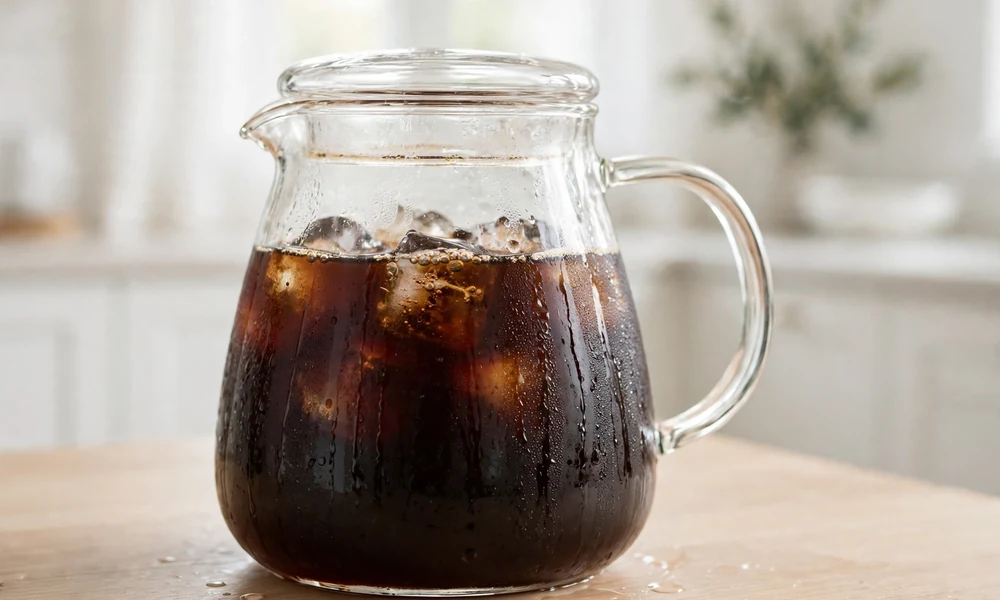
Cold brew pitchers are the simplest way into iced coffee. You add coarse coffee grounds and cold water, leave the pitcher in the fridge overnight, and strain it in the morning. The long, gentle steep pulls out sweetness while leaving behind much of the bitterness and acidity that hot brewing creates. The smooth concentrate keeps for up to two weeks, so one batch covers many mornings.
The main drawback is patience: you cannot decide at 7 a.m. that you want cold brew at 7:15, so start a batch the evening before. Look for a pitcher with a fine mesh filter that lifts out cleanly and a lid that seals well, so the coffee does not pick up fridge smells. New to this style? A guide to cold brew coffee makers for beginners will help you pick a first pitcher and avoid common mistakes.
Flash-Chilled Drip Makers
Flash-chilled drip makers look like ordinary coffee machines, but they brew a concentrated batch of hot coffee directly over a pitcher full of ice. The hot coffee melts some of the ice and chills instantly, which preserves the bright, aromatic notes that cold brewing softens. You get a full pitcher of iced coffee in under ten minutes, which makes this type the best fit for busy households.
These makers are also the easiest to share, since most brew enough for four to six glasses at once. Check that the pitcher is marked for the right ice level, because too little ice leaves the coffee lukewarm and too much dilutes it. Rinse the basket after every brew so old oils do not turn the next batch bitter.
Iced Pour-Over Sets
An iced pour-over set is a glass dripper that sits over a carafe filled with ice. You pour hot water slowly over the grounds, and the coffee drips straight onto the ice, chilling as it brews. This is the most hands-on method on this list, and it rewards a little attention with a remarkably clean, fragrant cup.
The trade-off is effort: you need a gooseneck kettle for a steady pour, and the process takes your full attention for five minutes. It also makes one or two servings at a time, so it suits solo drinkers rather than a full household. Pair it with freshly ground beans; a guide to compact coffee grinders for home can help you find a grinder that fits a small kitchen.

Espresso-Based Iced Coffee Makers
If your idea of iced coffee is an iced latte or a strong iced Americano, an espresso-based maker is the right tool. These machines pull a concentrated shot of espresso that you pour over ice and milk. The result is intense and rich, with the creamy body that drip coffee cannot match.
Espresso makers cost more than the other types here, and they need finer grounds and a little practice. The payoff is versatility: the same machine makes hot espresso, lattes, and iced drinks all year round. Clean the group head regularly, because old coffee oils spoil an otherwise excellent shot.
Single-Serve Iced Coffee Makers
Single-serve makers brew one glass of iced coffee at a time, usually from a pod or a small scoop of grounds, directly over ice in your glass. They are the fastest option after espresso machines, and they take up very little counter space.
The running cost is the main thing to watch. Pods cost more per cup than whole beans, and the flavour range is narrower, though reusable pods close that gap and let you use any coffee you like. Check the glass size the maker accepts, because a tall tumbler will not fit under every machine.
Cold Brew vs Flash-Chilled: Which Tastes Better?
The two most popular methods produce noticeably different cups, and neither is objectively better. Cold brew is smooth, sweet, and low in acidity, with chocolate and caramel notes and very little bitterness. Flash-chilled coffee is brighter and more aromatic, with the fruity and floral notes of the bean still intact.
Your routine should decide. If you plan ahead and like a mellow cup, cold brew wins. If you want iced coffee right now and enjoy a lively, bright flavour, flash-chilled wins. Some households keep both: a cold brew pitcher in the fridge for weekdays and a flash-chilled maker for weekends.
What to Look For Before You Buy
Capacity is the first detail to get right. A one-litre pitcher serves two people comfortably, while a 1.5-litre pitcher covers a family or a full day of refills. Measure your fridge shelf and the space under your cabinets before you order.
Brew Time and Planning
If you have five minutes, a flash-chilled or single-serve maker is the right choice; if you are happy to prepare the night before, cold brew rewards you with the smoothest cup.
Grind Size and Filters
Grind size shapes flavour more than most people expect. Cold brew needs a coarse grind, like raw sugar, so the long steep does not over-extract. Flash-chilled and pour-over methods need a medium grind, like sand. A grind that is too fine makes bitter, cloudy coffee in every method. Mesh filters are reusable; paper filters give a cleaner cup.
Cleaning and Durability
Look for a maker with few parts that come apart easily. Glass pitchers, removable filter baskets, and dishwasher-safe pieces make cleaning a thirty-second job, so avoid narrow-necked containers you cannot reach into with a sponge.
How to Make Great Iced Coffee at Home
Start with good beans and fresh, cold, filtered water. Grind just before brewing. Start with 60 grams of coffee per litre of water for cold brew concentrate, and a 1:8 coffee-to-water ratio for flash-chilled brewing.
Use large ice cubes rather than small ones. Big cubes melt slowly, so they chill the coffee without watering it down, and you can freeze coffee into ice cubes for an even stronger result. Add milk only after the coffee is fully chilled, and sweeten with simple syrup, which dissolves better than sugar in cold liquid. The French press method also works for iced coffee if you chill the brew quickly; our guide to French press coffee makers covers the steep times and grind sizes that keep the cup clean.

Checklist: Choosing Your Iced Coffee Maker
- Match the method to your mornings: cold brew for planners, flash-chilled for busy days.
- Pick a capacity that serves everyone who will drink it, not just yourself.
- Measure your counter and fridge space before you order anything.
- Choose a coarse grind for cold brew and a medium grind for flash-chilled coffee.
- Check that filters are reusable or cheap and easy to replace.
- Make sure every part that touches coffee comes apart and is easy to clean.
Frequently Asked Questions
Can I use a regular coffee maker to make iced coffee?
You can, but the result is often weak and bitter. Regular drip coffee poured over ice melts the cubes and dilutes the brew. If you must use one, brew it double-strength, then pour it over a full glass of ice and drink it straight away.
Is cold brew stronger than regular iced coffee?
Cold brew concentrate is stronger because it steeps for many hours, but you usually dilute it with water or milk before drinking. Served diluted, it is roughly as strong as regular iced coffee, just smoother and less acidic.
How long does cold brew last in the fridge?
Sealed cold brew concentrate keeps for up to two weeks in the fridge. Once diluted, drink it within two to three days, and always store it sealed so it does not absorb food smells.
What is the best grind for iced coffee?
Use a coarse grind for cold brew and a medium grind for flash-chilled and pour-over methods. A grind that is too fine over-extracts and turns the coffee bitter, while a grind that is too coarse makes it taste thin and sour.
Why does my iced coffee taste watery?
The most common causes are too little coffee, too much ice, and small cubes that melt fast. Use more coffee, brew at a stronger ratio, and switch to large ice cubes or coffee ice cubes to keep the flavour bold.
Do I need special beans for iced coffee?
No special beans are needed. A medium or dark roast works well because its chocolate and caramel notes survive chilling, while light roasts taste bright and fruity when flash-chilled.
The Bottom Line
The best iced coffee maker for your home is the one that fits your routine. Cold brew pitchers give the smoothest cup for planners, flash-chilled drip makers give the fastest cup for busy mornings, and pour-over sets give the most flavourful cup for hands-on brewers. Use fresh beans, a proper grind, and large ice cubes, and your home iced coffee will beat most café versions while costing far less.


