Gardening is done on your knees, and after twenty minutes on bare soil, cold patio slabs or a gravel path, your knees will tell you about it. Kneeling pads are the simplest answer: a flat slab of dense foam you drop on the ground and kneel on. A garden kneeler is the framed alternative, a padded platform on a metal frame that usually flips over to become a low seat, with handles at the sides to help you stand up again. Both cushion your knees and both are cheap, yet they suit different gardeners, different gardens and different knees.
This is a head-to-head comparison, not a list of picks. If you want ranked recommendations, our guide to the best garden kneelers of 2026 covers the framed kneelers worth buying. Here we settle the prior question: flat foam pad or framed kneeler? The pad wins on simplicity, weight and price; the kneeler wins on long sessions, getting up, and its seat.
Key Takeaways
- A kneeling pad is just the cushion: flat foam, no frame, no seat, nothing to fold or rust. A garden kneeler is a padded platform on a frame, with side handles and a flip-over seat.
- Dense foam matters more than thick foam. Soft padding flattens under your weight within a season and leaves your knees on the hard surface beneath.
- The framed kneeler is the better choice if your knees are stiff or sore, because the side handles help you stand up again after a long spell on the ground.
- The flat pad is the better choice if you move around a lot, carry your kit across an allotment, or want the cheapest tool that does the job.
- Measure before you buy: a pad narrower than your kneeling width forces one knee onto the bare ground.
The Two Contenders
The kneeling pad: flat foam, nothing else
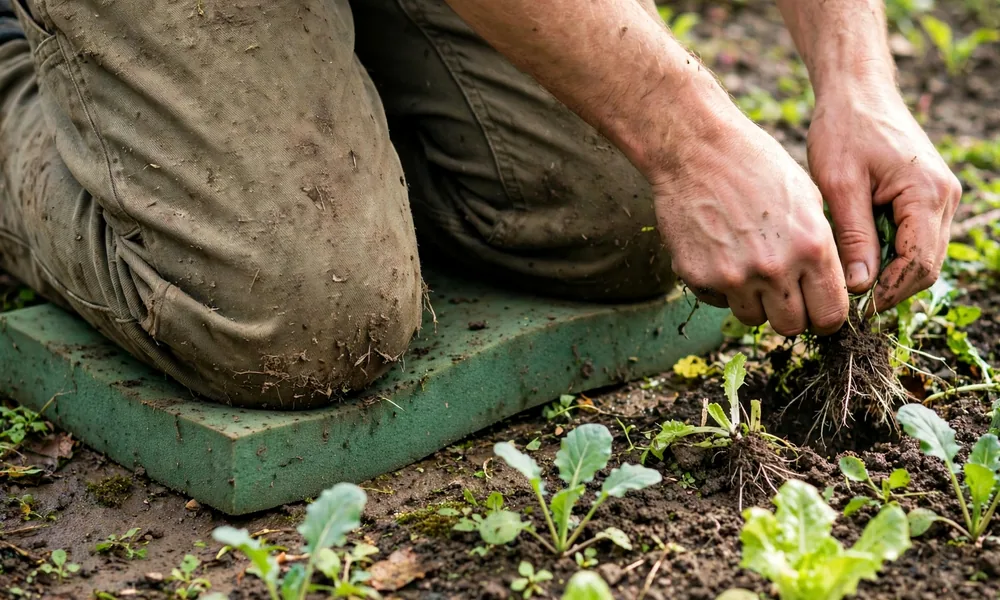
A kneeling pad is a rectangle of dense foam, usually EVA or a similar closed-cell foam, around forty to fifty centimetres wide and three to five centimetres thick. Some have a handle or a hanging loop, and some a textured top so your knees do not slide. That is the whole product. There is no frame to rust, no hinge to wobble, and nothing to fold, which makes it almost indestructible.
Its job is narrow and it does it well: it spreads your weight across both knees, keeps you off cold, wet or stony ground, and stops your trousers soaking through on damp grass. Because it is light, usually well under a kilo, you can carry it one-handed with a trug or a trowel and move it down the bed as you work. The weakness is that it does nothing else: it will not help you stand up, give you a seat, or hold your tools.
The garden kneeler: a padded platform on a frame
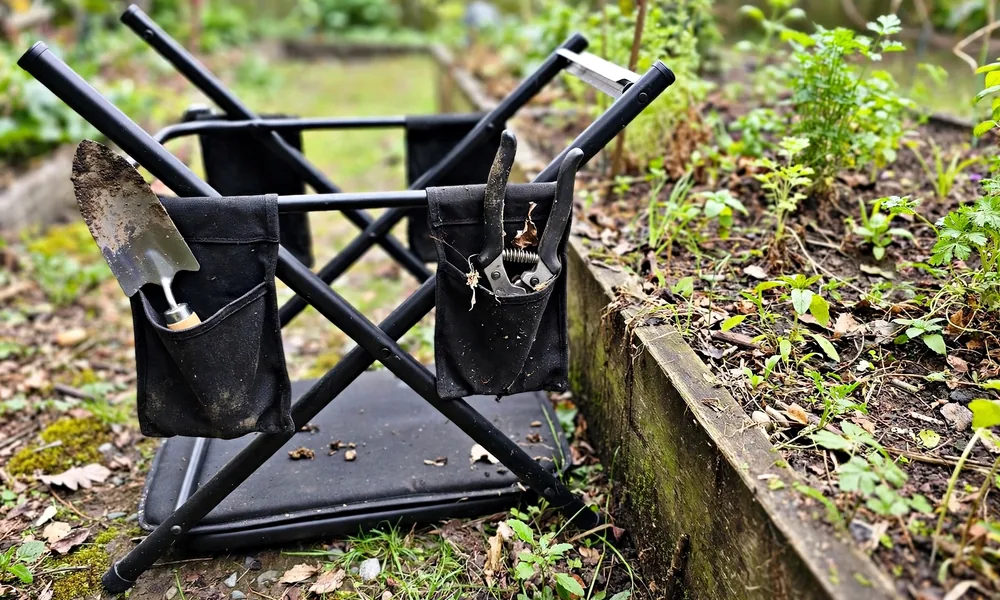
A garden kneeler is a padded platform mounted on a hinged metal frame, most often steel, sometimes aluminium. Turn it one way and it is a kneeler, with the pad low to the ground and handles at the sides. Flip it over and it is a small seat, high enough to take the strain off your knees entirely while you pot, prune or take a break. Many add side pockets for tools, so you stop standing up to fetch things.
The frame is the point and the price. It gives you something solid to push against when you rise, which matters enormously if your knees are stiff, and it keeps the pad off wet ground so the foam stays drier. The trade is weight and bulk: a steel-framed kneeler-seat can weigh several kilos, folds flat but never folds small, and its hinges and feet can wear, wobble or rust over time.
Kneeling Pads vs Garden Kneelers at a Glance
| What matters | Kneeling pad | Garden kneeler |
|---|---|---|
| Comfort over an hour | Good for short spells; foam thins under sustained weight | Better for long sessions; firm pad plus frame support |
| Getting up again | No help at all; you push off the ground | Side handles take your weight as you rise |
| Seat function | None | Flips over into a low seat |
| Weight to carry | Under a kilo; carries one-handed | Several kilos; a burden across an allotment |
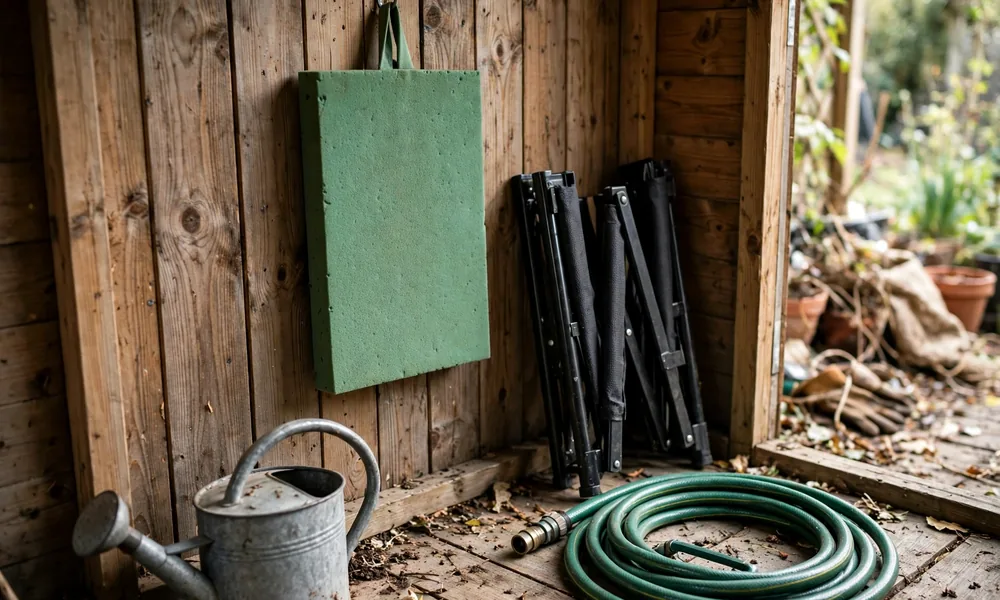
| Storage | Hangs on a hook; fits anywhere | Folds flat but needs shed floor or wall space |
| Durability | Almost nothing to break; foam wears eventually | Hinges, feet and frame can wear or rust |
| Typical price | Cheap; the lowest-cost option by far | Three to five times the price of a pad |
Where the Pad Wins
The pad wins on simplicity. There is nothing to assemble, nothing to adjust and nothing to go wrong. You put it down and kneel on it. For a quick job, that is all you need, and the kneeler’s frame is just extra weight you carry for no benefit. The pad also wins on portability: it weighs next to nothing, carries under one arm, and hangs on a hook in the smallest shed. If your garden is a steep slope, a muddy allotment or beds spread across a large plot, you will move your kneeling spot a dozen times in an hour, and every move is easier with a pad.
The pad wins on price and on versatility beyond the garden. A foam pad is cheap enough to replace without thinking, and the same pad works for cleaning low cupboards, fixing a car or laying flooring. Closed-cell foam does not soak up water, so a pad left out in the rain is usable again after a quick wipe, while a kneeler’s fabric-covered pad can stay damp for hours.
Where the Framed Kneeler Wins
The framed kneeler wins on the thing that ends most gardening sessions early: getting back up. Kneeling is easy; rising after forty minutes with stiff knees is not. The side handles let you push yourself up with your arms instead of levering off the ground with your knees, and for anyone with sore knees, a bad back or stiff hips, that decides whether you garden for an hour or for twenty minutes.
The kneeler also wins on long sessions. A framed pad stays flat and firm, so it does not curl, slide or thin out under your weight the way a cheap foam pad does. And it wins on the seat: flipped over, it becomes a low seat at the right height for potting, pruning and taking a break without walking back to the house. For more on the sitting side of the garden, see our guide to the best garden benches of 2026. Side pockets keep tools within reach, saving you standing up a dozen times an hour.
Which One Suits Your Garden
Bad or stiff knees point to the framed kneeler, every time. The handles matter more than the padding, because padding only helps while you are down there and the handles help you get back up. The same applies if you garden in long sessions or have a bad back, since the seat lets you alternate kneeling and sitting instead of staying down for the whole job. For a flat garden close to the shed, its weight is never a burden.
A small garden, a steep slope or an allotment points to the pad. If you carry your kit more than a few steps, if you kneel in short bursts between other jobs, or if you simply want the cheapest tool that works, the pad is the right buy. As a gift, the pad is the safer choice: cheap, and it cannot be the wrong size. If your knees hurt even on a pad, try knee pads you wear instead, which protect your knees wherever you kneel, though they do nothing for getting up again.
Buying Either One: What to Check
Foam comes first, whichever form you buy. Press the pad hard with your thumb. Good foam resists and springs back; cheap foam stays dented. A pad around five centimetres of dense foam will outlast a thicker pad of soft foam, because the soft one flattens to nothing under your knees within a season. Closed-cell foam is the better choice for garden use, since it does not absorb water. On a kneeler, check that the pad is thick and firmly attached, with no gaps at the edges where your knee could slip onto bare metal.
Size comes next. Measure your kneeling width once both knees are down and your feet are tucked behind you. A pad around forty-five centimetres wide suits most adults; if you are tall or broad, go wider. A narrow pad forces one knee onto the frame or the ground, and this is the most common buying mistake on both products. On a framed kneeler, also check the weight limit and the frame: the hinges should feel firm, with no wobble when you press down on the pad, and the feet should grip rather than slide on wet grass.
Before You Buy: A Quick Checklist
- Press the foam with your thumb: dense foam that springs back beats soft foam that stays dented.
- Check the width against your knees: around forty-five centimetres suits most adults, wider if you are tall or broad.
- If your knees are stiff or sore, choose the framed kneeler for its side handles, since getting up is the hard part.
- If you carry your kit across an allotment or up a slope, choose the pad, because a steel frame gets heavy fast.
- On a kneeler, test the hinges for wobble, check the weight limit, and look for rubber feet that grip wet grass.
- Plan where it lives: a pad hangs on a hook anywhere, while a kneeler needs shed space even folded flat.
Frequently Asked Questions
Is a kneeling pad the same as a garden kneeler?
No. A kneeling pad is just the cushion, a flat slab of foam with no frame and no seat. A garden kneeler is a padded platform on a metal frame, usually with side handles, and most designs flip over to become a low seat.
Which is better for bad knees?
The framed kneeler, because of its side handles. Padding protects your knees while you are down, but the handles help you stand up again, and standing up is where stiff or sore knees struggle most.
Can I use a kneeling pad indoors?
Yes, and this is one of the pad’s real advantages. The same foam pad works for cleaning low cupboards, laying flooring or fixing a car.
How thick should a kneeling pad be?
Around five centimetres of dense foam is the sweet spot. A thick pad of soft foam flattens under your weight, while a thinner pad of dense foam keeps supporting you. Press it with your thumb before you buy; good foam springs back.
Do garden kneelers rust?
Steel frames can rust if left out in the rain, especially around the hinges and feet. Aluminium frames do not rust but cost more.
Is a kneeler worth the extra money over a pad?
It is if you garden for long sessions, have stiff knees, or will use the seat. A kneeler costs roughly three to five times the price of a pad, and that money buys the handles, the seat and the frame. If you kneel in short bursts and move around a lot, the pad is the better spend.
The Bottom Line
Buy the kneeling pad if you want the simplest, lightest and cheapest tool that does the job: short sessions, a garden you move around, a tight budget, or a second pad for indoor jobs. Buy the framed garden kneeler if your knees are stiff, your sessions are long, or you want the seat and the side handles that get you back on your feet. The right one is the one that matches your knees and your garden.