The Matcha Bowls That Whisk a Smooth, Frothy Bowl in 2026
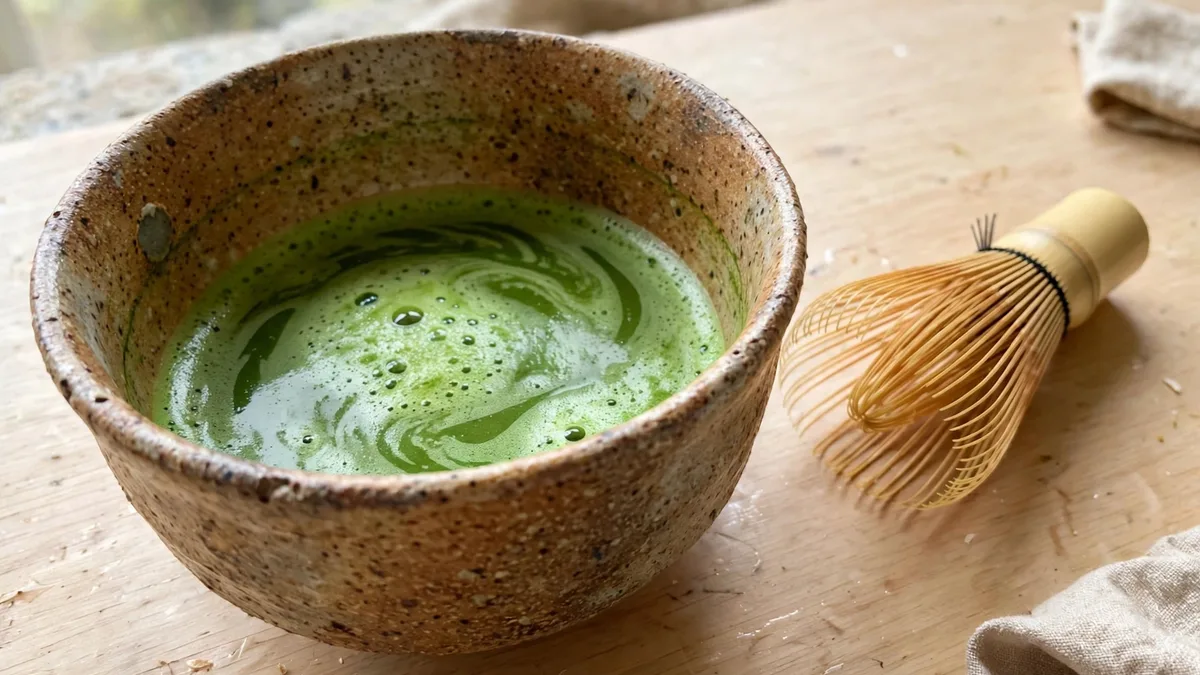
The best matcha bowls in 2026 do one job that no mug, cup or cereal bowl can do properly: they give a bamboo whisk room to move. Matcha is a fine green powder whisked into hot water until it turns smooth and frothy, and the bowl is the tool that makes that possible. The right matcha bowl is wide, steady and smooth inside, with a foot that sits flat and a glaze that wipes clean. The wrong one is too narrow, too light, or rough inside. This guide sorts the bowls that whisk smooth from the ones that fight you.
A matcha bowl, called a chawan in Japan, looks simple, and that is why so many are bad. It is a wide, low bowl with no handle, spout or lid, and every part of that simplicity has to be right: get the width or foot wrong and the bowl fights you. A teapot cannot do this job: a teapot pours brewed leaf tea, while a matcha bowl is where powdered tea is made. Our guide to the best teapots covers the pots that brew leaf tea; this guide covers the bowl that whisks powder into tea.
Key Takeaways
- Width matters most: the inside needs to be at least 11 centimetres across, so the whisk moves freely without hitting the sides.
- Ceramic and stoneware whisk the smoothest bowls; glass looks beautiful but cools the tea fast and shows every speck of powder.
- A low, wide foot keeps the bowl steady while you whisk with one hand and steady the bowl with the other.
- A smooth, glossy glaze inside matters more than the colour outside: rough interiors trap powder and stain.
- Matcha bowls are not teapots or tea cups: they are built for whisking powder, not for steeping leaves.

What Makes a Matcha Bowl Whisk Smooth Instead of Lumpy
Matcha turns lumpy when the whisk cannot move freely, usually where wall meets base. Four things decide whether a bowl whisks smooth.
1. Width, and why it matters most
A bamboo whisk is about 6 centimetres across, and it needs room to sweep in a fast M or W pattern. In a bowl narrower than about 11 centimetres inside, the whisk tines catch the wall on every stroke and the powder never fully dissolves. In a bowl 12 to 14 centimetres across, the whisk moves freely and the froth builds in seconds. Test it: sweep the whisk side to side in the empty bowl; if the tines touch the wall early, the bowl is too narrow.
2. The foot: small part, big consequences
The foot is the ring on the bottom of the bowl, and it has two jobs: keep the bowl steady while you whisk, and keep it from sliding across the table. A good foot is low, wide and flat, so the bowl sits planted while one hand whisks and the other steadies the rim. Too tall and it is tippy; too narrow and it spins. Press one side of the rim on a table: the bowl should stay put.
3. The glaze inside
The inside of a matcha bowl takes more punishment than the outside: a bamboo whisk scrapes it dozens of times a day, and fine green powder works into every pore. A smooth, glossy glaze lets the whisk glide, wipes clean with a rinse, and shows the bright green honestly. A rough interior grips powder, stains within a week, and slows the whisk.
4. Weight and wall thickness
A matcha bowl should feel solid in two hands but not heavy in one. Thin walls look delicate and cool the tea too fast; very thick walls hold heat well but make the bowl heavy when full. The sweet spot is a wall of 5 to 8 millimetres, keeping the tea warm while you whisk and drink. A bowl of 300 to 450 grams stays planted; a feather-light one skates across the table.
The Best Matcha Bowls at a Glance
| Bowl type | Best for | Whisking room | Verdict |
|---|---|---|---|
| Glazed ceramic, 12–14 cm | Everyday whisking | Excellent | Best |
| Stoneware, wide and heavy | Daily use, durability | Excellent | Best |
| Glass matcha bowl | Watching the froth form | Good | Best |
| Spouted matcha bowl | Pouring into a second cup | Good | Best |
| Narrow cereal-style bowl | Nothing, reliably | Poor | Worst |
| Unglazed rustic bowl | Display, not daily use | Fair | Worst |
| Thin novelty bowl | Decoration | Poor | Worst |
The Best Side: Matcha Bowls That Earn Their Shelf Space
Glazed ceramic: the everyday winner
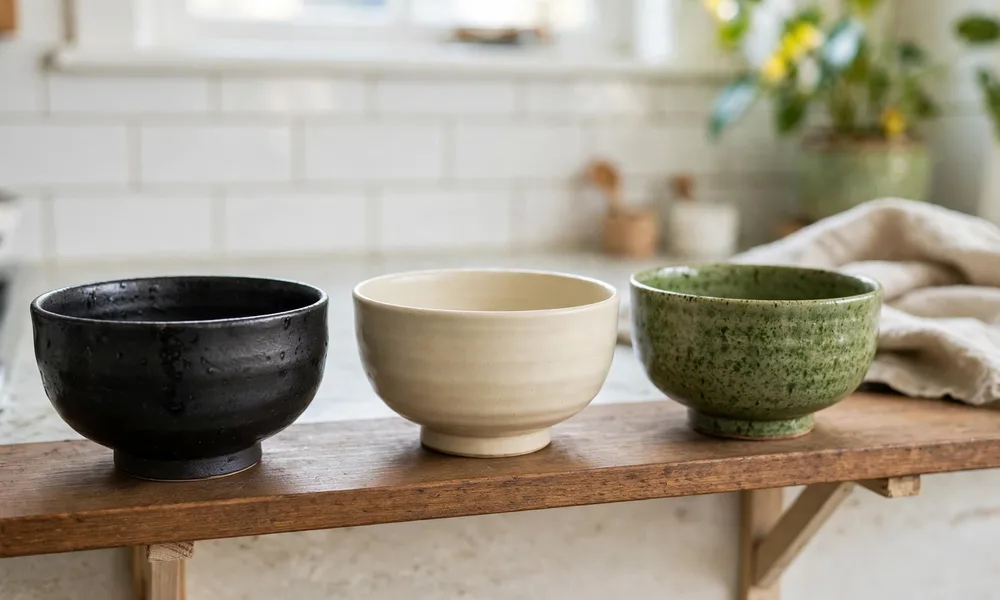
A well-made glazed ceramic matcha bowl, 12 to 14 centimetres across inside, is the best default choice for most matcha drinkers. It whisks smoothly, holds heat for a single bowl, and comes in every glaze from deep black to pale cream. It is also the easiest to clean, and forgiving if the whisk slips, because the glaze is harder than the bamboo.
Stoneware: the durable workhorse
Stoneware matcha bowls are heavier, thicker and tougher than fine ceramic, which makes them the best choice for daily use. They hold heat longer, survive knocks that would chip thin porcelain, and their weight keeps them planted while you whisk hard. Look for one under 450 grams, glazed smooth inside even when the outside is rough for grip.
Glass: the showpiece that works
A glass matcha bowl earns its place when you want to watch the froth form. Modern borosilicate glass handles hot water safely, and a good glass bowl whisks as well as a ceramic one, provided it is wide enough and has a flat base. The trade-off is heat: glass cools faster, and it shows every speck of undissolved powder.
Spouted bowls: for sharing
A spouted matcha bowl, with a small pouring lip, is the right choice when you whisk one bowl and pour it into two cups. The spout lets you pour without dribbling, and the wide body still gives the whisk full room. Look for a gentle curve rather than a sharp notch, which catches the whisk tines.
The Worst Side: Matcha Bowls That Fight the Whisk
Narrow cereal-style bowls
The most common bad matcha bowl is not a matcha bowl at all: it is an ordinary cereal or soup bowl pressed into service. It is too narrow, too deep and too curved at the base, so the whisk bangs the walls and the powder collects where the whisk cannot reach.
Unglazed rustic bowls
Unglazed or roughly glazed bowls look beautifully handmade, and they are wonderful to look at. They are poor daily matcha bowls. The porous surface grips powder, stains green within days, and slows the whisk. If you love the rustic look, choose a bowl rough outside and glazed smooth inside.
Thin novelty bowls
Matcha bowls shaped like animals, landmarks or cartoon characters are fun for a week and useless after it. They are usually too small, too thin and too uneven inside, so the whisk catches on every ridge and the bowl chips at the first knock. A bowl that cannot whisk belongs on a shelf.
How to Whisk Properly in Any Matcha Bowl
Even the best matcha bowl makes lumpy tea if the whisking is wrong. Warm the bowl first with hot water, then empty it and dry it lightly. Sift about two scoops of matcha powder through a fine sieve into the bowl, which breaks up the clumps before the water ever touches them. Add a little hot water, around 80 degrees, just enough to make a paste, and whisk gently in a slow circle to dissolve the powder. Then add the rest of the water and whisk fast in an M or W pattern, just above the bottom, for about fifteen seconds. Fresh powder matters as much as the bowl: it whisks brighter and smoother in any bowl. Our guide to the best matcha powders is a good place to start.
Matcha Bowls vs Teapots and Infusers
It is easy to confuse the tools of tea, because they all sit on the same shelf. A teapot brews loose leaves and pours the finished tea through a spout; a matcha bowl never brews anything, it whisks powder already in the bowl. An infuser holds leaves in a mesh basket to steep and lift out; matcha has no leaves to lift out, because the powder is the tea, drunk whole. If you drink mostly loose leaf, our guide to the best tea infusers covers the baskets that brew the cleanest cup.

Care: Keeping the Bowl Whisking Well
A matcha bowl stays good for years if washed and dried properly. Rinse it with hot water straight after use, and wash it with a soft cloth rather than a scouring pad, which scratches glaze and turns a smooth interior rough. Never use soap on an unglazed bowl, since the clay absorbs it; even on a glazed bowl a quick rinse is usually enough, as matcha leaves no grease. Dry the bowl upside down, and rinse the whisk, shake it dry, and stand it on its handle.
Your Matcha Bowl Checklist
- Inside width 12 to 14 centimetres, so the whisk sweeps fully without hitting the walls.
- Foot low, wide and flat, so the bowl stays planted while you whisk.
- Inside glaze smooth and glossy, with no rough patches that trap powder.
- Weight 300 to 450 grams: solid enough to stay put, light enough to drink from.
- Walls 5 to 8 millimetres thick, holding heat without making the bowl heavy.
- Bowl rinses clean in seconds and dries fully upside down.
Frequently Asked Questions
What size matcha bowl should I buy?
A bowl 12 to 14 centimetres across inside suits most people: room for a full whisk stroke and a normal 150 to 200 millilitre serving.
Can I whisk matcha in a normal bowl or mug?
You can, but it will be lumpy: a mug is too narrow, and a cereal bowl is too curved at the base, so powder collects where the whisk cannot reach.
Is a spouted matcha bowl better than a plain one?
A spouted bowl is better if you whisk for two and pour into cups; a plain bowl is better if you drink straight from the bowl, with no spout to catch the whisk.
Do I need a special whisk, or will a kitchen whisk work?
A bamboo whisk is worth it: its fine tines make the small, even froth of good matcha, while a metal whisk makes big bubbles and can scratch the glaze.
Why does my matcha taste bitter even in a good bowl?
Bitterness usually comes from water that is too hot or unsifted powder. Use water at around 80 degrees, sift first, and whisk for fifteen seconds.
How do I clean a matcha bowl without soap?
Rinse it with hot water straight after use and wipe it with a soft cloth. Matcha leaves no grease, so soap is rarely needed, and on unglazed bowls the clay absorbs soap and taints the next bowl.
Our verdict: a glazed ceramic bowl, 12 to 14 centimetres across, with a smooth inside and a low, flat foot, is the matcha bowl most people should buy first.
The Bottom Line
The best matcha bowls in 2026 are wide, steady and smooth inside: a glazed ceramic bowl, 12 to 14 centimetres across, with a low flat foot and a glossy interior, whisks a smooth, frothy bowl every time. Stoneware is the tougher daily choice, glass is the prettiest way to watch the froth form, and a spouted bowl is the right call when you pour for two. Skip narrow cereal bowls, unglazed interiors and novelty shapes.