
A nail dryer is the difference between a manicure that survives the evening and one that smudges on your car keys before you leave the house. Nail dryers cut the wait after painting your nails from half an hour of sitting still to a few minutes, and for gel polish they are not optional: gel only hardens under a UV or LED lamp.
Key Takeaways
- Match the dryer to your polish: lamps cure gel, fan dryers only speed up regular polish.
- LED lamps cure gel faster than UV lamps, usually in thirty to sixty seconds per coat, and their bulbs last far longer.
- A fan dryer is the best choice if you only wear regular polish, because it is cheaper, quiet, and needs no bulbs.
- Check the lamp fits all five fingers at once, thumb included, or you will cure one hand in two rounds.
- Never cure gel with a fan dryer and never rush a lamp cycle: under-cured gel peels and can irritate skin.
What a Nail Dryer Actually Does
A nail dryer is a small device that finishes your manicure for you. You paint your nails, place your hand in or on the dryer, and it either blows air across the polish or shines light onto it until the polish is dry or fully set. That matters because wet polish is fragile: a single touch can ruin ten minutes of careful painting.
Nail Dryers and Nail Lamps Are Not the Same Job
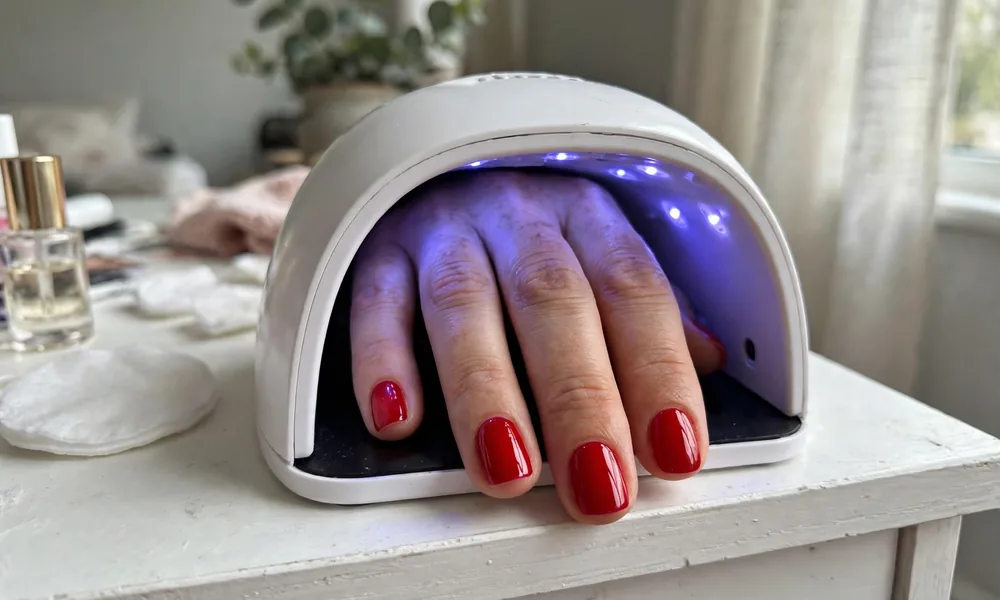
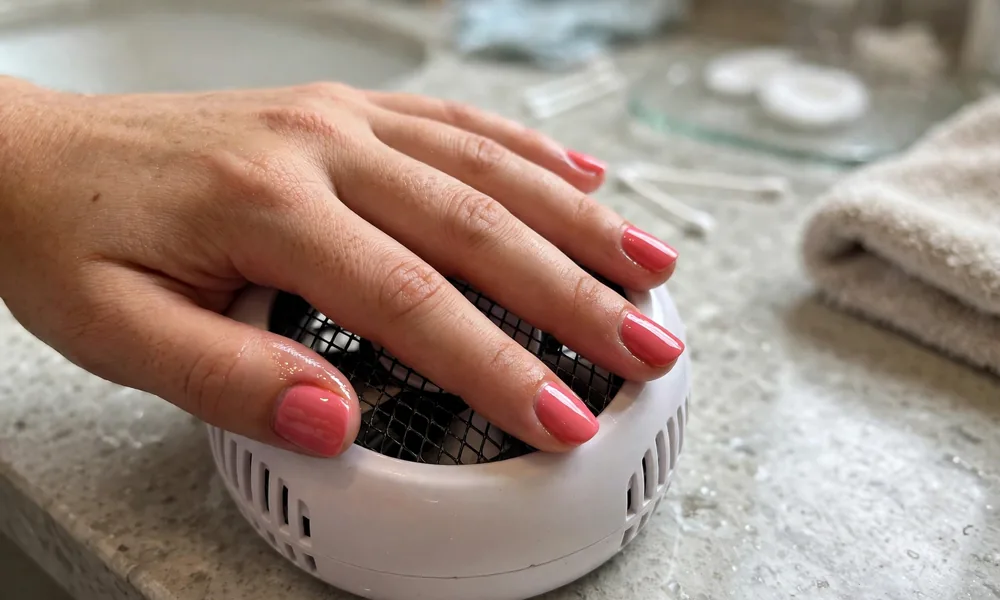
The two kinds of device do different jobs, though they are sold side by side. A fan dryer blows room-temperature air over regular nail polish, evaporating its solvents so it hardens faster. A UV or LED lamp does not dry anything: it cures gel polish, using light to trigger a chemical reaction that turns liquid gel hard. If you wear gel, you need a lamp; if you wear regular polish, you need a fan dryer.
If you are still deciding which polish to wear, the polish matters as much as the dryer. Our guide to nail polishes that last without chipping in 2026 covers formulas and application. A gel wearer needs a lamp with the right wavelength and timer, while a regular-polish wearer needs steady airflow, and buying the wrong type is the most common money wasted on nail care.
The Main Types of Nail Dryer Compared
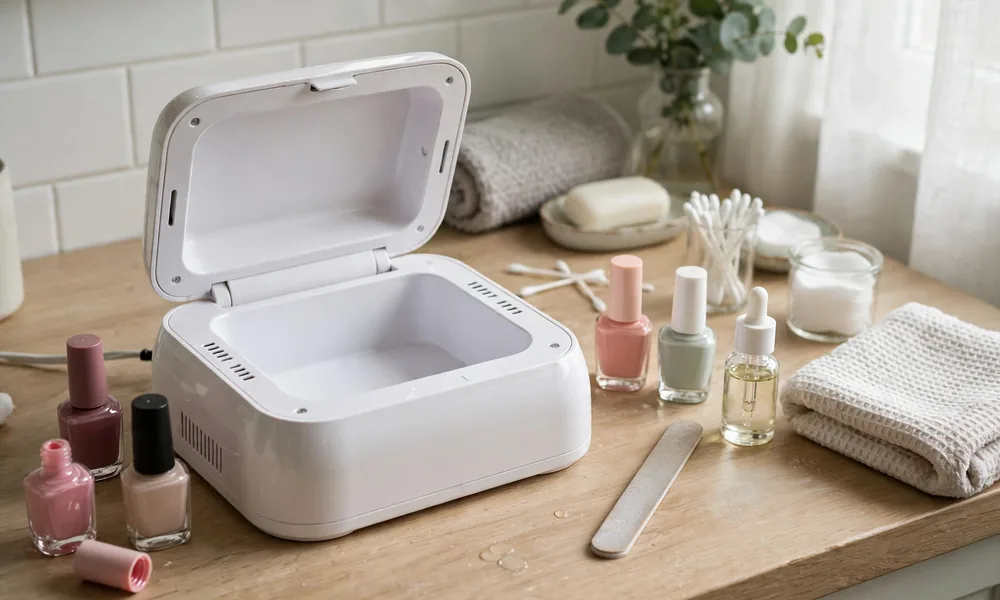
There are four main types. UV lamps are the original gel-curing lamps, curing gel in two to three minutes per coat. LED lamps are the modern replacement, curing the same gel in thirty to sixty seconds with bulbs that last years instead of months. Fan dryers blow air over regular polish and are the simplest and cheapest option. Combination dryers try to do both jobs, usually a fan with a small lamp built in.
Nail Dryers Compared
| Type | Best For | Time Per Coat | Drawbacks |
|---|---|---|---|
| LED lamp | Gel polish, most users | 30 to 60 seconds | Only cures LED-compatible gel |
| UV lamp | All gel types, older gels | 2 to 3 minutes | Slow, bulbs need replacing |
| Fan dryer | Regular polish only | 5 to 10 minutes | Cannot cure gel at all |
| Combination dryer | Switching gel and regular | 1 to 5 minutes | Bulky, costs more |
| Mini travel lamp | One finger, holidays, repairs | 30 to 60 seconds | Too small for a full hand |
For most people, an LED lamp is the best starting point if they wear gel, and a fan dryer is the best starting point if they do not. The LED lamp is faster, its bulbs last for years, and it runs cooler than an old UV lamp. The fan dryer is cheaper and simpler, with nothing to replace. Combination dryers suit only people who genuinely switch between gel and regular polish.
UV and LED Lamps: What to Check Before You Buy
A gel lamp is only as good as its light, and the light is where most buying mistakes happen. The lamp must match the gel you use: most modern gels cure under LED light, but some older gels need UV light, and a gel that never fully cures will peel within days. Check the gel bottle first, then buy the lamp it asks for. A dual UV and LED lamp covers both, and it is the safest buy if you own gels from more than one brand.
Size matters as much as light. The lamp must fit all four fingers and your thumb at once, without your nails touching the roof or the sides. A lamp that is too small forces you to cure your thumb separately, which doubles the time. Check the opening height too: long nails need more clearance, and a low roof will smudge the polish you are trying to set. A sensor that starts the timer when your hand goes in is a small feature that makes a real difference.
Curing Times and Why Rushing Fails
Gel cures on a timer, and the timer is not a suggestion. A base coat usually needs thirty seconds under LED or two minutes under UV, each colour coat needs the same again, and the top coat needs a full cycle of its own. Skipping a cycle or pulling your hand out early leaves the gel soft underneath, even if the surface feels hard. That half-cured gel lifts at the edges within a day or two and peels off in sheets, taking layers of your natural nail with it. Let every coat finish its full cycle, and keep your hand still while it cures.
Fan Dryers: What to Check Before You Buy
A fan dryer is a simple device, but a bad one is still a waste of money. The fan should move enough air to dry a coat in five to ten minutes without blowing dust onto wet polish, which means a gentle, even flow rather than a single fierce jet. A dryer with a filter or a covered intake keeps dust out of the airflow, and a flat, stable base keeps it from sliding across the table. Battery-powered fan dryers often blow weakly and die mid-manicure; a mains-powered dryer is the better buy for home use.
How to Use a Nail Dryer Properly
Start with clean, dry nails, because a dryer cannot fix a bad base. Push the cuticles back gently, wipe each nail with a little polish remover on a cotton pad to remove oil, and let the nails dry completely before the base coat. Our guide to nail polish removers that work without the damage covers which formula to use. Polish grips a clean nail and slides off an oily one.
Paint in thin coats, and cure or dry each coat before the next. Two thin coats always beat one thick coat, because thin layers dry hard all the way through instead of staying soft underneath, and a thick coat under a lamp cures on the surface while the gel underneath stays liquid. For gel, follow the order the gel maker gives: base coat, colour coats, top coat, each with its full cure time. For regular polish, give the fan dryer its full five to ten minutes per coat.
Common Mistakes to Avoid
The most common mistake is buying the wrong type of dryer for the polish you wear. A fan dryer cannot cure gel, and a UV lamp cannot dry regular polish, so the device sits unused while the polish still smudges. Check the polish bottle before you buy the dryer, not after. The second mistake is curing gel with a lamp that is too weak or too old: UV bulbs lose strength long before they stop glowing, and tired bulbs leave gel half-cured even when you follow the timer exactly.
The third mistake is over-curing, which sounds impossible and is not. Leaving gel under a lamp for far longer than the timer asks for does not make it harder; it makes it brittle, so it chips at the tips instead of flexing with the nail. Follow the timer, not the feeling that more must be better. The fourth mistake is using a dryer as a shortcut for bad application: thick coats and nails painted over oil will fail whatever dryer you own. A dryer finishes a good manicure faster; it does not rescue a bad one.
Nail Dryer Buying Checklist
- Check your polish first: gel needs a lamp, regular polish needs a fan dryer.
- Buy a dual UV and LED lamp if you own gels from more than one brand.
- Check the lamp fits all five fingers at once, thumb included, without nails touching the roof or sides.
- Look for a timer with 30, 60 and 120 second settings and a sensor that starts on hand entry.
- For a fan dryer, choose mains power over batteries and even airflow over a single fierce jet.
- Measure your space first: a combination dryer is bulky, and a lamp you cannot store goes unused.
Frequently Asked Questions
Do nail dryers work on regular nail polish?
Fan dryers do, because they blow air over regular polish and speed up the evaporation that hardens it. UV and LED lamps do not, because regular polish has no gel chemistry for the light to cure. Wear regular polish, buy a fan dryer; wear gel, buy a lamp.
How long does gel polish take to cure in a nail dryer?
Under an LED lamp, most gel coats cure in thirty to sixty seconds, and a full manicure takes about five minutes of curing across base, colour and top coats. Under a UV lamp, each coat takes two to three minutes, so a full manicure takes closer to fifteen minutes. Follow the time on the gel bottle, because under-cured gel peels and can irritate the skin.
Are UV nail dryers safe?
UV lamps expose your hands to a small amount of ultraviolet light for a few minutes per manicure, far less than a day in the sun but still real exposure. Most people use them without any problem, and sunscreen or fingerless UV gloves reduce it further. LED lamps use a narrower band of light and cure faster, so the exposure time is shorter.
Can I use a hair dryer instead of a nail dryer?
You can, but it is a poor substitute. A hair dryer on its cool setting will speed up regular polish, but the airflow is too strong and too warm, so it blows dust onto wet polish and can bubble the surface. It cannot cure gel at all. A dedicated fan nail dryer costs little and blows gently and evenly.
Why is my gel polish peeling after using a nail dryer?
Peeling usually means the gel never fully cured, the nails were oily before the base coat, or the coats were too thick. Cure every coat for its full time, wipe each nail with remover first, and paint thin coats. Also check that your lamp matches your gel: an LED-only lamp will not cure a UV-only gel, and old UV bulbs lose strength before they stop glowing.
Do I need a nail dryer if I get manicures at a salon?
Not necessarily, but it helps between appointments. Salons have professional lamps, and a home dryer is for the repairs, the colour change, and the manicure you do yourself on a Sunday evening. A small LED lamp or a fan dryer is cheap insurance against smudging a salon manicure on the way home.
The Bottom Line
A nail dryer is worth buying if you paint your own nails more than once a month: it turns the most frustrating part, the waiting, into a few minutes. Gel wearers should buy a dual UV and LED lamp that fits all five fingers, and cure every coat for its full time. Regular-polish wearers should buy a mains-powered fan dryer with even airflow and use it on thin coats. And if the rest of your at-home routine needs the same upgrade, our guide to manicure sets that keep nails neat at home covers the tools that turn a quick dry into a proper manicure.


