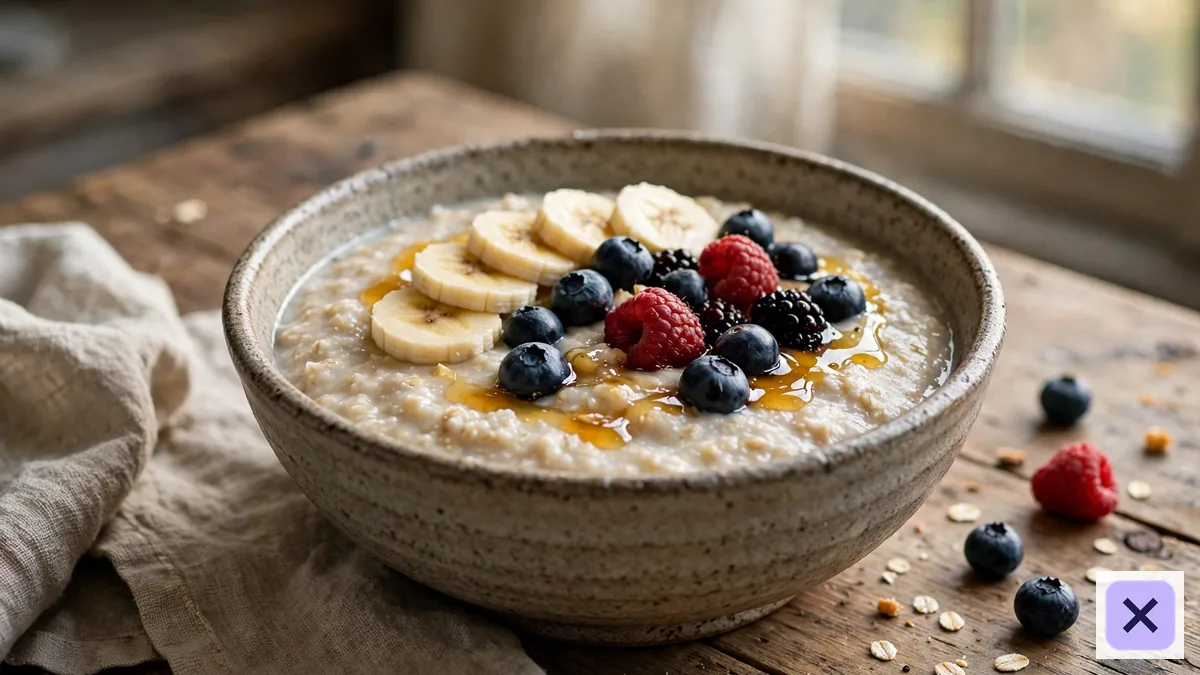
Oats deserve more than breakfast in 2026. Most of us meet them as porridge, a bowl eaten half-awake, and forget about them until the next morning. That wastes one of the most versatile foods in the pantry. Oats thicken soups, hold baking together, stretch a savoury dinner, and turn fruit and yoghurt into a meal you can make the night before. They are cheap, they keep for months, and they are genuinely good for you.
The case for oats starts with the numbers. A 40 gram serving of rolled oats gives around 150 calories, 5 grams of protein, 4 grams of fibre and a good share of your daily magnesium, iron and B vitamins, all for a few pence. The fibre that matters most is beta-glucan, which helps lower cholesterol and keeps you full for hours. This guide covers the types worth buying and how to use them well beyond the breakfast bowl.
Key Takeaways
- Rolled oats are the all-rounder: good for porridge, baking, overnight oats and crumbles alike.
- Steel-cut oats have the best texture and slowest energy release, but take 25 to 30 minutes to cook.
- Instant oats are convenient but the least filling, because they are the most processed form.
- A 40 gram serving gives about 4 grams of fibre, including beta-glucan, which lowers cholesterol.
- Store oats in a sealed container in a cool, dark cupboard; they keep for six to twelve months.
What Oats Actually Are
Oats are the grain of the oat plant, a hardy cereal that grows in cool, damp climates where wheat struggles. The whole oat groat is the least processed form: the entire grain with only the inedible hull removed. Every other type is a groat that has been cut, rolled or ground.
Nutritionally, oats stand out. They are naturally gluten-free, although most are processed where wheat is handled, so anyone with coeliac disease should buy certified gluten-free oats. They are rich in soluble fibre, particularly beta-glucan, linked to lower cholesterol and steadier blood sugar, and they supply avenanthramides, antioxidants found almost only in oats.
The Types of Oats Compared
The types are not interchangeable, so choosing oats starts with knowing them. The table below compares the main forms on the shelf.
| Oat Type | How It Is Made | Cooking Time | Texture | Best For |
|---|---|---|---|---|
| Steel-cut oats | Groats cut into pieces | 25 to 30 minutes | Chewy, nutty | Slow breakfasts, savoury bowls |
| Rolled oats | Groats steamed and flattened | 5 to 10 minutes | Soft, creamy | Porridge, baking, overnight oats |
| Quick oats | Rolled thinner, cut smaller | 2 to 3 minutes | Soft, smooth | Fast porridge, smoothies |
| Instant oats | Pre-cooked and dried | 1 minute | Very soft | Porridge in a hurry |
| Oat flour | Ground rolled oats | None | Fine powder | Baking, thickening |
| Oat bran | The outer layer of the groat | 3 to 5 minutes | Fine, gritty | Smoothies, muffins, porridge |
Steel-cut oats are the least processed and the most rewarding to eat. They keep a chewy, nutty texture, and because they digest slowly they keep you full for longer. The cost is time: 25 to 30 minutes on the hob, although soaking overnight cuts that to about ten. They are also the best oat for savoury cooking.
Rolled oats, also sold as old-fashioned oats, are the standard. The groats are steamed and rolled flat, so they cook in five to ten minutes and give porridge its familiar creamy texture. They are the most versatile type: good for porridge, overnight oats, flapjacks, crumbles and biscuits. Quick oats are cut smaller and rolled thinner, so they cook in two to three minutes but turn softer and less filling. Instant oats are pre-cooked, dried and often sweetened; convenient, but the least satisfying form of the grain.

Oat Flour and Oat Bran
Oat flour is simply ground rolled oats, and you can make it at home by blitzing rolled oats in a blender for thirty seconds. It works well in pancakes, muffins and biscuits, although it has no gluten, so it cannot replace wheat flour one-for-one in bread. Replace up to a third of the wheat flour in a recipe and see how it behaves.
Oat bran is the outer layer of the groat, where most of the beta-glucan lives. A spoonful stirred into porridge, a smoothie or a muffin batter adds fibre without changing the flavour much. It is the most concentrated form of what makes oats healthy, and it is cheap. Quinoa is another grain that earns its place in the same weekly rotation, and our guide to why quinoa still wins the weeknight grain race in 2026 covers how the two compare at dinner.
Oats by the Numbers
The nutrition of oats is easy to understate, because the numbers look modest until you compare them with the alternatives. A 40 gram serving of rolled oats, about half a cup, gives roughly 150 calories, 5 grams of protein, 4 grams of fibre, 27 grams of carbohydrate and 3 grams of fat. Most breakfast cereals give less fibre, less protein and more sugar, and cost several times as much. Oats also supply about a fifth of your daily magnesium and iron.
Beta-glucan is the figure worth remembering. Oats contain about 4 grams per 100 grams, and studies link a daily intake of 3 grams with lower total and LDL cholesterol. A single bowl of porridge gets you most of the way there. The same fibre slows digestion, which is why porridge keeps you full until lunch in a way toast or sugary cereal does not. Steel-cut oats score around 52 on the glycaemic index, rolled oats around 55, and instant oats around 79.
Beyond Breakfast: Cooking With Oats All Day
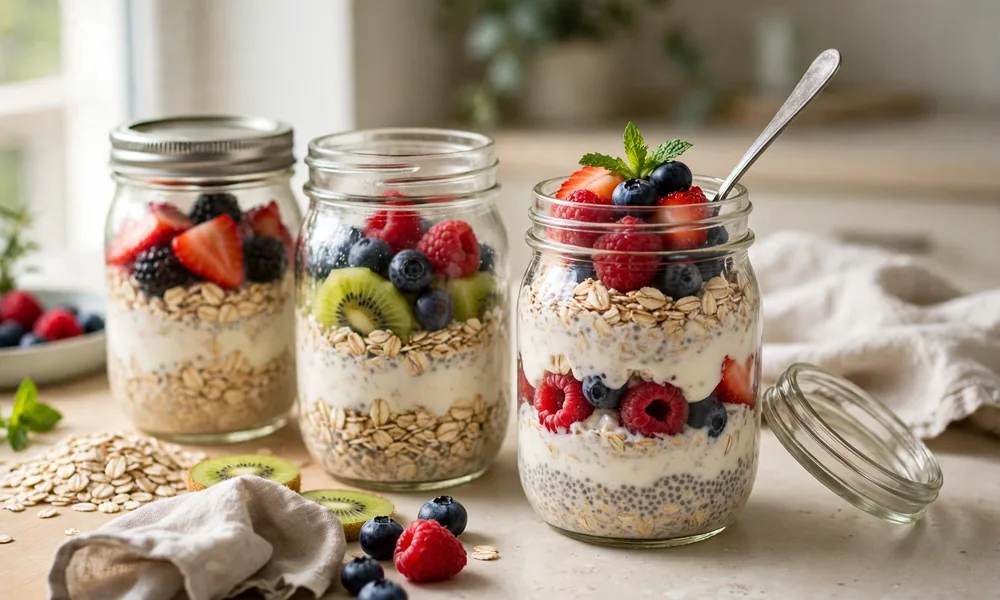
Porridge is the beginning, not the end. Overnight oats are the easiest way to eat oats well on a busy morning: rolled oats soaked overnight in milk or yoghurt with fruit, nuts and a little honey, ready straight from the fridge. The ratio is simple, one part oats to one part liquid. They keep for two to three days, so a batch made on Sunday covers the first half of the week.
Baked oats are the next step. Oats mixed with milk, egg, banana and baking powder, baked for twenty-five minutes, come out like a soft, sliceable cake for breakfast or an afternoon snack. They freeze well in portions and reheat in a minute. Oat biscuits and flapjacks are better made at home, where you control the sugar and butter.
Savoury oats are the use most people miss. Steel-cut oats cooked in stock with mushrooms, parmesan and a fried egg make a risotto-style dinner that costs almost nothing and tastes far better than it sounds. Rolled oats work as a binder in meatballs, burgers and stuffing, holding moisture better than breadcrumbs. Oats also thicken soups and stews: a handful stirred in during the last ten minutes gives body without flour.
How to Buy and Store Oats
Buy plain oats in the largest bag you will use within a few months. The plain bag is almost always the best value, because flavoured sachets add sugar, salt and cost for very little benefit. Look for certified gluten-free oats if you need them.
Storage is simple but worth doing properly. Oats keep for six to twelve months in a sealed container in a cool, dark cupboard. A glass jar with a tight lid beats the open bag, and the fridge is a good home for oat flour, which goes rancid faster. If your oats smell musty or taste bitter, they have gone off, and no amount of cooking will fix them.
Flaxseed is another pantry staple that rewards the same care, and our guide to the best flaxseed of 2026 explains how to buy and store it well. Oats also pair well with home baking, and our guide to the best bread makers of 2026 is a useful companion if you bake your own bread.
Oats Buying Checklist
- Buy rolled oats as your default: they work for porridge, baking, overnight oats and crumbles.
- Keep steel-cut oats for slow mornings and savoury dishes, where their chewy texture earns its keep.
- Skip flavoured instant sachets: plain oats with your own fruit and honey cost less and taste better.
- Choose certified gluten-free oats if you have coeliac disease; ordinary oats may be cross-contaminated.
- Store oats in a sealed jar in a cool, dark cupboard, and use within six to twelve months.
- Check the smell before cooking: musty or bitter oats have gone off and should be thrown away.

Common Mistakes With Oats
The most common mistake is using the wrong oats for the job. Instant oats in a flapjack turn to mush, steel-cut oats in overnight oats stay hard, and quick oats in a crumble topping go soggy. The second mistake is skimping on liquid: porridge made with too little milk or water turns gluey, while a generous ratio and a pinch of salt give a creamy bowl. Salt matters more than sugar, and it should go in during cooking, not after.
The third mistake is cooking porridge too hot and too fast. Oats want a gentle simmer and a stir, not a rolling boil, which makes them stick and turn lumpy. The fourth is storing oats badly: an open bag in a warm cupboard invites moths and staleness, while a sealed jar keeps them fresh for months. Finally, many people buy flavoured sachets and assume they are eating healthily, when plain rolled oats with banana and honey are cheaper, more filling and far lower in sugar.
Frequently Asked Questions
Are oats good for you?
Yes. Oats are rich in soluble fibre, particularly beta-glucan, which helps lower cholesterol and steady blood sugar. A 40 gram serving gives about 4 grams of fibre and 5 grams of protein, plus magnesium, iron and B vitamins, for around 150 calories.
Which type of oats is healthiest?
Steel-cut oats are the least processed and slowest to digest, so they keep you full longest and have the lowest glycaemic index. Rolled oats are a close second and far more versatile. Instant oats are the least healthy form, because they are the most processed and often sweetened.
Can you eat oats every day?
Yes, for most people. Oats are a whole grain with no known downside in normal amounts, and a daily bowl of porridge is one of the simplest healthy habits there is.
Are oats gluten-free?
Oats are naturally gluten-free, but most are processed where wheat, barley and rye are handled, so they can be cross-contaminated. If you have coeliac disease, buy oats labelled certified gluten-free, which are grown and processed separately.
How long do oats last?
Rolled and steel-cut oats keep for six to twelve months in a sealed container in a cool, dark cupboard. Oat flour goes off faster, in about three to six months. If oats smell musty or taste bitter, they have gone rancid and should be thrown away.
What is the difference between oats and oatmeal?
Oats are the whole grain. Oatmeal is the dish made from oats cooked in liquid, usually porridge, and in some countries the word also means ground oats. In practice the two words are used interchangeably for the breakfast bowl, while the dry grain in the bag is always called oats.
The Bottom Line
Oats deserve more than breakfast in 2026 because they are one of the few foods that is cheap, healthy, filling and versatile all at once. Buy plain rolled oats as your default, keep steel-cut oats for slow mornings and savoury dishes, and use them across the day: overnight oats for busy mornings, baked oats for snacks, oat biscuits for the tin, and steel-cut oats in a savoury dinner. A single bag will carry you through weeks of good eating.


