Oil heaters are the quiet achievers of winter. They take their time, they make no noise at all, and once they are warm they keep a room comfortable for hours without the hot-cold cycling that makes so many other heaters annoying to live with. An oil heater is a sealed electric radiator filled with a special thermal oil: the heating element warms the oil, the oil warms the metal fins, and the fins warm the room by gently radiating heat in every direction. The oil never gets used up.
That slow, steady character is exactly why oil heaters still earn their place in 2026. If you sit in one room for a long evening, read in bed, or work from a home office that never quite warms up, an oil heater suits the job better than almost anything else. It will not warm a freezing room in five minutes, and it is heavier than a fan heater, but what it does, it does calmly and well. This guide explains how oil heaters work, what they cost to run, how to size one for your room, and the safety checks that matter before you buy.
Key Takeaways
- Oil heaters warm slowly and silently, then hold a steady temperature for hours, which makes them ideal for living rooms and bedrooms.
- The oil inside is sealed for life and never needs topping up or replacing.
- A 1,500-watt oil heater costs roughly the same per hour as any other 1,500-watt electric heater.
- Allow about 100 watts of heating power per square metre of room, and a little more for draughty rooms and high ceilings.
- Look for tip-over protection, overheat shut-off and a thermostat before you look at anything else.
What an Oil Heater Actually Is
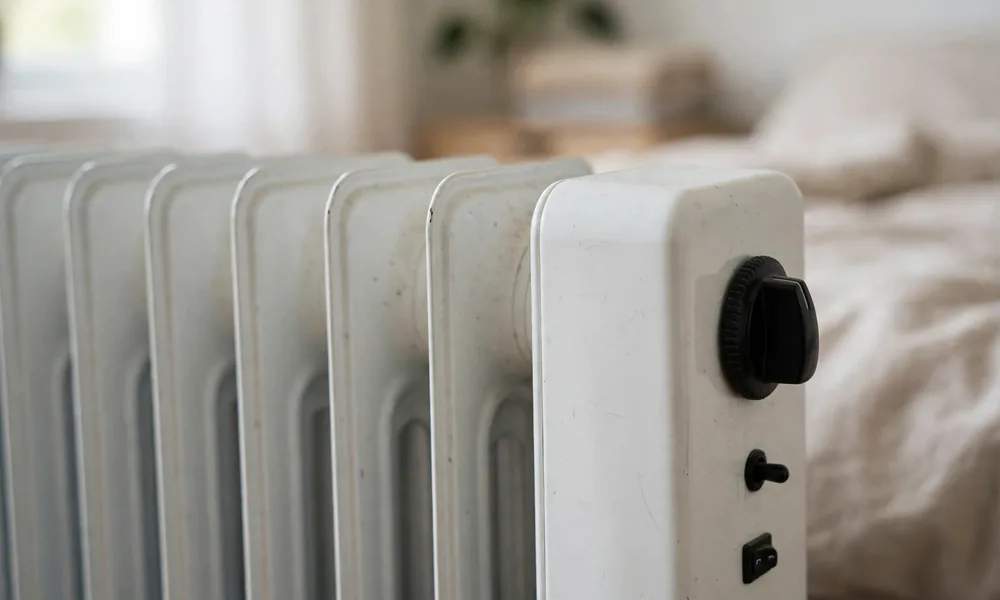
An oil-filled radiator looks like a traditional column radiator, and that is no accident. Inside the metal columns sits a sealed reservoir of diathermic oil, chosen because it holds heat well. An electric element at the base heats the oil, and as the oil circulates slowly through the columns it carries that warmth to every fin. The large surface area of the fins then releases the heat into the room, as gentle convection and radiant heat.
Because the oil stores heat, the heater keeps radiating warmth for a while even after the thermostat switches the element off. That stored heat is the secret of the oil heater’s comfort: the room temperature drifts up and down far less than it does with a fan heater, . The trade-off is speed. A typical oil heater needs twenty to forty minutes to bring a cold room up to a comfortable temperature, so switch it on a little early.
How Oil Heaters Warm a Room
Oil heaters warm a room in two ways at once, and understanding both helps explain why they feel so different from a fan heater. The first is convection: air touching the hot fins warms, rises, and is replaced by cooler air from floor level, setting up a slow, silent circulation that gradually evens out the temperature across the whole room. The second is radiant heat: the warm fins radiate warmth directly onto nearby surfaces and people, so you feel warm near the heater before the air has warmed.
That combination is why an oil heater suits a room where people sit still for hours. There is no draught, no fan noise, and no blast of hot air on one side of your body while the other side stays cold. The heat builds gradually and spreads evenly, which is also why oil heaters are a popular choice for bedrooms. Its silence suits light sleepers.
Oil Heaters Compared With Other Room Heaters
Choosing between heater types is really about choosing between speed, silence and staying power, and each type wins on a different measure. The table below sets out the practical differences, and if you want the wider picture, our guide to the space heaters that warm a room fast and safely compares all the main types side by side, while our round-up of the best heaters for every room, patio and budget covers the whole heater family.
| Heater type | Warm-up speed | Noise | Best for | Weakness |
|---|---|---|---|---|
| Oil-filled radiator | Slow, 20 to 40 minutes | Silent | Long evenings, bedrooms | Heavy, slow to start |
| Ceramic fan heater | Fast, a few minutes | Fan hum | Quick warmth, small rooms | Heat fades when it stops |
| Infrared panel | Fast on people | Silent | Draughty rooms, spot heat | Does not warm the air |
| Micathermic panel | Moderate | Silent | Slim spaces, steady heat | Surface gets very hot |
| Convector heater | Moderate | Silent | Even air warmth | Can feel drying |
What Oil Heaters Cost to Run
Running costs confuse a lot of buyers, so it helps to clear up one myth first. Every electric heater, whatever its technology, turns almost all the electricity it uses into heat, so a 1,500-watt oil heater and a 1,500-watt ceramic heater cost exactly the same per hour to run at full power. The real difference is how long each one needs to run.
To estimate the cost, multiply the heater’s wattage by the hours it runs and by your electricity price. A 1,500-watt heater running for four hours uses six kilowatt-hours. At a typical price of around 25 pence per kilowatt-hour, that is about £1.50 for the evening, though the thermostat will cut that in practice. A smaller 1,000-watt model in a well-insulated bedroom can cost well under a pound a night, and a timer saves more than any efficiency claim on the box.

Choosing the Right Size
Size matters more than brand with an oil heater, and the rule of thumb is simple: allow about 100 watts per square metre of room. A small bedroom of ten square metres needs around 1,000 watts, a living room of fifteen square metres needs around 1,500 watts, and a large open-plan space of twenty square metres or more needs 2,000 watts or more, or two smaller heaters placed at opposite ends of the room. Add headroom for draughty rooms and high ceilings.
Fin count is the other number to watch. More fins mean more surface area giving off heat, so a thirteen-fin 1,500-watt heater will warm a room more evenly than a seven-fin model of the same wattage. A slim heater with fewer fins can still do the job in a small room. If you have the floor space, the wider model is usually the better buy.
Safety: What to Check Before You Buy
Oil heaters are among the safest electric heaters you can buy, but only if the model you choose has the right protections built in. The first is tip-over protection, a switch that cuts the power if the heater falls over. The second is overheat shut-off, which switches the element off if the heater gets hotter than it should. The third is a thermostat that holds the room at a set temperature instead of running flat out. Buy a heater that has all three. All three are essential..
Placement matters as much as the heater itself. Keep at least a metre of clear space in front of the fins, never drape clothes or towels over the heater to dry, and never plug it into an extension lead or a power strip. Oil heaters draw a lot of current, and a cheap extension lead can overheat. Always plug the heater directly into a wall socket. The fins themselves get hot enough to burn.
One more safety point is specific to oil heaters: never try to open one, drill into it, or top up the oil. The oil is sealed for life at the factory, and opening the unit can cause leaks and create a fire risk. If a heater ever leaks oil, smells strongly of hot oil, or has a damaged cord, stop using it and replace it. A well-made oil heater should last for many winters, but a damaged one is not worth repairing.
Where Oil Heaters Work Best, and Where They Do Not
Oil heaters are at their best in rooms where people stay put for hours. A living room in the evening, a bedroom overnight, a home office through a working day, or a nursery where silence matters are all natural fits. Radiant heat also suits draughty older homes. If your central heating struggles to reach one cold room, an oil heater is a practical and affordable fix.
They are a poor fit for short, sharp jobs. A bathroom that needs warming for twenty minutes before a shower, a garage workshop visited for half an hour, or a hallway you pass through briefly will all be better served by a fast fan heater. Oil heaters also struggle in very large open-plan spaces on their own, where two smaller heaters or a different heating solution will do a better job.
For cold nights in bed, it is also worth knowing that a heater is not the only way to stay warm. Our guide to the best heated blankets covers a cheaper way to keep warm overnight, and many people find that a blanket plus a low oil heater on a thermostat is the most comfortable combination of all.

Checklist: Before You Switch an Oil Heater On
- Measure the room and match the wattage to it, allowing about 100 watts per square metre.
- Confirm tip-over protection, overheat shut-off and a thermostat are all built in.
- Place the heater on a flat, stable floor with a metre of clear space around the fins.
- Plug it directly into a wall socket, never into an extension lead or power strip.
- Keep curtains, bedding, clothes and furniture well away from the hot fins.
- Set a timer so the heater warms the room before you need it, rather than running all day.
Frequently Asked Questions
Do oil heaters need their oil refilled?
No. The oil is sealed inside the heater for life and never gets used up, . Never open an oil heater or try to top it up. If a heater leaks oil, stop using it and replace it.
Are oil heaters expensive to run?
They cost the same per hour as any other electric heater of the same wattage, because all electric heaters turn nearly all their power into heat. Over a whole evening it often costs less, as stored heat lets the element rest.
Can you leave an oil heater on overnight?
Yes, provided it has tip-over protection, overheat shut-off and a thermostat, and it is placed with clear space around it and plugged directly into a wall socket.
How long does an oil heater take to warm a room?
Expect twenty to forty minutes for a typical room, depending on the size of the heater, the size of the room, and how cold it was to start with. Use a timer to avoid waiting in the cold.
Do oil heaters dry out the air?
Less than fan heaters do. Oil heaters warm the air gently without blowing it around, so they feel less drying, though any heating will reduce relative humidity a little.
Are oil heaters safe around children and pets?
They are safer than many heaters because they have no exposed element and no fan, but the fins do get hot enough to burn. Keep the heater out of play areas, teach children not to touch it.
The Bottom Line
An oil heater is the right choice when you want a room to stay warm, quiet and even for hours at a time. It is slow and heavy, but asks for nothing: no refills, no noise, no fuss. Size it to the room, buy one with proper safety cut-offs, plug it straight into the wall, and switch it on a little early. Do that, and it will be the most comfortable heater in your home.