Outdoor lounge chairs are the chairs you buy when sitting outside is the point, not the pause between other things. Not a dining chair pulled away from the table, not a seat you fold up and carry, but a deep, reclining chair made for long afternoons: reading, napping, sunbathing and doing nothing at all. The best outdoor lounge chairs of 2026 are the ones that hold a full-length rest without sagging, survive rain and sun without rotting or fading, and still feel good after two hours, not just two minutes in the shop. This guide explains why they are worth the space, which types suit which garden, and how to choose one.
Key Takeaways
- A lounge chair is judged on recline and full-length rest: check the back angle, leg support and seat depth before you buy.
- Teak and powder-coated aluminium frames last longest outside; untreated softwood and bare steel fail fastest.
- Buy the cushions with the chair, in quick-drying foam with a solution-dyed cover, and budget for a deck box to keep them dry.
- Measure the footprint when the chair is fully reclined, not folded, because a lounger takes far more room flat than upright.
- Test the recline mechanism twice in the shop: a stiff catch or a wobbling frame is the flaw that ruins an otherwise good chair.
What an Outdoor Lounge Chair Actually Is
An outdoor lounge chair is a single seat made for reclining outside, on a patio, a deck or a lawn, through sun and rain. It is deeper than an ordinary chair, with a back that adjusts from upright to near-flat and, in most designs, a raised leg rest or a full-length frame that supports the whole body. That is what separates it from every other outdoor seat. A dining chair holds you upright for a meal. A lounge chair lets you lie back, stretch out and stay there, which is a different buying decision with different measurements: seat depth, recline range, cushion thickness and the space the chair takes when it is flat.
Our guide to the best outdoor chairs covers fixed patio seating as a whole, and gives the deep lounge chair only a short section among five types. This guide is the deep version of that one type: recline mechanisms, sun loungers, zero-gravity chairs and chaise longues, judged on the long sit. And our guide to the best garden chairs covers chairs that move with the sun: light folding chairs you carry across the lawn. A lounge chair is heavier, deeper and far more comfortable, and it stays where you put it.
The Main Types of Outdoor Lounge Chairs Compared
Most outdoor lounge chairs fall into five types, and each suits a different way of spending time outside.
| Chair type | Recline | Best for | Watch out for |
|---|---|---|---|
| Sun lounger | Flat to upright | Sunbathing, long afternoons | Bulky to carry and store |
| Deep lounge chair | Reclined, not flat | Reading, long evenings | Needs cushions and a cover |
| Zero-gravity chair | Weightless tilt | Napping, bad backs | Fabric sags over time |
| Adirondack chair | Fixed deep recline | Garden corners, reading | Low seat, hard to get out of |
| Chaise longue | Fixed, full-length | Poolside, elegant patios | Takes the most space |
Sun Loungers: The Full-Length Classic
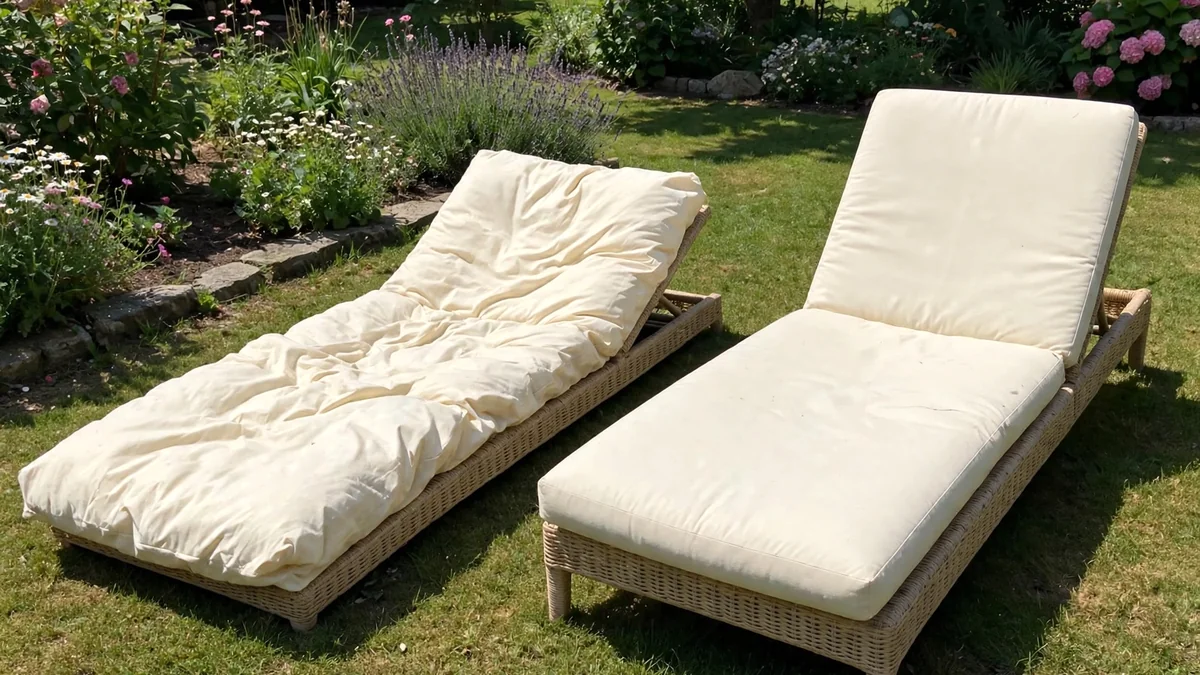
A sun lounger is the flat, full-length chair most people picture when they think of lounging outside: a long frame with an adjustable back that goes from upright to completely flat, made for sunbathing and long afternoons. The best ones have a back that locks firmly at several angles, a frame that does not flex when you lie down, and a surface that dries quickly after rain. The trade-off is size: a lounger takes up the space of a small bed when flat.
Deep Lounge Chairs: The Evening Seat
A deep lounge chair is the outdoor equivalent of an armchair: a wide, deep seat with low arms, made to be used with thick cushions. It is the most comfortable outdoor chair there is for reading and long evenings, and the least practical without a plan for the cushions, which need a dry store for wet nights. Buy the cushions with the chair, in quick-drying foam with a solution-dyed cover.
Zero-Gravity Chairs: The Weightless Option
A zero-gravity chair is a fabric sling chair on a folding frame that tilts back until your knees sit slightly above your heart, taking the weight off your back. It is the cheapest way into a genuinely comfortable recline, it folds flat for storage, and it suits napping and anyone with a bad back. The trade-off is the fabric: the sling stretches and sags over time, and cannot be re-tensioned on most models.

Adirondack Chairs: The Garden Classic
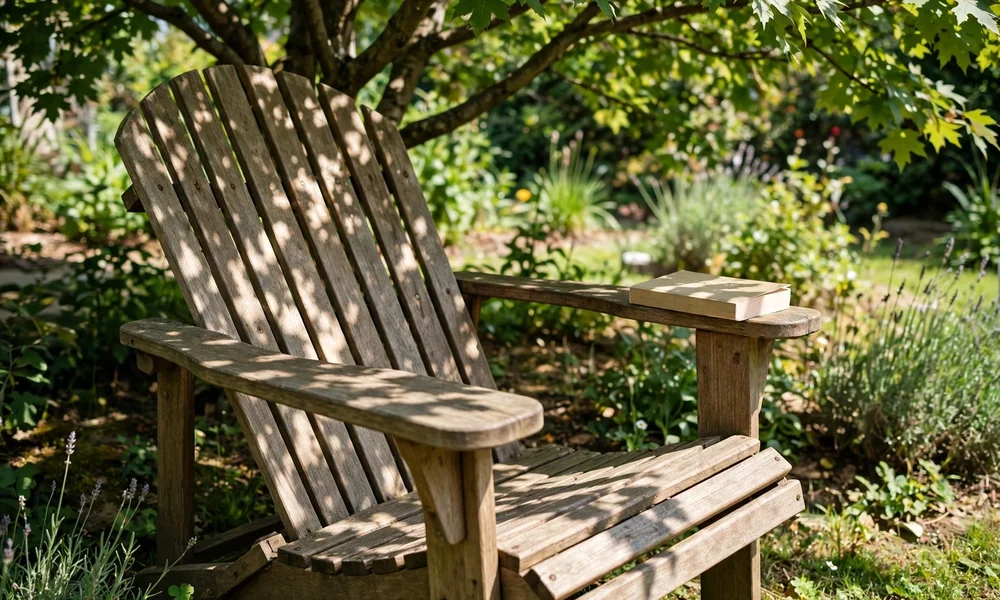
An Adirondack chair is the slatted wooden lounger with wide flat arms and a deep reclined seat, and it is the chair most people picture when they think of a garden. The wide arms hold a book and a cup without a side table, and the fixed recline suits long, lazy afternoons under a tree. The trade-off is the low seat: it is hard to get out of for anyone with stiff knees.
Chaise Longues: The Poolside Statement
A chaise longue is a long, elegant lounger with a raised head end and a fixed, full-length shape, made for poolside patios and gardens where the chair is part of the look. It is the most generous lounger of all, with room to stretch out completely, and it needs no adjustment because the shape is the design. The trade-off is that it takes the most space of any lounge chair. If you want seating for two that shares the space, a sofa is a different decision: our guide to the best outdoor sofas covers shared seating, while this guide covers the chair you lounge in alone.
Getting the Fit Right
Fit is where most outdoor lounge chairs go wrong, and it is the easiest thing to get right before you spend anything. Lie in the chair, do not just sit in it. The seat should support your whole back from the base of the spine to the shoulders, the leg rest should reach past your knees, and the back should lock firmly at the angle you actually use, not just at upright and flat. A seat depth of about 55 to 65 centimetres suits most adults, while a full-length lounger needs about 190 to 200 centimetres of flat space.
Measure the footprint when the chair is fully reclined, not folded, because a lounger takes far more room flat than upright. A sun lounger needs roughly 200 centimetres by 70 centimetres of clear patio, plus room to walk around it, and two loungers side by side need a gap between them for a side table and a drink. A lounge chair should be heavy enough not to blow over, but light enough to move when you chase the shade.
Materials That Survive Outside
The material decides how long an outdoor lounge chair lasts, and it is the single most important choice after fit. Teak is the classic outdoor wood. Its natural oils repel water and insects, and a well-made teak lounger can last twenty years with almost no care beyond an occasional wash. It weathers to a silver-grey if left alone. Eucalyptus and acacia look similar at first but need regular oiling to avoid cracking.
If the budget does not stretch to teak, powder-coated aluminium is the low-maintenance champion: it never rots, it is light enough to move around the patio, and modern finishes hold their colour for years. Resin wicker suits sheltered patios, but it needs a metal frame underneath and can go brittle in full sun. Sling fabrics dry fast and suit zero-gravity chairs, but they fade and stretch, so check the fabric is replaceable before you buy.
Cushions, Covers and Storage
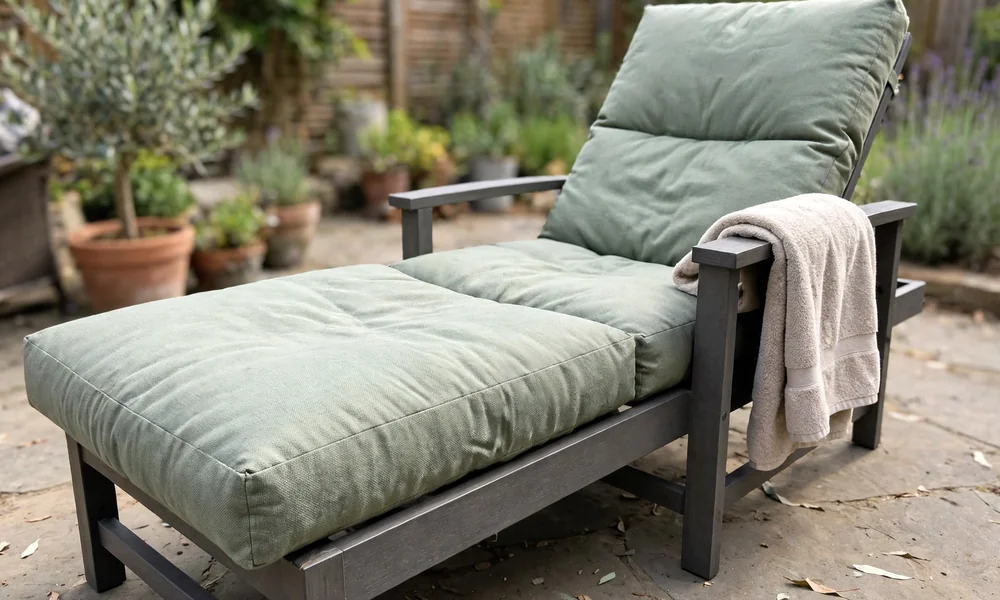
Cushions are half the comfort of a lounge chair and most of the maintenance. Thick cushions make a hard frame comfortable for a long afternoon, but they need a dry store for wet nights, and thin seat pads are often the better buy for a chair that stays outside all season. Look for quick-drying foam and solution-dyed covers, and buy the cushions with the chair so the fit is right.
A cover is the cheapest insurance a lounge chair can have. A breathable cover keeps rain off while letting damp escape; a plastic sheet traps moisture underneath and does more harm than good. Measure the chair before buying the cover, because a cover that is too tight tears at the corners and one that is too loose flaps in the wind. A teak or aluminium lounger can stay out all winter under a cover, while resin wicker, steel and fabric sling chairs last far longer in a shed or garage.
Before You Buy Checklist
- Lie in the chair, not just sit in it, and check the back, leg rest and seat depth support your whole body.
- Measure the footprint when the chair is fully reclined, leaving room to walk around it and fit a side table.
- Test the recline mechanism twice and check it locks firmly at the angles you will actually use.
- Check the material suits your weather: teak or powder-coated aluminium for full sun and rain, resin wicker for sheltered patios.
- Buy the cushions with the chair, in quick-drying foam with a solution-dyed cover.
- Check the frame, welds and fabric for rust, wobble, sagging and peeling before you pay.
Frequently Asked Questions
What is the difference between a lounge chair and a sun lounger?
A sun lounger is one type of lounge chair: a flat, full-length frame that goes from upright to completely flat, made for sunbathing. A lounge chair is the wider family, including deep seats, zero-gravity chairs, Adirondacks and chaise longues, all judged on recline and long comfort.
How much space does an outdoor lounge chair need?
A sun lounger needs roughly 200 centimetres by 70 centimetres of clear patio when flat, plus room to walk around it. A deep lounge chair needs less, about 90 by 90 centimetres. Always measure the chair fully reclined, not folded.
Are zero-gravity chairs good for bad backs?
Yes, for most people, because the tilted position takes weight off the lower back and spreads it across the body. Check the weight limit, test the lock, and remember the sling fabric stretches over time, so replaceable fabric is the better buy.
Can outdoor lounge chairs stay outside all winter?
A teak or aluminium lounger can stay out all winter under a breathable cover, and most owners leave them out. Resin wicker, steel and fabric sling chairs last far longer if they spend the worst months in a shed or garage, and all cushions should come indoors before the first frost.
Do I need cushions on a lounge chair?
A wooden or metal lounger is usable without them, but thick cushions turn a hard frame into a chair you can lie in for two hours. Buy quick-drying foam with a solution-dyed cover, and budget for a deck box, because wet cushions left out overnight are the part most owners regret.
Why are some outdoor lounge chairs so expensive?
The price is mostly the frame and the mechanism: teak and powder-coated aluminium cost more than softwood and bare steel, and a recline catch that locks firmly at five angles costs more than one that slips. A cheap lounger with a wobbling frame is the most expensive chair of all, because you buy it twice.
Bottom Line
The best outdoor lounge chair is the one that fits your body when you lie in it, fits your patio when it is flat, and survives the weather without a yearly rescue mission. Lie in it before you buy, measure the reclined footprint, choose teak or powder-coated aluminium, and budget for cushions and a cover. Get those four things right and the chair will be the place you spend your summer afternoons, for years.