
A garden looks its best when everything has a place, and nothing ruins that feeling faster than a pile of sodden cushions after a night of rain. The question of which outdoor storage box keeps cushions dry in 2026 comes down to a handful of practical details: a lid that seals properly, a body that does not let water in through its seams, and enough space for the cushions you actually own. Get those right and your cushions will be dry, clean and ready whenever the sun comes out. Get them wrong and you will be drying them on the washing line every weekend.
Outdoor storage boxes have improved a great deal in recent years. Better seals, smarter lids and tougher resins mean a good box can now keep its contents dry through a wet autumn and a freezing winter. But the market is still full of boxes that look weatherproof and are not, so this guide compares the main types and explains how to judge a seal and a size.
Key Takeaways
- A tight-fitting lid with a proper seal matters more than the box material for keeping cushions dry.
- Measure your cushions folded and stacked before buying, and add room for air to circulate.
- Resin boxes resist rust and rot, while wood looks better but needs regular treatment.
- Raise the box slightly off the ground so rainwater cannot pool underneath it.
- Ventilation and a dry base are what stop mould, even inside a waterproof box.
How We Judged Outdoor Storage Boxes
We judged every type of outdoor storage box on five things that decide whether cushions stay dry. Weatherproofing came first: a lid that overlaps the body, a seal that closes evenly all round, and seams that do not let wind-driven rain inside. Capacity came next, because a box that cannot hold your cushions folded is no use at all. Durability mattered too, since a box lives outside all year and must cope with sun, frost and being sat on. We also weighed ease of use, favouring lids that open smoothly and stay open while you load, and finally value, meaning the price measured against the years of dry cushions it should deliver.
We also considered what happens inside the box. A perfectly sealed box with no air movement can trap damp and grow mould, so ventilation and a dry base matter just as much as keeping the rain out.
Types of Outdoor Storage Boxes Compared
| Type | Best For | Stays Dry | Watch Out For |
|---|---|---|---|
| Resin deck box | Cushions, toys, tools | Excellent with sealed lid | Cheap lids that warp in sun |
| Wooden storage box | Traditional gardens | Good if treated and sealed | Rot and swelling if untreated |
| Metal storage box | Security, heavy use | Good, but check the seams | Rust and condensation inside |
| Storage bench | Small patios, seating | Good, if the seat seals well | Smaller capacity than a box |
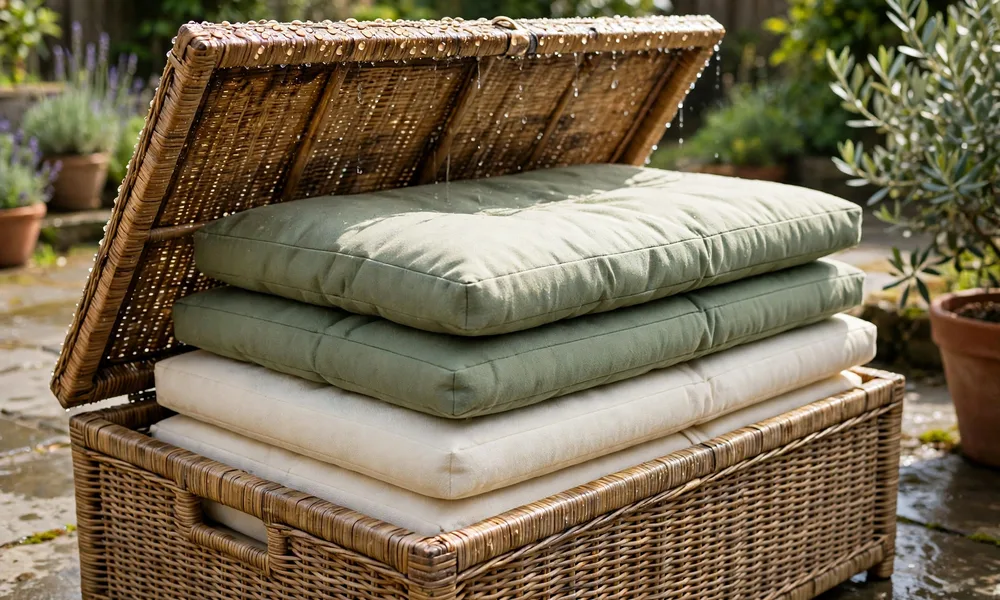
| Rattan-effect box | Matching patio sets | Good with a resin body | Real rattan rots outdoors |
| Waterproof bag or chest | Occasional use, renters | Very good, fully sealed | Less sturdy, can blow away |
Resin Deck Boxes: The Practical Choice
Resin deck boxes are the most popular outdoor storage boxes for good reason. They do not rust, they do not rot, and they need almost no maintenance beyond an occasional wash. A well-made resin box has a lid that overlaps the body like a roof, so rain runs off rather than in, and the better models add a rubber seal that closes the gap completely. Look for thick, rigid walls rather than thin panels that flex, because a flexing lid is a leaking lid.
Size is the main decision. Measure your cushions folded in half and stacked, then measure the inside of the box, not the outside. A box rated at 400 litres sounds large until you try to fit four deep seat cushions and four back cushions inside it. Leave a little room for air to move.
What to check before buying
Press the lid closed and look at the join all the way round. It should meet evenly, with no gaps and no rocking. Open it with one hand and see whether it stays open on its own; a lid that slams shut is a pinched-finger accident waiting to happen. Check whether the box can be locked, and whether it has wheels or handles if you move it around the garden.
Wooden Storage Boxes: Beautiful but Needy
A wooden storage box suits a traditional garden in a way plastic never will, and a well-made one can keep cushions perfectly dry. The catch is maintenance. Wood swells when wet and shrinks when dry, so the lid fit changes with the weather unless the box is properly treated. A wooden box needs waterproofing every year or two, and the lid should have a felt or rubber strip to take up the movement.
If you love the look, buy treated hardwood or pressure-treated softwood, and check the inside has a raised floor so cushions never sit in any water that does get in. A hinged lid with a stay is essential, and a box that doubles as a bench earns its space twice over. Wooden boxes are heavier than resin ones, which is a disadvantage when moving them and an advantage when the wind gets up.
Metal Boxes and Storage Benches
Metal storage boxes are the toughest and most secure option, and a powder-coated steel box will keep cushions dry for years if its seams and lid are well made. The risk is condensation: warm, damp air inside a cold metal box can leave cushions clammy even when no rain has got in. Ventilation gaps, opening it on dry days, or a moisture absorber inside through winter solves this.
Storage benches deserve a look if space is tight. They hold fewer cushions than a full deck box, but they give you somewhere to sit while you take your shoes off, and they fit neatly against a wall or under a window. Our guide to what the best garden bench for a small yard looks like in 2026 covers seating choices that pair well with a storage bench. For the bench itself, check the seat seal as carefully as you would a box lid, because a seat that lets rain in is worse than no storage at all.
Size, Placement and Keeping Mould Away
Getting the size right is the most common mistake in outdoor storage. People measure their cushions flat and buy a box that fits them flat, then discover the cushions will not fold that way. Fold your cushions the way you will store them, measure the stack, and add ten centimetres in every direction for air. A box that is too full cannot breathe, and cushions packed tight will stay damp for weeks.
Placement matters as much as the box itself. Put the box where rain does not pour off the roof straight onto it, and raise it a few centimetres off the ground on bricks or a pallet so water cannot pool underneath. A spot against a sheltered wall will keep the box drier than the middle of the lawn. Our guide to patio furniture that turns your garden into a second living room has more on arranging a patio so storage, seating and shelter work together.
Mould is the quiet enemy of stored cushions. It grows where damp air sits still, so ventilation matters even in a waterproof box. Open the box on dry days, let the cushions breathe, and never put cushions away wet. If they get caught in a shower, dry them in the sun first. A moisture absorber inside through winter helps, and a raised base lets air flow underneath.

What to Store, and What Not to Store
Cushions are the obvious contents, but a good outdoor storage box earns its keep all year. Garden tools, children’s outdoor toys, barbecue accessories, pool towels and throws all live happily in a dry box, and keeping them out of sight makes the garden look better too. Keep heavy tools away from soft cushions, so a spade handle does not tear a cover.
Some things should not live in an outdoor box. Anything that must stay completely dry for months, such as down-filled cushions or expensive fabrics, is better indoors over winter. Electronics and batteries should stay inside too. And never store wet items: a damp cushion put away in October will be a mouldy cushion by March, however good the box is. Our guide to the best throw pillows for outdoor use explains which fabrics dry fastest and resist mould best.
Mistakes That Leave Cushions Wet
The most common mistake is buying a box that looks waterproof but is not. A lid that sits on top of the body, rather than overlapping it, lets wind-driven rain run straight in. A box with drainage holes in the base will let ground water in just as readily. Check both before you buy.
The second mistake is overfilling. A box crammed full cannot ventilate, and the cushions at the bottom stay damp all winter. The third is placement: a box sitting in a dip where water collects will leak from below even if the lid is perfect. And the fourth is putting cushions away wet, which no box can fix. Dry them first, store them loosely, and check on them monthly through winter.
Choosing the Right Box for Your Patio
The right box depends on your patio, your cushions and your climate. A large patio set with deep cushions needs a big resin deck box, ideally with a sealed lid and a lock. A small balcony needs a compact bench or a narrow chest against the wall. A windy garden needs a heavy box, while a wet climate makes the lid seal and the raised base more important than anything else.
Think about how you will use it day to day. If you eat outside most evenings, you want a lid that opens easily with one hand while you carry cushions with the other. If you store the cushions away for winter, you want maximum capacity and the best seal you can afford. Buy the box for the cushions you own now, with a little room to grow.

Your Outdoor Storage Checklist
- Measure your cushions folded and stacked, then add room for air before choosing a size.
- Check the lid overlaps the body and seals evenly all round, with no gaps or rocking.
- Choose resin for low maintenance, wood for looks with yearly treatment, or metal for security.
- Raise the box off the ground and place it somewhere sheltered from roof run-off.
- Never store cushions wet, and air the box out on dry days through winter.
- Check the box monthly in winter for damp, mould or a lid that has shifted.
Frequently Asked Questions
Will any outdoor storage box keep cushions completely dry?
A well-made box with a sealed, overlapping lid will keep cushions dry in normal rain, but no box is perfect in a storm. Sheltered placement and dry cushions going in matter just as much as the box itself.
What size storage box do I need for patio cushions?
Measure your cushions folded and stacked, then add about ten centimetres in every direction. For a typical four-seat patio set, a box of 400 to 550 litres usually fits the cushions with room for air.
Do outdoor storage boxes need ventilation?
Yes. A completely airtight box can trap damp and grow mould. The best boxes keep rain out while allowing a little air movement, and opening the box on dry days helps.
Is a wooden storage box waterproof?
Not on its own. A wooden box needs regular waterproof treatment and a good lid seal, and untreated wood will swell, rot and leak. Treated and maintained, it works well and looks beautiful.
Can I leave cushions in a storage box all winter?
Yes, if the box is weatherproof, the cushions are dry when they go in, and you check on them monthly. In very wet climates, bringing valuable cushions indoors for winter is still the safest option.
Should the box sit directly on the ground?
No. Raise it a few centimetres on bricks, a pallet or feet so rainwater cannot pool underneath and seep in from below. Good air flow under the box also helps prevent damp and mould.
The Bottom Line
The outdoor storage box that keeps cushions dry in 2026 is the one with a lid that seals properly, a size that fits your cushions with room to breathe, and a spot in the garden that stays out of the worst of the weather. Buy that box, put your cushions away dry, and check on them through winter, and they will be clean and ready the first warm day of spring.


