
A Guide to the Best Panna Cotta for Every Occasion in 2026
A guide to the best panna cotta starts with one fact: this is the simplest great dessert there is, and also one of the easiest to get wrong. Panna cotta is cream, sugar, vanilla, and gelatine, set cold until it trembles on the spoon. At its best it is silky, barely sweet, and delicate enough to wobble when the plate moves. At its worst it is rubbery, bland, or so sweet that the cream disappears under the sugar. This guide ranks the best panna cotta styles for every occasion, and shows how to tell a great one from a disappointing one.
Key takeaways
- A great panna cotta wobbles: it should tremble on the spoon, never sit firm like jelly or collapse like cream.
- Real vanilla is the flavour: vanilla bean or natural extract beats synthetic flavouring every time.
- Less gelatine is more: too much sets the dessert rubbery, too little and it will not hold its shape.
- Chill it properly: at least four hours in the fridge, overnight if you can, and serve it cold.
- The topping should lift the cream, not bury it: fresh berries, a light coulis, or a little caramel are enough.
What panna cotta actually is
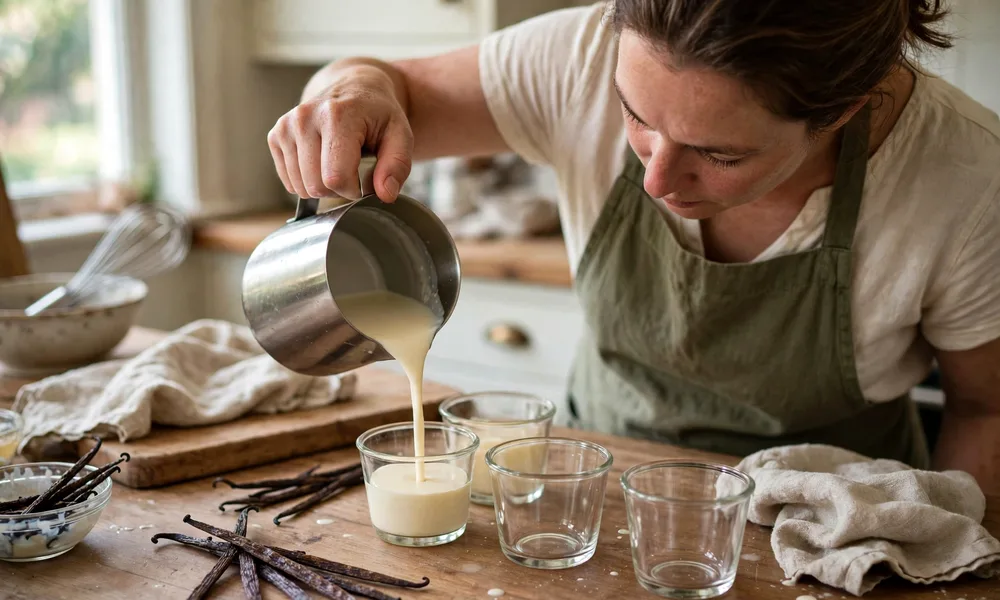
Panna cotta means cooked cream in Italian, and the name is the recipe. Cream is warmed with sugar and vanilla, gelatine is stirred in until it dissolves, and the mixture is poured into moulds and chilled until set. That is all there is to it, which is why the quality of each ingredient matters so much. The best panna cotta uses full cream, real vanilla bean or good extract, and just enough gelatine to hold the shape while keeping the texture soft. The result should feel like silk on the tongue, with the vanilla coming through gently and the sweetness sitting quietly in the background.
The texture is the test that matters most. A good panna cotta trembles when the plate is nudged, and it gives way under the spoon with almost no resistance. If it bounces back like a rubber sweet, it has too much gelatine. If it slumps into a puddle, it has too little, or it was not chilled long enough. If it tastes of nothing at all, the vanilla was skimped on or the cream was too thin. Panna cotta belongs to the same family of simple Italian desserts as its richer cousins, and our guide to the best tiramisu makes the same point about letting a few good ingredients do the work instead of piling on extras.
Comparison table: the best panna cottas of 2026
| Rank | Panna cotta style | Best for | Watch out for |
|---|---|---|---|
| 1 | Classic vanilla bean | Any occasion, the real thing | Needs real vanilla, costs more |
| 2 | Berry-topped | Summer dinners, fresh flavour | Over-sweet coulis can bury the cream |
| 3 | Chocolate | Chocolate lovers, winter evenings | Too rich if the chocolate is heavy |
| 4 | Mango and passion fruit | Bright, tropical puddings | Sharp fruit can overpower the cream |
| 5 | Caramel and salt | Dinner parties, grown-up flavour | Caramel turns bitter if overcooked |
| 6 | Coconut | Dairy-free tables, light finish | Can taste thin without enough cream |
| 7 | Individual glass pots | Parties, easy serving | Less elegant than a turned-out mould |
The best panna cottas of 2026
1. Classic vanilla bean panna cotta: the best overall
The classic vanilla bean panna cotta is the one every other version is judged against, and it is still the best. Cream, sugar, vanilla bean, and gelatine, nothing else, set in a mould and turned out onto a cold plate. The vanilla should be visible as tiny dark seeds through the cream, and the first spoonful should taste of vanilla before anything else, soft and warm, with the cream following behind. If a restaurant or a recipe cannot get this version right, none of its flavoured versions will be any better.
2. Berry-topped panna cotta: the freshest choice
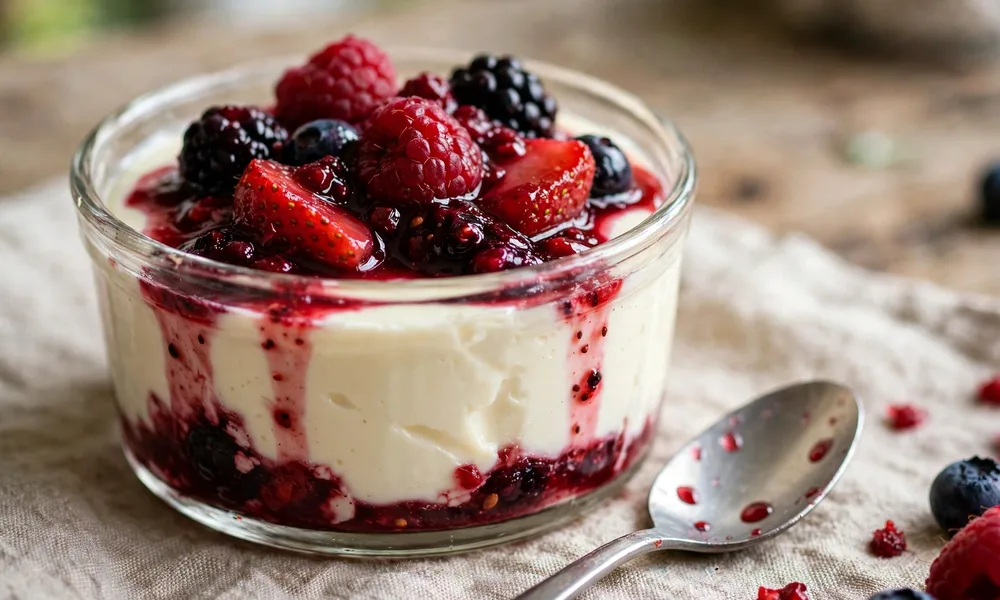
Berry-topped panna cotta is the best version for summer, when fresh berries are at their best and the dessert needs to feel light. Strawberries, raspberries, and blueberries bring colour, tartness, and a little juice that cuts through the richness of the cream. A light coulis, made by warming the berries with just a spoonful of sugar, is better than a thick sauce, because the cream should still be the main flavour. The berries also forgive a slightly plain panna cotta, which is why this is the safest version to serve to guests: even an average base tastes wonderful under good fruit.
3. Chocolate panna cotta: the richest version
Chocolate panna cotta is for people who find the classic version too delicate. Dark chocolate is melted into the warm cream before setting, so the result is smooth, deep, and rich, more like a chocolate cream than a white one. The best chocolate versions use dark chocolate with at least sixty per cent cocoa, because milk chocolate makes the dessert too sweet and too soft. Serve it in small portions, with a little whipped cream or a few raspberries, because a full-sized chocolate panna cotta is a lot of richness in one bowl. It is the best choice for a winter evening, when a light dessert feels wrong.

4. Mango and passion fruit panna cotta: the brightest version
Mango and passion fruit panna cotta is the brightest version on this list, and the best one for anyone who likes their desserts sharp as well as sweet. The tropical fruit is spooned over the set cream, or layered through it, and its acidity lifts the richness in a way that berries do not quite manage. The danger is balance: too much passion fruit and the dessert tastes sour, too much mango and it tastes like a smoothie. The fruit should sit on top, bright and fresh, with the cream underneath doing the quiet work. This is the version to serve after a spicy meal, when something cool and sharp is exactly what the table needs.
5. Caramel and salt panna cotta: the dinner-party pick
Caramel and salt panna cotta is the most grown-up version, and the best one for a dinner party. A thin layer of caramel is poured over the set cream, or the cream itself is flavoured with a little caramel, and a pinch of flaky salt is scattered on top. The salt is the trick: it sharpens the caramel, deepens the cream, and stops the whole thing from tasting too sweet. The caramel must be watched carefully, because a minute too long on the heat turns it bitter, and bitter caramel ruins a dessert that is otherwise perfect. Get it right, though, and this is the version guests remember and ask about.
6. Coconut panna cotta: the lightest version
Coconut panna cotta replaces some or all of the cream with coconut milk, and it is the best version for a dairy-free table or for a meal that needs a light finish. The coconut flavour is gentle and fragrant, and it pairs well with mango, lime, or a little toasted coconut on top. The texture needs care: coconut milk is thinner than cream, so the gelatine must be measured carefully, or the dessert will not set firmly enough to turn out. Serve it in a glass rather than a mould if you are unsure, because a coconut panna cotta in a glass looks just as good and never risks collapsing on the plate. Like the crisp pastry in our guide to the best cannoli, it rewards a light hand and good ingredients over elaborate decoration.
7. Individual glass pots: the easiest way to serve it
Individual glass pots are the most practical way to serve panna cotta, and for a party they are the best choice. The cream is poured straight into small glasses, chilled, and topped in the glass, so there is no turning out, no risk of a collapse, and no last-minute panic. Guests can see the layers, the dessert looks generous, and the washing up is simple. Make them the day before, keep them cold, and top them just before serving, and they will look as though they took far more effort than they did.
What to avoid when making or buying panna cotta
The most common mistake is too much gelatine. People add extra because they are afraid the dessert will not set, and the result is a rubbery disc that bounces on the spoon and tastes of nothing. Use the amount the recipe states, bloom the gelatine properly in cold water first, and give the dessert time in the fridge instead of adding more setting agent. The second mistake is boiling the cream: cream should be warmed gently until the sugar dissolves, never boiled, because boiling changes the flavour and can make the texture grainy. The third mistake is the topping. A thick, over-sweet sauce buries the cream, which is the whole point of the dessert. Keep toppings light, fresh, and simple, and let the panna cotta speak for itself. The same restraint matters in layered desserts, and our guide to the best mille-feuille makes the same point: when the base is good, the extras should stay in the background.
Checklist: making or choosing the best panna cotta
- Use full cream and real vanilla bean or good natural extract, never synthetic flavouring.
- Measure the gelatine exactly, bloom it in cold water, and never add extra for safety.
- Warm the cream gently until the sugar dissolves; do not let it boil.
- Chill for at least four hours, overnight if you can, and serve the dessert cold.
- Turn out onto a cold plate with a quick dip of the mould in warm water, or serve in glasses.
- Top lightly: fresh berries, a thin coulis, or a little caramel, and nothing heavier.
Frequently asked questions
How long does panna cotta take to set?
At least four hours in the fridge, and overnight is better. The dessert needs time for the gelatine to set evenly, and rushing it is the most common reason a panna cotta collapses when it is turned out.
Why is my panna cotta rubbery?
Too much gelatine, almost always. Use the amount the recipe states, bloom it properly in cold water, and resist the urge to add extra. A good panna cotta should tremble on the spoon, not bounce back.
Can I make panna cotta without gelatine?
You can use agar agar instead, but the texture changes: agar sets firmer and less silky than gelatine, so use a little less than you think you need and expect a slightly different wobble. Vegetarian gelatine alternatives work, but none of them matches gelatine exactly.
How long does panna cotta keep?
Two to three days in the fridge, covered, without the topping. Add fruit or sauce just before serving, because toppings soften and bleed into the cream if they sit on it overnight.
Can I freeze panna cotta?
You can, but the texture suffers: freezing makes the cream slightly grainy when it thaws. It is better to make it a day ahead and keep it in the fridge than to freeze it and hope for the best.
What should I serve with panna cotta?
Fresh berries, a light fruit coulis, a little caramel, or nothing at all. The dessert is complete on its own, so the topping should lift the cream rather than compete with it, and a small biscuit on the side is plenty.
Bottom line
The best panna cotta in 2026 is the classic vanilla bean version, made with full cream, real vanilla, and just enough gelatine to hold a trembling shape. Serve it cold, top it lightly, and let the cream do the talking. The simplest dessert is the hardest to hide behind, which is exactly what makes a great one worth finding.


