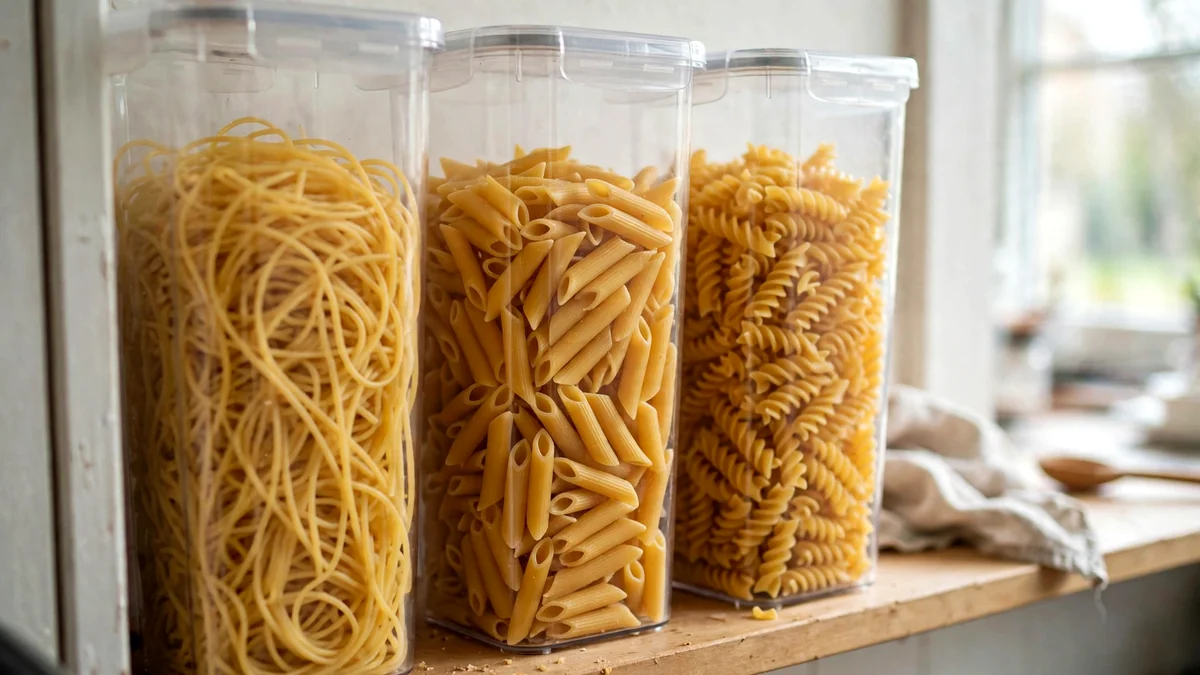
Pasta containers are the tall, narrow keepers that stop spaghetti snapping in a bag and keep penne, fusilli and rigatoni fresh for months, and the best pasta containers of 2026 do that job without taking over the pantry. A bag of spaghetti is awkward: too long for a normal jar, too fragile to toss in a drawer, and open to kitchen humidity the moment the packet tears. The right container holds long pasta upright so nothing breaks, seals tightly enough that damp and pantry moths stay out, and pours cleanly.
Most kitchens need two kinds of pasta container. Long pasta — spaghetti, linguine, bucatini — needs a tall, narrow container, usually 28 to 32 centimetres high, with a lid that seals and a mouth wide enough to pour from. Short pasta — penne, fusilli, rigatoni — suits a wide, squat jar that you scoop from with a cup. Buy the tall one first if you cook spaghetti weekly. A matching set in one footprint keeps the shelf tidy, and clear walls show what is running low.
Key takeaways
- Tall, narrow containers suit long pasta; wide jars suit short pasta.
- An airtight silicone-seal lid matters more than the material, because humidity makes pasta soft and stale.
- Measure the shelf height before buying: most tall containers need 30 centimetres or more.
- Clear plastic shows the level and survives drops; glass looks better on an open shelf but breaks if it falls.
- Match the size to one bag of pasta, usually 1 to 2 litres, so it empties in a few weeks.
What makes a great pasta container
The seal comes first. Dry pasta slowly absorbs moisture from the air, and a container with a loose lid lets it go soft and stale within weeks. The best pasta containers use a silicone gasket that presses against the rim, a clamp lid that locks down, or a screw lid with a rubber ring. Test it before you trust it: close the lid, squeeze gently, and listen for air hissing out around the edge. If air escapes, humidity and pantry moths get in too.
Shape comes second, and it follows the pasta. Spaghetti is about 25 centimetres long, so a shorter container forces you to snap strands in half. A tall container of 30 centimetres or more holds a full bag upright. Short pasta needs the opposite: a wide mouth you can fit a measuring cup into, because pouring penne from a narrow neck is slow and messy. The best cereal containers show the same lesson in another food: the shape must match how you take the food out, not just how you store it.
Material comes third. Clear plastic is the practical choice for most households: light, hard to break, and transparent so you can see the level without opening the lid. Look for thick-walled BPA-free plastic, because thin walls flex and loosen the seal. Glass is heavier and breakable, but it never stains or holds smells, and looks better on an open shelf. Stainless steel blocks light and survives drops, though you cannot see inside, so labelling matters more.
Tall containers for long pasta
A tall pasta container is a narrow box or cylinder, usually 1.5 to 2.5 litres, built around one job: keeping spaghetti, linguine and fettuccine unbroken and dry. The best ones have straight sides, so strands slide in and out without catching, and a lid that opens wide enough to pour from. Some have a pour spout at one corner, which suits spaghetti well; others have a flip-top lid that opens fully, which is better for linguine or bucatini, because the wider opening lets you pull out a bundle without bending it.
Height is the measurement most buyers get wrong. Measure the shelf before you buy, and leave two centimetres above the container so you can lift it out. Standard shelves are 30 to 35 centimetres apart, which fits most tall containers, but a fixed divider or low cupboard can be too short. A container that is too short is worse: spaghetti pokes out of the top, the lid will not close, and the pasta goes stale.

Wide containers for short pasta
Short pasta needs a different container entirely. Penne, fusilli, rigatoni and farfalle are best stored in a wide jar with a mouth you can fit a cup into, because scooping is faster and more accurate than pouring. A wide jar of 1.5 to 2 litres holds one bag of short pasta. The lid should lift off completely rather than flip open, because a flip-top lid gets in the way when you are scooping with one hand.
Glass vs plastic vs stainless steel
Glass pasta containers are the best-looking option and the easiest to keep clean. Borosilicate glass never stains or holds smells, so a jar that held tomato-flavoured pasta last month will not smell of it this month. The trade-offs are weight and breakability: a full glass container is heavy on a high shelf, and one drop onto tile can end it.
Plastic wins on weight, price and toughness. A good BPA-free plastic container can be dropped, squeezed into a crowded cupboard, and washed in the dishwasher without complaint, and a full set costs a fraction of a glass one. The downsides are real: plastic scratches and clouds over time, and thin walls flex and loosen the seal. Replace plastic containers when they warp, cloud, or stop sealing. For most households, plastic is the practical choice, and the best flour containers make the same case for another dry food: the seal matters more than the material.
Seals that actually keep pasta fresh
Not every lid that claims to be airtight is one. A press-on lid that just rests on top lets air drift in all day, and pasta stored that way goes soft within weeks, especially in a humid kitchen. A silicone gasket is the feature to look for: a soft ring that compresses against the rim when the lid closes, creating a seal you can feel. Clamp lids press the gasket down with levers and give the tightest everyday seal of all, which is why they suit pasta you store for months. Screw lids with a rubber ring are nearly as good and simpler to use one-handed.
Pantry moths are the other reason the seal matters. A female pantry moth lays eggs in dry food, and once they hatch the larvae web through the pasta and ruin the whole container. An airtight seal keeps moths out. If you have had moths before, decant every bag the day you buy it, and freeze new bags for 48 hours before decanting — freezing kills any eggs already in the pasta. A worn or cracked gasket is no longer airtight, so replace the seal rather than the whole container.
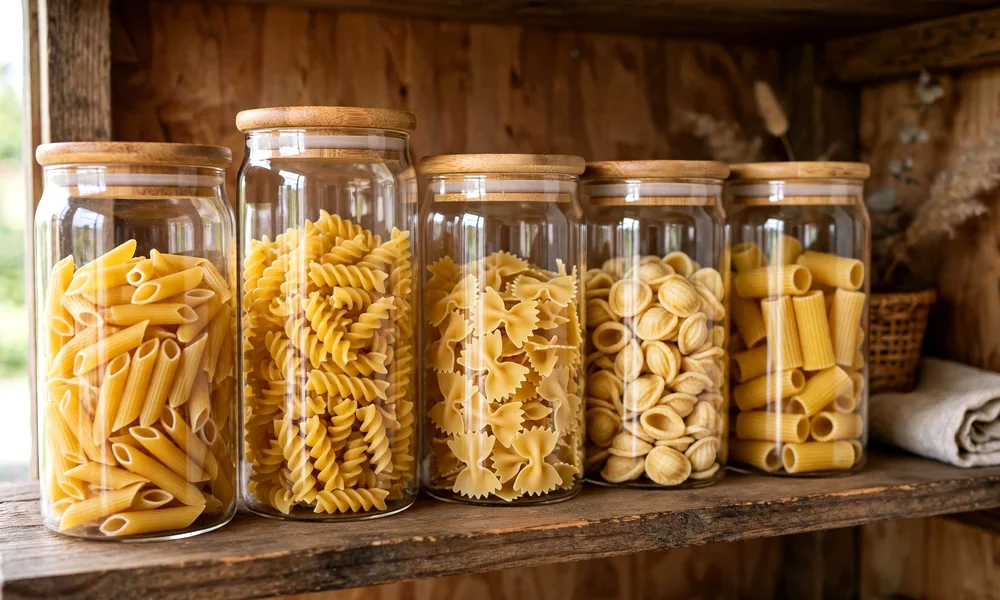
The best pasta containers of 2026
1. Best overall tall container. A tall, clear plastic container with a silicone-seal flip-top lid is the safest single purchase: it holds a full bag of spaghetti upright, pours cleanly, and the seal keeps humidity and moths out. Choose one around 2 litres with straight sides and a lid that opens fully.
2. Best budget set. A set of three matching plastic containers — one tall for spaghetti, two wide for short pasta — gives a household a full range for the price of one glass jar. Look for thick walls and silicone seals.
3. Best glass container. A borosilicate glass jar with a bamboo lid and a silicone ring suits open shelves: it looks better than plastic, never stains, and the wide mouth makes filling easy.
5. Best wide jar for short pasta. A wide-mouth jar of 1.5 to 2 litres with a lift-off lid suits penne, fusilli and rigatoni, because you scoop with a cup instead of pouring. The wide mouth also makes the jar easy to wash.
Pasta containers compared
| Type | Best for | Strength | Watch out for |
|---|---|---|---|
| Tall narrow container | Spaghetti, linguine | Keeps long pasta unbroken | Needs 30 cm shelf height |
| Wide-mouth jar | Penne, fusilli, rigatoni | Easy scooping with a cup | Pouring is slow and messy |
| Glass jar | Open shelves | Never stains or smells | Heavy and breakable |
| Plastic container | Everyday use | Light, tough, clear | Thin walls loosen the seal |
| Stainless steel | Long storage | Toughest, blocks light | Cannot see the level |
| Pour-spout container | Spaghetti portions | Controlled pouring | Jams with wide pasta |
How to size and organise pasta containers
Start by counting the pasta shapes you actually cook. Most households use two or three: spaghetti, one short shape like penne or fusilli, and perhaps a small shape for soups. Buy one container per shape, sized to one bag — usually 1 to 2 litres — so each container empties in two to three weeks. A container that takes two months to empty gives humidity two months to work on the pasta.
Organise by shelf height. Tall containers belong on the top shelf, wide jars at eye level where you can scoop easily, and heavy glass jars low, where they are easy to lift and cannot fall far. Label every container with the pasta inside and the date you filled it, and keep one food per container. The best storage jars make the same point for the wider pantry: one footprint in two or three heights, so jars line up in a straight row.
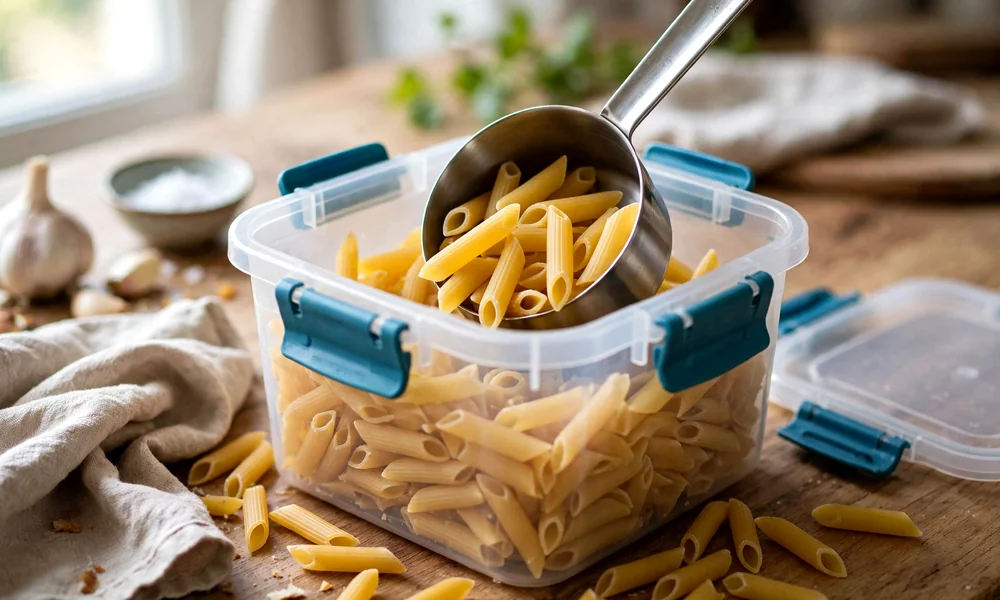
Pasta container checklist
- Measure the shelf height first — most tall containers need 30 centimetres of clear space.
- Check the seal: close the lid, squeeze gently, and listen for air hissing out around the edge.
- Match the shape to the pasta: tall and narrow for spaghetti, wide and scoopable for penne.
- Size each container to one bag, so it empties in two to three weeks and stays fresh.
- Choose clear walls where you need to see the level, and label steel containers you cannot see into.
- Decant new bags the day you buy them, and freeze for 48 hours first if you have had pantry moths.
Frequently asked questions
What size pasta container do I need?
Most households suit a tall container of 1.5 to 2 litres for spaghetti and a wide jar of 1.5 to 2 litres for short pasta. Measure the shelf height before you buy — tall containers need 30 centimetres or more.
Do pasta containers keep pasta fresh longer?
Yes, when the seal is genuinely airtight. A sealed container keeps pasta fresh for months by keeping damp and air out, while an open bag lets it go soft in weeks. A worn gasket should be replaced rather than ignored.
Are glass or plastic pasta containers better?
Glass never stains or holds smells and looks better on an open shelf, but it is heavy and breakable. Plastic is lighter, tougher and cheaper, and shows the level at a glance. For most kitchens, plastic with a good silicone seal is the practical choice.
How do I stop pantry moths getting into pasta?
Decant every bag into a sealed container the day you buy it, because an airtight lid keeps moths out. Freeze new bags for 48 hours before decanting to kill any eggs already in the pasta.
Can I store different pastas in one container?
You can, but you should not. Mixed shapes cook at different times, the smaller shapes sink to the bottom, and you cannot tell how much of each is left. One food per container keeps cooking times right.
How long does dry pasta last in a container?
Dry pasta lasts one to two years in a sealed container in a cool, dry cupboard, though it is best within a few months of opening. Wholewheat pasta goes stale faster, because its oils turn rancid, so use it within six months.
Bottom line
The best pasta containers are tall enough for spaghetti, wide enough to scoop short pasta, and sealed tightly enough to keep humidity and moths out. Buy one container per shape, sized to a single bag, measure the shelf before you order, and choose clear plastic for everyday use or glass for an open shelf.