Cereal Containers vs Pantry Containers: Which Keeps Breakfast Fresh in 2026?
Cereal containers are the tall, pour-friendly keepers built to hold breakfast cereal, and the best ones in 2026 do far more than decant a box into a prettier jar. A cereal container is a dedicated home for flakes, hoops, puffs and granola, with a lid that seals out air and moisture and a spout that pours a bowl without spilling half of it across the counter. Cereal goes stale fast, because thin flakes soak up kitchen humidity within days of the box being opened. The right container keeps the first bowl and the last bowl equally crisp.
The comparison matters because the two products look alike on a shelf. A pantry container is a general-purpose jar for any dry food, while a cereal container is shaped around one job: storing breakfast cereal and pouring it cleanly every morning. This guide compares the two, so you can see where a dedicated cereal keeper earns its place and where an ordinary pantry container does the same job for less.
Key Takeaways
- A cereal container is a tall, narrow keeper made for breakfast cereal; a pantry container is a general jar for any dry food.
- An airtight silicone-seal lid matters more than the material, because flakes go soft from kitchen humidity, not from age.
- Pour spouts suit flakes and hoops, while a wide mouth is better for scooping granola, muesli and chunky mixes.
- Match the size to one box of cereal, usually 1.5 to 2.5 litres, so it empties in two to three weeks.
- Clear plastic shows the level at a glance and survives drops; glass looks better on an open shelf but breaks if it falls.
What a Cereal Container Is — and What a Pantry Container Is
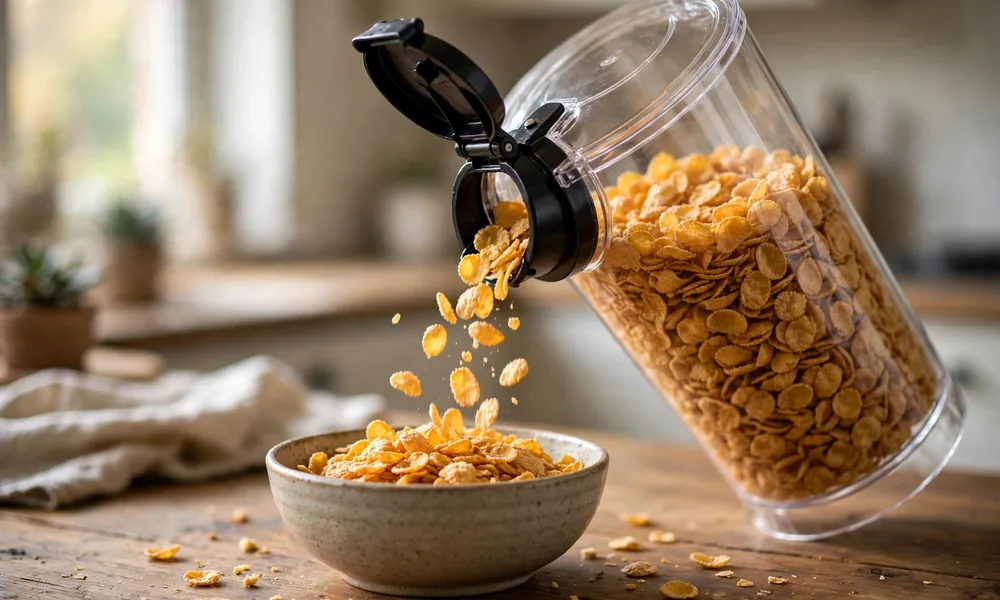
A cereal container is a tall, narrow, lidded container made to store breakfast cereal between pours. It is usually clear plastic or glass, it holds roughly one standard box of cereal, and its lid seals tightly enough that humidity stays out and the flakes stay crisp. The better ones add a pour spout or a flip-top opening that lets you tip a measured bowl with one hand. Most hold 1.5 to 2.5 litres, and the right size is the one you empty before the cereal softens.
A pantry container is the general version of the same idea: a jar, bin or canister for any dry food, chosen for its seal and for how a whole shelf looks. Our guide to pantry bins covers the wider family, while this guide stays narrow: the tall keeper that holds your morning cereal and pours it cleanly. If you want one container that does a bit of everything, a pantry container is the flexible choice. If you want the best bowl of cereal on day fourteen, the dedicated container wins.
The Main Types of Cereal Container
Most cereal containers fall into three designs, each suiting a different kind of cereal and household.
Pour-spout dispensers
A pour-spout dispenser has a narrow spout at one corner of the lid, so you tip the container and the cereal flows out in a controlled stream. Dispensers suit light, free-flowing cereals: cornflakes, hoops, puffs and rice cereals that pour like sand. The weakness is chunky food: granola clusters and muesli jam in a narrow spout, and you end up shaking the container and spilling more than you pour.
Wide-mouth keepers
A wide-mouth keeper has a lid that lifts off completely, so you scoop the cereal out with a cup or pour it straight from the open top. Keepers suit everything a dispenser cannot handle: granola, muesli and chunky mixes with dried fruit. The wide mouth also makes the container easy to fill and easy to wash, because you can fit a hand inside. The trade-off is pour control: without a spout, you judge the portion by eye.
Bulk and family-size containers
Bulk containers hold 3 litres or more and suit households that buy cereal in large bags. They are usually wide-mouth keepers with a sturdy handle, because a full 3-litre container is heavy to tip. The risk is staleness: a container that takes six weeks to empty gives humidity six weeks to work on the flakes. For most households, two medium containers beat one giant one.
Cereal Containers vs Pantry Containers at a Glance
| Feature | Cereal container | Pantry container |
|---|---|---|
| Best for | Breakfast cereal, poured daily | Any dry food, whole-shelf storage |
| Shape | Tall, narrow, pour-friendly | Any shape, matched to the food |
| Lid | Pour spout or flip-top | Sealed lid, often clamp or screw |
| Typical size | 1.5 to 2.5 litres | 0.5 to 4 litres |
| Pour control | Excellent for flakes | Fair, depends on the mouth |
| Versatility | One job, done well | One container, many foods |
Seal and Freshness: What Keeps Flakes Crisp
Freshness comes down to air and moisture, and a good container controls both. Moisture is the real enemy of cereal, because flakes are thin and dry and absorb humidity from the kitchen air within days. A lid that seals tightly slows that down dramatically, which is why the seal is the first thing to judge. Press the lid on, squeeze the container gently and listen: if air hisses out around the edge, the seal is not doing its job.
The best seals use a silicone ring that presses against the rim, the same design that makes the best food containers reliable for leftovers. A lid that just rests on top lets air drift in all day, and a flip-top spout needs its own small seal, because a spout that stays slightly open is a hole in the container.
Pour Control: Spouts, Flaps and Wide Mouths
Pour control is where cereal containers earn their keep, and it is the feature most buyers judge badly because they test it empty. A spout that pours beautifully when the container is half full can flood when it is full, because the weight of the cereal pushes flakes through faster. Test with the container full if you can. The pour should start when you tip and stop when you level the container.
Spout size follows the cereal. Small hoops and puffs pour well through a narrow spout, while large flakes need a wider opening or they bridge across the spout and stop flowing. Granola and muesli need a wide mouth, full stop: no spout handles clusters gracefully. If your household eats more than one kind of cereal, a wide-mouth keeper with a measuring cup is often the better buy.

Size and Shelf Fit
Size is the easiest thing to get wrong. A container that is too big holds a lot of stale air above the cereal, and that air speeds up softening. A container that is too small needs constant refilling, which is annoying enough that people stop using it and go back to the box. The right size holds one standard box of cereal with a little room at the top, so the container empties in two to three weeks.
Measure your shelf before you buy, not after. A tall cereal container needs roughly 30 centimetres of clear height, and many kitchen shelves offer less once the shelf above is counted. Rectangular containers use shelf space better than round ones, because they sit flush against each other and against the wall. If the container lives behind a cupboard door, buy for the seal and the pour and ignore the looks.
Materials: Plastic, Glass and Steel
There is no single best material, only the best material for how your kitchen works. Clear BPA-free plastic is light, cheap and nearly unbreakable, and you can see the level at a glance without opening it. The downsides are real: plastic scratches over time, and the scratches cloud the view and trap crumbs. Replace plastic containers when they cloud, warp or stop sealing.
Glass looks better and never stains, and it washes clean forever, but one drop onto tile ends it, and a full 2-litre glass container is a two-handed lift. Stainless steel never breaks, but you cannot see how much is left. For most kitchens, plastic is the practical choice, and storage jars in glass suit a container that is there to be seen as much as used.
Cleaning and Everyday Use
A container that is hard to clean becomes a stale container, because old crumbs build up in the corners. Look for a wide mouth you can fit a hand into and a lid that comes apart, so the spout and the seal can be washed separately. Wash it every time you finish a box, and dry it completely before refilling.
Daily use matters as much as cleaning. The lid should open and close with one hand, because the other hand is holding a bowl. The container should stand steady when it is nearly empty and top-light. Label the container if you keep more than one cereal; a small label on the lid beats opening three containers every morning.

What to Avoid When Buying Cereal Containers
The worst cereal containers fail in the same few ways. A lid without a gasket looks fine in the shop and lets air in at home. A spout too narrow for your cereal jams every morning and trains you to shake the container, which crushes the flakes. A container with a narrow mouth you cannot fit a hand into will never get properly clean. A giant container that takes two months to empty guarantees the last third goes soft. Buy for the pour first and the looks second.
Checklist: Six Checks Before You Buy
- Seal test: press the lid on and squeeze — no air should hiss out around the edge.
- Pour test: tip it full, not empty, and check the flow starts and stops cleanly.
- Size check: one box of your usual cereal should fill it with a little room to spare.
- Shelf check: measure the height and depth of your shelf before you buy.
- Cleaning check: fit your hand inside, and check the lid and spout come apart.
- Cereal check: flakes suit a spout, granola and muesli need a wide mouth.
Frequently Asked Questions
Do cereal containers really keep cereal fresher than the box?
Yes, when the lid seals properly. The box is opened every morning and the inner bag rarely closes tightly, so kitchen humidity gets in daily. A container with a silicone-seal lid keeps the air out between pours.
What size cereal container should I buy?
Match it to one box of the cereal you eat most, usually 1.5 to 2.5 litres. The container should empty in two to three weeks.
Are pour-spout dispensers or wide-mouth keepers better?
Dispensers suit light, free-flowing cereals like cornflakes and hoops, because the spout controls the portion. Wide-mouth keepers suit granola, muesli and chunky mixes that jam in a spout.
Is plastic or glass better for cereal containers?
Plastic is lighter, cheaper and unbreakable, which suits daily use and households with children. Glass looks better on an open shelf and never stains, but it is heavier and breaks if dropped.
Can I use a pantry container instead of a cereal container?
Yes, if it seals well and pours cleanly for your cereal. A tall pantry container with a wide mouth works well for granola and muesli.
How often should I wash a cereal container?
Wash it every time you finish a box, and dry it fully before refilling. Crumbs left in the corners go stale and flavour the new box.
Bottom Line
Buy a cereal container when you pour cereal most mornings and want the last bowl as crisp as the first: a tall, narrow keeper with a silicone-seal lid, sized to one box, with a spout for flakes or a wide mouth for granola. If you store many dry foods and pour cereal only sometimes, a good pantry container does the same job for less.