A good food container is the quiet workhorse of the kitchen: it keeps last night’s dinner fresh until tomorrow’s lunch, stops soup leaking into your bag, and turns a crowded fridge into shelves you can see into. The best food containers of 2026 do all of that without staining, smelling, or cracking after a few months of daily use.
This guide covers the whole family: glass and BPA-free plastic boxes for leftovers, airtight containers for the fridge and pantry, stackable sets for small kitchens, and sturdy boxes that survive the freezer, the microwave, and the dishwasher — whatever you cook, pack, or store, there is a container here that fits.
Key takeaways
- Glass keeps food freshest, resists stains and smells, and goes from fridge to microwave or oven without worry.
- Airtight locking lids with silicone seals matter most, because a weak seal ruins even the best container.
- Buy a set that stacks and shares one footprint, so the boxes and the lids both fit in the same cupboard.
- BPA-free plastic is the lightest choice for lunch bags, while stainless steel is the toughest for kids and commutes.
- Label and date everything you freeze, and cool food before the lid goes on.
What makes a great food container
The seal comes first: four-clip locking lids and silicone gaskets keep air out and liquid in, while a press-on lid will pop open in a bag and let soup escape. Fill a candidate with water, close it, turn it upside down, and shake it. If a drop escapes, it is not a lunch container, whatever the box says.
Material comes second. Borosilicate glass handles heat and cold, never stains orange after curry, and lets you see inside without opening it. BPA-free plastic is light, cheap, and hard to break — the sensible pick for lunch bags and children’s meals. Stainless steel never stains or holds smells and survives drops that would shatter glass, though you cannot microwave it. The best kitchens keep a mix: glass at home, plastic or steel on the move.
Size is the third test, and the one most people get wrong. A useful set covers three sizes: small boxes around 350 millilitres for sauces and snacks; medium boxes around 700 millilitres for one lunch or a generous leftover portion; and large boxes of 1.2 litres or more for family meals and batch cooking. If the boxes nest when empty and stack when full, they earn their shelf space twice over.

Glass vs plastic vs stainless steel
Glass is the best all-rounder for home storage. It does not absorb odours, it does not stain, and it reheats evenly in the microwave with the lid off or vented. Borosilicate glass is the safest kind, because it tolerates sudden temperature changes without cracking. The trade-off is weight and breakability: a full glass set is heavy in a lunch bag, and one drop onto tile can end it.
Plastic wins on weight, price, and toughness. A good BPA-free polypropylene container can be dropped, squeezed into a crowded bag, and frozen solid without complaint, and a full set costs a fraction of a glass one. The downsides are real: plastic stains, holds smells, and scratches over time. Replace plastic boxes when they warp, cloud, or stop sealing, and never microwave plastic unless it is marked microwave-safe. For families who want one set that does everything, plastic is the practical choice, and the best meal prep containers of 2026 show how far good plastic and glass sets have come for weekly cooking.
Stainless steel sits in the middle: lighter than glass, tougher than plastic, and completely stain-proof, which makes it ideal for children, commutes, and outdoor eating. The limits are that steel cannot go in the microwave and you cannot see through it, so labelling matters more. For dry food and sandwiches, steel is hard to beat; for saucy leftovers you plan to reheat, glass is better.
The nine best food containers of 2026
1. Best overall glass set. A borosilicate glass set with four-clip locking lids is the safest single purchase: the boxes go from fridge to microwave to table, the lids seal with a click, and the glass stays clear after years of curries and tomato sauces. Choose three sizes with lids that stack flat.
2. Best budget plastic set. A BPA-free plastic set with snap-lock lids gives a household a full range of sizes for the price of one glass box. Look for thick walls, silicone seals, and lids that fit every box.
3. Best airtight containers. For food that must stay crisp or fresh for days, airtight boxes with silicone gaskets and locking clips are worth the extra cost. They keep salad crisp, stop biscuits going soft, and hold strong smells inside the box instead of spreading them through the fridge.
4. Best stackable set. A set with one shared footprint and lids that nest together can double the usable space in a small kitchen. Rectangular boxes stack far better than round ones, and straight sides make them easier to fill and clean.
5. Best freezer-safe containers. Freezer-safe boxes use thick, cold-resistant walls and lids that stay flexible below zero, so they do not crack as food expands. Leave headroom at the top, label every box with contents and date, and use frozen meals within three months.
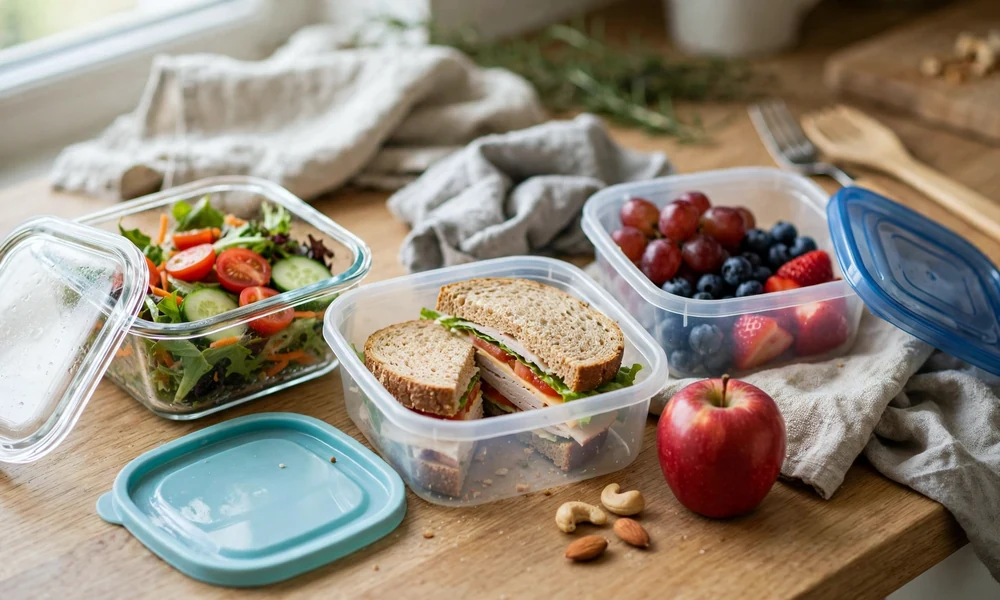
6. Best containers for lunch. A lunch container needs a truly leak-proof seal, a size that fits a standard lunch bag, and a shape that holds a sandwich or grain bowl without squashing it. Divided boxes keep wet and dry food apart, so salad stays crisp and dressing stays where it belongs.
7. Best stainless steel containers. Steel boxes are the toughest option for school bags, work bags, and picnics: they never stain or smell, and survive drops that would break glass. Pick ones with silicone-sealed lids in a normal portion size, not a feast.
8. Best large family containers. Big rectangular boxes of 1.5 litres or more hold a whole salad, a batch of pasta, or a roast’s leftovers at family dinners. They stack neatly in the fridge and are easy to serve from.
9. Best small containers. Small boxes of 150 to 350 millilitres handle sauces, dips, and snacks, and stop you opening a large box for a spoonful of something. A few inside a larger lunch box turn one box into a whole packed lunch.
Sizes: build a set that actually fits
Start with how you actually eat: a single person who cooks twice a week needs mostly medium boxes and a few small ones, while a family that batch-cooks on Sundays needs large boxes first, with medium ones for the next day’s lunches. Count your fridge shelves before you buy — tall round tubs waste space on a shallow shelf, while flat rectangular boxes slide in like books.
One shared footprint is the trick that makes a set work: when every box has the same base size and only the height changes, the boxes stack in a stable tower, the lids interchange, and the whole set packs onto one shelf. Mixed shapes look charming in the shop and cause chaos at home.
Freezer, microwave and dishwasher
Freezer safety is about the material, not the brand: thick glass and good polypropylene survive freezing, while thin plastic goes brittle and cracks and cheap lids shrink and let in air, causing freezer burn. Cool food completely before freezing, leave headroom for expansion, and label every box.
For the microwave, remove the lid or open its vent, and never microwave a container that is not marked microwave-safe; glass is the safest reheating choice, since it heats evenly and never warps. In the dishwasher, put lids on the top rack, where the heat is gentler, and let boxes dry fully before stacking, because a damp stack grows smells fast.

Food containers for lunch
Lunch is the hardest test a food container faces: it must seal perfectly, survive a commute, and open easily at a desk or school table. A friction-fit lid fails in a busy bag, while a four-clip locking lid with a silicone seal holds through a train ride and a bumpy cycle. Test every lunch box with water before trusting it with soup.
Shape matters too: rectangular boxes fit sandwiches without bending them, divided boxes keep wet and dry food apart, and a small container inside for dressing stops soggy salad. The best lunch boxes of 2026 cover the dedicated lunch end of the range, while compartment designs borrow from the best bento boxes of 2026 when you want several small dishes in one neat package. For children, pick lids a small hand can open, steel or tough plastic that survives a drop, and sizes that match a child’s appetite rather than an adult’s.
Mistakes that ruin good containers
The most common mistake is putting hot food straight into a sealed box: steam builds up, the lid warps, and the food goes soggy — let food cool first, then seal. The second is microwaving with the lid clamped shut, which can warp lids or pop them off, so always vent or remove the lid. The third is storing boxes with lids on: trapped moisture breeds smells, so store lids separately.
Staining is not a sign of a bad container, but scrubbing with harsh pads ruins seals and scratches plastic, which makes the next stain worse. Soak stained boxes in warm soapy water, or use baking soda paste for stubborn marks. Replace any box whose lid no longer clicks or whose seal is cracked: a container that does not seal is just a box.
How to choose your set
Choose by your routine, not by the prettiest set on the shelf: reheat leftovers most nights, buy glass first; pack lunch daily, buy leak-proof boxes sized to your lunch bag; small kitchen, buy stackable boxes with one footprint; freeze in bulk, buy thick-walled freezer-safe boxes and a marker. Two or three sizes, one trusted material, and lids that seal with a click cover almost every meal.
Buy fewer, better boxes rather than a huge cheap set: a dozen flimsy tubs will be in the bin within a year, while a good glass or steel set lasts for years and costs less per use. Check spare lids are available before you buy, because lids wear out first.
Frequently asked questions
Are glass food containers better than plastic? For home storage and reheating, yes: glass resists stains and smells, heats evenly, and lasts longer. For lunch bags and children, BPA-free plastic or steel is lighter and tougher.
What does BPA-free mean? It means the plastic was made without bisphenol A, a chemical once common in food plastics. BPA-free is the standard to look for, but the boxes still need replacing when they warp, cloud, or stop sealing.
Can food containers go in the freezer? Thick glass and good polypropylene can, if you leave headroom for expansion and cool food first. Thin plastic cracks in the cold.
How do I stop containers smelling? Wash them promptly, dry them fully before stacking, and store lids separately. A soak in warm water with baking soda removes most lingering smells from plastic.
The best food containers of 2026 are the ones you reach for without thinking: they seal with a click, stack neatly, survive freezer and microwave, and keep food tasting like it should. Buy the sizes you actually use, in a material you trust, and a good set will make every meal easier for years.