
Pottery Wheels That Make Throwing Clay Easy in 2026
Pottery wheels turn a lump of clay into a bowl, a mug, or a vase in a way no other tool can. The wheel spins, your hands stay still, and the clay rises between them. But the wrong wheel makes learning far harder than it needs to be: a wobbly head, a motor that stalls under pressure, or a speed control that jumps from too slow to too fast can turn a relaxing hobby into a frustrating one.
This guide covers the pottery wheels that make throwing clay easy, whether you are setting up your first home studio or replacing a tired classroom wheel. We judged motor strength, wheel-head size, noise, speed control, and price. Note the distinction: a pottery wheel is a powered machine for throwing clay on a spinning head, while a clay kit is a hand-building set with air-dry or oven-bake clay and no wheel at all. If you want to throw pots, you need the wheel.
Key Takeaways
- A good beginner pottery wheel needs a smooth motor that does not stall when you centre clay.
- Look for a wheel head of at least 11 inches and a motor of at least a quarter horsepower.
- Electric wheels are easiest to learn on; kick wheels suit potters who want a quiet, traditional rhythm.
- A foot pedal gives far more control than a simple speed dial.
- Check the weight limit and warranty before buying a budget wheel.
What Makes a Pottery Wheel Easy for Beginners?
Throwing clay is a skill of pressure and patience, and the wheel should stay out of your way while you learn it. The most important quality is steady torque. Centring a lump of clay pushes hard against the wheel head, and a weak motor slows down or stalls at exactly the moment you need it most. A wheel that holds its speed lets you feel the clay instead of fighting the machine.
Wheel-head size matters too. A head of 11 to 14 inches gives you room to centre two to three pounds of clay comfortably, covering most mugs, bowls, and small vases. A removable splash pan catches water and slip so your floor stays clean and lifts off for easy washing. Noise is easy to overlook until the wheel runs in your kitchen, so if you live in a flat, a quiet direct-drive wheel is worth paying for.
Electric Wheels vs Kick Wheels
Electric wheels dominate home studios for good reason. You press a foot pedal, the head spins, and you control the speed with your foot while both hands stay on the clay. That leaves your attention free for the work itself, and it makes learning faster. Most run on a standard household socket.
Kick wheels are the older technology: a heavy flywheel you spin with your foot, which keeps the head turning through momentum. They are silent, need no electricity, and give a wonderfully direct feel for the clay. But they demand leg strength and rhythm, and they are harder to learn on because the speed fades as the flywheel slows. For most beginners in 2026, an electric wheel is the easier path.

The 7 Pottery Wheels Worth Your Money in 2026
1. Best Overall: A Quiet Direct-Drive Studio Wheel
The best all-round choice is a direct-drive wheel with around a third of a horsepower, a 12-inch head, and a smooth foot pedal. With no belt to slip, the speed stays constant under pressure and the wheel runs almost silently. It centres three to four pounds of clay without complaint, covering everything from espresso cups to serving bowls. It costs more than budget models, but it lasts for years and holds its value well.
2. Best Budget: A Compact Belt-Drive Wheel
A compact belt-drive wheel is the smartest way in on a tight budget. Expect a quarter-horsepower motor, an 11-inch head, and a simple pedal, at roughly half the price of a studio wheel. It handles one to two pounds of clay easily, which is plenty for mugs, small bowls, and planters. The trade-off is noise and less torque, so wedge your clay well and learn a lighter touch.
3. Best for Small Spaces: A Tabletop Wheel
Tabletop wheels are built for flats and spare rooms. They weigh under 25 pounds, sit on any sturdy surface, and pack away into a cupboard when you are done. Most have a 10-inch head and a modest motor, so they suit small pieces rather than production throwing. For renters, that convenience is the difference between throwing weekly and not throwing at all.
4. Best for Beginners: A Wheel With a Learning Kit
Some wheels are sold as starter sets with clay, tools, a wire cutter, sponges, and a project guide. The wheel is usually a solid mid-range electric model; the value is in the bundle. Having the right tools from day one removes a dozen small frustrations, and a bundle often costs less than buying everything separately.
5. Best Heavy-Duty: A High-Torque Studio Wheel
Potters who throw big want torque above all else. A heavy-duty wheel with a half-horsepower motor and a 14-inch head centres eight pounds of clay or more without slowing, day after day in a classroom or working studio. These wheels are heavy and costly, but they last decades.
6. Best Kick Wheel: A Classic Flywheel Wheel
For potters who want silence and tradition, a well-made kick wheel is a joy. A heavy flywheel stores energy, the head spins smoothly, and the only sound is the clay. There is no motor to fail and no electricity bill. The learning curve is steeper, but a kick wheel teaches you to read the clay in a way no electric wheel quite does.
7. Best for Kids and Classrooms: A Low, Sturdy Wheel
Teaching children calls for a different wheel: low, very stable, simple to operate, and easy to clean. Look for a compact electric wheel with a guarded speed control, a large splash pan, and a slower top speed, which keeps wobbles gentle and messes small. Pair it with soft clay and short sessions, and young potters will finish holding a real cup they made.
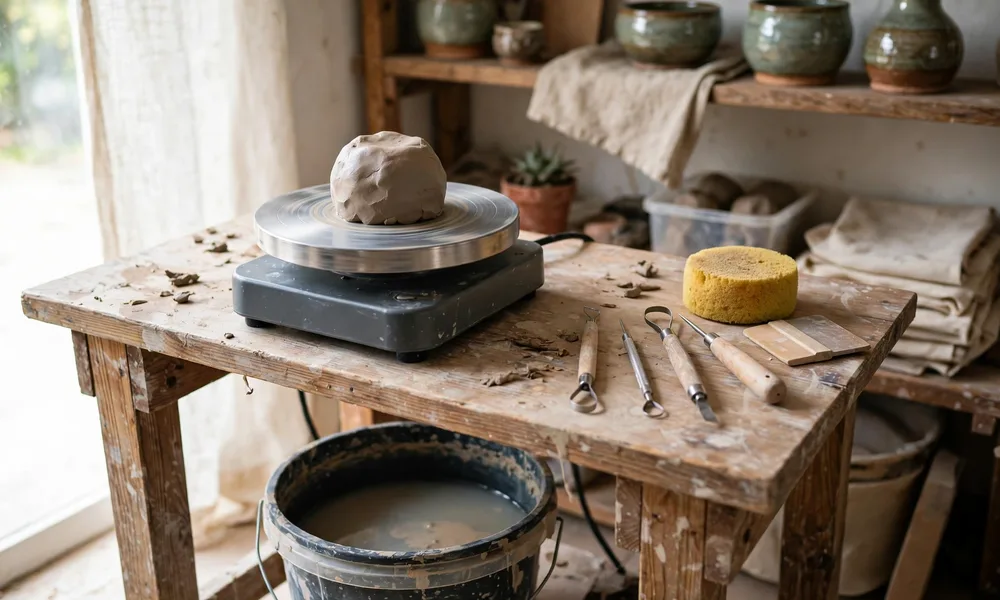
Pottery Wheels Compared
| Wheel type | Best for | Motor | Wheel head | Typical price band |
|---|---|---|---|---|
| Direct-drive studio | Best overall | Third of a horsepower | 12 inches | Mid to high |
| Compact belt-drive | Budget buyers | Quarter horsepower | 11 inches | Low |
| Tabletop electric | Small spaces | Modest | 10 inches | Low to mid |
| Starter bundle | First-time potters | Quarter horsepower | 11 inches | Mid |
| Heavy-duty studio | Large pieces | Half horsepower | 14 inches | High |
| Kick wheel | Traditional throwing | None, flywheel | 13 inches | Mid to high |
| Classroom wheel | Kids and classes | Quarter horsepower | 11 inches | Mid |
How to Choose the Right Pottery Wheel
Start with your space and your ambitions, not the price tag. Measure where the wheel will live, including room for a stool, a water bucket, and a shelf for drying pots. A rubber mat under the wheel cuts noise and stops it creeping across the table. If you rent, confirm you can use water and clay in the room, and think about how you will fire your work, because a wheel without access to a kiln leaves you with unfired greenware.
Next, be honest about how much clay you will throw. Most beginners centre one to two pounds, and any decent wheel handles that. If you already know you want big bowls, spend more on torque now rather than replacing a weak wheel in a year. Finally, budget for the extras: clay, a wire tool, a sponge, a needle tool, a rib, and a trimming tool.
Your First Month on the Wheel
Your first sessions will be messy, and that is exactly how they should be. Start by wedging your clay, kneading it until it is even and free of air pockets, because trapped air causes cracks and collapses. Centre the clay with wet hands and steady pressure, elbows braced against your body. Centring is the hardest skill in pottery and the one that matters most; a centred lump opens easily, while an off-centre lump wobbles no matter what you do.
Once centred, open the clay with your thumbs and pull up the walls slowly, keeping the clay wet and your hands steady. Pull little and often rather than in one big tug. Your first pots will be thick, uneven, and slightly lopsided, and they will still be wonderful, because you made them. Keep a simple routine: throw two or three times a week for half an hour rather than one long monthly session.
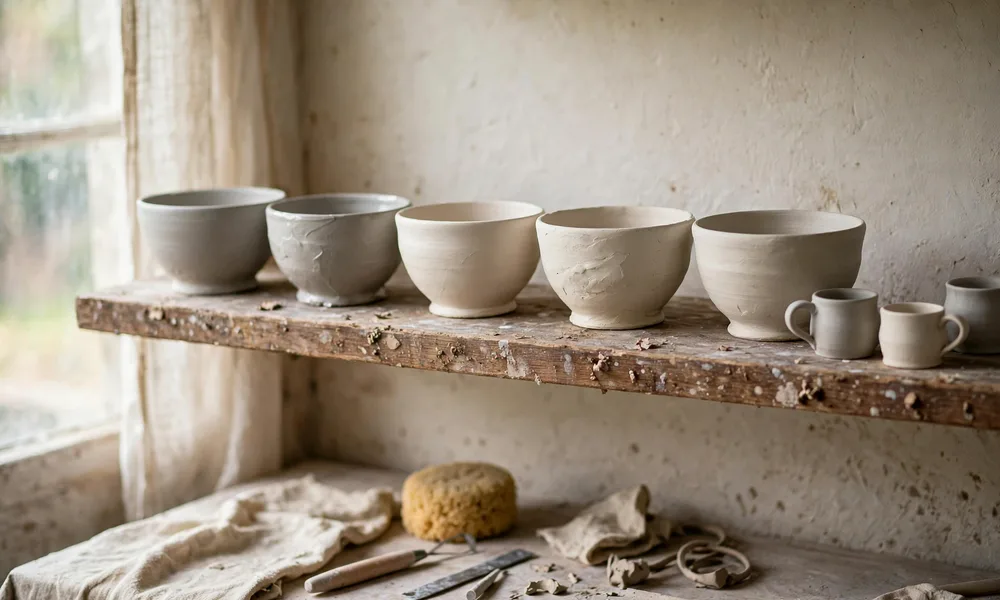
Common Mistakes Beginners Make
The most common mistake is using too much water. Water is a lubricant, not an ingredient, and a puddle on the wheel head makes the clay sloppy and weak. Keep your hands damp, not dripping. The second mistake is rushing the centre: if the clay wobbles, go back to centring instead of trying to save it. Beginners also pull walls too thin too soon and forget to compress the base, which leads to cracks as the pot dries.
Checklist: Before You Buy a Pottery Wheel
- Measure your space, including room for a stool, water bucket, and drying shelf.
- Check the motor size and weight limit against the size of pots you want to make.
- Test the foot pedal for smooth, gradual speed control if you possibly can.
- Confirm the wheel head size, splash pan, and whether bats are included.
- Read the warranty, especially motor cover, and check the returns policy.
- Budget for clay, tools, and kiln firing as well as the wheel itself.
Pottery Wheels and Other Beginner Crafts
Throwing clay sits happily alongside other hands-on hobbies. If you like the slow, rhythmic side of pottery, candle-making kits offer a similar calm, with warm wax and scent instead of wet clay. For something you can do at the kitchen table with no special equipment, soap-making kits turn simple ingredients into bars you can actually use. And if you want to sew a cloth to wrap your pots in, sewing kits cover the quick fixes and small projects that round out a craft cupboard.
Frequently Asked Questions
How much does a good beginner pottery wheel cost?
A decent beginner electric wheel usually costs in the low to mid hundreds. Compact models sit at the lower end, while quiet direct-drive studio wheels cost more. Add clay, tools, and firing to your budget.
Can I learn pottery on a cheap wheel?
Yes, as long as the wheel spins true and holds its speed under light pressure. A cheap wheel with a wobbling head or stalling motor will teach you bad habits, but a well-made budget wheel is a fine teacher.
Do I need a kiln to use a pottery wheel?
You need access to firing, but not your own kiln. Many beginners fire through a local studio, a community pottery, or a supplier that offers kiln hire. Air-dry clay works for practice pieces, but it is not the same as fired stoneware.
How much clay can a beginner wheel centre?
Most beginner wheels centre one to three pounds of clay comfortably, covering mugs, small bowls, cups, and planters. Larger pieces need a stronger motor and a bigger head, so check the weight limit before you buy.
Are kick wheels harder than electric wheels?
Yes. You must keep the flywheel spinning with your foot while your hands work the clay. They are quieter and need no power, but most beginners progress faster on an electric wheel.
What clay should a beginner start with?
Start with a smooth, forgiving stoneware or earthenware clay with a little grog for strength. Avoid porcelain at first: it is beautiful but soft, floppy, and quick to collapse.
The Bottom Line
The best pottery wheel is the one that lets you forget about the machine and focus on the clay. For most beginners in 2026, that means a quiet electric wheel with a steady motor, a 12-inch head, and a smooth foot pedal.


