Sewing Kits That Cover Every Quick Fix in 2026
Sewing kits that cover every quick fix in 2026 are the smallest toolbox in the house, and the one that saves the most clothes. A button pops off on the way out the door, a hem drops on a favourite skirt, a seam splits on a jacket: each is a two-minute job with the right kit, and a trip to the tailor, or a garment thrown away, without one.
A good kit costs little, fits in a drawer or a suitcase, and lasts for years. The trick is buying one that covers the fixes you will actually meet, rather than a pretty box of thread you will never use. This guide explains what belongs in a kit, how the main types compare, and how to pick one that handles buttons, hems, seams and tears.
Key Takeaways
- A home sewing kit needs needles, thread in black, white and navy, buttons, pins, a seam ripper and small scissors: that handful covers nearly every fix.
- Match the thread to the fabric: polyester suits most clothes, cotton suits natural fabrics, and heavy thread is needed for denim and canvas.
- A travel kit should be small enough for a wash bag but still include a needle threader, because threading a needle in a hotel room is the hardest part.
- Check the scissors before you buy: blunt scissors snag fabric and fray thread, and are the most common reason a cheap kit feels useless.
- Keep the kit where you can reach it in a minute: a kit buried in the loft will not save the shirt you need this morning.
What a Sewing Kit Actually Covers
A sewing kit is a hand-sewing kit: needles, thread and small tools for mending by hand, not a machine. It covers the fixes of everyday wear: sewing on a button, tacking up a hem, closing a split seam, repairing a small tear, replacing a loose hook, and stitching a pocket back into place. All are quick once the kit is to hand.
What a kit does not do is make clothes from scratch, take in a whole garment, or repair heavy damage such as a torn lining or a broken zip. Those jobs need a machine or a tailor. A kit is for maintenance and rescue, and it earns its place by keeping good clothes in use for longer.
The other thing a kit covers is time. A button sewn on at home takes five minutes and costs nothing; the same button at a repair shop costs the trip, the wait and the fee. A kit pays for itself the first time it saves a garment you would otherwise have stopped wearing.
The Main Types of Sewing Kit
Four types cover almost every need, and most households only need one of them, plus a travel kit if they travel often. The right choice depends on where you mend and what you mend most.
Home Sewing Kits
The home kit is the classic: a box or basket with a full range of thread colours, several needle sizes, pins, buttons, a seam ripper, a tape measure, a thimble and small scissors. It lives in a drawer or on a shelf, and it is the kit for the household, not just one person. Buy the largest thread range you can store, because the colour you need is always the one you do not have.
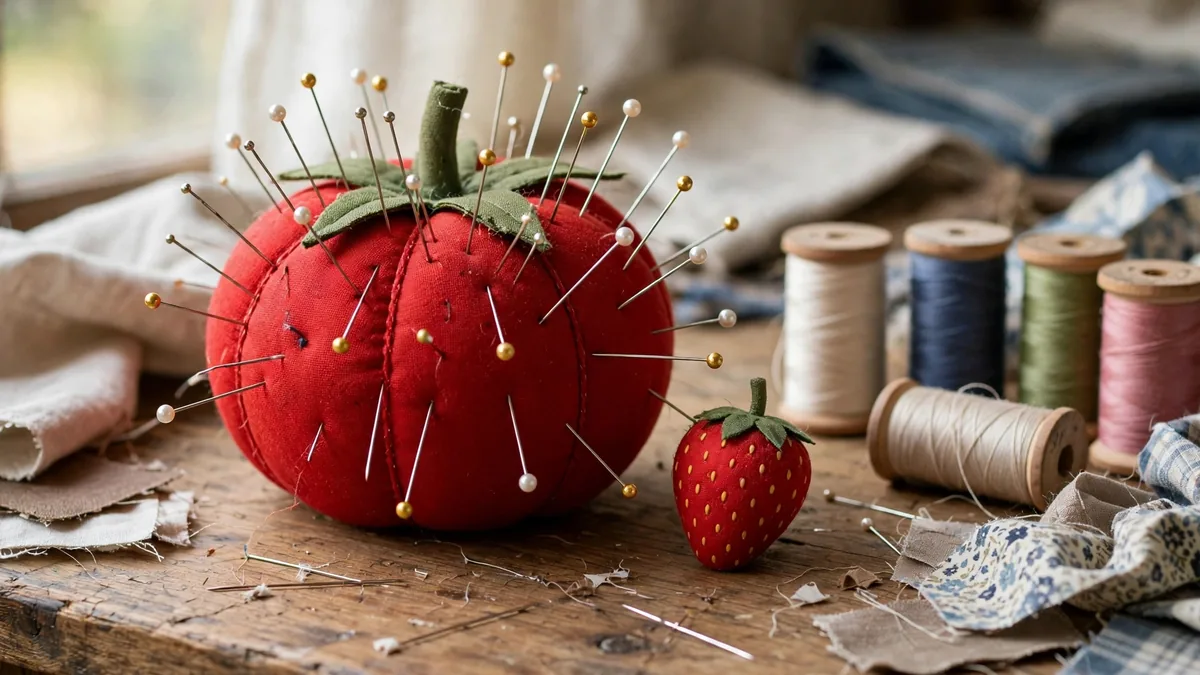
Look for a box with compartments that keep thread spools from unravelling into a tangle, and needles stored in a case rather than loose. A good home kit also includes a needle threader and a magnetic pin holder. The kit does not need to be expensive, but it does need to be complete: a missing seam ripper turns a ten-minute fix into a frustrating half hour.
Travel Sewing Kits
A travel kit is a small pouch or tin with the essentials only: a few needles, black and white thread, two or three buttons, safety pins and tiny scissors. It fits in a wash bag or a jacket pocket, and its job is to rescue an outfit on a trip, a wedding or a work journey, where a loose button or a dropped hem would otherwise ruin the day.
The best travel kits are honest about their limits. They will not handle a heavy repair, and the thread is often short, so they are for one fix, not a season of mending. Check that the case closes firmly: a travel kit that spills needles into a suitcase is worse than no kit at all.
Heavy-Duty and Denim Kits
A heavy-duty kit is built for thick fabric: denim jeans, canvas bags, workwear and upholstery. It has thicker needles, often curved ones for tight spots, heavy polyester thread, and a thimble that protects your finger when you push a needle through four layers of denim. Ordinary needles bend on this work, and ordinary thread pulls straight out.
Buy a heavy-duty kit if you regularly repair jeans, work clothes or outdoor gear, and keep it separate from the home kit so the thick needles do not end up in a silk blouse. A seam ripper with a sturdy handle is essential here too, because unpicking a heavy seam with a flimsy ripper risks tearing fabric.
Craft and Embroidery Kits
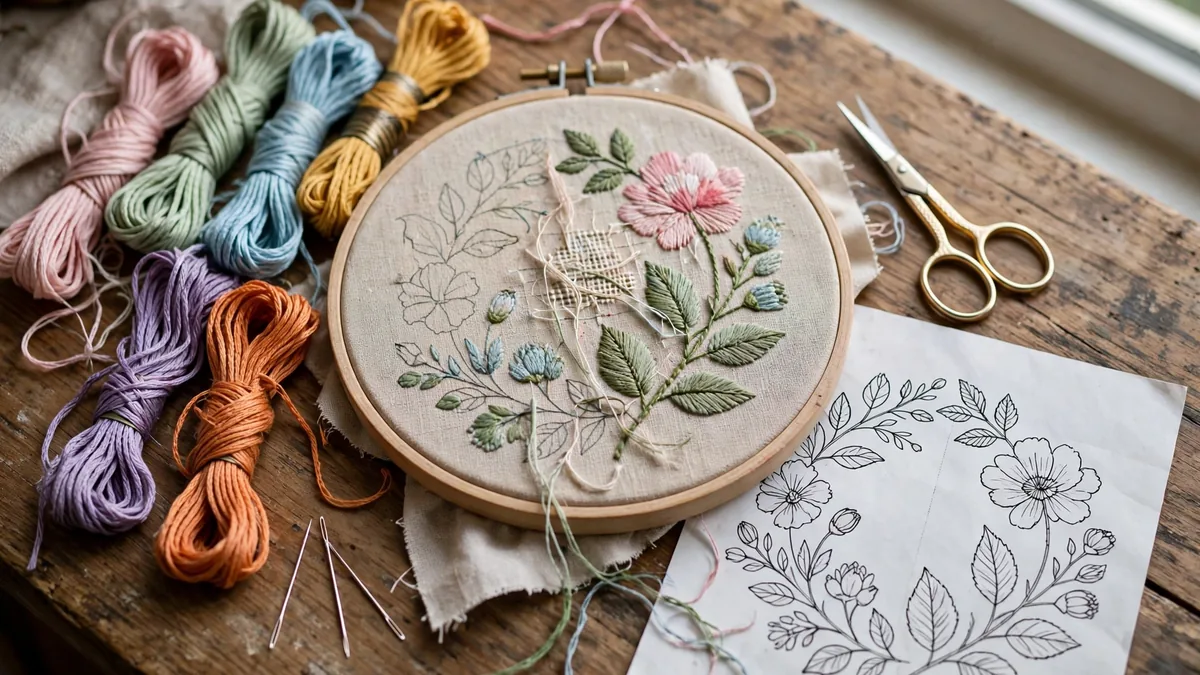
Craft kits are for decorative work rather than mending: embroidery thread in many colours, a hoop, a range of needles, and patterns to practise on. They overlap with a home kit on needles and scissors, but their thread is for show, not strength. A craft kit is a good gift and a pleasant hobby, but it is not a substitute for a mending kit, so keep the two separate.
Sewing Kits vs Sewing Machines: Different Tools
A sewing kit and a sewing machine do different jobs, and owning one does not replace the other. A kit mends by hand, one stitch at a time, and is right for small repairs, buttons and hems. A machine sews long seams quickly and evenly, and is right for making and altering clothes.
For anyone starting out, the machine matters more than the kit. Our guide to the best sewing machines for beginners covers machines that are forgiving to thread, steady at slow speeds, and honest about what they can and cannot do.
The comparison matters too, because a bad machine wastes more fabric than a good kit can save. Our guide to the best vs worst sewing machines puts the best and worst head to head on stitch quality, threading and fabric range. Keep both if you sew at all: the machine for the making, the kit for the mending.
Comparison Table
| Type | Best for | Thread range | Size | Price range |
|---|---|---|---|---|
| Home kit | Everyday mending | Wide, many colours | Box or basket | Budget to mid-range |
| Travel kit | Rescues on trips | Black and white only | Pocket or pouch | Budget |
| Heavy-duty kit | Denim, canvas, workwear | Heavy polyester | Small box | Mid-range |
| Craft kit | Embroidery and decoration | Many colours, fine thread | Box with hoop | Budget to mid-range |
| Deluxe home kit | Household plus craft | Wide, plus extras | Large box | Mid-range to premium |
How to Sew On a Button in Five Minutes
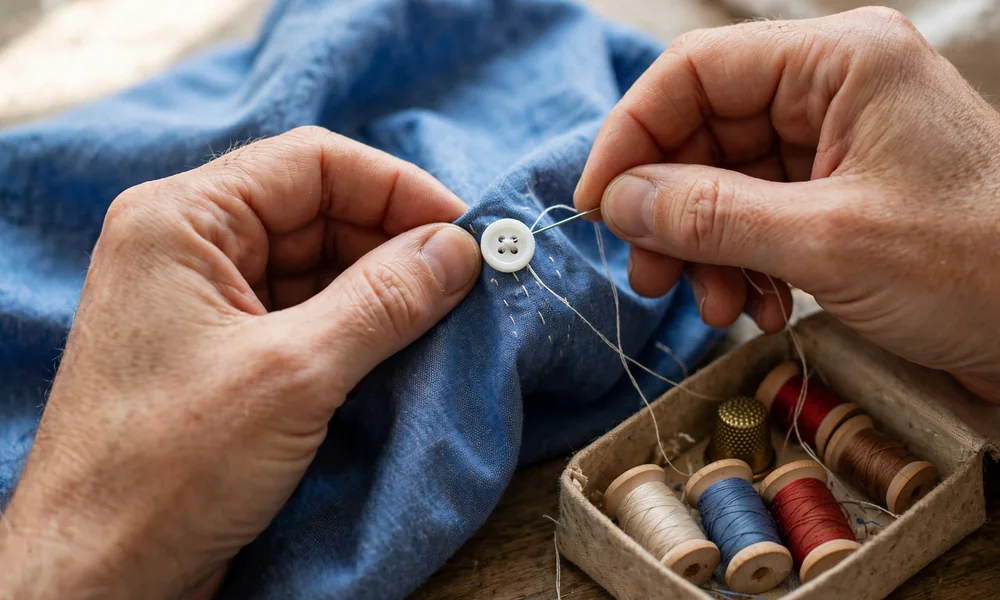
Thread the needle with about an arm’s length of thread, double it, and knot the end. A needle threader makes this easy, and if the thread keeps slipping, cut it at a sharp angle so it passes through the eye cleanly.
Place the button on the fabric and push the needle up from underneath, through one hole, then down through the opposite hole. Repeat six times, keeping the stitches snug but not so tight that the fabric puckers. For a shirt button, slip a matchstick under the button while you sew, so the finished button has a small shank of thread and sits properly in the buttonhole.
Finish by pushing the needle to the back of the fabric, wrapping the thread around the stitches under the button a few times, and tying a small knot. Snip the thread close and check the button: it should sit flat, feel firm, and pass through the buttonhole without a fight.

What to Look For Before You Buy
Start with the thread. Open the kit and look at the spools: are the colours ones you actually wear, and is there enough thread on each spool for a real repair? Cheap kits often have tiny spools that run out halfway through a hem. Black, white, navy, grey and beige cover most clothes.
Next, check the needles. A good kit has several sizes, from fine needles for silk and shirt fabric to thicker ones for wool and denim, and each needle should be straight, smooth and rust-free. A needle threader and a thimble are worth paying for, and a seam ripper should have a sharp point and a comfortable handle.
Check the scissors and the case. Small scissors should cut thread cleanly in one snip, without chewing the ends, and the case should keep everything separate: thread in compartments, needles in a case, pins in a holder. A kit that turns into a tangled mess after one use will not be used twice.
Checklist: Before You Buy a Sewing Kit
- Thread in black, white and navy, with enough on each spool for a real repair.
- Needles in several sizes, straight, smooth and stored in a case.
- A seam ripper, a needle threader and a thimble included.
- Small scissors that cut thread cleanly in one snip.
- Buttons, pins and safety pins in useful sizes and colours.
- A case with compartments that keeps everything separate and tidy.

Frequently Asked Questions
What should a basic sewing kit contain?
Needles in a few sizes, thread in black, white and navy, buttons, pins, a seam ripper, a tape measure, a thimble and small scissors. That handful covers buttons, hems, split seams and small tears.
Is a travel sewing kit worth it?
Yes, if you travel, attend weddings or wear suits for work. A loose button or a dropped hem on a trip is a small disaster without a kit and a five-minute fix with one. Keep it in your wash bag so it is always packed.
Can I mend denim with a normal sewing kit?
Only for a small repair on thin denim, and even then you need a thick needle and heavy thread. Ordinary needles bend on thick seams and ordinary thread pulls out, so buy a heavy-duty kit for jeans and workwear.
How do I match thread colour to fabric?
Hold the thread against the fabric in daylight and pick the shade that disappears into it. If you cannot match exactly, choose a shade slightly darker than the fabric, because darker thread blends in while lighter thread stands out.
How long does thread last in a kit?
Good polyester thread lasts for years if kept dry and out of sunlight. Cotton thread weakens sooner, especially in a damp room. If thread snaps easily when you pull it, replace that spool rather than trusting it on a repair.
Do I need a sewing machine as well as a kit?
Not for mending. A kit handles every quick fix on its own, and many people never need more. A machine is worth it only if you want to make clothes or sew long seams, and then the kit still handles the buttons and small repairs.
The Bottom Line
The best sewing kit is the one that covers the fixes you actually meet, and for most homes that means a home kit with a wide thread range, good needles and a seam ripper, plus a travel kit if you are often away. Buy for thread quality and completeness, and keep the kit where you can reach it in a minute. Every garment it saves is money kept and waste avoided. Once the mending is done, a good press is the finishing touch: our guide to the best vs worst ironing boards covers the other half of a tidy sewing corner.