A slime kit has one job: to let a child mix up a pot of stretchy, squidgy slime in minutes, without a mess that takes an hour to clean. The worst slime kits of 2026 fail at it in ways that leave a kitchen table covered in glue, a child with stained hands, or a pot of slime that dries into a hard lump overnight. They miss out the activator, use glue that never sets, or make slime so sticky it bonds to everything it touches. Children buy into them hoping for the gloopy fun they have seen online. What they get is a kit that sticks, a kit that stinks, or a kit that simply does not make slime at all. A kit that is bought for a rainy afternoon should be judged on that afternoon, not on the photograph, because the photograph never shows the clean-up.

Activator That Does Not Work
Slime needs an activator to turn runny glue into stretchy slime, and the worst kits fail at this first step. The activator bottle is too small, so the glue never sets, or it is missing from the box entirely, so a child stirs and stirs and nothing happens. Some kits include the wrong activator for their glue, so the mixture turns into a watery soup or a rubbery lump instead of slime. A child who follows the instructions exactly and still gets no slime will conclude that slime-making is a trick, and will not try again. A mixture that turns into a watery soup instead of slime has the wrong activator for its glue, and no amount of stirring will fix a mismatch like that.
A good kit includes enough activator for every batch it promises, with clear measuring marks so a child knows how much to add. The instructions should say what to do if the slime is too sticky or too stiff, because a little more activator fixes the first and a little more glue fixes the second. Check the box before you buy: if it does not list an activator among the contents, it is not a complete kit. A kit that makes slime on the first try is a kit that gets used again. A little more activator fixes slime that is too sticky, and a little more glue fixes slime that is too stiff, so the instructions should say both.
Slime That Sticks to Everything
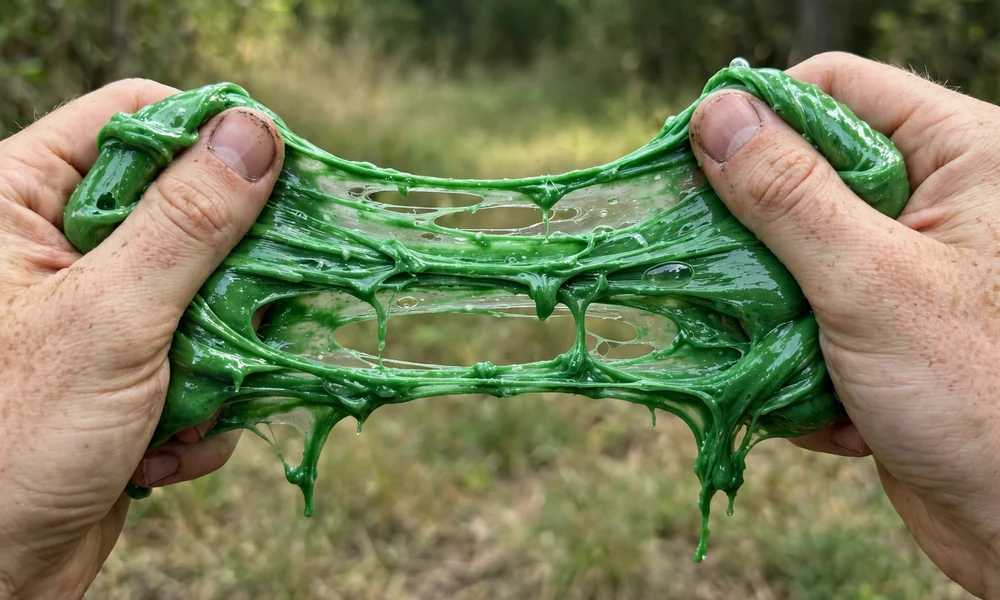
Slime should stretch in the hands and stay off the table, and the worst slime sticks to everything it touches. It bonds to fingers, to clothes, to the carpet, and to the table, so a ten-minute play session becomes a thirty-minute clean-up. The problem is worst with kits that use too much glue and too little activator, or with slime that was never properly mixed, so it stays wet and tacky instead of firm and stretchy. A child who has to peel slime off their hands will not want to play with it again. A slime that sticks to the table will stick to the carpet too, and a carpet with slime in it is a carpet that needs professional cleaning.
The test is simple: after mixing, the slime should come away from the bowl in one piece and leave the hands almost clean. If it leaves strings on every finger, add a little more activator and knead it in, and if it still sticks after that, the kit is at fault, not the child. Good kits also include a play mat or a tray, so the slime has somewhere to live that is not the kitchen table. A slime that peels off cleanly is a slime that gets played with, and a slime that sticks is a slime that gets thrown away. A child who has to peel slime off their hands will not want to play with it again, so a clean peel matters more than a bright colour.
Slime That Dries Out Overnight
Slime should keep for days in a sealed pot, and the worst kits make slime that dries into a hard lump overnight. The pot lid does not seal, so air gets in and the slime hardens, or the slime itself is made from a glue that dries fast and cannot be revived. A child who makes slime on Saturday and finds a brick on Sunday will not ask for another kit. The waste is the worst part: a kit that promises five batches and delivers one usable play session is a kit that has failed at its basic job. A pot that is too big for the slime inside lets in too much air, and air is what dries slime out fastest.
Look for kits with pots that seal properly, with a lid that clicks shut and a pot that is not too big for the slime inside. A little air in a big pot dries slime faster than a full small pot, so the pot should match the batch. Store the slime in the fridge if the instructions allow it, and keep it out of direct sun, which dries it faster still. If a kit’s slime dries out even in a sealed pot, the recipe is wrong, and no amount of careful storage will save it. If you want a kit that keeps its promise from the first batch to the last, our guide to the best craft kits of 2026 shows what a complete, well-made kit looks like. A slime that is stored in the fridge will keep longer, but only if the instructions allow it, because some slimes go hard in the cold.
Smells That Fill the Room
Slime should smell of nothing much, and the worst kits fill the room with a chemical smell that gives a parent a headache. Cheap glue and strong fragrance oils are the usual culprits, and some kits add scent to cover a glue smell that should never have been there. The smell is worst when the slime is first mixed, when the glue is fresh and the room is closed, and a child who plays with strong-smelling slime for an hour will carry the smell on their hands afterwards. A kit that smells bad is a kit that will be used once and then hidden away. A smell that is strong enough to notice across the room is a smell that will give a parent a headache within the hour.
Open the glue bottle before you buy if you can, or check reviews for any mention of smell. A good kit uses a mild glue and a light scent, or no scent at all, and the slime should smell faintly of nothing once it is mixed. If the smell is strong enough to notice across the room, the kit is not suitable for a child. Ventilation helps, but a kit that needs the windows open is a kit that was made with the wrong ingredients.
Colours That Stain Hands and Tables
Slime colours should stay in the slime, and the worst ones do not. Bright dyes come off on small hands, on clothes, and on the table, so a play session ends with stained fingers and a stained tablecloth. The problem is worst with dark colours and glitter, which transfer easily and are hard to wash out. A child who ends up with blue hands after playing with blue slime will not be allowed to play with it again, however much they enjoyed it. A dye that comes off on small hands will come off on clothes too, and a stained shirt is the reason many parents ban slime from the house.
Look for kits that use food-safe colouring or colouring that is bound into the slime, rather than loose dye that transfers on touch. Test a small amount on the back of a hand before a full play session: if the colour comes off, it will come off on everything else too. Glitter should be fine and mixed in, not loose on the surface, and it should wash off with soap and water. A slime that keeps its colour is a slime that a parent will allow back on the table.
Kits With Too Little to Make Anything
A slime kit should contain enough to make the batches it promises, and the worst ones do not. The glue bottle is tiny, the activator runs out after one batch, or the extras, like glitter and foam beads, are so few they disappear into the first pot. The box promises five slimes and contains enough for one, or it promises a big slime and delivers a pot the size of an egg. A child who runs out mid-way through the second batch learns that the kit was a promise the box could not keep. A kit that promises five slimes and contains enough for one is a kit that has failed at its basic job, however fun the first slime was.
Check the contents list before you buy, and look for actual amounts, not just a list of ingredients. A good kit includes enough glue and activator for every batch on the box, plus a little extra for mistakes, because a child will spill some. If the box hides its quantities in tiny print, or the amounts look small for the price, treat that as a warning. A kit that is generous with its materials is a kit that gets played with for weeks, not minutes. A box that hides its quantities in tiny print is hiding a small amount, and a small amount is the first sign of a kit that will run out.

What to Buy Instead
The slime kits worth buying share a short list of features, and none of them is expensive on its own. Enough activator for every batch, with clear measuring marks. Glue that sets into stretchy slime and peels off hands cleanly. A pot that seals properly, so the slime keeps for days. Mild smell, colour that stays in the slime, and enough materials for every batch on the box. If a kit fails any one of those checks, keep looking.
Fit matters as much as build, and the kit should suit the child in front of you rather than the child in the photograph. A younger child needs a simple kit with big pots and no small parts, while an older child can handle glitter, foam beads, and more complicated recipes. Check the age guidance on the box and trust it, and cover the table before you start. If you need the glue that holds the rest of the craft table together, our guide to the best glue sticks of 2026 covers the sticks that bond cleanly without a mess.
The Bottom Line
The worst slime kits of 2026 share a pattern: activator that does not work, slime that sticks to everything, slime that dries out overnight, smells that fill the room, colours that stain, and kits with too little to make anything. Avoid those six failures and you avoid almost every slime-kit regret. Check the activator is in the box, test a small batch first, and cover the table before you start. Do that, and the kit you buy will be the one that ends with a pot of slime a child plays with for days. And if you are stocking the whole craft cupboard, our guide to the best art supplies of 2026 covers the paints, papers and tools that make a child’s craft table complete.