
Glue Sticks That Hold Paper Without the Mess in 2026
A glue stick is the quiet workhorse of the desk drawer. The best glue sticks lay down a thin, even layer of adhesive, hold paper firmly without wrinkling it, and leave no sticky fingers, no drips, and no mess on the table. A bad one skips, clumps, or soaks the paper until it ripples. This guide explains how glue sticks work, which types suit school, scrapbooking, and office work, and how to use them so the bond holds and the paper stays flat.
It is worth saying what a glue stick is, because the name causes confusion. A glue stick is a solid stick of adhesive in a twist-up tube, like a lipstick, that you rub directly onto paper. It is not a hot-melt stick for a glue gun, which is melted by heat, and it is not a liquid glue in a bottle. Paper glue sticks are water-based, washable, and made for paper and light card.
Key Takeaways
- A glue stick is a solid, water-based adhesive in a twist-up tube, made for paper and light card, not for wood, fabric, or heavy materials.
- A thin, even layer holds better than a thick one: too much glue wrinkles paper and takes far longer to dry.
- Washable formulas suit children and schoolwork; permanent formulas suit scrapbooks and displays that must last.
- Keep the cap on and store the stick upright, or it will dry out and the tip will harden.
- For heavy or awkward jobs, a glue stick is the wrong tool: use tape, a glue gun, or a liquid adhesive instead.
How a Glue Stick Actually Works
A glue stick is mostly water, a sticky polymer, and a solidifying agent that turns the mixture into a firm stick. When you rub it across paper, a thin film of adhesive transfers onto the surface. The water soaks slightly into the paper fibres, the polymer grabs hold, and as the water evaporates the bond sets. That is why a glue stick works so well on paper and so poorly on anything else.
The solid form is the whole point. Because the adhesive is a firm stick rather than a liquid, you control exactly where it goes, and it goes on thin. There is no puddle to spread, no drips, and no wet patch soaking through to the other side. A good glue stick glides smoothly and leaves an even film. A poor one drags and skips, which is why its bond fails in patches.
Drying time matters. Most glue sticks feel dry to the touch within a minute, but the bond keeps strengthening for a few minutes after that. Press the pieces together firmly and leave them flat while they set. Peeling them apart to check, or bending the page while the glue is still damp, weakens the bond.
The Main Types of Glue Stick
Standard washable glue sticks are the classroom staple. They are non-toxic, they wash out of clothes and off hands with water, and they hold paper, light card, and photos well enough for schoolwork. Their bond is strong enough for a display that lasts a term, and weak enough that a child can pull a mistake apart and try again.
Permanent glue sticks look the same but bond harder. They use a stronger polymer, they set faster, and once they are dry the paper is not coming apart without tearing. They suit scrapbooks, photo albums, and displays that need to last. The trade-off is forgiveness: a permanent stick gives you seconds to line things up.
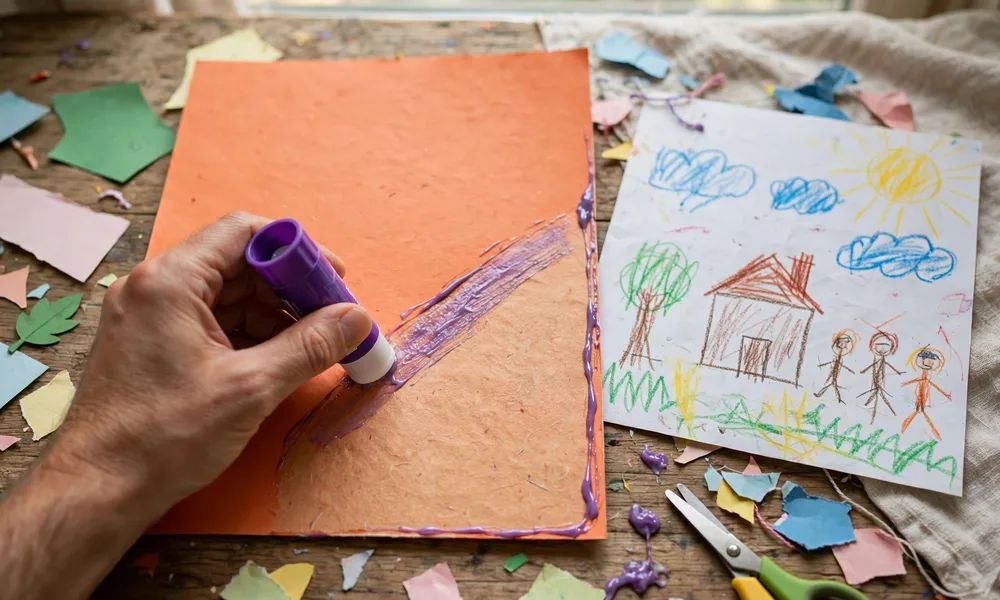
Colour-changing glue sticks go on purple or blue and dry clear. The colour shows exactly where you have applied the glue, which stops the two classic mistakes: missing a patch and putting glue where it is not needed. They are brilliant for children, and for precise work such as scrapbooking, where an even coat matters.
Large and jumbo glue sticks are for big jobs. A fat stick covers a large sheet quickly, with fewer passes and fewer skips, which matters when you are mounting a poster or a display board. They cost more and are heavier in the hand, so they are overkill for a single sheet of paper.
Acid-free and photo-safe glue sticks are the scrapbooker’s choice. Ordinary glue can yellow paper and damage photographs over time, because it is slightly acidic. Acid-free sticks are pH neutral, so they will not discolour paper or photos even after years in an album.
Choosing the Right Glue Stick for the Job
Match the stick to the work, not to the price. For school and homework, a washable stick in a medium size is right. For scrapbooking and photo albums, choose an acid-free permanent stick, ideally one that goes on coloured and dries clear. For posters, a jumbo permanent stick covers large areas fast.
Size matters more than people expect. A small stick, around 8 to 10 grams, suits a pencil case and occasional use. A medium stick, around 20 grams, is the best all-rounder. A large stick, 40 grams or more, is for regular crafters and teachers, but a huge stick that takes a year to use can dry out half wasted.
Check the twist mechanism before you commit to a brand. The tube should twist smoothly, the stick should rise evenly without wobbling, and it should retract without catching. A stick that wobbles will snap at the base when you press it, and a tube that will not retract leaves the tip exposed to dry out.
How to Use a Glue Stick Without the Mess
Less glue is more. Twist up only a few millimetres of the stick, hold it at a slight angle, and rub it across the paper in smooth, overlapping strokes. Cover the whole area, paying attention to the edges and corners, because those are the parts that lift first. One thin, even coat is enough.
Stick the pieces together while the glue is still slightly damp, press them flat, and smooth from the centre outward to push out air. A ruler or the back of a spoon does this well. Then leave the page flat under a book for a few minutes. Weight while drying is the simplest way to stop wrinkling, and it costs nothing.
Clean up as you go. Wipe the rim of the tube before you put the cap back on, or dried glue will stop the cap sealing and the stick will dry out. If glue gets on your hands, wash it off with water while it is wet. And keep the cap on between uses: an uncapped stick left out overnight will have a hard, useless tip by morning.

Glue Sticks vs the Rest of the Adhesive Drawer
Every adhesive in the drawer has a job, and knowing which is which saves ruined projects. A glue stick is for paper to paper: clean, thin, and even, and it dries flat. Double-sided tape is the closest alternative: it is instant, it never wrinkles paper, and it suits mounting photos, but it is fiddly on large areas. Our guide to double-sided tape explains when tape beats glue.
A glue gun is a different beast entirely. It melts a solid hot-melt stick and lays down a thick bead of hot glue that sets in seconds. It bonds wood, fabric, and plastic, and it holds heavy things, but it is far too thick and hot for paper, and it leaves lumps and strings. If you need one, our guide to glue guns that flow smooth without dripping covers them.
The rule is simple. Paper to paper, use a glue stick. Paper to a board, use a glue stick or tape. Anything heavier, or anything that is not paper, use the right adhesive for that material.
Glue Sticks Compared
| Stick type | Best for | Bond | Washable |
|---|---|---|---|
| Standard washable | School and homework | Medium | Yes |
| Permanent | Scrapbooks and displays | Strong | No |
| Colour-changing | Children and precise work | Medium | Usually |
| Jumbo | Posters and display boards | Strong | Varies |
| Acid-free photo-safe | Photos and keepsakes | Medium | No |
Storing Glue Sticks So They Last
Glue sticks dry out from the tip, so storage is mostly about keeping air away from it. Always replace the cap firmly after use, and store the stick upright with the cap at the top. Keep sticks out of direct sunlight and away from radiators: heat softens the adhesive, and a stick left in a hot car can melt and never work properly again.
Mistakes That Weaken the Bond
The most common mistake is using too much glue. A thick layer wets the paper, the paper wrinkles as it dries, and the bond is actually weaker, because the glue skins over on the outside while staying wet underneath. A thin, even coat always holds better.
The third mistake is sticking to the wrong surface. Glue sticks do not bond to plastic, metal, glass, or glossy coated paper, because the adhesive cannot soak in. A photo with a glossy coating or a laminated sheet will not hold, and no amount of extra glue will change that.

Checklist: Before You Stick Anything Down
- The paper is clean, dry, and free of dust, because glue sticks do not bond to dirty surfaces.
- You have the right stick for the job: washable for school, permanent and acid-free for keepsakes.
- The tip is soft and smooth, not hard, dried out, or crumbly.
- You have planned the position first, because a permanent stick gives you seconds to adjust.
- One thin, even coat covers the whole area, including the edges and corners.
- The page will stay flat under a book for a few minutes while the bond sets.
Frequently Asked Questions
Are glue sticks washable?
Most standard glue sticks are washable: they wash out of clothes and off skin with water while wet, and they peel off easily once dry. Permanent and photo-safe sticks are usually not washable, so check the label before giving one to a child.
Why does my glue stick wrinkle the paper?
Wrinkling is almost always caused by too much glue. A thick layer wets the paper, and the paper ripples as it dries. Use one thin, even coat, press the page flat, and weight it under a book for a few minutes while it sets.
Can I use a glue stick on cardboard?
Yes, for light card and thin cardboard, a glue stick works well. For thick corrugated cardboard or anything that must bear weight, it is too weak. Use tape, a glue gun, or a liquid adhesive instead, and clamps will help hold the joint while it sets.
How long does a glue stick bond last?
A permanent glue stick bond on paper can last for years if the page is kept dry and flat. A washable stick bond is weaker and can loosen over time, especially in damp conditions. For anything you want to keep, use a permanent, acid-free stick.
What is the difference between a glue stick and a glue gun stick?
A paper glue stick is a solid water-based adhesive in a twist-up tube, rubbed directly onto paper at room temperature. A glue gun stick is a rod of hot-melt adhesive that a glue gun melts and pushes out through a nozzle. They are not interchangeable.
Can glue sticks be used on photographs?
Yes, but only with an acid-free, photo-safe stick. Ordinary glue can yellow paper and damage photos over time. Use a thin coat, press the photo flat, and avoid getting glue on the front of the print.
The Bottom Line
The best glue sticks are simple: a smooth tip, a thin even coat, and the right formula for the job. Washable for school, permanent and acid-free for scrapbooks and keepsakes, jumbo for big display work. Keep the cap on, store them upright at room temperature, and use less glue than you think you need. For jobs beyond paper, our guides to clamps that make every glue-up easier and the adhesives above will point you to the right tool.


