
How to Pick a Hole Punch That Won’t Jam in 2026
A hole punch that will not jam is not a luxury, it is the difference between a five-minute filing job and a twenty-minute fight with a stuck lever and a torn sheet. This guide explains how to pick a hole punch that won’t jam in 2026, by matching the punch to the paper you actually use, checking the build before you buy, and learning the small habits that keep any punch cutting cleanly for years.
Key takeaways
- Buy a punch rated for more sheets than you usually punch at once, because a punch worked at its limit jams far more often than one worked well inside it.
- A metal frame and sharp, hollow cutting heads matter more than the brand name.
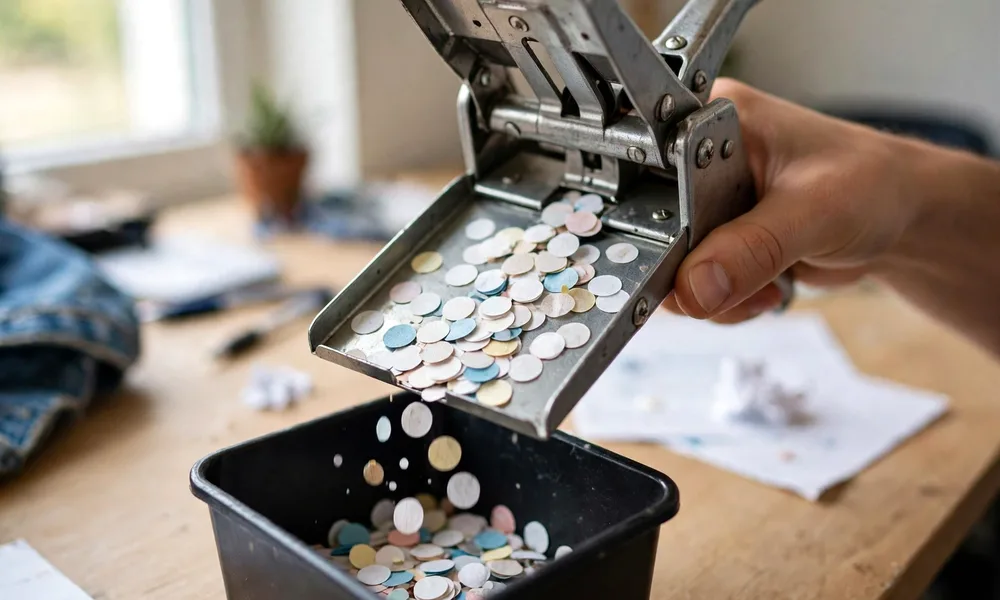
- Empty the confetti tray before it is full, because a packed tray is the most common cause of a punch that suddenly sticks halfway down.
- Never punch more sheets than the rating, never punch stapled or taped paper.
- A single-hole punch suits tags and tickets, a two-hole punch suits home filing, and a three-hole punch suits ring binders, so buy for the job, not the drawer.
Why hole punches jam
A hole punch jams when the cutting head cannot finish its cut. The head is a hollow steel tube with a sharpened edge, and it works by slicing a clean disc out of the paper and pushing it down into the tray. Anything that stops that slice will jam the punch: too many sheets, so the head runs out of force halfway through; a dull head, so it tears instead of cutting; paper that is too thick, glossy or damp, so it resists the cut; or a full tray, so the discs already inside have nowhere to go and pack back up into the head.
Comparison table: hole punches that won’t jam in 2026
| Rank | Type | Best for | Watch out for |
|---|---|---|---|
| 1 | Two-hole, metal frame | Home filing, everyday paper | Cheap plastic versions flex and jam |
| 2 | Three-hole, adjustable | Ring binders, school and office | Heads drift if the lock is weak |
| 3 | Heavy-duty two-hole | Thick stacks, card, reports | Heavy and dear; overkill for light use |
| 4 | Single-hole plier punch | Tags, tickets, crafts | Tiny capacity; one sheet at a time |
| 5 | Electric punch | High-volume office filing | Needs power; jams badly if overloaded |
| 6 | Adjustable multi-hole | Planners, discs, mixed binding | Fiddly to set up; easy to misalign |
| 7 | Shape and craft punch | Scrapbooks, cards, decoration | Jams on thick card; not for filing |
The hole punches that won’t jam
1. Two-hole metal-frame punch: the best everyday punch
The two-hole punch with a solid metal frame is the best choice for most homes, because it does the most common job, filing everyday paper, with the least fuss. Two holes, spaced eighty millimetres apart, fit the standard two-ring files used at home and in small offices, and a good metal one will punch ten to twenty sheets cleanly in a single press. Look for a frame that feels heavy and rigid in the hand, with no wobble when you press the lever halfway and let go.
2. Three-hole adjustable punch: the best punch for ring binders
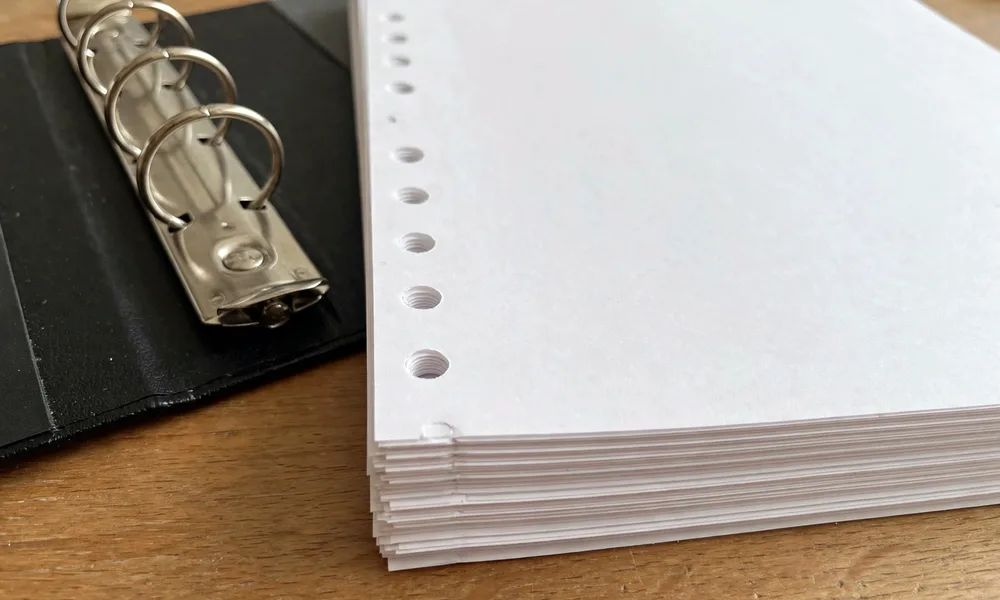
A three-hole punch is the right choice if your papers live in ring binders, because three holes hold a sheet far more securely than two, and the sheet does not sag or tear at the holes over time. The best ones have adjustable heads, so you can slide the outer heads in or out to match different binder spacings, and a lock that holds them firmly once set. Three-hole punches are usually rated for twenty to forty sheets, which makes them the workhorse of school and office filing.
3. Heavy-duty two-hole punch: the best punch for thick stacks
A heavy-duty punch is built for jobs an everyday punch cannot do: forty, sixty or even a hundred sheets at once, thick card, and whole reports that need filing in one go. It is heavier, with a long lever that gives you real force, a deep throat that takes larger sheets, and cutting heads made from hardened steel that stay sharp far longer than the heads on a light punch. If you regularly punch thick stacks, this is the punch that will not jam, because it is working well inside its limits on a job that would push a normal punch to the edge. Check the sheet rating honestly: a punch rated for sixty sheets should punch sixty sheets of ordinary copier paper, not sixty sheets of card, and thick or glossy paper counts double.
4. Single-hole plier punch: the best punch for tags and tickets
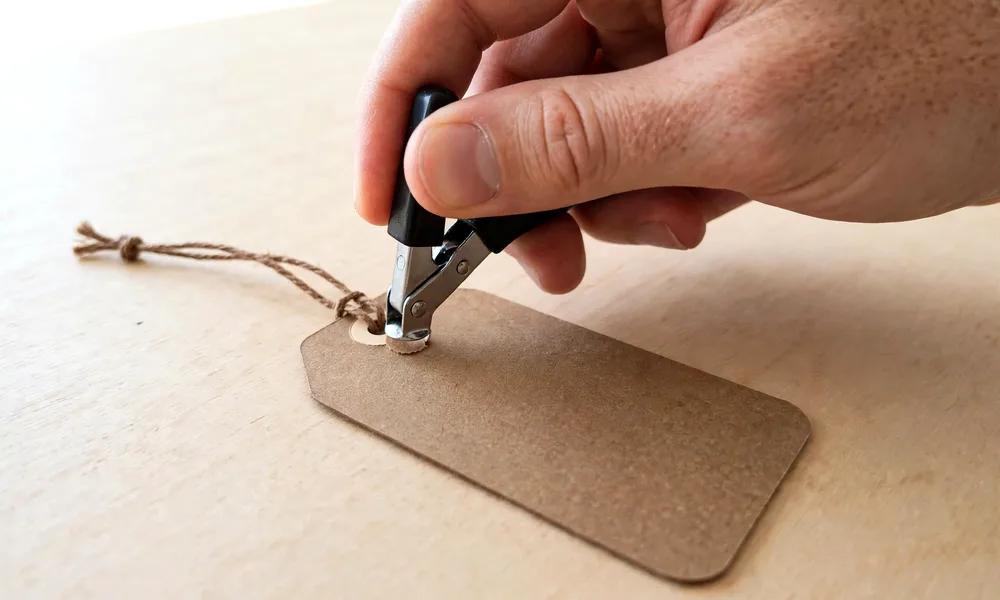
A single-hole plier punch is a small hand tool, squeezed like pliers, that punches one hole at a time in a single sheet. It is the best punch for tags, luggage labels, tickets, craft projects and anything that needs one neat hole near an edge. It will not jam in the usual sense, because there is only one head and one sheet, but it will tear if you use it on thick card it was not built for, or if the head goes dull and you keep squeezing harder instead of replacing it.
5. Electric punch: the best punch for high-volume filing
An electric punch does the pressing for you, which makes it the best choice for offices that punch hundreds of sheets a day. You feed the paper in, press a button, and the motor drives the heads through the stack. A good one punches twenty to thirty sheets at a time, senses when the tray is full, and stops rather than forcing a jam. Electric punches are the most expensive option, need a power socket, and are wasted on light home use. They also jam badly if overloaded, because the motor keeps pushing where a hand would feel the resistance and stop.
6. Adjustable multi-hole punch: the best punch for planners and discs
An adjustable multi-hole punch has heads that slide along a rail, so you can set it for two, three, four or more holes at any spacing, which makes it the best punch for planner pages, disc-bound notebooks and mixed binding systems. It is the most flexible punch you can buy, and also the fiddliest. Setting it up takes a few minutes, and a head that is even slightly out of line will punch a hole that does not match the binder, which means the page will not sit flat and the next punch will jam.
7. Shape and craft punch: the best punch for scrapbooks
A craft punch cuts shapes rather than round holes: stars, hearts, circles, flowers and borders, pressed out of paper and card for scrapbooks, greetings cards and decorations. It is a different tool from a filing punch, and it jams for different reasons, usually thick card, damp paper, or a shape with fine points that catches in the die. Our guide to why scrapbooks still beat photo apps explains how punched shapes, borders and tags turn a plain page into a keepsake, and why a clean punch matters more than a fancy one.
How to use a hole punch without jamming it
The habits matter as much as the punch. Punch in batches of about two thirds of the rated capacity, and the heads will cut cleanly for years. Push the paper fully into the guide and square it up before you press, because paper that enters at an angle cuts unevenly and tears. Press once, smoothly and firmly, all the way down, and let the lever spring back on its own rather than pulling it up. Never punch stapled, taped or glued paper, and never punch paper with a fold or a crease across the punching line, because the doubled thickness at the fold is what jams the head.
What to look for before you buy
Check the frame first. Metal frames last, plastic frames flex, and a frame that flexes is a punch that will jam. Pick the punch up and press the lever halfway: the frame should not bend or twist, and the base should stay flat on the desk. Check the sheet rating second, and buy a rating comfortably above your usual stack: if you usually punch fifteen sheets, buy a punch rated for twenty-five or thirty, not one rated for fifteen. A punch that passes all five checks is a punch that will not jam on ordinary paper.
What to avoid when buying a hole punch
Avoid the cheapest punch on the shelf, because it is cheap for a reason: a thin plastic frame, soft steel heads that dull in months, and a tray that falls out. Avoid buying a punch for the wrong job: a single-hole punch will never file a report, and a heavy-duty punch is wasted on ten sheets a week. If your filing mostly lives in notebooks rather than loose sheets, our guide to what makes a notebook worth writing in may save you buying a punch at all, and for craft desks, a good adhesive matters as much as a good punch, as our guide to glue sticks that hold paper without the mess explains.
Checklist: picking a hole punch that won’t jam
- Choose a metal frame that does not flex when you press the lever halfway down.
- Buy a sheet rating comfortably above your usual stack.
- Check the tray slides out easily and empty it before it is full, not after a jam.
- Make sure the paper guide slides smoothly and locks firmly at your usual setting.
- Match the punch to the job: single-hole for tags, two-hole for home filing, three-hole for binders.
- Test the lever: one smooth press with one hand, and a clean spring-back on its own.
Frequently asked questions
Why does my hole punch keep jamming?
Usually because you are punching too many sheets at once, the confetti tray is full, or the paper is stapled, taped or folded at the punching line. Punch smaller batches, empty the tray, and remove staples before you punch, and most jams disappear.
How many sheets can a hole punch handle?
An everyday two-hole punch handles ten to twenty sheets of ordinary copier paper, a three-hole punch twenty to forty, and a heavy-duty punch forty to a hundred. Always punch about two thirds of the rated maximum for clean cuts and a longer life.
Can I sharpen a hole punch?
Not really. The cutting heads are hollow steel tubes, and sharpening them properly needs specialist tools.
What is the standard hole spacing for binders?
Two-hole filing uses holes eighty millimetres apart, and three-hole ring binders use the same eighty-millimetre spacing between adjacent holes. Adjustable punches let you match other spacings for planners and disc-bound notebooks.
Can a hole punch cut through card?
Yes, in small amounts. An everyday punch handles one or two sheets of thin card, and a heavy-duty punch handles thicker card in small stacks. Craft punches are rated for card up to about 160 grams per square metre; thicker board will jam them.
How do I clear a jammed hole punch safely?
Stop pressing, lift the lever gently, and pull the paper out slowly from the side it entered. Clear stuck discs with a thin wooden stick, never a metal tool, and never force the lever. If it is electric, switch it off first and use the reverse function.
Bottom line
The hole punch that will not jam in 2026 is a metal-framed punch rated well above the stacks you actually punch, with a tray you can see and empty, a guide that locks, and a lever that moves smoothly with one hand. Match the type to the job, punch in batches of two thirds of the rating, empty the tray often, and never punch staples or folds.


