Top Pantry Bins for a Tidy Kitchen in 2026
The best pantry bins for a tidy kitchen in 2026 give every bag, tin and packet a fixed home, so you can see what you have and reach it without moving half the shelf. A tidy pantry is rarely about having less food. It is about having the right containers: bins that fit the shelf, suit the food inside them, and keep dry goods fresh instead of letting them go stale in torn bags. When the bins work, shopping gets easier and far less food is thrown away because it was forgotten at the back.
A pantry bin is narrower than a general storage box. It lives in the kitchen, holds food, and gets opened every day, so it has to be food-safe, easy to clean, easy to lift with one hand, and sized for pasta, flour, tins, snacks and baking supplies.
Key Takeaways
- Measure the shelf first, leaving two centimetres above the bin so you can lift it out.
- Clear bins belong where you need to see stock levels at a glance; solid bins belong where you want packets and clutter hidden.
- One food category per bin, always: a bin holding pasta, snacks and baking supplies together is just a junk drawer with handles.
- Airtight lids matter for flour, rice and sugar; open-front bins suit tins and packets you grab daily.
- Buy one footprint in two or three heights so bins stack and line up.

What Makes a Pantry Bin Good or Bad
The first test is the fit. A bin one centimetre too tall for its shelf is a bin you will never use, and a bin too deep hides food at the back. The best bins leave a little air around them, so you can pull one out without dragging its neighbours with it.
The second test is the material. Hard clear plastic is the workhorse: light, easy to wipe clean, and transparent, so you can see whether the rice is running low without opening the lid. Glass is heavier, but it does not stain or hold smells, and suits flour, sugar and coffee well. Bamboo and wood look warm, yet they need wiping dry and are a poor choice for anything damp. Woven baskets hide packets well, but crumbs collect in the weave and they cannot be washed, so keep them for sealed packets.
The third test is the lid. A snap-on or screw lid keeps flour fresh, keeps damp out, and keeps pantry moths away, which is why airtight lids belong on anything you decant. A bin without a lid is fine for tins and sealed packets, and faster for things you grab every day. The worst pantry bins fail on the lid first: lids that do not seal, lids that crack, or lids so stiff you need two hands to open them. Handles matter too: a cut-out handle on each end is not a luxury, and handles that are part of the bin itself last longer than glued-on ones.
The Six Pantry Bin Types That Do the Work
Every pantry bin is a variation on a handful of ideas. Once you know them, you can match the bin to the food instead of buying a matching set that solves nothing.
1. Clear Stackable Bins
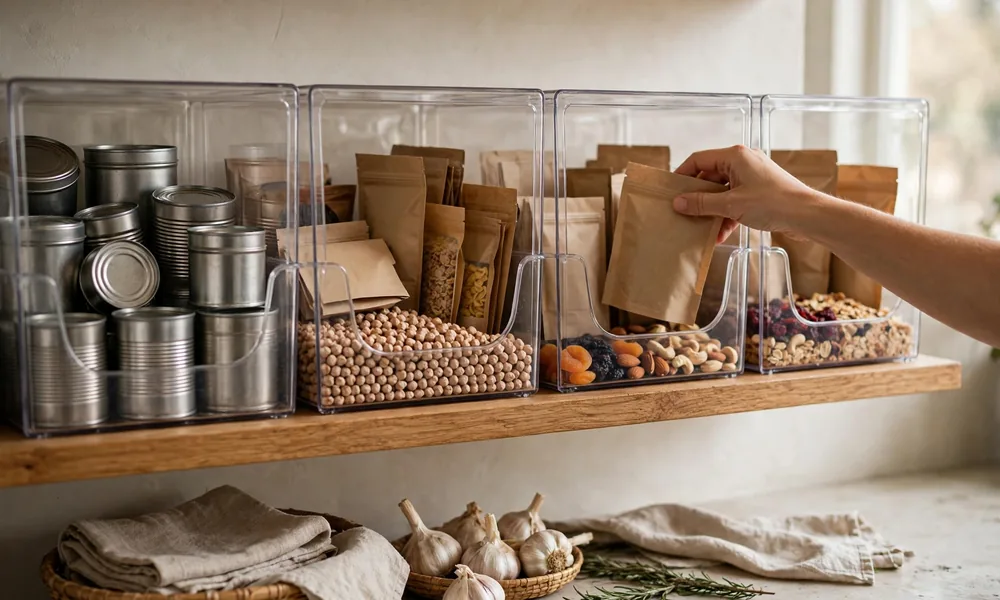
Clear stackable bins are the best all-round pantry bins for most kitchens: hard plastic, rectangular, with a flat top that lets another bin sit on it, holding anything from pasta to packets of soup. Their strength is visibility: you can see what is inside and how much is left, which stops you buying a third bag of rice when two are already there. Their weakness is that they show everything, including the mess.
2. Airtight Canisters
Airtight canisters are for dry goods you pour: flour, sugar, rice, oats, coffee and dried pulses. A good seal keeps damp and pantry moths out, and keeps flour fresh roughly twice as long as an open bag. Glass canisters with a silicone seal are best, though heavy when full; plastic canisters with a locking lid are lighter and safer on a high shelf. Decant only the dry goods you use weekly, and label the canister.
3. Open-Front Bins
Open-front bins look like a lidded box from the front, but a cut-out lets you pull things out without lifting the bin down. They are the best bins for deep shelves, where a normal bin hides everything behind the first row, and for things you grab daily: tins, snacks and sachets. Put weekly items in open-front bins and monthly items in lidded ones. Their weakness is dust, so keep them away from the hob and wipe them out weekly.
4. Produce and Ventilated Bins
Onions, garlic, potatoes and root vegetables need air, not a sealed box. A wire bin, a slatted crate or a woven basket lets air move around the produce, keeping it dry and stopping it sprouting as fast. Keep these bins low and dark, and never store onions and potatoes together, because onions release gases that make potatoes sprout. A ventilated bin is a poor choice for anything else, because crumbs and small packets fall through the gaps.
5. Can Dispensers and Tin Bins
Tins are the pantry’s worst citizens: heavy, round, identical from the top, and they roll. A can dispenser is a sloped track that feeds tins forward as you take one, so the oldest tin is always the one you grab next, cutting waste from out-of-date stock. A simpler tin bin, a deep open box holding tins upright in a single layer, does most of the same job for less money, provided you keep one type per bin and label the front.
6. Baskets and Solid Bins
Solid bins and baskets are for the pantry you can see. On an open shelf, a woven basket or solid-coloured bin looks like furniture and hides the packets you would rather not display. Their weakness is structure: fabric bins sag when half empty, and neither lets you see what is inside, so label the front and reserve them for sealed packets.
Pantry Bins Compared
| Bin type | Best for | Watch out for | Price in 2026 |
|---|---|---|---|
| Clear stackable bins | Everyday dry goods and packets | Lids that do not seal; thin walls under heavy loads | Low to mid |
| Airtight canisters | Flour, rice, sugar, coffee | Heavy glass on high shelves; seals that wear out | Mid |
| Open-front bins | Tins, snacks, daily-use packets | Dust on open contents | Low to mid |
| Produce and ventilated bins | Onions, garlic, potatoes | Not for loose food or small packets | Low |
| Can dispensers and tin bins | Tinned food, first-in-first-out | One type per bin only | Low to mid |
| Baskets and solid bins | Open shelves, hiding packets | Sagging when half empty; crumbs in the weave | Low to mid |
Matching Bins to the Food Inside Them
The fastest way to choose is to start with the food, not the bin. Dry goods you pour belong in airtight canisters, because they go stale and attract moths in an open bag. Tins belong in open-front bins or can dispensers, upright and in a single layer, one type per bin, so you can read every label. Packets and snacks belong in clear stackable bins, while baking supplies suit solid bins that hide the jumble. Potatoes, onions and garlic want a dark, ventilated bin low down, while fruit wants a shallow open basket where bruising is easy to spot. Anything in a torn bag should be decanted or clipped shut first, because a bin full of open packets stays tidy for about a week. For the jars beside the bins, our guide to storage jars that keep your pantry looking tidy in 2026 compares the dedicated options.
Sizing, Labelling and Keeping Bins Clean
Sizing is the step most people skip, and it is why so many bins end up unused. Take a tape measure to every shelf, including the gap above it, because a bin that cannot be lifted out will be left full of whatever was in it first. Tall bins suit cereal and pasta; short, wide bins suit tins and snacks.
Labelling is what makes the system survive the first month: a label on the front of every bin means anyone can put things away in the right place. Cleaning is simple but regular: empty each bin when it runs low, wipe it out, dry it fully, and only then refill it, because damp inside a sealed bin is how mould starts.

Pantry Bins and the Rest of the Kitchen
Pantry bins work best as part of a wider system. Group food by how you cook, breakfast together, baking together, dinner together, snacks together, and give each group its own shelf. Our guide to pantry organizers that end the clutter in 2026 covers the turntables, risers and pull-out drawers that work alongside bins, while our guide to storage bins worth buying for a tidier home in 2026 covers the bins for the rest of the house.
Buying Checklist: Six Checks Before You Pay
- Measure every shelf, including the clearance above it, and buy bins that fit those measurements.
- Check the lid: it should seal firmly on airtight bins and lift off easily on daily-use bins, without needing two hands.
- Pick the material for the food: glass or sealed plastic for flour and rice, ventilated bins for onions and potatoes.
- Look for handles that are part of the bin, and test the weight of a full bin before you buy a set of them.
- Buy one footprint in two or three heights, and keep one category per bin, labelled on the front.
- Count what you actually store first, and buy the bins for that list.
Frequently Asked Questions
How many pantry bins do I need?
Most family kitchens need eight to twelve bins: two or three airtight canisters, three or four clear stackable bins, two open-front bins for tins, and one ventilated bin.
Are clear or solid pantry bins better?
Clear bins are better where you need to see stock levels, such as rice, pasta and snacks. Solid bins are better on open shelves, where you want clutter hidden. Most tidy pantries use both.
Should pantry bins be airtight?
Only bins holding dry goods you pour need to be airtight: flour, sugar, rice, oats and coffee. Airtight lids keep damp and pantry moths out. Tins and sealed packets do not need airtight bins, and produce actively needs air, so a sealed bin would make onions and potatoes go soft faster.
What size pantry bin suits a standard shelf?
A standard kitchen shelf is 30 to 40 centimetres deep and 30 to 45 centimetres high, so a bin around 25 to 30 centimetres deep and 20 to 25 centimetres tall usually fits well. Measure your own shelves first, because a bin that fits one shelf may not fit the shelf above it.
Can I put pantry bins in the dishwasher?
Most hard plastic and glass bins can be washed in warm soapy water, and many glass canisters are dishwasher-safe once the seal is removed, but bamboo lids, wooden bins and woven baskets cannot go in a dishwasher and will warp or split. When in doubt, hand-wash and dry fully.
How do I stop pantry bins from getting messy again?
Keep one category per bin, label every bin, and decant or clip shut anything in a torn bag. Empty and wipe each bin when it runs low, and do a five-minute tidy when the shopping is put away.
The Bottom Line
The best pantry bins for a tidy kitchen in 2026 are clear stackable bins for everyday food, airtight canisters for flour, rice and sugar, open-front bins for tins and snacks, and a ventilated bin for onions and potatoes, all measured to fit your shelves and labelled on the front. Buy for the food you actually store, one category per bin, and every bag, tin and packet will have a home that is easy to find and easy to keep.