Best Canisters That Keep Food Fresh Longer in 2026
The best canisters keep food fresh longer because they seal out the air, moisture and smells that quietly ruin dry goods. A good canister is not just a pretty jar on the counter.
Key Takeaways
- The seal matters more than the material: a silicone gasket or locking clamp keeps food fresh far longer than a loose wooden lid.
- Glass canisters suit coffee and anything you want to see at a glance, while steel and ceramic suit foods that suffer in light.
- Buy the size you will empty in a few weeks, not the biggest jar on the shelf, so food never sits long enough to go stale.
- Wide mouths make filling and scooping easy, but a narrow neck pours better, so match the opening to how you use the food.
- One food per canister, labelled with the fill date, stops mystery mixes and helps you use the oldest stock first.
What Makes a Canister Keep Food Fresh
A canister keeps food fresh by slowing down the three things that spoil dry goods: air, moisture and light. Air carries oxygen, and oxygen dulls flavour, especially in coffee, nuts and whole grains. Moisture makes flour clump, sugar harden and crackers go soft.
The lid is where most canisters succeed or fail. A simple wooden lid that just rests on top looks lovely, but it lets air drift in and out all day. A lid with a silicone ring that presses against the rim seals far better, and a clamp lid with a metal catch seals better still.

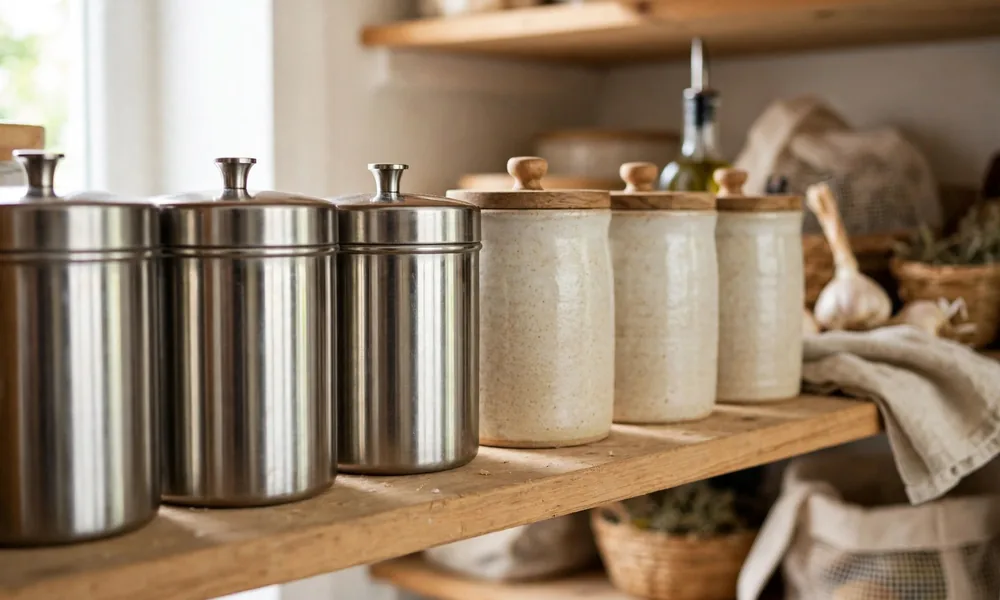
Material matters next, and each one has a real trade-off. Glass shows the contents and the level at a glance, does not absorb smells or stains, and washes clean, but it lets light in and it can break. Stainless steel blocks light completely, survives drops and suits coffee and tea, but you cannot see how much is left without opening it.
The Main Types of Kitchen Canister
Glass Canisters with Silicone Gaskets
Glass canisters with a silicone gasket are the best all-rounders for most kitchens. The glass body lets you see flour, rice, pasta and coffee without opening the jar, so you know what is running low and you do not buy duplicates.
Stainless Steel Canisters
Stainless steel canisters are the best choice for coffee, tea and anything that hates light. Steel blocks light completely, does not absorb odours, and survives the knocks of a busy kitchen.
Ceramic Canisters
Ceramic canisters are the traditional countertop choice, and they still earn their place. A glazed ceramic body blocks light, keeps food cool, and looks at home in almost any kitchen. The classic sets come in three sizes for tea, coffee and sugar, with lids that lift off easily.
Clamp-Lid and Vacuum-Seal Canisters
Clamp-lid canisters use a metal catch to press the lid down onto a silicone ring, and they give the tightest everyday seal of all. They are the best choice for flour, rice and anything stored for weeks, because the clamp holds the seal even if the jar is knocked.
Best Canisters of 2026 at a Glance
| Pick | Best For | Standout Strength | Typical Price |
|---|---|---|---|
| Best overall | Everyday dry goods | Glass body, silicone gasket, wide mouth | $25–$45 a set |
| Best for coffee | Coffee beans and ground coffee | Steel body, airtight lid, blocks light | $20–$35 each |
| Best for flour | Flour, sugar and rice | Clamp lid, large wide mouth, easy scooping | $18–$30 each |
| Best for small kitchens | Tea, sugar and spices | Compact ceramic set, stackable shapes | $30–$50 a set |
| Best for pasta | Spaghetti, penne and rice | Tall narrow glass, pour-friendly neck | $15–$25 each |
| Best budget set | First canister set | Three sizes, silicone seals, clear glass | $20–$30 a set |
How to Choose the Right Size and Shape
Size is the easiest thing to get wrong, and it matters more than most people expect. A canister that is too big holds a lot of stale air above the food, and that air speeds up staling. A canister that is too small needs constant refilling, which is annoying enough that people stop using it.
Shape follows use. Wide-mouth canisters suit flour, sugar and rice, because you scoop the food out with a cup or a spoon. Narrow-neck canisters suit pasta and coffee beans, because you pour them out without spilling.
Keeping Food Fresh: Habits That Matter as Much as the Jar
Even the best canister cannot save food that was already stale when it went in, or food that sits in a hot, sunny spot. Decant food as soon as you bring it home, and write the date on the lid or on a label so you know how old it is.

Canisters vs Jars, Bins and Mason Jars
Canisters, jars and bins overlap, but they are not the same tool. A canister is a countertop container for a single dry food, chosen for its seal and for daily use. A storage jar is usually part of a pantry system, chosen for how a whole shelf looks and works together.
The distinction matters when you shop, because buying the wrong container wastes money. If you want a tidy pantry shelf, pantry bins for a tidy kitchen will do more than another set of canisters. If you want to preserve jam or pickles, a mason jar for storage and canning is the only safe choice, because only a proper mason jar with a two-piece lid seals under heat.
What to Avoid When Buying Canisters
The worst canisters fail in the same few ways. A lid without a gasket looks fine in the shop and lets air in at home. A jar with a narrow mouth that you cannot fit a hand into will never get properly clean, and old flour will build up in the corners.
Canister Sizes for Common Foods
Flour is the bulkiest food most kitchens store, and it needs the biggest canister. A standard bag of plain flour weighs about one and a half kilograms and fills a canister of roughly two litres, so a wide, squat jar with a large mouth is the best home for it. Sugar is denser, so a bag of sugar fits a smaller jar, about one and a half litres, and a narrow neck pours it neatly into a measuring cup. Rice and pasta sit in the middle: a tall, narrow canister holds a bag of spaghetti upright and keeps the strands from breaking, while a wide jar suits short pasta and rice that you scoop out by the cup.
Coffee needs the smallest canister of all, because you should use it quickly. A bag of coffee beans fills a jar of about one litre, and a smaller jar is better than a larger one, because less air sits above the beans. Tea, spices and salt need even smaller jars, and a set of small canisters in matching shapes keeps a shelf tidy. If you already use storage jars that keep your pantry looking tidy, match the canister footprint to the jars you own, so the two sets line up on the same shelf instead of wasting space in mixed shapes and heights.
Cleaning and Looking After Canisters
Canisters last for years when they are cleaned properly, and they fail quickly when they are not. Wash glass and steel canisters in warm soapy water, rinse them well, and dry them completely before refilling, because even a little dampness will clump flour and harden sugar. Wooden lids should be wiped clean and left to dry, not soaked, because soaking swells the wood and loosens the fit. Silicone gaskets can be removed, washed and dried separately, and they should be replaced when they go stiff, cracked or loose, because a worn gasket is the most common reason a good canister stops sealing.
Check the rim of every canister when you wash it, because a chip on a glass rim or a dent on a steel rim can break the seal without you noticing. A canister that has lost its seal is still useful for pasta or for foods you use within days, but it should not hold flour or coffee. Keep spare gaskets if the maker sells them, and label each canister with the food inside, so nobody pours sugar into the flour jar by mistake. A little care keeps a mid-priced set working as well in its third year as it did on the day you bought it.
Matching Canisters to Your Kitchen
The best canister for a small kitchen is not the same as the best canister for a large one. In a small kitchen, stackable canisters with flat lids save shelf space, and a matching set in one footprint makes the most of a single shelf. In a large kitchen with open shelves, ceramic and glass canisters can sit on display, and their looks matter as much as their seals. In a household with children, steel canisters survive drops that would shatter glass, and in a rented kitchen, a light plastic set is easier to move.
Canister Checklist: Before You Buy
- Press the lid and check for a silicone gasket that meets the rim all the way around.
- Turn the closed canister upside down over the sink to test for leaks and dust.
- Check the mouth is wide enough for your hand and your scoop to fit inside.
- Measure the shelf and the cupboard height, including the lid and knob, before ordering.
- Match the material to the food: glass for foods you watch, steel for coffee and tea.
- Buy the size you will empty in two to four weeks, and label it with the fill date.
Frequently Asked Questions
Do canisters really keep food fresh longer?
Yes, when the lid seals properly. A canister with a silicone gasket or a clamp lid keeps air and moisture out, which slows staling in flour, coffee, rice and pasta. A canister with a loose lid does little more than a bag clipped shut, so the seal is what makes the difference.
Are glass or steel canisters better?
Glass is better when you want to see the contents and the level, and it does not absorb smells. Steel is better for coffee, tea and spices, because it blocks light completely. Many kitchens use both: glass for flour, rice and pasta, and steel for coffee and tea.
How long does flour last in a canister?
Flour lasts about three to six months in a sealed canister kept in a cool, dark place, and less in a warm kitchen. White flour lasts longer than wholemeal flour, which goes rancid faster. Label the fill date and use the oldest flour first.
Can I store coffee in a glass canister?
You can, but keep it in a cupboard away from light, and use it within two weeks of opening the bag. For longer storage, a steel canister or an opaque jar protects the beans better. Grind only what you need, because ground coffee stales far faster than whole beans.
Should canisters go in the dishwasher?
Glass and steel bodies usually wash well in a dishwasher, but wooden lids and silicone gaskets last longer when washed by hand. Check the maker’s instructions, dry the canister completely before refilling, and replace a gasket that has gone stiff or cracked.
How many canisters do I need?
Most kitchens need five or six: flour, sugar, coffee, tea, rice and pasta. Start with those, in sizes you will empty in a few weeks, and add more only for foods you actually decant. A matching set in one footprint keeps the shelf tidy and makes the sizes easy to remember.
The Bottom Line
The best canisters keep food fresh longer because they seal properly, suit the food inside them, and come in a size you will actually empty. Choose glass with a silicone gasket for everyday dry goods you want to see, steel for coffee and tea that need darkness, and a clamp lid for flour and rice you store for weeks.