What Is Wax Paper Actually Good For in 2026
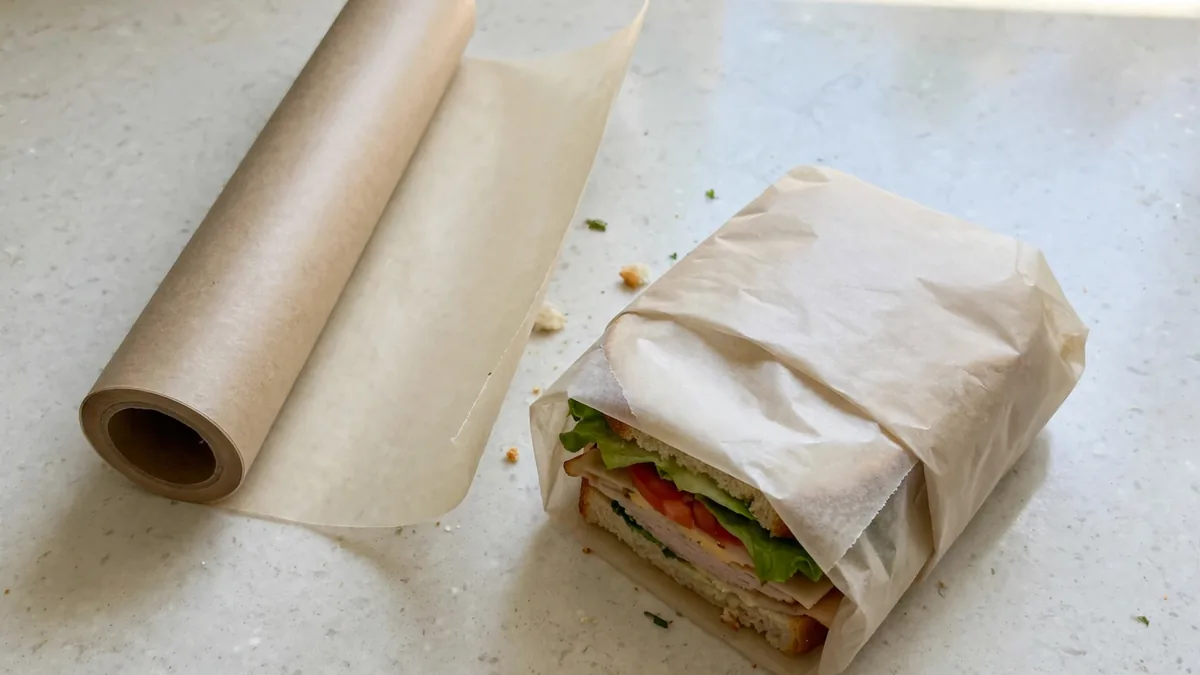
Wax paper is actually good for wrapping sandwiches, lining work surfaces, separating food and keeping sticky things from sticking to each other, and it is still worth a place in the kitchen drawer in 2026. It is not a baking paper, it is not a cling film, and it is not a foil, and most of the confusion about wax paper comes from treating it as one of those things.
Key Takeaways
- Wax paper is best for cold wrapping, lining counters and separating food, not for baking or grilling.
- Never put wax paper in the oven, under the grill or in the microwave, because the wax coating melts and can smoke.
- It wraps sandwiches, burgers and baked goods better than cling film, because it folds, breathes and does not stick to itself.
- Use it between layers of cookies, burgers and cheese slices to stop them sticking together in the fridge or freezer.
- It is not the same as parchment paper, which is silicone-coated and oven-safe, or beeswax wraps, which are reusable cloth.
What Wax Paper Actually Is
Wax paper starts as ordinary thin paper, and it is then coated on both sides with a thin layer of food-grade paraffin wax. The wax fills the fibres of the paper, which makes the sheet resist water and grease, and it gives the paper its slight sheen and its slippery feel.
The wax coating is also the limit. Paraffin wax melts at a low temperature, well below the heat of an oven, so wax paper must never go into a hot oven, under a grill or into a microwave. In the oven the wax melts into the food, the paper can scorch, and in the worst case it can smoke or catch.
What Wax Paper Is Good For
Wrapping Sandwiches and Packed Lunches
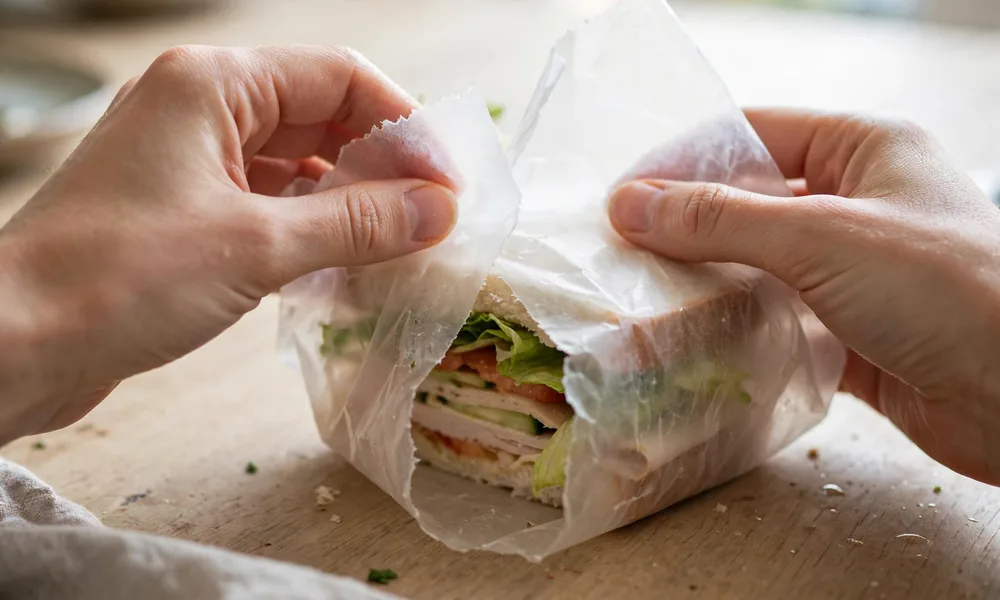
Wrapping sandwiches is the job wax paper does best. A sheet folded around a sandwich holds its shape, keeps the filling in place and protects the bread from drying out, without the cling and the fuss of plastic wrap.
Lining Counters and Work Surfaces
Wax paper is excellent for lining a counter or a work surface while you cook. Lay a sheet down before you roll out dough, shape burgers or chop messy food, and the counter stays clean. The wax coating stops grease and juice soaking through, and the sheet lifts away when you are done, taking the mess with it.
Separating Food in Storage
Wax paper is the simplest way to stop food sticking together in storage. Put a sheet between layers of cookies, between burger patties before freezing, between slices of cheese or between pancakes, and each piece lifts away cleanly. Without a separator, frozen burgers fuse into a block, cookies stick to each other, and cheese slices tear.
Kitchen Jobs Beyond Wrapping
Wax paper has a long list of small kitchen jobs that add up. It stops a sticky spoon rest from marking the counter, it lines a cake tin for a no-bake cake, and it wraps a block of cheese so it does not dry out in the fridge.

Wax Paper vs Parchment Paper, Plastic Wrap and Foil
Wax paper is most often confused with parchment paper, and the difference matters. Parchment paper that actually stops sticking is coated with silicone, not wax, and it is made for the oven: it survives heat up to about 220 degrees, it releases cookies cleanly, and it lines baking tins.
Plastic wrap and foil are different tools again. What makes great plastic wrap is its cling: it seals a bowl airtight, keeps a cut avocado green, and wraps food tightly for the fridge. Wax paper does not cling, so it cannot seal a bowl, but it is better for wrapping a sandwich, because it folds and breathes.
| Wrap | Best For | Oven Safe | Reusable |
|---|---|---|---|
| Wax paper | Cold wrapping, lining, separating | No, wax melts | No |
| Parchment paper | Baking, lining tins, roasting | Yes, to about 220°C | No |
| Plastic wrap | Sealing bowls, covering food | No, unless labelled safe | No |
| Aluminium foil | Grilling, roasting, wrapping | Yes | No |
| Beeswax wraps | Covering bowls, wrapping cheese | No | Yes, for months |
When Not to Use Wax Paper
The list of things wax paper cannot do is short, but it matters. Never put wax paper in the oven, under the grill, in a toaster oven or in the microwave, because the wax melts and the paper can scorch or smoke.
Wax paper also has limits even for cold jobs. It is not airtight, so it will not keep a cut onion fresh for days, and it will not stop bread drying out overnight the way a sealed bag does.
How to Use Wax Paper Well
Using wax paper well is mostly about choosing the right sheet and folding it neatly. Tear off a sheet a little larger than the food, place the food in the centre, and fold the sides in before rolling the parcel closed, so the folds hold without tape.
Buy wax paper in a roll with a cutter, and keep it beside the parchment and the plastic wrap, so you reach for the right roll without thinking. A standard roll lasts months in most kitchens, because each job uses only one sheet.

Wax Paper for Freezing Food
Wax paper is a reliable helper in the freezer, where its main job is to stop food sticking together. Lay a sheet between burger patties before you stack them, between layers of cookies, between slices of meat, or between pancakes, and each portion lifts away cleanly when you need it. Without a separator, frozen food fuses into a solid block, and you have to thaw the whole batch to use one piece. Wax paper is thin, so it does not add bulk to a freezer bag, and it peels away from frozen food without tearing or leaving fibres behind.
It also wraps individual portions well. Wrap a single burger, a portion of dough or a piece of fish in wax paper, then put the parcel in a freezer bag, and the paper stops the food sticking to the bag and to its neighbours. Label the parcel with the date and the contents, because frozen parcels all look the same after a month. Wax paper is not a freezer bag on its own: it is not airtight, so food wrapped only in wax paper will dry out and suffer freezer burn over time. Use it as a separator and a wrapper inside a sealed bag or container, and it will do its job well for weeks.
Wax Paper vs Reusable Wraps
Wax paper and reusable wraps solve the same problems in different ways, and most kitchens can use both. Beeswax wraps are the reusable swap worth trying for covering bowls, wrapping cheese and keeping bread fresh, because a single wrap lasts for months and costs less over a year than roll after roll of disposable paper. Wax paper is the better choice when the food is messy, when you need a fresh sheet for each portion, or when you are wrapping food for someone else and do not expect the wrap back.
The choice comes down to how often you use the wrap and how much waste you want to make. A household that wraps a sandwich every day will save money and waste with a set of reusable wraps, washed and reused. A household that wraps a sandwich once a week, separates burgers for the freezer, or lines a counter for a messy job will find wax paper cheaper and simpler. There is no need to choose one or the other: keep a roll of wax paper for the disposable jobs and a few reusable wraps for the everyday ones, and reach for whichever suits the food in front of you.
Wax Paper in Crafts and Around the Home
Wax paper has a long history outside the kitchen, and it is still useful for crafts and for small jobs around the home. It lines a table while children paint, glue or bake, and it protects a surface while you polish shoes, oil a wooden board or clean a greasy hinge. It wraps a bar of soap for travel, so the soap does not stick to the inside of a wash bag, and it lines a drawer to stop jars and bottles rattling. It can even be used to press leaves and flowers, to wrap a small gift, or to keep a iron from sticking when you press a fabric that might mark.
In the craft room, wax paper is a handy non-stick surface for glue, paint and resin, because dried glue peels off it cleanly. It separates layers of paper, fabric and card in storage, and it wraps finished pieces so they do not stick together. It is not a substitute for proper craft paper or for a heat-resistant surface, and it must never go near a hot iron or a glue gun, because the wax melts.
Wax Paper Checklist: Before You Reach for the Roll
- Check the job is cold: no oven, grill, toaster oven or microwave for wax paper.
- Choose wax paper for wrapping, lining and separating, and parchment for baking.
- Tear a sheet a little larger than the food, so the folds close neatly without tape.
- Use a fresh sheet between layers of cookies, burgers, cheese and pancakes.
- Store the roll in a dry drawer, so the sheets tear cleanly and do not stick together.
- Throw the used sheet away after one use, and reach for a reusable wrap when you can.
Frequently Asked Questions
Is wax paper the same as parchment paper?
No. Wax paper is coated with paraffin wax and melts in heat, so it must never go in the oven. Parchment paper is coated with silicone and is made for the oven, surviving heat up to about 220 degrees. They look similar in the roll, but they are different products for different jobs.
Can wax paper go in the microwave?
No. The wax coating melts in the microwave, and the paper can scorch. Use a microwave-safe cover, a plate or a paper towel instead. Wax paper is for cold food and room-temperature work only.
Is wax paper safe for food?
Yes, for cold and room-temperature food. The paraffin wax used on food-grade wax paper is safe to touch food, and it has been used in kitchens for generations. Do not heat it, and do not use it for very hot food, because the wax can melt into the food.
Can I use wax paper instead of cling film?
For wrapping sandwiches and separating food, yes, and wax paper often works better, because it folds neatly and does not stick to itself. For sealing a bowl or keeping food airtight in the fridge, no: cling film seals, wax paper does not, so use plastic wrap or a container for those jobs.
Does wax paper keep sandwiches fresh?
Yes, for a few hours. Wax paper protects a sandwich from drying out and keeps the filling in place, and it breathes enough that the bread does not go soggy. For overnight storage, a sealed container or a bag keeps a sandwich fresher than wax paper alone.
Can wax paper be composted or recycled?
Plain wax paper can often go into home compost in small amounts, because the paper breaks down and the wax is a small part of the sheet. Check your local rules first, because some councils do not accept it. It cannot go into paper recycling, because the wax coating contaminates the paper stream.
The Bottom Line
Wax paper is actually good for wrapping sandwiches, lining counters, separating food and handling all the small cold jobs in a kitchen, and it earns its place in the drawer in 2026. It is not a baking paper, it is not a seal, and it must never go near heat.