Pasta Dryers That Stop Fresh Noodles Sticking Together in 2026
The best pasta dryers solve the problem every home pasta maker meets within minutes of rolling: fresh noodles are soft, damp, and sticky, and left in a pile they weld themselves into a single clump. A pasta dryer is the rack that hangs every strand in the air so it dries evenly, keeps its shape, and cooks as separate noodles instead of one lump. It is a simple tool, little more than arms on a stand, yet it is the difference between pasta that looks handmade and pasta that looks rescued.
A dryer is not a luxury for people who make pasta once a year. It is the cheapest part of the setup, it folds away into a cupboard, and it saves the batch that a good pasta maker just produced. A dryer also buys you time: strands can wait on the rack while the sauce finishes, instead of clumping in a bowl. This guide explains what pasta dryers are, how the main types differ, and how to dry fresh pasta properly.
Key takeaways
- A pasta dryer hangs fresh noodles in the air so they dry evenly and never stick together before cooking.
- A rotating stand dryer is the best first buy: it holds a full batch, turns for easy loading, and folds flat for storage.
- Hang strands loosely with air between them: noodles that touch while damp will weld together as they dry.
- Thirty minutes of drying is enough for pasta you cook tonight; dry it fully, for hours, only if you plan to store it.
- Wood absorbs moisture and is kind to delicate pasta; metal and plastic wipe clean and suit everyday use.
What a pasta dryer actually is
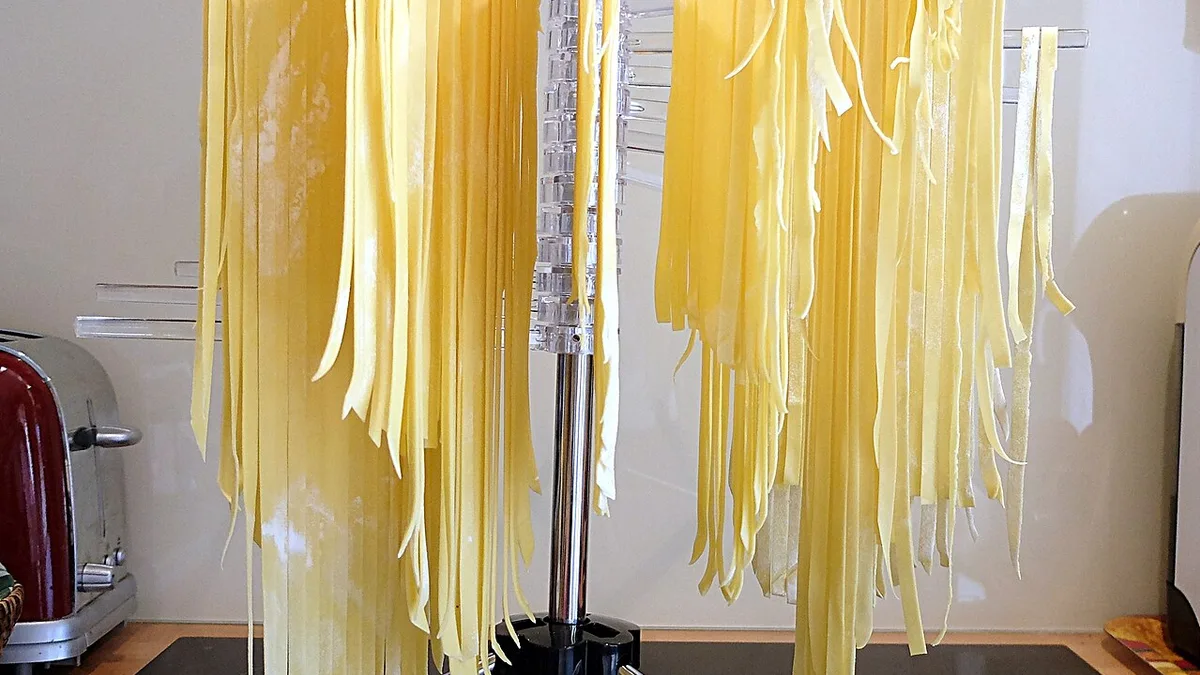
A pasta dryer is a rack, usually a stand with horizontal arms, that holds fresh pasta strands apart while air dries them. The classic design is a central pole on a tripod base, with eight or more arms that fold out like a tree. You drape each nest of noodles over an arm, and gravity and air do the rest. Flat racks exist too: a mesh or slatted tray that pasta lies on, turned once as it dries. Some stands rotate, so you can load every arm without walking around the table, and most fold flat for storage.
It is worth knowing what a dryer is not. It is not a pasta maker: the maker rolls dough into sheets and cuts it, and our guide to the best pasta makers for home covers the machines that do that job. A dryer takes over where the maker stops, holding the cut noodles until they are ready to cook or store. It is also not a ravioli maker: that tool shapes filled pasta, and our guide to the best ravioli makers covers the moulds and stamps that do it. Filled pasta dries flat on a tray, not hanging, so a dryer is for strands and sheets, not parcels.
The main types of pasta dryer, compared
Almost every pasta dryer falls into one of four designs. Pick by batch size first: a dryer that cannot hold a full batch is worse than no dryer at all, because half the noodles end up in a pile anyway.
| Type | Best for | Capacity | Watch out for |
|---|---|---|---|
| Rotating stand | Most home cooks | A full batch | Needs a flat, stable surface |
| Flat mesh rack | Short pasta and sheets | One layer at a time | Slow for long strands |
| Wall-mounted arms | Small kitchens | A full batch | Fixed in place |
| Clothes-rack style | Very large batches | Several batches | Takes up the most room |
Rotating stand dryers
The rotating stand is the best first buy for most home cooks. A central pole holds eight or more arms, and the whole head turns, so you can load one side, spin it, and load the other without walking around the table. The arms fold down flat, and the whole thing stands in a cupboard between uses. Look for a wide tripod base: a narrow base tips when one side is loaded and the other is empty. Wooden arms grip slightly and are kind to delicate egg pasta; plastic arms wipe clean but can let very fine strands slide.

Flat mesh racks
A flat rack is a mesh or slatted tray that pasta lies on in a single layer. It suits short pasta, sheets for lasagne, and filled pasta that cannot hang. The trade-off is speed: strands lie flat, so air reaches only the top, and you must turn them once. It also takes the most table space per portion. Keep one for sheets and filled pasta, and hang your strands.
Wall-mounted and large dryers
Wall-mounted arms fold out from the wall and suit small kitchens, because they take no counter space at all. The cost is permanence: they stay where they are fixed, and you dry pasta in that one spot. Clothes-rack style dryers, tall folding frames with many bars, suit very large batches, a family making pasta for a crowd, but they take up the most room and are the hardest to store. Most home cooks will never need either; the rotating stand covers a normal batch.
How to choose: arms, stability, material, and storage
Arms come first. Count them, and measure them: eight arms of about 30 centimetres hold a full batch for four people, with room for air between the strands. Short arms force you to crowd the noodles, and crowded noodles stick. Arms that fold flat matter too, because a dryer that cannot fold lives on the counter forever, and a dryer on the counter gets put away in frustration and never used again.
Stability is the second test. A dryer loaded on one side only is badly unbalanced, and a light base will tip, dropping a batch on the floor. A wide tripod base, or a base you can weight with a heavy plate, is worth more than a pretty finish. Test it in the shop if you can: load one side and see if it leans.
Material is a trade-off. Wood absorbs a little moisture and grips the pasta gently, which suits delicate egg noodles. Metal is strong, easy to clean, and lasts for years, but smooth steel lets very fine strands slide toward the centre. Plastic is the lightest and cheapest, and it wipes clean, but thin plastic arms flex under a heavy load. For most kitchens, beechwood arms on a steel pole are the best balance.
Storage decides whether the dryer gets used. A stand that folds flat slides into a cupboard beside the baking trays; one that does not fold lives on the counter, gets in the way, and is eventually put away for good. Measure your cupboard before you buy, not after.
How to dry fresh pasta properly
Drying is simple, but the timing matters. For pasta you will cook tonight, hang the strands loosely as soon as they are cut, with air between them, and leave them for about thirty minutes. The surface firms up, the strands stop sticking, and they cook evenly. Do not wait longer than an hour for tonight’s pasta: over-dried strands turn brittle and snap when you drop them in the pot.
For pasta you want to store, dry it fully. Hang it in a dry room with moving air, away from steam, for several hours or overnight, until the strands snap cleanly when bent. Then gather them into loose nests and store them in an airtight container. Fully dried pasta keeps for weeks, but it must be truly dry: a nest stored while still soft in the middle will go mouldy in days.
Mistakes that ruin a batch
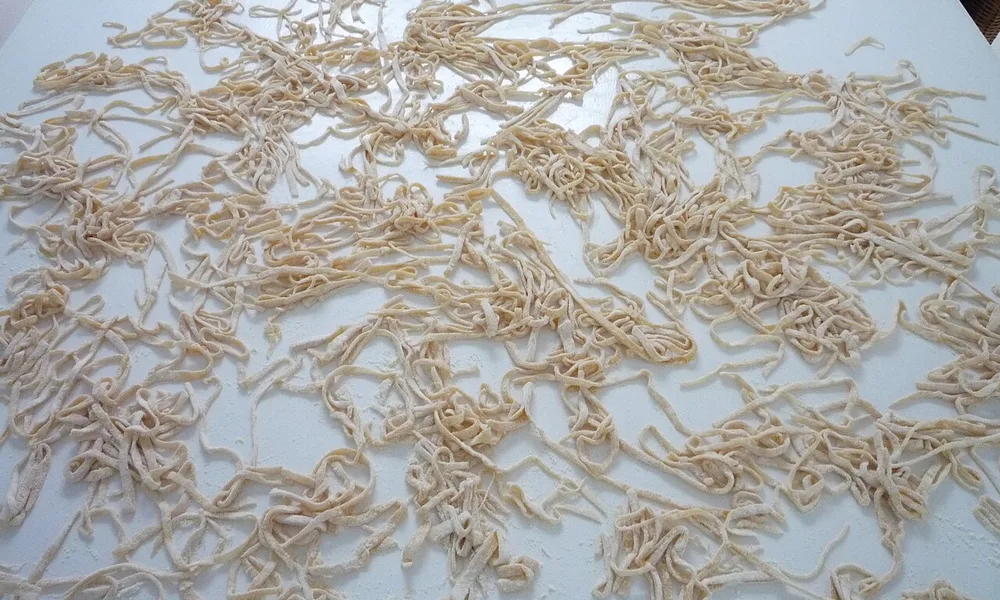
The most common mistake is crowding the arms. Noodles that touch while damp weld together as they dry, and no amount of pulling apart will save them: they tear, and the torn strands cook unevenly. Hang fewer strands per arm than you think you need, and use every arm before you double up.
The second mistake is drying in a steamy kitchen. A dryer next to a boiling pot sits in warm, damp air, and the pasta never firms up. Move it to a cooler, drier room, or at least away from the hob. The third mistake is flouring too heavily. A light dusting stops sticking; a thick coat dries into a pale crust that clouds the cooking water and dulls the sauce. Shake the strands gently before hanging, and let the air do the work.
The fourth mistake is cooking straight from a long dry. Pasta left hanging overnight turns brittle and snaps in the pot. If it has dried hard, it is no longer tonight’s pasta: store it as dried pasta and cook it a little longer, with more water.
Your pasta dryer checklist
- Choose a rotating stand with at least eight arms of about 30 centimetres for a full batch for four.
- Check the base: wide and stable, so a half-loaded dryer never tips.
- Pick beechwood arms for delicate egg pasta, and steel or plastic for easy cleaning.
- Hang strands loosely with air between them, and never double up an arm before all arms are used.
- Dry for about thirty minutes for tonight’s pasta, and fully, for hours, only for storage.
- Fold the dryer flat after use: a dryer that stores easily is a dryer that gets used.
Frequently asked questions
Do I really need a pasta dryer?
Not for a small batch you cook at once, but for any batch you cut ahead, yes. Without one, fresh noodles left in a pile stick together and cook as a lump. A dryer costs little and saves the batch.
How long should fresh pasta dry before cooking?
About thirty minutes at room temperature is enough for pasta you cook tonight. The surface firms up and the strands stop sticking. Do not leave it for hours unless you plan to store it.
Can I dry pasta in the oven?
No. An oven, even on low, is too hot and too still: it cooks the outside while the inside stays soft, and the strands turn brittle. Dry pasta in moving air at room temperature.
How do I store dried homemade pasta?
Dry it fully, until the strands snap cleanly when bent, then gather them into loose nests and keep them in an airtight container in a cool, dry cupboard. Fully dried pasta keeps for weeks.
Can I use a pasta dryer for ravioli?
No. Filled pasta should dry flat on a tray, not hanging: hanging pulls the seal apart and the filling escapes. Use a flat rack or a floured tray for ravioli.
Wood or metal arms: which is better?
Wood grips gently and absorbs a little moisture, which suits delicate egg pasta. Metal is stronger and easier to clean. For most home cooks, beechwood arms on a steel pole are the best balance.
The bottom line
The best pasta dryer in 2026 is not the biggest or the most expensive. It is the rotating stand with enough long arms to hold a full batch loosely, a base wide enough never to tip, and a fold-flat design that lives in a cupboard between uses. Hang the strands with air between them, give them thirty minutes, and cook them while they are still supple. A dryer that folds flat and holds a full batch will be the tool you reach for every time. And when the pasta is on the table, the right tool matters there too: our guide to the best pasta servers covers the servers that lift spaghetti without dropping it. Get the drying right, and the pasta you worked for arrives at the table as separate strands, not a rescue job.


