Pet Dental Wipes 2026: The No-Brush Way to Cleaner Teeth and Fresher Breath
Pet dental wipes are the simplest tool in pet dental care: a pre-moistened cloth, usually wrapped around your finger, that wipes plaque off your pet’s teeth without a brush, without paste, and without the struggle that puts many owners off brushing altogether. For dogs and cats that will not tolerate a toothbrush, for puppies and kittens still learning, and for owners who travel or need a quick clean between brushes, wipes are the fallback that actually gets used. This guide explains how pet dental wipes work, how they differ from toothpaste, and how to pick ones that clean teeth instead of just masking bad breath.
Here is the distinction that matters most. Pet dental wipes and pet toothpastes are not the same product in different packaging, and they do not do the same job. A toothpaste is a chemical cleaner: enzymes and mild abrasives in a paste that you apply with a brush, and the brush does the scrubbing while the paste does the chemistry. A dental wipe is a mechanical cleaner: a textured cloth that physically lifts soft plaque off the tooth surface as you rub it, with only a mild cleaning solution to help. Wipes are easier and faster, and they reach pets that refuse a brush, but they cannot match a paste-and-brush routine for thorough cleaning, especially along the gumline and on the back teeth. Think of wipes as the best no-brush option, not as a replacement for brushing.
Key Takeaways
- Pet dental wipes clean by wiping: a textured cloth lifts soft plaque off teeth, with no brush and no paste needed.
- Wipes are not toothpaste: paste works chemically with a brush, while wipes work mechanically with a cloth, and brushing still cleans better.
- Wipes are ideal for pets that refuse a brush, for puppies and kittens, and for quick cleans between brushing sessions.
- Choose wipes with a short, safe ingredient list, no xylitol, and a texture rough enough to grip plaque.
- Wipes cannot remove hardened tartar; they slow new plaque, and tartar already there needs a vet cleaning.
How Pet Dental Wipes Work
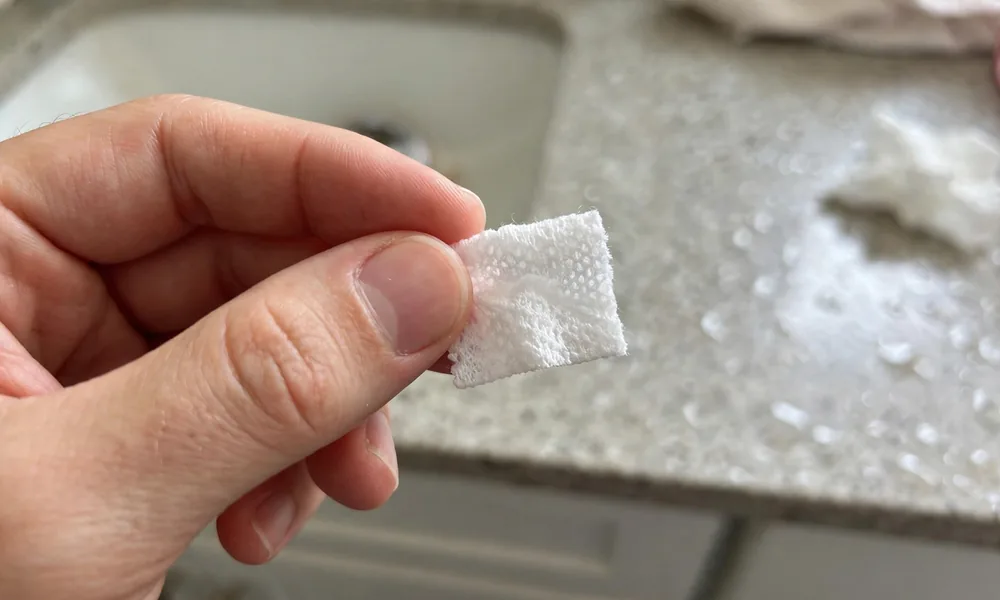
A dental wipe is a small disposable cloth, usually about the size of a sticking plaster, impregnated with a mild cleaning solution. You wrap it around your index finger, lift your pet’s lip, and rub the cloth over the outer faces of the teeth, paying attention to the gumline where plaque collects. The texture of the cloth does most of the work: tiny ridges or a slightly rough weave grip the soft, sticky plaque film and lift it away. The solution, often containing a mild antibacterial agent or a small amount of an enzyme, helps loosen the film and freshens breath.
That simplicity is the whole appeal. There is no brush to manoeuvre, no paste to squeeze, and no foaming to frighten an animal. A wipe session takes under a minute, and most pets tolerate a finger in their mouth far more readily than a brush. The trade-off is reach and thoroughness. A finger cannot scrub the back teeth of a large dog the way a long-handled brush can, and a wipe cannot work its way under the gumline. Wipes are a surface clean, and they are honest about it: used daily or several times a week, they slow plaque build-up noticeably, but they are not a deep clean.
Wipes Versus the Other Dental Options
Pet dental care has four main at-home tools, and each one fits a different pet and a different moment. Understanding where wipes sit among them stops you buying the wrong product for your pet’s temperament.
| Tool | How it cleans | Best for | Limit |
|---|---|---|---|
| Dental wipes | Textured cloth lifts soft plaque by rubbing | Brush refusers, puppies, kittens, travel | Surface clean only; weak on back teeth |
| Toothpaste and brush | Enzymes plus bristle scrubbing at the gumline | Most dogs and cats; the most thorough home clean | Needs a pet that tolerates brushing |
| Dental chews | Chewing scrubs plaque as the pet bites through | Dogs that love to chew; daily habit | Adds calories; does not reach the gumline |
| Dental treats | Crunchy bite scrubs briefly while being eaten | Cats and small dogs; quick daily reward | Lightest cleaning effect of the four |
The sensible approach is to combine tools rather than choose one and stop. Wipes on the days brushing does not happen, a brush session twice a week when it does, and a chew or treat as a daily extra: that layered routine covers more ground than any single product.
What to Look For When You Buy
Start with the ingredient list. A good wipe has a short list of safe ingredients, no xylitol, no alcohol, and no strong artificial fragrance. Xylitol is toxic to dogs, and alcohol dries and irritates gums. If the wipe smells strongly of mint or chemicals, your pet will probably dislike it, and a wipe your pet hates is a wipe that stays in the packet. Unscented or very lightly flavoured wipes are the safer bet, especially for cats, who are far more sensitive to smells than dogs.
Texture, Size, and Strength
Texture is what does the cleaning, so check it before you buy in bulk. The cloth should feel slightly rough or ridged to the touch, not smooth like a baby wipe. A smooth cloth slides over plaque without gripping it. Size matters too: a wipe that is too small disappears around a large dog’s tooth, while a wipe that is too big is clumsy in a cat’s mouth. Most brands make one size that suits medium dogs and cats, and large-breed owners often use two wipes per session, one per side. Buy a small pack first and test both the texture and your pet’s reaction before committing to a large box.

Enzymes, VOHC, and Price
Some wipes carry enzymes similar to those in toothpaste, which help break down plaque after wiping. They are worth a small premium if your pet only tolerates a very quick wipe, because the enzymes keep working after you stop. The VOHC seal of acceptance is rarer on wipes than on pastes and chews, but a wipe that carries it has been tested and shown to reduce plaque or tartar, which is meaningful evidence. On price, wipes are a consumable: a daily wipe habit costs more over a year than a tube of paste, so factor the per-wipe price into your decision rather than the price of the pack alone.
How to Use Dental Wipes Properly
Keep the first sessions short and positive. Let your pet sniff the wipe, then rub it gently over one or two front teeth and stop, with praise and a small reward. Over a few days, work up to the outer faces of all the teeth, spending the most time on the upper back teeth where tartar builds fastest. Wrap the wipe snugly around your index finger so it does not slip, use a fresh wipe for each side of the mouth, and throw each wipe away after use: reusing a wipe just moves plaque from one tooth to another. If your pet will eventually tolerate more, a pet toothbrush gives a deeper clean, and wipes make a good stepping stone towards it, because the finger-in-mouth habit is already built.
How often should you wipe? Daily is ideal, but three to four times a week still makes a real difference, and it is far better than a perfect routine that never happens. Wipes are also useful in specific moments: after a meal of wet food, which leaves more residue than dry food; before a vet visit, when you want the vet to see the teeth rather than the plaque; and when travelling, when a brush and paste are impractical. Keep a pack in the kitchen where you will actually reach for it, not in a bathroom cupboard you never open.
Mistakes That Waste the Wipe
The most common mistake is wiping only the front teeth, which are the easiest to reach and the least likely to develop tartar. The second is pressing too hard, which irritates gums and teaches the pet to pull away. The third is treating wipes as a cure: once plaque has hardened into tartar, no wipe will remove it, and that is a vet cleaning under anaesthetic. Wipes prevent the next layer of plaque; they do not undo the last one. If your pet already has heavy tartar, bleeding gums, or bad breath that does not improve, see a vet before relying on wipes, because rubbing sore gums can make things worse.
Another quiet mistake is combining wipes with the wrong extras. A sugary dental treat given after wiping feeds exactly the bacteria you just cleaned away, so if you reward the session, use a plain treat or a pet dental chew with a VOHC seal instead. And do not use human wet wipes or baby wipes on your pet’s teeth: they are not made for mouths, they often contain ingredients that are unsafe to swallow, and their smooth texture does not grip plaque anyway.
Your Pet Dental Wipes Checklist
- Check the label for xylitol and alcohol and skip any wipe that contains them.
- Choose a wipe with a rough or ridged texture that can grip plaque.
- Buy a small pack first and test your pet’s reaction before buying in bulk.
- Wrap the wipe snugly around your index finger and use a fresh wipe per side.
- Wipe the outer faces of the upper back teeth along the gumline, not just the front teeth.
- Wipe three to four times a week at minimum, daily if your pet allows it.
Frequently Asked Questions
Are pet dental wipes as good as brushing?
No, but they are much better than nothing. Brushing with a pet toothpaste and a brush cleans deeper, especially at the gumline and on back teeth. Wipes are the best option when brushing is not possible, and they work well alongside brushing on the days you do not brush.
Can I use baby wipes on my pet’s teeth?
No. Baby wipes are not made for mouths, they often contain ingredients that are unsafe to swallow, and their smooth texture does not grip plaque. Use wipes made specifically for pet teeth.
How often should I use dental wipes?
Daily is ideal, and three to four times a week is the minimum that makes a real difference. A wipe session takes under a minute, so frequency is easier to keep up than with brushing.
Do dental wipes remove tartar?
No. Wipes lift soft plaque before it hardens. Once plaque has hardened into tartar, only a vet cleaning under anaesthetic will remove it. Wipes slow the next layer from forming.
Are dental wipes safe for cats?
Yes, if they are made for pets and free of xylitol and alcohol. Cats are more sensitive to smells, so choose unscented or lightly flavoured wipes and introduce them slowly, a few teeth at a time.
What if my pet bites the wipe?
Stay calm, let go, and try again later with a shorter session. Never pull a wipe from a pet’s mouth by force. If biting happens every time, ask your vet about alternatives and check your pet’s gums, because sore gums make pets bite.
Bottom Line
Pet dental wipes are the best no-brush tool in pet dental care: quick, simple, and easy enough that you will actually use them. Choose wipes with a safe ingredient list and a rough, grippy texture, use them on the back teeth as well as the front, and pair them with brushing whenever your pet allows it. Used that way, a pack of wipes is one of the cheapest ways to keep your pet’s teeth cleaner and its breath fresher between vet visits.