Pet First Aid Kits That Keep Your Dog or Cat Safe Until the Vet in 2026
A pet first aid kit is the box you hope you never open, and the one you will be glad you packed when your dog limps home with a cut paw or your cat comes in with a bee sting. The best pet first aid kits for 2026 are built around the injuries pets actually get — cut paws, ticks, stings, thorns, and upset stomachs — and they hold only supplies that are safe for animals. A human first aid kit is a poor substitute: its medicines can poison a dog or a cat, and it has nothing for a tick, a muzzle, or a paw bandage.
A pet kit buys you time, not a cure. Its job is to stop bleeding, clean a wound, keep a pet calm and still, and get them to the vet safely. The kit needs to fit the animal as well as the injury: a large dog’s kit looks different from a small cat’s, and a hiking kit looks different from a kitchen one. This guide explains what belongs in a pet first aid kit, what to leave out, and how to use it when minutes matter.
Key Takeaways
- A pet kit is not a human kit with a new label — human medicines like ibuprofen and paracetamol can poison dogs and cats.
- Build around the injuries pets actually get: cut paws, ticks, stings, thorns, and minor wounds.
- Include a muzzle or a soft cloth — even a gentle pet may bite when hurt and frightened.
- Keep your vet’s number and the emergency vet’s number taped inside the lid, not just in your phone.
- Check the kit twice a year and replace anything used, opened, or past its date.
Why a Pet Kit Is Different From a Human Kit
Most of a human kit transfers badly to animals. Adhesive plasters do not stick to fur, bandages need to wrap a paw rather than a finger, and human painkillers are dangerous: ibuprofen and paracetamol can seriously harm dogs and cats, and aspirin is unsafe for cats. A pet kit also needs tools a human kit never has: a tick remover, blunt-ended scissors for cutting fur from a wound, and a muzzle or cloth to keep a frightened animal from biting. Our guide to building a first-aid kit for real emergencies covers the human side in full; this guide is its pet companion.
The Main Types of Pet First Aid Kit
Pet kits come in two shapes, and the right one depends on your pet and where injuries happen.
Home kits
A home kit is the biggest and most complete. It lives in the kitchen or by the back door and holds the full range: gauze, bandages, saline, tweezers, a tick remover, blunt scissors, a thermometer, and a torch. For cats, use a towel instead of a muzzle and small bandages. Because it never travels, it can include a towel for wrapping a cat, a spare lead, and pet-safe wound wash. Keep it visible and labelled, and make sure everyone in the house knows where it lives.
Travel and walking kits
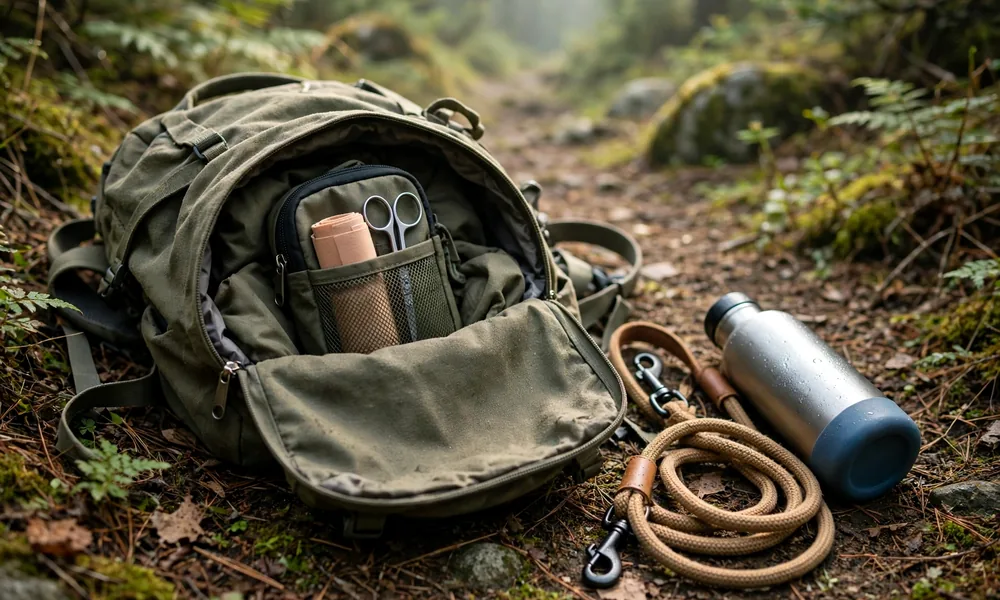
A travel kit is a small pouch that fits in a coat pocket, a rucksack, or the car door. It holds the essentials for the injuries that happen away from home: a paw cut, a thorn, a tick, or a sting. Keep it light — gauze pads, a small bandage, tweezers, a tick remover, saline wipes, and a spare lead — and check it before every walk. A kit that stays at home because it is too big is no kit at all. Near water or rough ground, add a torch and a foil blanket for a cold or shocked animal.
Pet First Aid Kits Compared
| Kit type | Best for | Size | Key contents | Weakness |
|---|---|---|---|---|
| Home kit | Dogs and cats at home | Large box or bag | Full range, towel, thermometer | Stays at home |
| Travel pouch | Walks, car, holidays | Pocket-sized | Gauze, bandage, tick remover | Limited supplies |
| Cat kit | Indoor and outdoor cats | Small pouch | Towel, saline, small bandages | No large-dog items |
| Dog kit | Medium and large dogs | Medium bag | Muzzle, paw bandages, lead | Too big for cats |
| Hiking kit | Trails and countryside | Rucksack pouch | Foil blanket, torch, water | Heavier to carry |
What Belongs in a Pet First Aid Kit
Start with the jobs, not a shopping list: a pet kit needs to clean, cover, hold still, remove, and contact help. For cleaning: saline or saline wipes, pet-safe wound wash, and cotton pads — never alcohol or hydrogen peroxide on an open wound, as both damage tissue. For covering: gauze pads, a roll of gauze, self-adhesive bandage that sticks to itself rather than fur, and medical tape. For holding still: a muzzle that fits your dog, a towel for wrapping a cat, and a spare lead. For removing: tweezers for thorns and splinters, and a proper tick remover — never pull a tick with bare fingers, as the head can break off.
Then add the items people forget: a digital thermometer and a little lubricant, a torch, blunt-ended scissors, and a small bottle of water. And paperwork: your vet’s number, the emergency vet’s number, vaccination record, and medicines your pet takes. Tape the numbers inside the lid so they are there even when your phone is dead.
The Injuries Pets Actually Get
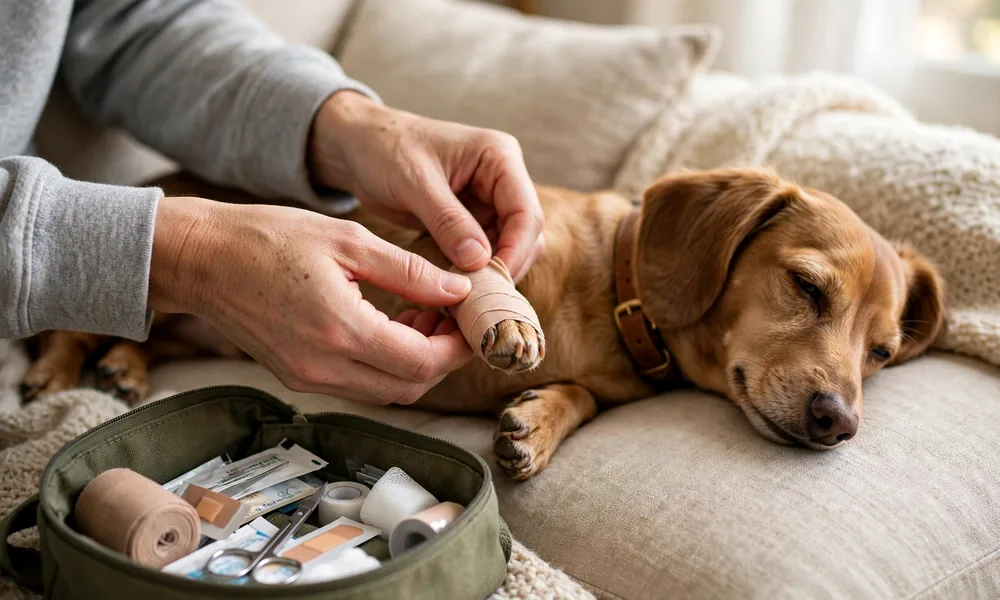
Cut paws are the most common pet injury. Glass, thorns, and sharp stones slice paw pads, which bleed a lot and are hard to bandage because the paw flexes. Rinse the paw with saline or clean water, check for anything stuck in it, press gauze on the cut for a few minutes, then wrap it snugly — not tight — in self-adhesive bandage. If bleeding does not stop after ten minutes of pressure, or the cut is deep, go to the vet straight away. A sock over the bandage stops the dog chewing it off.
Ticks, stings, and bites come next. Remove a tick with a tick remover, twisting gently until it lets go, then clean the bite and watch it for a week — a spreading red ring or a pet off its food needs a vet. A bee sting usually means a sore, swollen muzzle; scrape the sting out with a card edge, not tweezers, and watch for facial swelling or trouble breathing, which is an emergency. Bite wounds look small on the surface and can be deep underneath, especially in cats, where a bite often turns into an abscess days later. Any bite that breaks the skin should be seen by a vet, even if it looks minor. Heatstroke is an emergency too: move an overheated dog to shade and wet its paws, belly, and ears with cool water.

What Never Belongs in a Pet Kit
Human medicines are the biggest danger. Ibuprofen and paracetamol can poison dogs and cats, aspirin is unsafe for cats, and human eye drops, creams, and antiseptics can all harm. Never give a pet medicine meant for people unless a vet has told you to, and never guess a dose from a human packet. Alcohol, hydrogen peroxide, and strong antiseptics should stay out too — they sting, they damage healing tissue, and a pet that licks a wound will swallow them. Cotton wool sheds fibres into a wound, so use gauze pads instead. Skip adhesive plasters entirely — they do not stick to fur, and a pet will chew them off and may swallow them.
What to Look For When You Buy
Buy a kit sized to your pet, not the biggest box on the shelf. A large dog needs a muzzle that fits and large bandages; a cat needs small bandages and a towel, not a dog muzzle. Check the bag first: it should open flat so you can see everything, have clear pockets or labelled compartments, and be a bright colour you can spot in a hurry. A waterproof bag matters if the kit lives in a car or a rucksack. Check every item inside — cheap kits are often packed with filler, plasters that do not stick to fur, and bandages too small to use.
Building your own kit is often better than buying one ready-made. Start with a bright waterproof pouch, add the items in this guide, and you will have a kit that fits your pet exactly for about the same money. Restock it after every use, and check it twice a year, replacing anything opened, used, or past its date. Keep one kit at home and a smaller pouch in the car or walking bag — the injury that matters most happens furthest from home. A calm pet recovers faster too, so our guide to choosing pet calming aids that actually soothe is worth reading.
Pet First Aid Checklist
- Keep the kit by the back door and a small pouch in the car or walking bag.
- Tape your vet’s number and the emergency vet’s number inside the lid.
- Check the kit twice a year and replace anything used, opened, or past its date.
- Practise wrapping a paw and fitting the muzzle on a calm day.
- Never give human medicine to a pet unless a vet has told you to.
- If bleeding will not stop, breathing is difficult, or the pet collapses, go to the vet now.
Frequently Asked Questions
What should be in a pet first aid kit?
Saline, gauze pads, self-adhesive bandage, medical tape, tweezers, a tick remover, blunt scissors, a thermometer, a torch, a muzzle or a towel, and your vet’s number taped inside the lid. Add a spare lead and water for walks.
Can I use a human first aid kit on my dog or cat?
Only in part. Gauze, saline, and bandages transfer fine, but human medicines like ibuprofen and paracetamol can poison pets, and plasters do not stick to fur. A pet kit needs a tick remover, a muzzle, and paw bandages a human kit never has.
How do I bandage a dog’s paw?
Rinse the paw with saline, check for anything stuck in it, press gauze on the cut for a few minutes, then wrap it snugly in self-adhesive bandage. You should be able to slip a finger underneath. A sock over the top stops the dog chewing it off.
What should I do if my pet is bitten by another animal?
Keep the pet still, stop any bleeding with gauze and pressure, and go to the vet — even if the wound looks small. Bite wounds are often deeper than they look, and cat bites often turn into abscesses days later.
Can I give my dog or cat paracetamol?
No, never without a vet’s instruction. Paracetamol and ibuprofen can seriously harm dogs and cats, and the safe dose is nothing like a human dose. If your pet is in pain, call the vet.
When is a pet injury an emergency?
Go straight away for bleeding that will not stop after ten minutes of pressure, difficulty breathing, collapse, a swollen face after a sting, suspected poisoning, or a pet that is limp, unresponsive, or in severe pain. When in doubt, call the vet.
Our guide to pet toothbrushes that make brushing easier covers the small daily habit that prevents vet visits a first aid kit cannot fix.
The Bottom Line
The best pet first aid kit is built for your animal, kept where you can reach it with one hand, and checked often enough that everything inside works when it matters. A home kit for the full range, a small pouch for walks, and nothing in either that a vet would not approve of — no human medicines, no plasters, no cotton wool. Learn the basics on a calm day: how to wrap a paw, remove a tick, and keep a frightened pet still. A kit buys you time until the vet; knowing when to use it, and when to drive straight there, is what saves your pet.