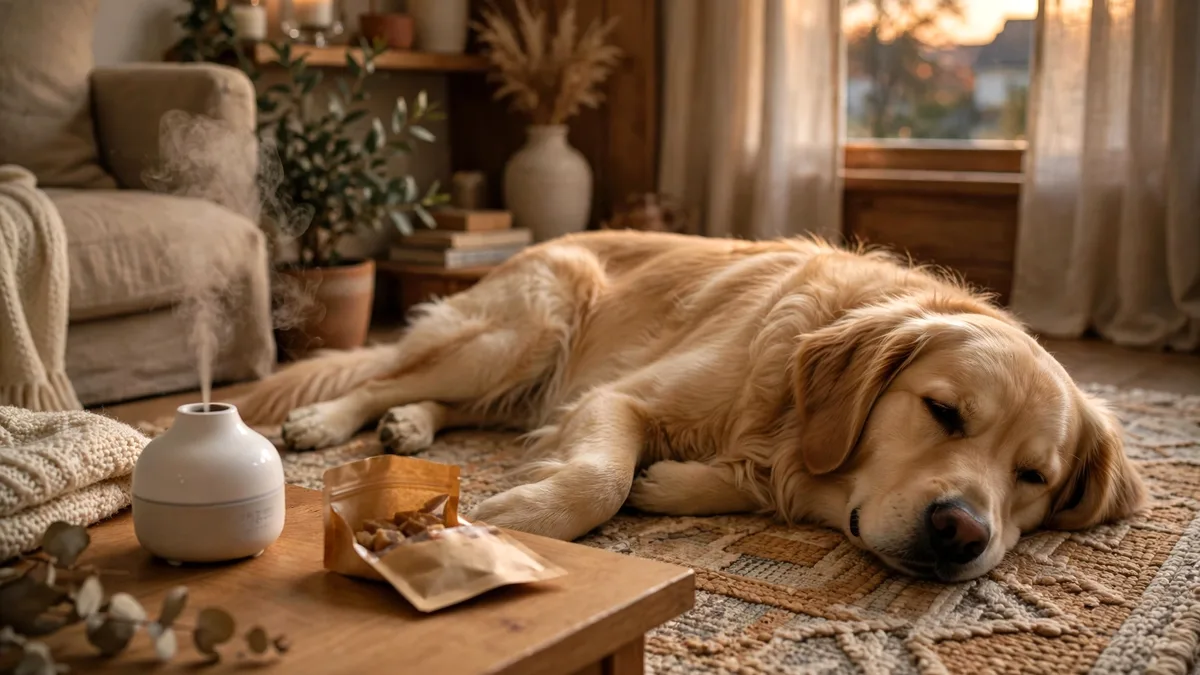
Pet calming aids are products made to help dogs and cats feel less anxious, from soft chews and plug-in diffusers to pressure wraps and calming music. They do not train a pet or replace a vet visit, but for many owners they take the edge off the moments that stress a pet most: fireworks, thunderstorms, vet trips, car journeys, and being left alone. A good calming aid will not turn a nervous dog into a bold one, but it can turn a shaking, panting pet into one that settles and sleeps through the worst of it.
The market is crowded, and the claims on the packets are bigger than the evidence behind most of them. Some calming aids have gentle, well-understood ingredients and a plausible mechanism. Others are little more than a nice smell and a hopeful label. This guide explains what pet calming aids actually do, which types suit which trigger, and when the answer is a vet rather than a product.
Key Takeaways
- Pet calming aids reduce the signs of anxiety; they do not cure it, and they work best alongside training and routine.
- Chews suit short, predictable stress like fireworks, while diffusers suit ongoing tension at home.
- Check the label for named active ingredients and a weight-based dose, and avoid products that hide behind a blend.
- Start any new calming aid on a calm day, never for the first time during the stressful event itself.
- If anxiety is severe, constant, or getting worse, see a vet before buying more products.
What Pet Calming Aids Actually Do
Anxiety in a pet is a stress response: the body releases stress hormones, the heart rate rises, and the pet pants, paces, hides, or trembles. Calming aids aim to soften that response. Some work through the body, with ingredients like L-theanine, tryptophan, or chamomile that support the brain chemistry of relaxation. Some work through the senses, with pheromones that mimic the scent a mother dog or cat produces for her young, or with steady pressure that feels like being held.
None of these switch anxiety off. What a good calming aid does is lower the peak: the pet still notices the thunder, but it lies down instead of pacing the house for an hour. That is why calming aids pair so well with training. A calmer pet can learn that the scary thing passes, while a panicking pet learns nothing. Think of the aid as a helper, not a solution.

The Main Types of Calming Aid
Calming aids fall into a few families, and each suits a different situation. The right choice depends less on the brand and more on the trigger, the pet, and how long the stress lasts.
Calming chews and supplements
Calming chews are soft treats with relaxing ingredients, usually L-theanine, tryptophan, chamomile, valerian, or magnesium. They suit short, predictable stress: fireworks night, a vet appointment, a car journey. Most take thirty to sixty minutes to work, so they need to be given before the event, not during it. Dose by weight, and buy from a brand that names every active ingredient and its amount. Our guide to the best dog chews of 2026 explains how to judge chew quality in general, which applies to calming chews too.
Diffusers, sprays and collars
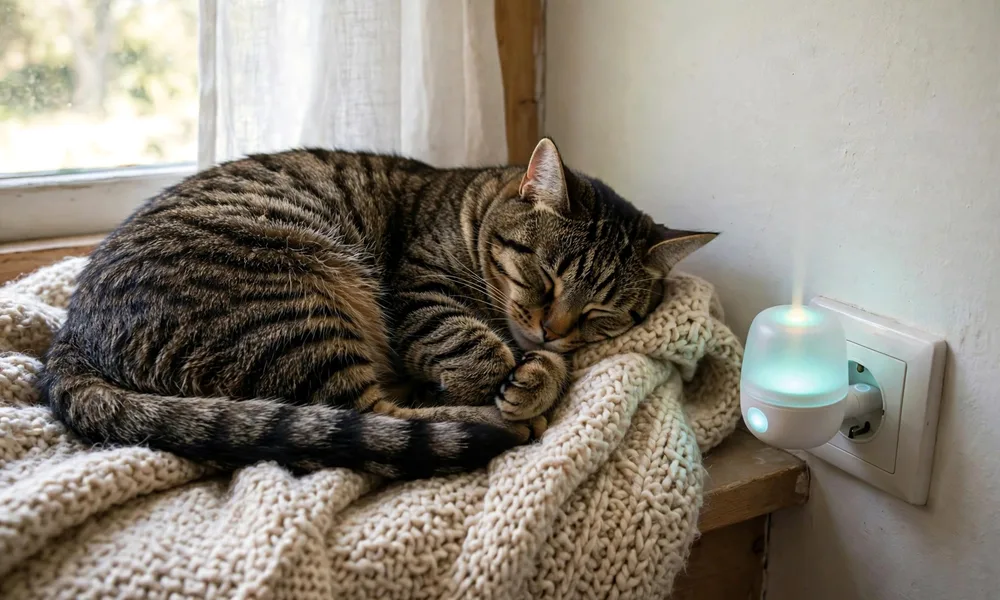
Pheromone diffusers plug into a wall socket and release a synthetic copy of the calming scent a mother dog or cat produces. They suit ongoing tension at home: a new baby, a house move, a new pet, or a cat that sprays when stressed. They work slowly, over days rather than minutes, and they only cover the room they are in. Sprays do the same job in a smaller space, such as a carrier or a car, and collars release pheromones close to the pet wherever it goes. Pheromones are species-specific, so buy the dog version for a dog and the cat version for a cat.
Pressure wraps and calming clothing
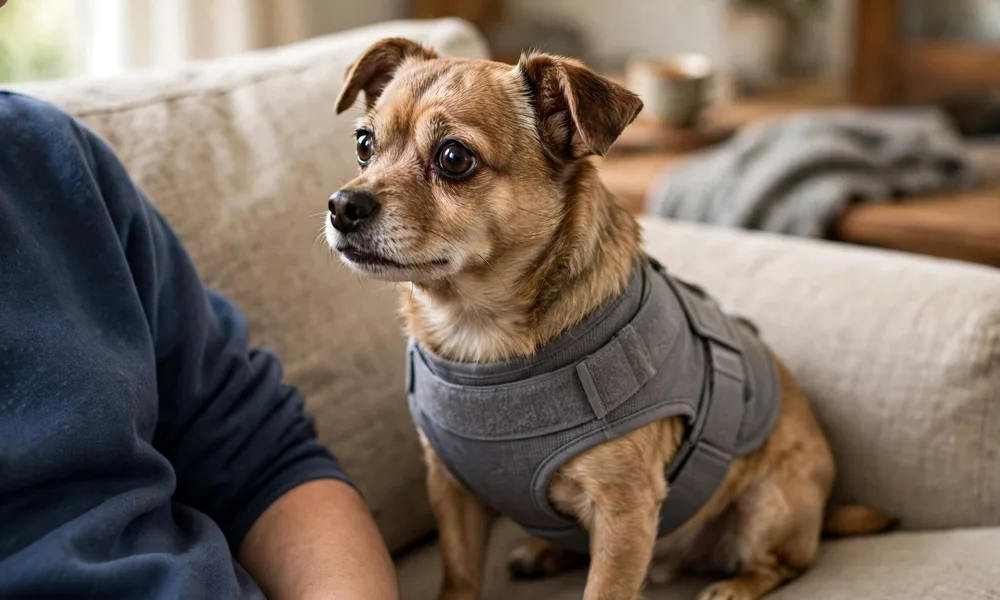
A pressure wrap is a snug-fitting vest that applies gentle, even pressure around a pet’s torso, a little like a hug. Many owners report that it helps during thunderstorms and fireworks. Fit matters more than brand: too loose and it does nothing, too tight and the pet will hate it. Introduce the wrap on a calm day, pair it with treats, and let the pet get used to it before the storm. Some pets refuse wraps entirely, and that is fine.
Chews and Supplements: What to Look For
The label is the best guide to a calming chew. Look for named active ingredients with amounts per chew, a clear dose by weight, and a brand that sells through vets or pet shops. L-theanine and tryptophan are the most studied ingredients, chamomile and valerian are traditional and gentle, and melatonin is sometimes used for sleep-related anxiety. Be cautious of products that list a proprietary blend with no amounts, or that promise instant calm in five minutes.
Start a new chew on a calm day, at the lowest dose the packet suggests, and watch the pet for a few hours. A good chew should make the pet drowsy and relaxed, not wobbly or unresponsive. If the pet vomits, becomes very sleepy, or seems unsteady, stop and call the vet. Never give a pet a human calming supplement: the dose is wrong, and some human products contain xylitol, which is poisonous to dogs.
Diffusers, Sprays and Collars in Practice
A diffuser is a slow tool. Plug it in a few days before the stressful event, in the room where the pet spends most of its time, and leave it running. Do not expect a visible change on day one; pheromones build up gradually, and the effect is subtle. Replace the refill on schedule, and remember that one diffuser covers one room, so a large house may need two.
Sprays are the portable version: a few sprays inside a carrier fifteen minutes before the pet goes in, or on a blanket in the car. Collars are the wearable version, and they suit pets that move from room to room or travel often. A collar needs to fit snugly against the skin to work, and it should be replaced on the schedule on the packet, usually monthly. If the pet scratches at the collar constantly, take it off and try a different format.
Calming Aid Types Compared
| Type | Best for | How fast | How long it lasts |
|---|---|---|---|
| Calming chews | Fireworks, vet visits, car trips | 30 to 60 minutes | A few hours |
| Pheromone diffuser | Ongoing tension at home | Days | About a month per refill |
| Pheromone spray | Carriers and cars | About 15 minutes | A few hours |
| Pheromone collar | Pets that move around a lot | About a day | About a month |
| Pressure wrap | Thunderstorms and fireworks | Minutes | While it is worn |
| Calming music | Noise fears | Straight away | While it plays |
Matching the Aid to the Trigger
The same pet can need a different aid for a different fear, so start with the trigger, not the product. A pet that panics only on fireworks night needs a short-acting aid: chews given an hour before dark, a pressure wrap, and music to mask the bangs. A pet that is tense every day since a house move needs a slow aid: a diffuser in its favourite room, a routine, and time.
Fireworks and thunderstorms
Noise fears are the most common reason owners buy calming aids. The combination that works best is usually a chew given before the noise starts, a pressure wrap, and a safe den: a covered crate or a quiet room with the curtains closed and music playing. Never punish a pet for hiding; hiding is a coping strategy, not bad behaviour.
Separation anxiety
A pet that panics when left alone needs more than a chew. Calming aids can lower the peak, but the core fix is gradual desensitisation: short departures that grow longer, a consistent goodbye routine, and a chew or a food puzzle given at the moment you leave. A diffuser in the room the pet waits in can help. If the pet harms itself, destroys doors, or panics for the whole time you are out, that is a vet conversation, not a shopping one.
Travel and vet visits
Travel anxiety is often a mix of motion sickness and fear, so rule out sickness first: a pet that drools and vomits in the car may need a vet-prescribed anti-nausea medicine, not a calming chew. For a pet that is simply nervous, a pheromone spray in the carrier, a familiar blanket, and short practice trips that end with something good can change the association. A pet carrier that travels comfortably in 2026 makes the whole trip easier.
Before You Buy: A Six-Point Checklist
- Name the trigger first, then choose the aid that matches it, rather than buying the product with the biggest claims.
- Check the label for named active ingredients with amounts, a weight-based dose, and a brand you can trace.
- Start any new aid on a calm day, and test it before the stressful event it is meant for.
- Buy the dog version for a dog and the cat version for a cat, especially for pheromone products.
- Keep chews sealed and out of reach, and never give a pet a human calming supplement.
- If anxiety is severe, constant, or getting worse, see a vet before buying more products.
Frequently Asked Questions
Do pet calming aids really work?
They can help, but the effect is modest and varies by pet. Chews with named ingredients and pheromone diffusers have the most support, and pressure wraps help many pets. No calming aid cures anxiety on its own; the best results come from combining an aid with routine, training, and a safe space.
How long before fireworks should I give a calming chew?
Most chews take thirty to sixty minutes to work, so give the chew at least an hour before the fireworks are expected to start. Giving it during the noise is too late, and a pet that is already panicking may refuse to eat at all.
Are calming diffusers safe for cats?
Pheromone diffusers made for cats are safe when used as directed, but buy the cat version, not the dog version, and keep the diffuser away from curtains and bedding. Some essential-oil diffusers are not safe for cats, so never use a human aromatherapy diffuser around a cat.
Can I use a calming aid every day?
Diffusers and collars are designed for daily use, and many owners run them for weeks during a stressful period. Chews are usually meant for occasional use, so check the packet and ask a vet before giving them daily for a long time.
What if my pet refuses the calming chew?
Try a different flavour, or hide the chew in food the pet already loves. If the pet still refuses, switch to a diffuser, a spray, or a wrap instead. A calming aid only works if the pet actually takes it.
When should I see a vet about my pet’s anxiety?
See a vet if the anxiety is severe, constant, or getting worse, if the pet harms itself, stops eating, or panics for hours. A vet can rule out pain or illness, which often looks like anxiety, and can prescribe medicine for cases that calming aids cannot touch. A good dog collar for comfort and control in 2026 will not fix anxiety on its own, but a comfortable collar makes the vet trip itself less stressful.
The Bottom Line
Pet calming aids are worth trying, as long as you buy them with realistic expectations. Match the aid to the trigger, check the label for named ingredients and a weight-based dose, start on a calm day, and combine the product with routine, training, and a safe space. For fireworks, chews plus a wrap plus music cover most pets. For ongoing tension at home, a diffuser is the steadier choice. And if the anxiety is severe or getting worse, the best calming aid is a vet visit.


