A dog chew is one of the simplest ways to keep a dog happy, busy and calm, and one of the easiest purchases to get wrong. A good chew keeps a dog occupied for a long while, gives the jaws a proper workout, and helps scrape away the soft plaque that builds up on teeth between brushes. A bad chew disappears in ninety seconds or upsets a sensitive stomach. The best dog chews of 2026 match the dog in front of you: the right size, the right hardness, and ingredients you can actually pronounce.

What Makes a Dog Chew Good
The first thing to judge is how long it lasts for your dog. A chew that vanishes in a minute is a snack, not a chew, and it teaches a dog to gulp rather than to settle down and work at something. A chew that lasts twenty minutes or more gives a dog a proper job to do, and that quiet, focused chewing is calming in a way a quick treat never is.
The second thing is hardness. A chew should give a little when a dog bites down on it. If it is as hard as a rock, it can crack a tooth, and a cracked tooth is a painful and expensive problem. A useful rule is the thumbnail test: if you cannot make a small dent in the chew with your thumbnail, it is probably too hard for most dogs.
The third thing is what is actually in it. The best chews have a short ingredient list: one animal protein, or one simple natural material, with nothing hidden. Long lists of colours, flavours and fillers are a warning sign, and so are chews that smell strongly of chemicals when the packet is opened.
The Main Types of Dog Chew
Bully sticks are the classic long-lasting chew. They are made from dried beef muscle, they are fully digestible, and most dogs love them. They come in many thicknesses, from thin sticks for small dogs to thick braided ones for heavy chewers, and the thicker the stick, the longer it lasts. Cheaper sticks can smell strong, so look for low-odour ones.
Yak chews, also called Himalayan chews, are hard bars made from yak milk, salt and a little lime juice. They start very hard and soften slowly as a dog works on them, which makes them one of the longest-lasting chews for medium and large dogs. When one wears down to a nub, soak it and microwave it for a minute: it puffs up into a crunchy treat instead of becoming a hazard.
Antlers are the hardest chew on this list, and they divide dog owners more than any other. A split antler, cut lengthways to expose the softer marrow inside, is a good middle ground: the dog can work at the marrow without chewing on solid bone all the time. But they are genuinely hard, so they suit only adult dogs with healthy teeth — never puppies, older dogs, or dogs that bite straight through things.
Rawhide-free chews are the modern answer to old-fashioned rawhide, and the difference matters. Traditional rawhide is a by-product of leather making, it is hard to digest, and it can swell in a dog’s stomach. Rawhide-free chews are usually made from beef collagen, sweet potato, chicken or plant starches, and they are designed to break down safely. They are a kinder choice for sensitive stomachs and small mouths.
Dental chews are built for a different job: cleaning teeth. They are usually softer than a long-lasting chew, with a shape or texture designed to scrub the tooth surface as the dog bites through. A dental chew will not replace brushing, but a daily dental chew does help with breath and plaque, and many dogs treat it as the best part of the day.
Puppy chews are softer, smaller and gentler than adult chews, because puppy teeth and jaws are still growing. A chew for a puppy should be easy to hold, easy to bite through, and kind to sore gums during teething. Many puppy chews are flavoured with chicken or peanut butter, which helps a nervous puppy settle with something of its own.
How to Choose the Right Chew
Start with the dog, not the shelf. A small dog needs a small chew it can hold between its paws, while a large dog needs a thick chew that will not fit whole into its mouth. A good rule is that a chew should be longer than the dog’s muzzle, so the dog has to work at it rather than gulping it down.
Next, think about how your dog chews. Some dogs are gentle gnawers that nibble at a chew for an hour. Some dogs are destroyers that try to bite chunks off anything in front of them. Gentle chewers can enjoy almost anything, including softer dental chews and rawhide-free sticks. Destroyers need the toughest options and should always be watched.
Age matters as well. Puppies need soft chews, adult dogs can handle the full range, and older dogs often need softer chews again as their teeth wear down. A senior dog that loved antlers at three may find them painful at eleven, and a softer collagen chew may suit it far better.
Finally, check the calories. Chews are food, even when they feel like toys, and a large bully stick can hold as many calories as a small meal. Count the chew as part of the day’s food. Our guide to the best dog treats of 2026 covers treats that pair well with a chew routine, so the extras never quietly add up to a second dinner.

Chews for Puppies
A puppy’s first chews should be about comfort as much as chewing. Teething hurts, and a puppy that has something safe to chew is far less likely to chew the table leg, the shoes or the remote control. Soft rubber teething rings, puppy bully sticks and gentle edible chews all help, and a chew that can be chilled in the fridge feels even better on sore gums.
Keep puppy chew sessions short, around ten to fifteen minutes, and always stay in the room. Puppies explore with their mouths, and a piece that seems far too big to swallow can disappear surprisingly fast. Take the chew away once it is small enough to fit whole in the puppy’s mouth, and replace it with a fresh one.
Chews for Heavy Chewers
Heavy chewers are the hardest dogs to buy for, and the dogs most at risk from a bad chew. Buy the toughest chews in the largest size, and treat every new chew as a trial: watch the first session from start to finish, and see how the chew wears down before trusting it alone with the dog. A chew holder adds a safety net by keeping the last piece out of reach.
Do not be tempted by the hardest chew you can find simply because it lasts longest. A chew that is too hard for a heavy chewer is the one most likely to crack a tooth, because a strong dog bites harder, not more carefully. A tired dog settles with a chew far more happily than a dog bursting with energy. Our guide to the best dog toys of 2026 covers toys that burn off that energy first, so the chew can do its calming job afterwards.
Chews for Sensitive Stomachs and Healthy Teeth
Some dogs love to chew but pay for it afterwards with an upset stomach. For those dogs, the ingredient list matters more than the shape. Single-protein chews, such as a plain beef collagen stick or a single-ingredient fish skin chew, are the easiest to digest and the easiest to trace if something goes wrong. Introduce any new chew slowly: half on the first day, a full one only if the stomach stays settled.
For teeth, the best chew is the one the dog actually uses. A chew that sits untouched in the corner cleans nothing, however good its shape. Dental chews work because most dogs eat them eagerly, and the chewing action scrubs the back teeth where plaque builds up fastest. Our guide to the best dog food for your dog’s age and size covers feeding that supports teeth and digestion together.
How to Offer a Chew Safely
Always supervise the first few sessions with a new chew, and stay nearby for any chew that is new to the dog. Most dogs chew safely, but no chew is risk-free, and a dog left alone with a chew it has never had before is a dog nobody is watching.
Take the chew away when it gets small. The rule is simple: if the remaining piece could fit whole into the dog’s mouth, it is time to take it. Some chews can be finished safely, such as the puffed-up end of a yak chew, but most should be traded for a small treat so the dog does not feel robbed.
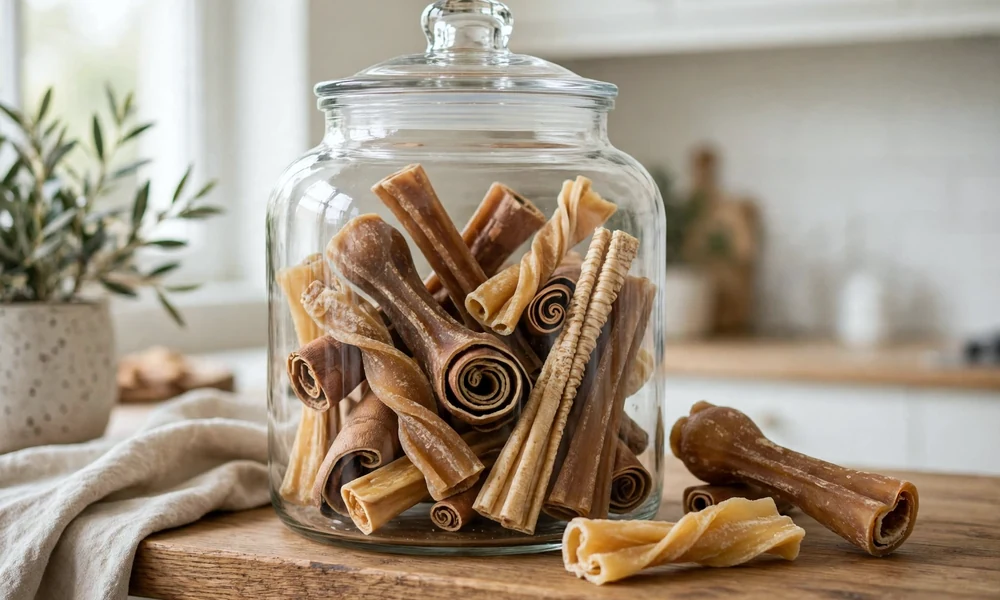
Rotate chews so they stay interesting. A dog that gets the same chew every day will get bored with it, just as a person would get bored eating the same meal every night. Keep two or three different types in the jar and swap them around through the week: a bully stick on Monday, a yak chew on Wednesday, a dental chew each evening. Variety also spreads the risk, because no single chew is perfect, and a dog that enjoys several types is less likely to fixate on one that does not suit it. Watch which chew your dog returns to first when you offer a choice, because that is the clearest vote it can cast.
Mistakes to Avoid
The most common mistake is buying the wrong size: a chew that is too small is a choking risk, and a chew that is too large for a small dog is simply ignored. The second mistake is choosing by hardness alone: the hardest chew lasts longest, but it is also the one most likely to crack a tooth. The third mistake is giving a chew to a dog that has just eaten a full meal, then wondering why the dog has an upset stomach, because chews add calories and bulk.
The Bottom Line
There is no single best dog chew for every dog, because the best chew depends on the dog’s size, age, teeth and chewing style. A bully stick is the most reliable all-rounder for most adult dogs, a yak chew lasts longest for strong chewers, a split antler suits careful adult gnawers, a rawhide-free chew is kindest for sensitive stomachs, a dental chew is the most useful daily habit, and a soft puppy chew is the only safe choice for a young dog.
The simplest way to find your dog’s best chew is to try two or three types properly. Buy the right size, watch the first session, time how long each chew lasts, and notice which one your dog settles with most happily. That chew, whichever type it turns out to be, is your dog’s best chew. Take away the last piece before it can be swallowed, and enjoy the quiet: a dog happily chewing is calm, busy and content.