
Why Pet Grooming Clippers Are Not Human Hair Clippers in 2026
Pet grooming clippers look like human hair clippers, sound like them, and are sold in the same aisle. They are not the same tool. A clipper made for people is built to cut a single layer of fine hair on a head that sits still. A clipper made for pets is built to cut through dense, often matted animal fur on a body that moves, with skin far thinner and closer to the blade than a human scalp. Buy the wrong one and the motor stalls, the blade heats up, the dog panics, and the cut comes out patchy.
The best pet grooming clippers solve all of that: a motor with enough torque to hold its speed through a thick double coat, blades designed to stay cool and cut without pulling, and a noise level a nervous dog can tolerate. Here is why they differ from human hair clippers, when they beat scissors, and how to choose the right pair for your dog’s coat.

Key Takeaways
- Pet clippers have stronger motors, because animal coats are denser and double-layered.
- Pet blades run cooler and feed thick fur through without snagging.
- Quieter clippers matter: a nervous dog will tolerate a low hum far better than a loud buzz.
- Scissors shape and finish; clippers remove bulk and set an even length.
- Clean and oil the blades after every groom, or even the best clipper will pull and heat up.
Why Pet Clippers Differ From Human Hair Clippers
The first difference is the motor. Human hair is fine and grows in a single layer, so a human clipper motor only needs enough power to keep the blade moving through thin hair. A dog’s coat is a different job: guard hairs over a dense undercoat and mats that resist the blade. A pet clipper motor is built with more torque so it holds its speed when it meets that resistance. You can hear it: a good pet clipper keeps a steady hum through a thick patch, while a human clipper slows and starts to chew instead of cut, which pulls hair and frightens dogs.
The second difference is the blade. Pet clipper blades are usually wider, with teeth spaced to feed thick fur through, and they are made from steel or ceramic that sheds heat. Human clipper blades are narrower and finer, made for precision on a scalp. A human blade on a dog clogs quickly, because the teeth are too fine for dense fur, and it heats up faster. A hot blade burns skin, and dog skin is thinner than human skin.
The third difference is noise and vibration. Dogs hear far better than people, and a loud clipper is frightening in a way that is easy to underestimate. Pet clippers are designed to run quieter, with motors and housings that dampen vibration. Our guide to the best hair clippers shows what a good human clipper looks like, and the comparison is instructive: everything that makes a human clipper good for a head, fine teeth, light power, and a low price, is exactly what makes it wrong for a dog.
Clippers or Scissors: Which Job Needs Which
Clippers and grooming scissors are not rivals; they do different jobs, and a good groom uses both. Clippers set an even length over a large area quickly: taking the body down to half an inch all over takes minutes with a guide comb, while scissors would take half an hour. Scissors shape and finish: they round a head, tidy feathering on the legs, trim around the ears, and blend the line where a clipped body meets a scissored head. The rule is simple: clippers for bulk and length, scissors for shape and detail.
The Three Choices That Matter
Corded or Cordless
Cordless clippers are the easiest to live with for most home grooms. There is no cable to snag on the table or drag across the dog, and you can walk around the animal freely. A good cordless clipper gives at least an hour of run time, which covers most single-dog grooms. Corded clippers suit long, thick cuts without battery worry: they never fade, and their motors are usually stronger. For one small or medium dog, cordless is the better buy; for a large doodle or double-coated breed, corded power is worth the cable.
Single-Speed or Variable Speed
Single-speed clippers run at one pace, and that is enough for most coats. They are simpler, cheaper, and there is nothing to adjust by accident. Variable-speed clippers let you slow down for sensitive areas, such as the belly and the insides of the legs, and speed up for the broad, dense panels of the back and sides. The slow speed is also quieter, which helps with a nervous dog. If your dog has one uniform coat and a calm temperament, single speed is fine; if the coat is thick or the dog is easily frightened, variable speed is worth it.
Blades and Guide Combs
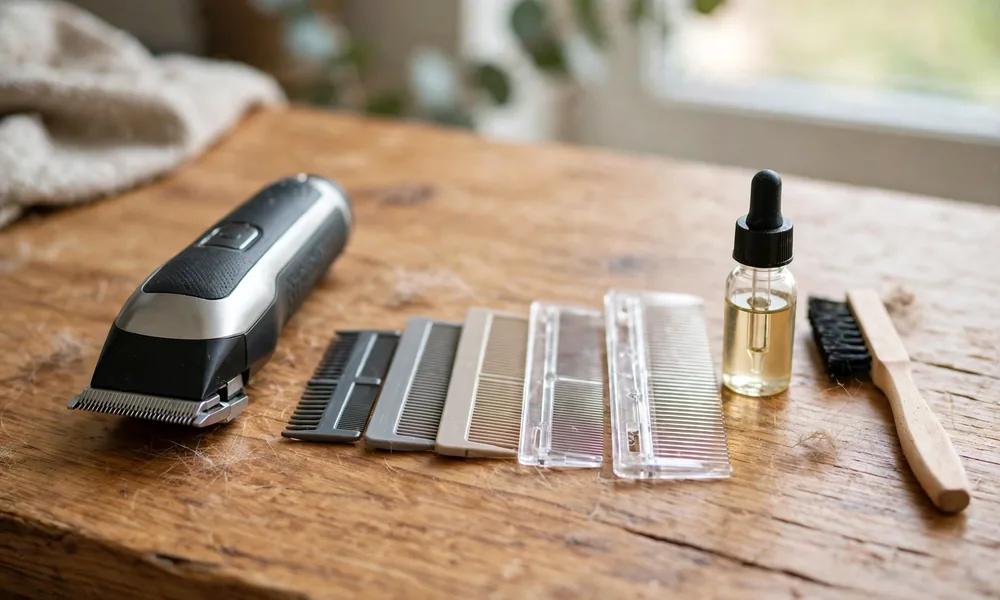
The blade is where the cutting happens, and two details matter: the material and the cut length. Stainless steel blades are tough, hold an edge well, and survive being dropped. Ceramic blades stay cooler and stay sharp longer, but they can chip if the clipper falls on a hard floor. Most home groomers should choose steel. Detachable blades are worth having, because you can swap a hot blade for a cool one mid-groom. Guide combs clip over the blade and set the length of the cut, usually from an eighth of an inch to an inch. A good set clicks on firmly and matches its stated length; loose combs cause uneven patches.
Pet Grooming Clippers Compared
| Type | Best For | Watch Out For |
|---|---|---|
| Cordless clippers | Small and medium dogs, free movement | Battery fades on long, thick grooms |
| Corded clippers | Large, heavy-coated dogs | Cable snags and limits movement |
| Variable-speed clippers | Nervous dogs, sensitive areas | Costs more; easy to pick the wrong speed |
| Detachable-blade clippers | Swapping hot blades | Spare blades add cost |
Matching the Clipper to the Coat
Coat type decides the clipper more than brand does. A short, smooth coat, such as a Labrador’s, needs little power. A double coat, such as a Husky’s or a Golden Retriever’s, needs torque, because the dense undercoat resists the blade, and you should never clip a double coat very short: the undercoat protects the dog from sun and cold, and shaving it can damage how it grows back. A curly coat, such as a Poodle’s or a Doodle’s, needs a clipper that does not clog. A matted coat needs patience before power: work the mats out with a brush and comb first, or cut them out with scissors, because no clipper cuts well through a solid mat. If your dog sheds heavily, a deshedding routine before clipping helps too, and the best pet deshedding tools take out the loose undercoat that clogs blades fastest.
How to Clip Without Frightening Your Dog
Start before the clipper is switched on. Brush and comb the coat fully, because a clipper dragged through a tangle will snag and pull, and the dog will remember it. Bathe and dry the dog first: a clean coat cuts evenly. Let the dog sniff the clipper while it is off, then switch it on a few feet away so the dog gets used to the sound.
When you clip, hold the skin taut with your free hand so the blade glides over a flat surface instead of catching a fold. Skin folds are where nicks happen, especially on the belly, the armpits, and the loose skin of the neck. Clip in the direction the hair grows for a longer, natural finish, and against the growth only when you want it shorter and the coat is not matted. Work in smooth, overlapping passes. Check the blade temperature every few minutes by touching it to the inside of your wrist: if it feels hot to you, it will burn the dog. Swap to a cool blade, or spray it with coolant, and wait before you carry on.

Keep the session short, especially the first few times. Clip the easy areas first, the back and the sides, and leave the sensitive areas, the belly, the legs, and the face, until the dog is settled. If the dog starts to shake, pant heavily, or try to leave the table, stop.
Keeping Blades Cool, Clean, and Sharp
A clipper is only as good as its blade, and blades need care after every groom. Brush the loose hair out of the teeth with the small cleaning brush that comes with the clipper, then wash detachable blades in blade wash and dry them fully. Add a drop of blade oil across the teeth and run the clipper for a few seconds so the oil spreads. If the blade starts to pull hair instead of cutting it, or the motor sounds strained, the blade is dull: send it for professional sharpening, or replace it.
Heat is the other enemy. Blades heat up with friction, and a hot blade will burn a dog’s skin before you notice, so swap blades when one gets warm and keep a coolant spray on the table. If you are buying your first clipper, a set that includes spare blades, guide combs, oil, and a cleaning brush is better value than buying each part separately, and the best pet grooming kits show what a complete set looks like.
Before You Buy: The Checklist
- Motor torque that holds its speed through a thick coat.
- Blades that stay cool, in steel for toughness or ceramic for cooler running.
- Noise low enough that a nervous dog can tolerate it.
- Guide combs that click on firmly and match their stated length.
- Cordless for freedom, or corded for steady power on large, heavy-coated dogs.
- Detachable blades, blade oil, and a cleaning brush included.
Frequently Asked Questions
Can I use human hair clippers on my dog?
You can for a very short, fine coat, but you should not rely on them. Human clippers lack the torque for dense animal fur, their fine teeth clog quickly, and they heat up faster.
Are pet clippers louder than human clippers?
Good pet clippers are usually quieter than human clippers, because they are designed for animals that hear better and startle more easily. Cheap ones can be loud, though, so check reviews for noise first.
Should I clip my dog’s double coat short in summer?
No. A double coat insulates against heat as well as cold, and shaving it can damage how the undercoat grows back. If your dog is hot, thin the undercoat with a brush and keep the top coat at a moderate length.
How often should clipper blades be sharpened?
For a home groomer clipping one dog every few weeks, once a year is usually enough. The signs a blade needs sharpening are pulling, patchy cutting, and a strained-sounding motor.
What is the safest way to clip around the belly and legs?
Hold the skin taut with your free hand, use the slowest speed, and clip with the growth of the hair. Keep the blade flat, move slowly, and check the temperature often.
Do I need scissors too, or are clippers enough?
Clippers alone are enough for a short, even cut on the body, but most grooms look better with scissors for the finish: rounding the head, tidying the ears and paws, and blending the line between clipped and unclipped areas.
The Bottom Line
The best pet grooming clippers are built for animal coats, not human hair: a strong motor that holds its speed, blades that stay cool and feed thick fur without clogging, and a noise level your dog can tolerate. Match the clipper to the coat, keep the blades clean and oiled, and clip in short, calm sessions. Do that, and the groom will be even and the dog relaxed.


