Hair Clippers That Cut Cleanly at Home in 2026
The best hair clippers for cutting hair at home in 2026 do one thing above all else: they cut cleanly, on the first pass, without pulling, snagging or leaving lines you have to fix afterwards. A good home clipper has a sharp blade, a motor that holds its speed through thick hair, and guide combs that deliver the length printed on them. A bad one tugs, heats up, and turns a ten-minute trim into a patchy rescue job. This guide sorts the difference, so you can buy a clipper that makes home haircuts easy.
Key Takeaways
- The best hair clippers cut cleanly on the first pass, with sharp blades and a motor that does not slow down in thick hair.
- Stainless steel blades suit most home users; ceramic blades stay cooler but chip more easily if dropped.
- Cordless clippers suit quick trims and fades, while corded models suit long, thick cuts without battery worry.
- Guide combs should click on firmly and match their stated length; loose combs cause uneven patches.
- Clean and oil the blades after every few cuts, or even the best clipper will start to pull.
What Makes a Hair Clipper Cut Cleanly
A clean cut starts with the blade. The blade is a pair of toothed metal plates, one fixed and one moving, and the gap between them decides how neatly hair is sliced. When the blade is sharp and properly aligned, hair is cut the moment it enters the teeth. When it is dull, or the plates sit slightly out of line, hair is dragged before it is cut, and that drag is what you feel as pulling. It also leaves split, frayed ends that make the cut look rough even when the length is even.
The motor matters just as much. A clipper motor has to keep the moving blade travelling at full speed while it meets resistance from hair. Cheap motors slow down the moment they hit a thick patch, and a slow blade does not cut, it chews. Good home clippers use a motor strong enough to hold its speed through the crown and the back of the head, where hair is often thickest. You can hear the difference: a good clipper keeps a steady hum, while a weak one changes pitch and labours.
Blade Materials, Explained Simply
Most home clippers use stainless steel blades. They are tough, they hold an edge well, and they survive being dropped off a bathroom shelf better than anything else. Some use ceramic blades, which run cooler and stay sharp for a long time, but they can chip if the clipper falls on a hard floor. A few use titanium-coated blades, which are really steel blades with a harder coating. For most people cutting hair at home, a good stainless steel blade is the safe, honest choice, and it is the easiest to look after.
Corded or Cordless: Which Suits Home Cuts
Cordless clippers are the easiest to live with for most home haircuts. There is no cable to snag on the chair or drag across the mirror, and you can walk around the person you are cutting without thinking about where the plug is. A good cordless clipper gives at least forty-five minutes of cutting from a charge, and a five-minute quick charge is enough to finish a trim. The trade-off is that the battery fades over the years, and a clipper that once ran for an hour may run for twenty minutes after three years of use.
Corded clippers never run out of power, and they usually have the strongest motors in their price range. They suit long cuts, very thick hair, and households where several people are cut in one session. The cable is the only real drawback, and it is a small one if you set up near a socket and drape the cable over your shoulder. Some clippers do both, running corded while they charge, which is the best of both worlds for a home kit that gets used in different ways.
Guide Combs and the Lengths That Matter
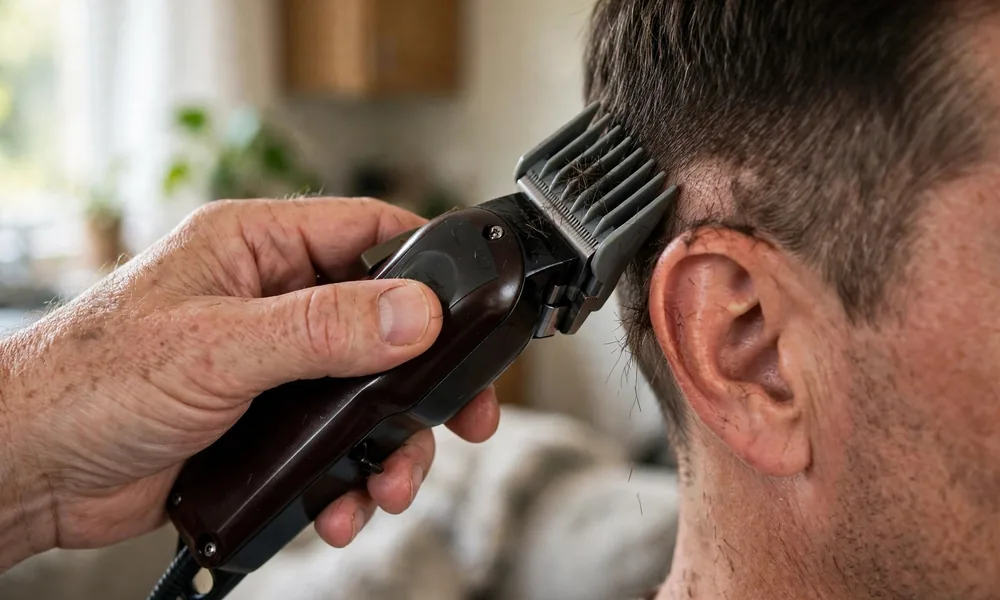
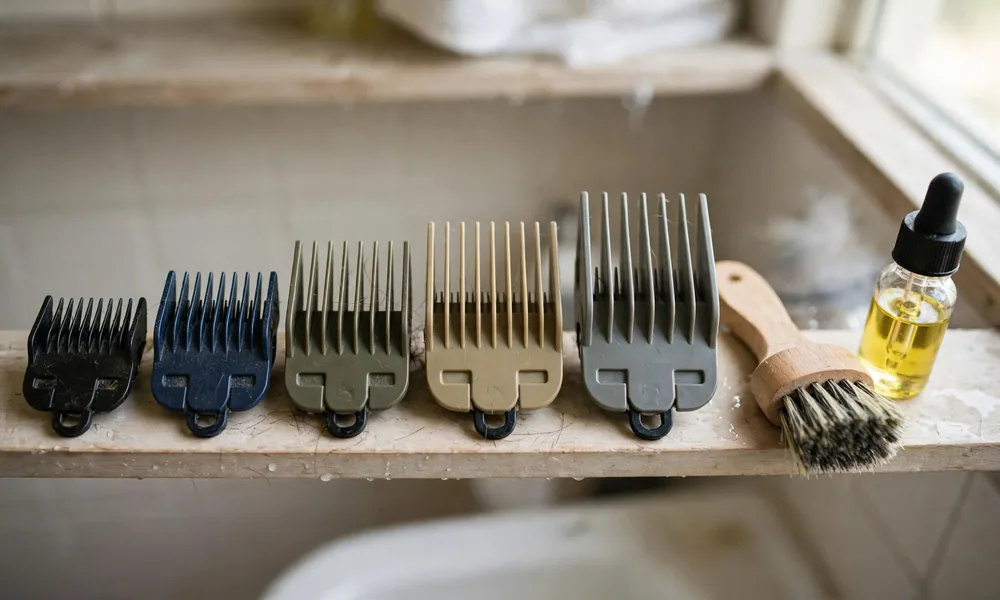
Guide combs are the plastic attachments that hold the blade a set distance from the head, and they decide the length of the cut. The numbers on them are usually given in millimetres or in the old barber numbering system, where a number one is about three millimetres and a number eight is about twenty-five. A good set covers the range you actually use, from a close number one or two for the sides up to a longer guard for the top, and each comb clicks on firmly with no wobble.
Loose combs are the quiet cause of most bad home cuts. If a comb rocks on the blade, the cutting length changes as you move, and the result is a patchy, stepped finish that looks worse than a slightly uneven length. Before you keep a clipper, test every comb: click it on, tug it gently, and check that it sits flat against the blade. A comb that pops off mid-cut leaves a bald stripe you cannot undo.
The Best Hair Clippers for Home Use in 2026
The best home clippers in 2026 are not the ones with the longest accessory list. They are the ones that cut evenly, hold their charge, and still feel solid after a year of regular use. A strong all-rounder has a stainless steel blade, a motor that keeps its speed, a set of firm-fitting guards from three to twenty-five millimetres, and a battery that covers a full cut with room to spare. It should also be easy to clean, with a blade that lifts off or flips open so you can brush the trapped hair out properly.
For a simple all-over cut, a straightforward cordless clipper with a good set of guards is all you need. For fades, look for a taper lever and a slimmer blade, because a wide blade makes it hard to work close around the ears. For thick or curly hair, prioritise motor power over everything else. The same care applies when choosing a beard trimmer, and our guide to beard trimmers that keep your beard sharp makes the same point: sharp, well-made cutting parts matter far more than the number of attachments in the box.
Comparison Table: What to Look For
| Feature | Best choice for home | What to avoid |
|---|---|---|
| Blade | Sharp stainless steel, replaceable | Dull, fixed blade you cannot replace |
| Motor | Steady speed through thick hair | Motor that slows and changes pitch |
| Power | Cordless with 45+ minutes, or corded | Short battery that dies mid-cut |
| Guards | Firm-fitting, 3 to 25 millimetres | Loose combs that wobble or pop off |
| Cleaning | Blade lifts off, brush and oil included | Sealed head you cannot clean properly |
| Weight | Balanced, secure grip when damp | Heavy head that dips, slippery body |
The Worst Mistakes Home Cutters Make
The most common mistake is starting with too short a guard. Hair cannot be put back, and a number one where you meant a number three leaves you with a week of regret. Always start one guard longer than you think you need, check the result in the mirror, and only then go shorter. The second mistake is cutting dry, dirty hair. Hair that is clean and slightly damp cuts more evenly, because it lies flat and feeds into the blade smoothly. Hair full of product or sweat clumps together and leaves uneven patches.
Rushing is the third mistake, and it shows in the finish. A clipper cuts best when it moves slowly and steadily against the direction of hair growth, in overlapping passes. Fast strokes skip patches and leave lines, so take your time around the ears and the neckline. Face shaving rewards the same patience, and our comparison of the best vs worst shavers of 2026 makes the same point: light, steady strokes beat pressure and speed every time.
How to Cut Hair at Home, Step by Step
Start with clean, towel-dried hair and a clear plan. Decide the length for the top, the sides and the back before you switch the clipper on, and lay the guards out in order so you are not hunting for the right one mid-cut. Work in good light, with a mirror for the back of the head, and cover the shoulders with a towel so loose hair does not end up down a collar.
Cut the bulk first. Fit the longest guard you plan to use and work from the front to the back, moving the clipper against the grain in slow, overlapping strokes. Keep the comb flat against the head and do not press the blade in; the guard sets the length, and pressure only bends the comb and changes it. Work in sections, and brush the loose hair away as you go so you can see what you have actually cut.
Cleaning and Looking After Your Clipper
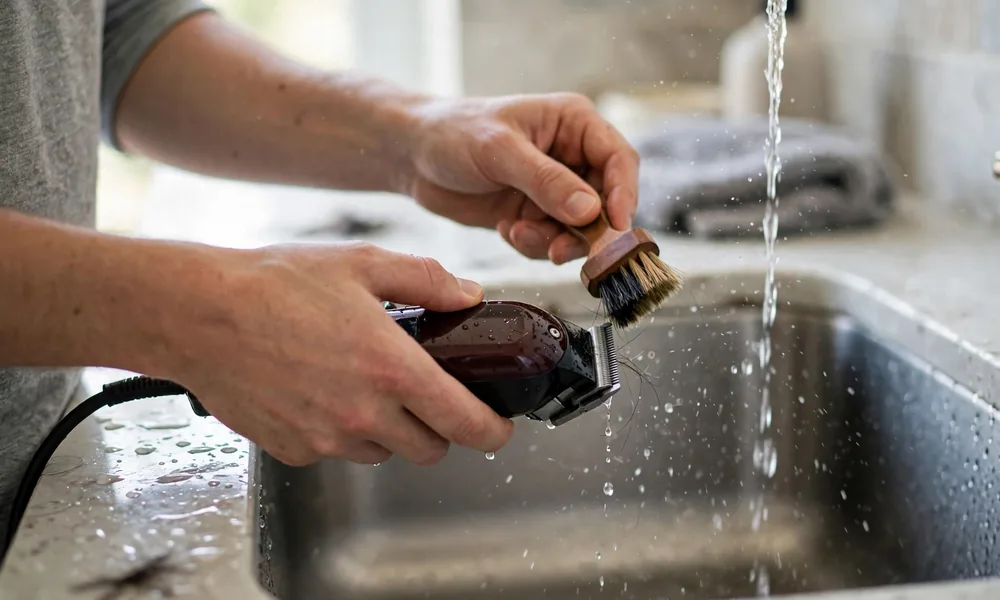
Cleaning is simple and it matters more than any feature on the box. After each cut, switch the clipper off, remove the guard, and brush the hair out of the blade teeth with the small brush that came in the kit. Never rinse a clipper that is not made to be washed, and never run it under a tap to clean it, because water inside the body rusts the moving parts and kills the motor.
Checklist: Before You Buy a Hair Clipper
- Check the blade is sharp stainless steel and that replacement blades are sold for the model.
- Test that every guide comb clicks on firmly and sits flat against the blade.
- Confirm the battery covers a full cut, or choose a corded model for long sessions.
- Look for a taper lever if you want fades or blended sides.
- Make sure the clipper is easy to clean, with a brush and oil in the box.
- Hold it first if you can: it should feel balanced, not heavy at the blade end.
Frequently Asked Questions
How often should I cut my hair at home?
Most short styles need a trim every two to three weeks to keep their shape. Longer styles can go four to six weeks between cuts.
Can one clipper cut hair and beards?
Yes, for the bulk of the work, but the finishing is different: a beard needs a narrower tool for shaping. If you shave as well, keep the tools separate: our guide to safety razors that give a close shave without the nicks covers the face side properly.
Why does my clipper pull my hair?
Pulling almost always means a dull, dirty or dry blade. Clean the hair out of the teeth, add a drop of oil, and try again. If it still pulls on clean hair, the blade is worn and needs replacing.
Should I cut hair wet or dry?
Slightly damp, towel-dried hair cuts most evenly at home, because it lies flat and feeds into the blade smoothly. Very wet hair clumps and sticks to the blade, and very dry hair can fly away from the teeth.
What guard should a beginner start with?
Start with a number four or five guard, about thirteen to sixteen millimetres, for an all-over cut. It is short enough to look tidy and long enough to forgive small mistakes. You can always take more off; you cannot put it back.
How long should a good home clipper last?
A well-made home clipper should last five years or more with regular cleaning and oiling. The battery in a cordless model is usually the first thing to fade, after three to four years.
The Bottom Line
The best hair clippers for home use in 2026 are the ones that cut cleanly, hold their speed, and stay easy to look after. Choose a sharp stainless steel blade, a motor that does not slow in thick hair, guards that fit firmly, and a power setup that suits how you cut. Start longer than you think, move slowly, and clean the blade after every cut.