
A good beard rarely happens by accident. Left alone, most beards grow unevenly: longer on one cheek, stray hairs curling over the lip, the neckline creeping down the throat. The fix is a beard trimmer used properly, with the right length guard and a clear plan for the shape you want. The best beard trimmers of 2026 hold one even length, cut cleanly without snagging, and let you tidy the edges without taking the whole beard off by mistake.
This guide is about shaping, not removing. A trimmer keeps hair at a chosen length and sculpts the outline of a beard. That needs different thinking from shaving: which guard, which lines, and how often to touch up. Get those three things right and a scruffy beard can look deliberate in about ten minutes, with no trip to the barber.
Key Takeaways
- A beard trimmer shapes and maintains length; it is a shaping tool, not a tool for taking hair down to bare skin.
- Start with a longer guard than you think you need, then step down one size at a time.
- The neckline and cheek line matter more than any setting on the trimmer.
- Trim a clean, dry beard, working against the direction of growth for an even result.
- Clean the blades after every trim and oil them when the maker says to.
Trimming Is Not Shaving
A trimmer cuts hair to a set length and leaves that length in place. A three-millimetre guard leaves three millimetres of beard all over; a twelve-millimetre guard leaves a short, full beard. The guard is the whole point of the tool: the difference between a tidy beard and a bad haircut is usually one guard size too short.
Shaving is the opposite job: it removes hair completely, down to the skin. If what you want is a smooth face with no beard left at all, a trimmer is the wrong starting point, and our comparison of the best and worst shavers of 2026 is the better guide. If you want to keep your beard and make it look deliberate, stay with the trimmer.
Length Guards, Explained
Guards are numbered by the length they leave behind, usually in millimetres, and most sets run from about one to twenty. The small numbers are for stubble. The middle numbers, around three to six millimetres, cover the short boxed beard that suits most faces. The larger numbers, ten and up, are for fuller beards, where you are evening out the length rather than setting a new one.
The safest rule, and the one barbers repeat most, is to start long. Put on a guard two sizes above the length you think you want, trim the whole beard, look at it in natural light, and only then step down a size. Hair does not grow back in an afternoon, but a guard change takes ten seconds, so there is no reason to gamble. Write down the guard you settle on.

Beard Styles and the Guard That Suits Each One
The style you want decides the guard, not the other way round. Short stubble needs a one to three millimetre guard and a trim every two or three days. A short boxed beard, the neat square shape that frames the jaw, usually sits at three to six millimetres, with the cheek line crisp and the neckline tidy. A full beard is a longer project: ten to twenty millimetres, trimmed every week or two, with the trimmer used mainly to even out stray hairs.
Faded beards are the hardest to do at home, because they blend from short on the cheeks to longer on the chin. Work in bands: a shorter guard high on the cheek, a middle guard through the middle, and the longest guard on the chin, then blend the joins by running the trimmer lightly across them. Go slowly, check both sides after every band, and stop while it still looks slightly underdone.
| Beard style | Usual guard | How often to trim | Lines to keep sharp |
|---|---|---|---|
| Short stubble | 1–3 mm | Every 2–3 days | Cheek line and neckline |
| Short boxed beard | 3–6 mm | Twice a week | Cheek line, neckline, moustache |
| Full beard | 10–20 mm | Every 1–2 weeks | Neckline and stray hairs |
| Faded beard | 3, 6 and 9 mm bands | Weekly | Blend lines, neckline |
| Goatee and moustache | 3–6 mm, bare blade for edges | Every 2–3 days | Outline around the mouth and chin |
The moustache grows over the lip faster than the rest of the beard. Trim it with the smallest guard or the bare blade, combing the hairs down first and cutting only the tips that hang past the lip line.
How to Shape Your Beard, Step by Step
Start with a clean, completely dry beard. Wash it, dry it thoroughly, and comb it through so the hairs lie in their natural direction. Wet hair hangs longer and clumps, so trimming it wet always takes off more than you expect and dries unevenly.
Fit the longest guard you plan to use and trim the whole beard first, moving the trimmer against the direction of growth so the teeth lift the hairs to an even length. Use slow, overlapping passes and let the guard glide rather than pressing it in: pressing bends the guard and cuts shorter than the setting.
Next, set the neckline. Put two fingers above the Adam’s apple and draw an imaginary curve from one ear to the other, following the jaw. Everything below that line comes off with the bare blade, and everything above it stays. A neckline set too high makes the beard look small; one left down on the throat looks untidy.
Then do the cheek line. Find the natural line where the beard thins out on the cheek, and keep it, removing only the stray hairs above it. A straight cheek line can look sharp on a short boxed beard, but it has to be symmetrical, so trim a little, step back, and compare both sides before trimming more. Finish by combing the beard down and trimming the odd long hairs that stick out.
What to Look for When You Buy One
Blade width is the first practical detail. A standard blade around thirty millimetres wide covers the cheeks and chin quickly, while a narrower detail blade is better for the edges around the lips. Some trimmers come with both, and that combination is worth having if you wear a goatee or keep a sharp cheek line.
Next, check the motor and the battery together. A trimmer should run at full speed until the battery is nearly empty, not fade as the charge drops, because a slowing blade pulls and leaves an uneven length. About an hour of running time is plenty, and a quick charge that gives one trim from a few minutes on the plug is genuinely useful.
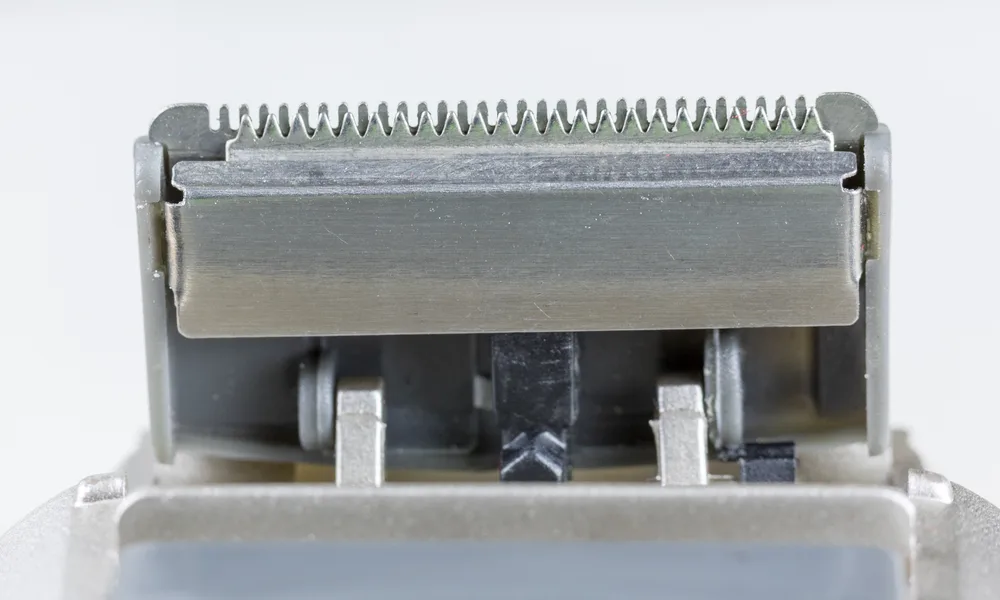
Waterproofing matters mainly because it makes cleaning easier: a trimmer you can rinse under the tap takes seconds to clean, while one you have to brush out carefully every time will get skipped, and a dirty blade is a blunt blade. Check the box, too: the guard range you need, a cleaning brush, blade oil if needed, and a pouch that keeps the guards together.
Mistakes That Ruin a Good Beard Shape
The most common mistake is starting with too short a guard. The beard looks long in the mirror and a short guard feels like the fastest fix. It is not: it is the fastest way to a beard thinner than you wanted and patchy where hair grows slowly. Start long and step down slowly.
The second mistake is rushing the lines. Cheek lines and necklines need a still head, a clean mirror and good light; trimming them while leaning into a foggy mirror is how lines end up at different heights on each side. Give the lines their own minute at the end, when the length is set and you can see the shape. The third mistake is forgetting the beard has two sides: five careful minutes on one side and thirty seconds on the other looks fine to you and lopsided to everyone else.
The last mistake is treating the trimmer as a once-a-month tool. A beard keeps its shape only if it is touched up regularly, and the gap between a neat beard and a scruffy one is usually about four days. Short styles need a trim every two or three days, longer beards every week or two. Short, frequent trims are easier than long, corrective ones.

Looking After Your Trimmer
A trimmer lasts for years if it is cleaned and stored properly, and for months if it is not. Brush the loose hairs out of the blade after every trim, rinse it if the maker allows it, and let it dry completely before you put it away. A drop of oil when the instructions call for it keeps the cut smooth. Store the trimmer and its guards somewhere dry and upright rather than loose in a damp drawer. Our guide to the best shower caddies for small bathrooms is useful here, because a trimmer left rattling around a wet shelf will not last as long as one kept dry and in its case.
Charging habits matter too. Do not leave a trimmer plugged in for days, and do not let the battery sit flat for months. When the blade finally dulls, replace it rather than pressing harder. A little beard oil combed through keeps the hairs lying in the same direction, and a light fragrance to finish is a detail people notice. Our guide to colognes that smell expensive without the price tag covers that last step well.
Your Beard Trimming Checklist
- Wash and fully dry the beard, then comb it through before you start.
- Fit a guard two sizes longer than your target length and trim the whole beard first.
- Step down one guard size at a time, checking both sides in the mirror as you go.
- Set the neckline two fingers above the Adam’s apple, in a gentle curve.
- Keep the natural cheek line and remove only the strays above it.
- Brush and dry the blades after every trim, and store the trimmer dry.
Frequently Asked Questions
How often should I trim my beard?
Short stubble needs a trim every two or three days, a short boxed beard twice a week, and a full beard every one to two weeks. Little and often keeps the shape.
Should I trim my beard wet or dry?
Dry, always. Wet hair hangs longer and clumps, so you cut off more than you meant to and the length dries unevenly.
What guard should I start with?
Start two sizes longer than the length you think you want. Trim the whole beard, look at it in daylight, and step down one size at a time until it looks right.
How do I stop my neckline looking wrong?
Use the two-fingers-above-the-Adam’s-apple guide and draw the line in a gentle curve from ear to ear. Keep it low rather than high.
Can a beard trimmer replace a visit to the barber?
For keeping a shape, yes, once the shape is set. For setting a new style or getting a fade right, a barber is still the safer choice.
How long should a good beard trimmer last?
Several years with basic care: brush and dry the blades after each use, oil them when the maker says to, and replace the blade when it dulls. A trimmer cleaned and stored dry outlasts one left damp in a drawer.
The Bottom Line
The best beard trimmers of 2026 are not the ones with the longest list of features. They are the ones that hold one even length, keep their guards firmly in place, and let you shape the cheek line and neckline without a fight. Pick your style, start with a longer guard than you think you need, trim a dry beard little and often, and look after the blades.


