Folding chairs that actually hold up in 2026 are not the flimsy seats most people picture when they hear the words. A good folding chair holds an adult comfortably for a whole evening, folds flat in seconds, and still works after years of regular use. The difference between a chair that lasts and one that wobbles after a month is decided long before you sit down: in the frame, the hinges, the weight rating, and the seat.
Most folding chairs fail in the same few places. The frame bends at a weak joint, the seat fabric sags, the feet slide on a hard floor, or the hinge loosens until the chair rocks from side to side. None of these faults is obvious in a shop, where a chair only has to survive a ten-second sit.
Key Takeaways
- Choose a chair rated at least 50 pounds above the heaviest person who will use it, and treat that rating as a hard limit.
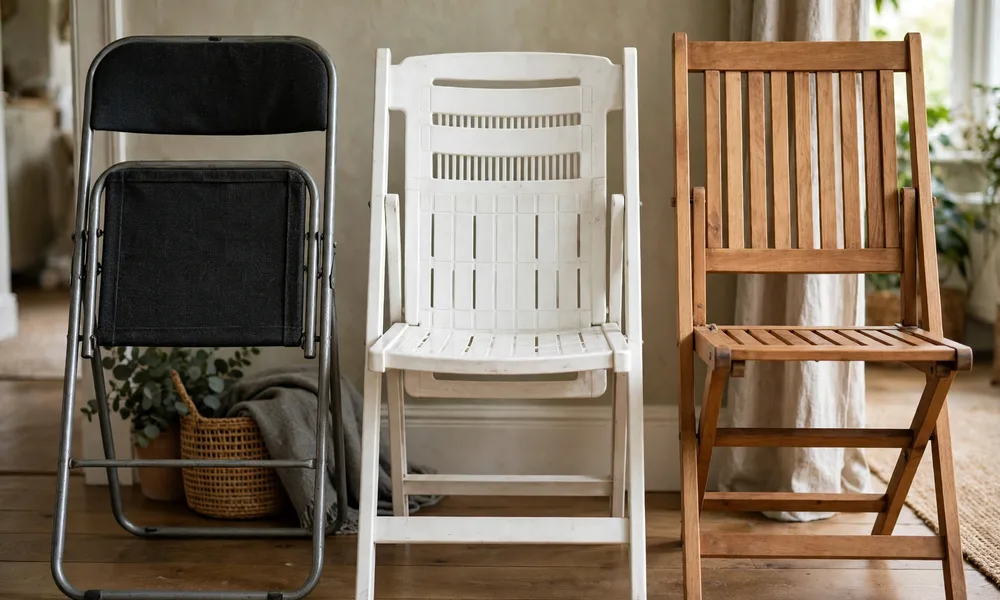
- Metal frames are the strongest all-rounders, resin is the easiest to clean, and wood looks the best in a living room.
- Check the hinge and the locking mechanism first: a wobbly joint is the first thing to fail.
- A padded seat and a proper backrest matter more than a cup holder when anyone sits for longer than an hour.
- Measure your storage space first, because a chair that folds flat is only useful if it fits where you plan to keep it.
Why Most Folding Chairs Fail Early
A folding chair has a harder job than an ordinary chair, because every part of it moves. The legs pivot, the seat folds, and the backrest swings into place, which means every joint carries load and wear at the same time. A fixed chair spreads weight through solid joints that never move. A folding chair concentrates it on pins, rivets, and hinges, and the cheapest chairs use the thinnest metal and the smallest fasteners they can get away with.
The most common failure is the hinge. A good hinge is a thick steel plate with a rivet that fits tightly and a lock that clicks firmly into place. A bad one is thin, stamped metal that flexes every time the chair opens, and it slowly stretches until the chair develops a sideways wobble. Test it in the shop by pushing the open chair gently from side to side: a sound chair barely moves.
The Main Types of Folding Chair
Folding chairs fall into four main families, and each one suits a different kind of use. The right choice depends less on taste than on where the chair will live, who will sit on it, and how often it will be folded away.
Metal Folding Chairs
The metal folding chair is the workhorse of the family. A steel frame with a padded vinyl or fabric seat is strong, affordable, and easy to stack, and it is the standard choice for halls and event venues. Steel is the strongest frame material at a given price, and a well-made steel chair rated to 300 pounds will hold most adults with a comfortable margin. Aluminium versions are lighter and resist rust, but they cost more and dent more easily.
Resin and Plastic Folding Chairs
Resin folding chairs are the easiest to live with outdoors and in messy households. They do not rust, they wipe clean with a damp cloth, and they survive rain, spills, and muddy shoes without complaint. A good resin chair has a thick, reinforced seat and a steel-reinforced frame; a bad one is thin plastic that flexes under weight and cracks in cold weather.
Wooden Folding Chairs
Wooden folding chairs are the best-looking option, and the right choice when chairs will stay visible in a living room or dining room. Beech, oak, and acacia are the common hardwoods, and they feel warmer and more solid than metal or plastic. A wooden chair with a woven or padded seat can genuinely suit a dining table, which a steel event chair never will. The weaknesses are weight and maintenance: wood is heavy, it scratches, and it needs occasional oiling.
Padded Event Chairs
Padded event chairs are folding chairs built for long sits: a fully upholstered seat and backrest on a steel frame, often with a slightly wider seat. They are the most comfortable folding chairs you can buy, and the standard choice for weddings and long dinners. The trade-off is bulk and cleaning: padded chairs are heavier, they stack less neatly, and fabric upholstery stains.

Frames, Joints and Weight Limits
The frame is the part of a folding chair that decides whether it is safe, and it deserves more attention than the seat. A chair rated to 300 pounds sounds generous until you remember that people do not sit still: they lean back, shift their weight, and sometimes sit with a child on their lap. A rating is a static test, not a guarantee under real movement, which is why the margin matters.
Weight Capacity, Honestly
Buy a chair rated at least 50 pounds above the heaviest person who will use it. If the heaviest guest weighs 220 pounds, a 300-pound rating is the minimum, and a 350-pound rating is better. Chairs rated below 250 pounds are only suitable for light, occasional use. Be suspicious of any chair that does not print a rating at all: a manufacturer that will not state a weight limit has usually not tested one.
Hinges, Locks and Feet
Open and close the chair several times before you buy. The hinge should move smoothly without grinding, and the lock should click into place with a firm, positive action. Cross-braced legs are stronger than simple parallel legs, because the brace stops the frame from racking sideways. Rubber feet grip hard floors and protect them from scratches, while bare metal feet slide and can mark wood.
Seats: Comfort for an Hour, Not Five Minutes
A folding chair is easy to judge in five minutes and hard to judge in two hours, which is exactly the problem. A hard seat feels fine at first and punishing by the end of a meal. Seat height of around 17 to 18 inches suits most adults, letting feet rest flat on the floor with knees at roughly a right angle. Padding of at least an inch of dense foam transforms a folding chair: thin padding compresses to nothing within weeks, while dense foam keeps its shape for years.
Folding Chairs at a Glance
| Type | Best for | Weight capacity | Watch out for |
|---|---|---|---|
| Metal folding chair | Events and guests | 300 to 350 pounds | Heavy to carry, plain looks |
| Resin folding chair | Gardens and patios | 250 to 300 pounds | Hard seat, cracks in cold |
| Wooden folding chair | Dining and living rooms | 250 to 300 pounds | Heavy, needs care |
| Padded event chair | Long dinners, weddings | 300 to 350 pounds | Bulky, stains easily |
| Lightweight aluminium chair | Carrying and travel | 225 to 275 pounds | Dents, lower capacity |
Folding Chairs for Every Use
Where a folding chair will be used decides almost everything about which one to buy.
Extra Guests at Home
For extra guests, buy chairs that match your dining chairs in height and look as close as you can manage. Wooden folding chairs are the natural choice here, because they blend with a dining set instead of announcing themselves as spare seating. Keep four to six on hand if you host regularly, and store them somewhere you can reach them without moving furniture.
Events, Halls and Parties
For events, strength and stackability matter more than looks. Steel chairs with padded vinyl seats are the standard, and they stack ten high without fuss. Buy all of one type so they stack evenly, and count on needing more chairs than you think. If the event is outdoors, resin chairs are the safer choice, because they will not rust if the evening turns damp. Our guide to the best vs worst patio furniture covers the other pieces that complete an outdoor setup.
Gardens and Patios
For gardens and patios, weather resistance is the deciding factor. Resin and aluminium chairs survive rain and sun without rusting or rotting, while steel needs a good coating and wood needs shelter. A folding chair earns its place outdoors because it can be brought inside when the weather turns.
Storage and Care
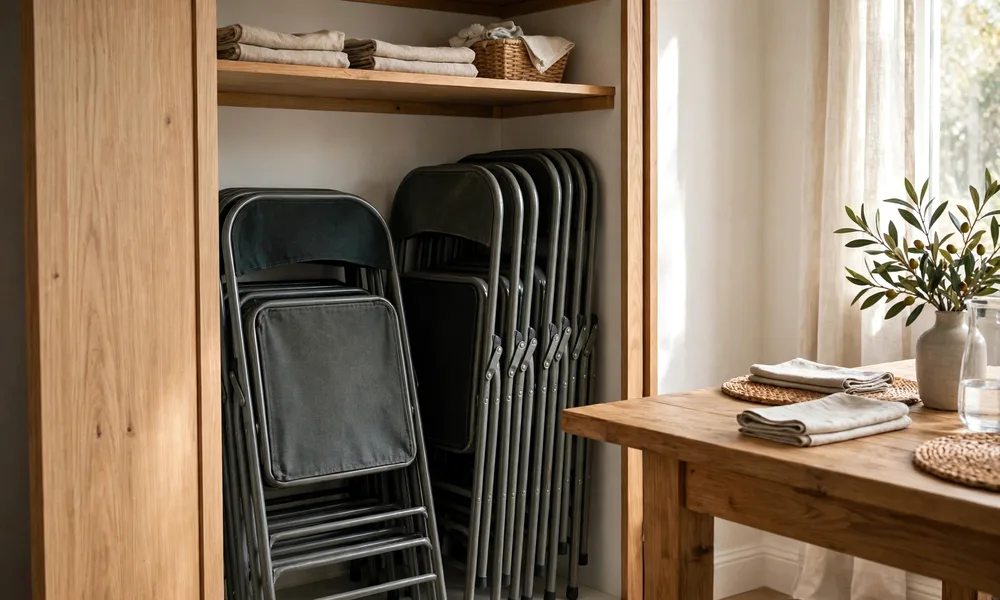
Good storage is what keeps a folding chair working for years. Store chairs clean and dry, folded flat, in a place where they will not be knocked over or buried under heavy boxes. Stack them upright rather than lying them flat under weight, which bends frames over time. Wipe metal frames dry after outdoor use, and check for rust at the joints each spring: a small spot caught early is a five-minute fix, while a rusted hinge is a dead chair.
What to Check Before You Buy
- Open and close the chair five times: the hinge should move smoothly and the lock should click firmly every time.
- Push the backrest gently from side to side: a sound chair barely twists, while a weak one racks visibly.
- Check the weight rating and buy at least 50 pounds above the heaviest user.
- Sit for five minutes with your feet flat on the floor: your knees should sit at roughly a right angle.
- Measure the folded chair against your storage space, including its thickness, not just its height.
- Inspect the feet: rubber feet should be intact and firmly fixed, with none missing or cracked.
Frequently Asked Questions
How much weight can a folding chair hold?
Most good folding chairs are rated between 250 and 350 pounds. Steel chairs sit at the top of that range, while lightweight aluminium and thin resin chairs sit at the bottom. Always buy at least 50 pounds above the heaviest person who will use the chair.
Are wooden folding chairs strong enough for daily use?
Yes, if they are made from hardwood with proper joints. A beech or oak folding chair with a 250-pound rating will handle daily dining use for years. The weakness is maintenance: screws loosen as wood moves with humidity, so check and tighten them every few months.
Can folding chairs be left outside?
Resin and aluminium chairs can handle outdoor use, but even they last longer if brought inside in bad weather. Steel chairs will rust if their coating chips, and wooden chairs will swell and crack if left in the rain.
What is the best folding chair for a wedding or large event?
A steel folding chair with a padded vinyl seat is the standard choice: strong, stackable, easy to clean, and comfortable for a long meal. Buy all of one type so they stack evenly, and order a few more than the guest list.
Why does my folding chair wobble?
Usually because a hinge has loosened, a foot is missing, or the frame has bent slightly. Check the feet first, then tighten every hinge screw, and check the frame on a flat floor. If the frame itself is bent, the chair is no longer safe and should be replaced.
How do I store folding chairs so they last?
Store them clean, dry, and folded flat, standing upright rather than piled under weight. Keep them somewhere reachable, because chairs buried behind boxes do not get used. Wipe metal frames dry after outdoor use and oil wooden frames once or twice a year.
Bottom Line
A folding chair that actually holds up is not a mystery purchase: it has a strong frame, a firm hinge, an honest weight rating, and a seat that stays comfortable for a whole evening. Metal wins for events, resin wins outdoors, wood wins in the dining room, and padding wins whenever anyone sits for hours. Measure your storage, check the hinge before you buy, and buy a rating with real margin in it. For seating that stays in one place, our guides to the best camping chairs of 2026 and the best beach chairs of 2026 cover the chairs built for grass and sand.