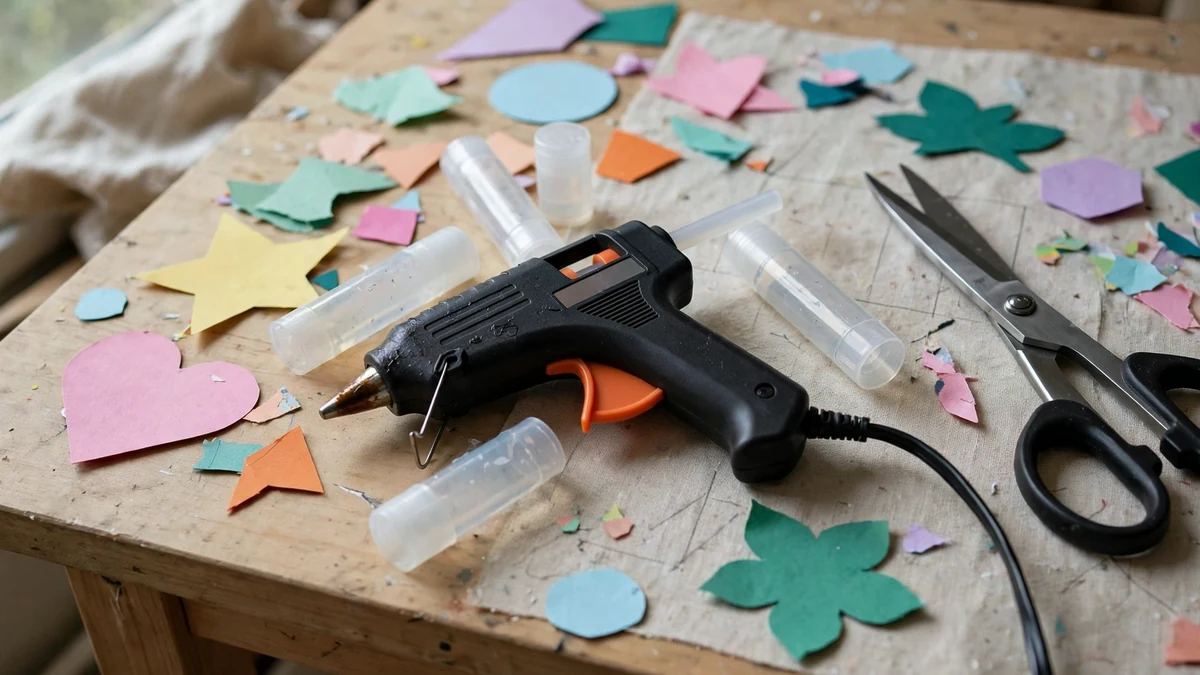
A craft glue gun has one job: to lay a neat, controlled bead of hot glue exactly where it is needed, without dripping, stringing, or burning the fingers that hold the work. The worst glue guns for crafts in 2026 fail at it in ways that leave a crafter with glue all over the table, a burnt fingertip, or a delicate paper project ruined by a blob of glue three times too big. They drip constantly, heat unevenly so the glue comes out lumpy, or are so bulky and heavy that fine work is impossible. Crafters buy them hoping for a tidy tool for cards, decorations, and small repairs. What they get is a gun that leaks, a gun that scorches, or a gun that turns a careful project into a sticky mess. A craft gun should be judged on the smallest join it must make, not on the largest, because a gun that cannot lay a tiny bead cannot do fine work at all.

Nozzles That Drip Constantly
A glue gun should stop when you stop squeezing, and the worst ones do not. A nozzle that drips constantly leaves puddles on the bench, strings across the work, and blobs on delicate paper that cannot be removed once they have set. The problem is worst on cheap guns, where the nozzle has no valve at all and the melted glue simply flows out under its own weight. A crafter who must wipe the nozzle after every squeeze is a crafter who cannot work at any speed, and a project that needs a dozen small dots of glue becomes a dozen small disasters. A nozzle that drips also wastes glue, so a gun that drips will empty its sticks twice as fast as one that shuts off cleanly.
The test takes a minute in the shop or at home. Heat the gun fully, hold it over a piece of scrap paper, and wait without squeezing: a good nozzle stays dry, while a bad one starts dripping within seconds. Look for a nozzle with a fine, precision tip and a valve that shuts off cleanly, and avoid guns with wide, open nozzles that cannot control the flow. A gun that drips in the shop will drip worse at home, when it is hot, full, and being used for fine work that cannot hide a single blob.
Heat That Is Uneven or Far Too Hot
A craft glue gun must heat the glue evenly so it flows smoothly, and the worst ones heat it in fits and starts. Cheap guns heat unevenly, so the glue is too hot at the nozzle and too cool at the feed, which means lumps, strings, and a bond that fails within days. Others run far too hot for craft materials, scorching paper, melting foam, and warping thin plastic the moment the glue touches it. A gun that cannot control its own heat is a gun that damages the very materials it was bought to join. A gun that heats unevenly will also bond unevenly, so a join that looks strong on the outside can fail with the slightest pull.
For craft work, a dual-temperature gun is worth seeking out, because it lets you switch to a low setting for paper, fabric, and foam, and a high setting for wood and heavier joins. A gun with no temperature control at all is a gun that treats every material the same, which is exactly the wrong approach for crafts. Test the gun on scrap pieces of the materials you actually use: if the glue scorches paper or melts foam, the gun is too hot for your craft table. Our guide to the best glue guns of 2026 shows the guns that heat up quickly and drip least.
Triggers With No Feel at All
A glue gun trigger controls how much glue comes out, and the worst triggers give the crafter no control at all. A stiff, jerky trigger releases glue in sudden bursts, so a small dot becomes a large blob, while a loose trigger feeds the stick in fits and starts, leaving gaps in the bead. Some triggers stick halfway, so the glue keeps flowing after the finger has lifted, and some are so hard to squeeze that the hand tires within minutes. Fine craft work needs a trigger that responds to a gentle squeeze with a small, precise bead, and a trigger that cannot do that is a trigger that ruins fine work. A trigger that sticks halfway will keep feeding glue after the finger has lifted, so the bead grows long after the hand has stopped.
Squeeze the trigger slowly before you buy, and feel whether the glue comes out smoothly or in jerks. A good trigger moves evenly through its travel and stops the moment you release it, while a bad one sticks, jumps, or needs real force to move at all. Check the feed mechanism too: the stick should advance steadily without slipping back, and the gun should not need a second squeeze to get going again. A trigger that feels wrong in the hand will feel worse after an hour of careful work.
Stands So Bad the Gun Tips Over
A glue gun spends most of its life sitting on its stand while the crafter positions the next piece, and the worst stands let it fall over. A stand that is too narrow, too light, or missing entirely means the hot nozzle rests on the table, scorching the surface and dripping glue everywhere. A gun that tips over can burn a hand, melt a craft project, or set light to paper left nearby. The stand is a small part of the gun, and it is the part that keeps a hot tool safe between uses. A stand that lets the gun tip will tip it at the worst moment, usually when the table is covered in paper and the nozzle is at full heat.
Look for a wide, stable stand that holds the gun upright with the nozzle clear of the table, and check that the gun sits in it firmly without wobbling. A fold-out wire stand is better than no stand at all, but a solid built-in stand is better still. Set the gun on its stand and nudge the table: if the gun tips, the stand is not good enough for a craft table covered in paper and fabric. A gun that cannot stand safely is a gun that should not be left hot and unattended for even a moment.
Too Big, Too Heavy, Too Clumsy for Crafts
Craft work is fine work, and the worst glue guns are built like industrial tools. A full-size gun is heavy, bulky, and hard to hold steady for the small, precise joins that cards, decorations, and models need. The nozzle is too wide for a small bead, the body blocks the view of the work, and the weight tires the hand within minutes. A gun that is too big for the work will always lay down too much glue in the wrong place, and a craft ruined by too much glue cannot be fixed by taking the glue away. A gun that is too heavy for fine work will also be too heavy for long sessions, and a tired hand lays glue in the wrong places.

For crafts, a mini gun is usually the right size, with a fine nozzle and a light body that can be held like a pen. Check the weight in your hand before you buy, and hold it in the position you will actually use: if your wrist aches after a minute, it will ache far more after an hour. A gun that feels like an extension of the hand is a gun that will lay neat beads all afternoon, while a gun that feels like a power tool belongs on a workbench, not a craft table.
Glue Sticks That Jam and Strings That Follow Everywhere
A glue gun is only as good as the sticks it takes, and the worst guns jam constantly. Sticks that are the wrong diameter for the feed stick halfway, sticks that are too soft melt back into the gun and clog it, and sticks that are too hard will not feed at all. The result is a gun that stops mid-project, a half-melted stick that must be pulled out with pliers, and a craft left waiting with glue cooling on it. Strings are the other plague: cheap glue leaves fine threads across every join, so a tidy project ends up covered in cobwebs that must be picked off one by one. A stick that jams halfway will leave the gun half full and the project half done, with glue cooling on the join while the jam is cleared.
Buy sticks made for your gun, in the diameter the maker specifies, and avoid the cheapest bulk sticks, which vary in size from batch to batch. A good gun feeds its stick smoothly and lays a bead that breaks cleanly when you lift the nozzle, while a bad gun strings on every join. Keep the sticks clean and dry, and never force a stick that will not feed: a jammed gun is a gun that will be damaged by the force used to clear it. A gun that works with its own sticks, and only its own sticks, is a gun that was made properly.
What to Buy Instead
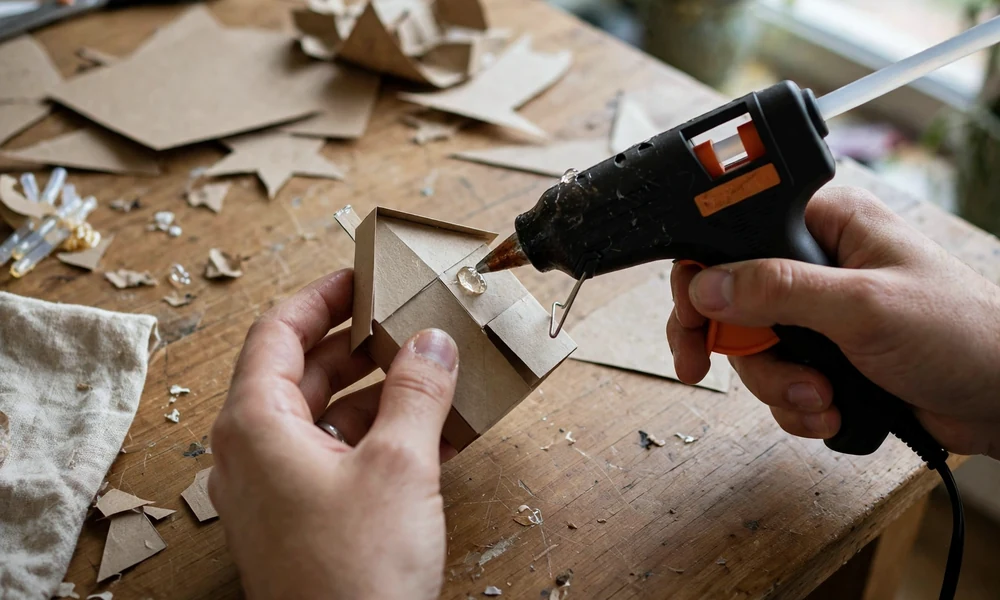
The guns worth buying share a short list of features, and none of them is expensive on its own. A fine precision nozzle with a valve that stops dripping, even heat with a low setting for delicate materials, and a trigger that lays a small, controlled bead. A wide, stable stand, a light body that can be held like a pen, and sticks that feed smoothly without jamming. If a gun fails any one of those checks, keep looking.
Fit matters as much as build, and the gun should suit the craft in front of you rather than the workshop in the photograph. A paper crafter needs a mini gun with a low-temperature setting and a fine nozzle, while a maker of heavier decorations needs a dual-temperature gun with a little more power. Test the nozzle for drips, try the trigger, and check the stand before you pay. A gun that works on the first project and still works on the fiftieth is worth every penny. If you need the rest of the craft kit to match, our guide to the best craft kits of 2026 covers the kits that make a good first project easy.
The Bottom Line
The worst glue guns for crafts in 2026 share a pattern: nozzles that drip constantly, heat that is uneven or far too hot, triggers with no feel at all, stands so bad the gun tips over, guns too big and heavy for crafts, and sticks that jam with strings everywhere. Avoid those six failures and you avoid almost every glue gun regret. Test the nozzle, try the trigger, and check the stand before you pay. Do that, and the gun you buy will be the one that makes tidy joins all afternoon, project after project. And if you want a simpler adhesive for paper work, our guide to the best glue sticks of 2026 covers the sticks that hold paper without the mess.