A first crochet hook has one job: to glide through yarn smoothly, catch each loop cleanly, and let a beginner build stitches without fighting the tool. The worst crochet hooks for beginners in 2026 fail at it in ways that leave a new crocheter with split yarn, aching hands, or a hook that snags on every single stitch. They are too rough to let the yarn slide, shaped so badly the hook cannot catch a loop, or sized so wrongly that the fabric comes out either full of holes or stiff as cardboard. Beginners buy them hoping for a relaxing craft they can pick up in an evening. What they get is a hook that snags, a hook that hurts, and a project abandoned before the first row is done. A first hook should be judged on the first blanket, not on the first chain, because a hook that feels fine for ten stitches can still fail over a hundred.

Hooks That Snag on Every Stitch
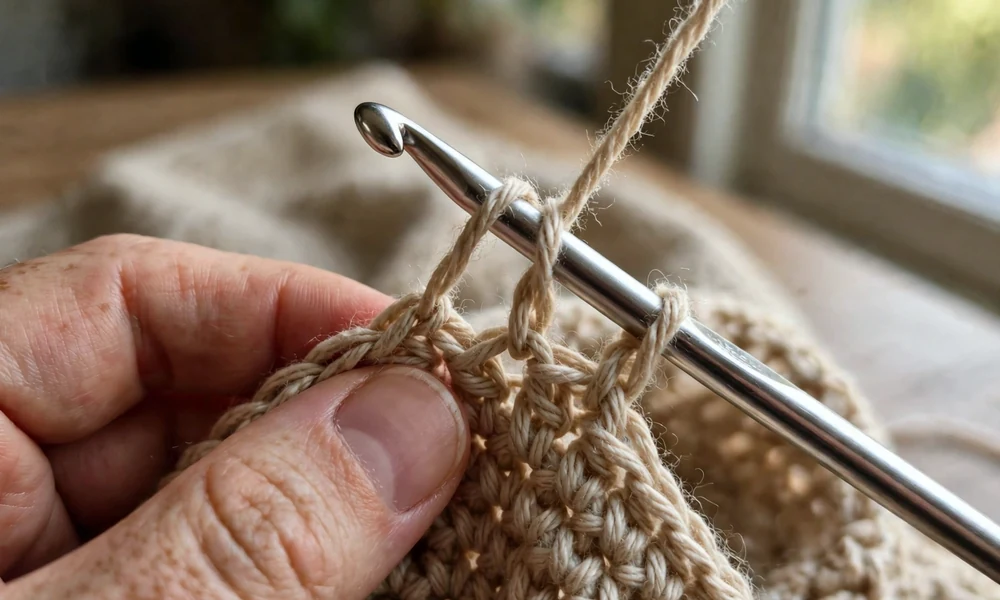
A crochet hook must let the yarn slide along its shaft and over its head without catching, and the worst hooks snag constantly. Rough metal with burrs, plastic with mould lines down the middle, and wooden hooks with splinters all catch the fibres and stop the yarn dead. The beginner pulls harder, the stitch tightens unevenly, and the work comes out lumpy and misshapen. A hook that snags is a hook that makes every stitch feel like hard work, and a craft that feels like hard work is a craft that gets put down after one evening. A hook that snags the yarn also tightens the stitch unevenly, and uneven stitches make a fabric that puckers no matter how careful the hands are.
Slide a loop of yarn up and down the hook before you buy it, and feel for any catch, bump, or rough patch along the shaft and around the head. A good hook feels like glass under the yarn, smooth from the handle to the tip, while a bad one catches in the same place every time. Check the throat of the hook too, where the yarn is caught: it should be smooth and rounded, with no sharp edge to split the fibres. A smooth hook is not a luxury for a beginner: it is the difference between crocheting and wrestling with the yarn.
Heads That Cannot Catch a Loop
The head of a crochet hook does the delicate work of catching the yarn and pulling it through a loop, and the worst heads cannot do it at all. A head that is too shallow lets the yarn slip off before it can be pulled through, while a head that is too deep and pointy splits the yarn into separate strands. Some cheap hooks have heads that are not even centred on the shaft, so the yarn catches on one side and slips on the other. A beginner who cannot catch a loop will blame their own hands, when the fault is entirely in the tool. A head that drops the loop will drop it at the worst moment, usually halfway through a long row that took an hour to build.
Look at the head closely before you buy, and try it with the yarn you will actually use. A good head is smoothly rounded, deep enough to hold the yarn securely, and centred on the shaft so the yarn slides over it evenly. Work a few stitches in the shop if you can: a hook that catches every loop cleanly is a hook worth buying, while a hook that drops or splits the yarn on every third stitch is a hook that will ruin a first project. A well-shaped head is the single most important feature on a beginner hook.
Handles That Ache After Ten Minutes
A beginner holds a hook for an hour at a time while learning, and the worst handles make every minute hurt. Thin metal shafts with no grip dig into the fingers, hard plastic handles with sharp edges press into the palm, and hooks that are too short force the hand into a cramped grip. Some hooks have handles so slippery that the hand must squeeze harder just to hold on, which tires the fingers within minutes. A handle that hurts is a handle that will not be held for long, and a craft that hurts is a craft that gets abandoned. A handle that aches after ten minutes will ache worse after an hour, and a craft that hurts is a craft that gets put down for good.
Hold the hook the way you will actually crochet, and keep holding it for a full minute. A good handle feels secure without biting, with a shape that supports the fingers and a surface that grips when the hand is warm. Ergonomic handles with a soft, slightly flattened grip suit most beginners, while a plain metal shaft suits those who prefer a lighter tool. A handle that leaves red marks after a minute will leave aches after an hour, and aches are the fastest way to stop a new hobby.
Wrong Sizes for a First Project
Hook size decides how the fabric turns out, and the worst beginner hooks are sold in sizes that suit nobody learning. A hook that is too small for the yarn makes stiff, tight stitches that are hard to work and harder to see, while a hook that is too large makes loose, holey fabric that looks like a net. Some beginner sets include a jumble of sizes with no guidance, so a new crocheter picks one at random and wonders why the blanket looks nothing like the picture. A hook in the wrong size is a hook that teaches the wrong lesson about what crochet should feel like. A fabric that is too tight for the yarn will not drape, while one that is too loose will not hold its shape, so the size must match the yarn exactly.
A beginner should start with a five-millimetre hook and a ball of double-knitting or aran yarn, because that combination is forgiving, easy to see, and suited to the simple projects most beginners start with. Check that the size is printed clearly on the hook, not just on the packaging, because a hook with no size marking is a hook that will get mixed up with all the others. A set that includes the right size for a first project, and says so plainly, is a set made by people who understand beginners.
Hooks That Bend, Snap, or Shed Their Handles
A crochet hook takes gentle but constant pressure, and the worst ones cannot take even that. Thin aluminium hooks bend under a tight grip, plastic hooks snap at the neck, and hooks with glued-on handles shed them mid-row, leaving a bare shaft that cannot be held. A hook that bends changes the size of every stitch it makes, so the fabric comes out uneven, and a hook that snaps drops the work on the floor. A hook should be the most reliable thing in the project, not the most fragile. A hook that bends under a tight grip will keep bending, because the grip only gets tighter as the work gets harder.
Hold the hook at both ends and bend it gently: a good hook stays straight and springs back, while a bad one either stays bent or snaps. Check the join between the handle and the shaft, and pull it firmly: a handle that moves or wobbles will come off at the worst possible moment. A solid, well-made hook from a trusted maker will outlast a dozen cheap ones, and it will cost less in the end. A hook that feels flimsy in the hand will feel worse after a week of use.
Sets That Promise Everything and Deliver Confusion
Beginner sets that promise every size, every colour, and every accessory in one box are often the worst buy of all. The hooks are the cheapest possible version of everything, the case falls apart, the stitch markers are unusable, and the instructions are a single folded sheet that explains nothing. A beginner who opens such a set faces a jumble of tools with no idea which one to pick up first, and the sheer number of choices is more confusing than helpful. A set that promises everything usually delivers nothing well. A set that includes everything and explains nothing leaves the beginner with twenty choices and no idea which one to pick up first.
A beginner needs one good hook, one ball of yarn, and a simple pattern, not a box of twenty hooks of dubious quality. If you buy a set, buy one from a maker with a reputation to protect, and check that the hooks are the same quality as the ones they sell singly. A set that includes a clear guide to which hook suits which yarn is a set made for beginners, while a set that includes everything and explains nothing is a set made for a gift shop shelf.
What to Buy Instead
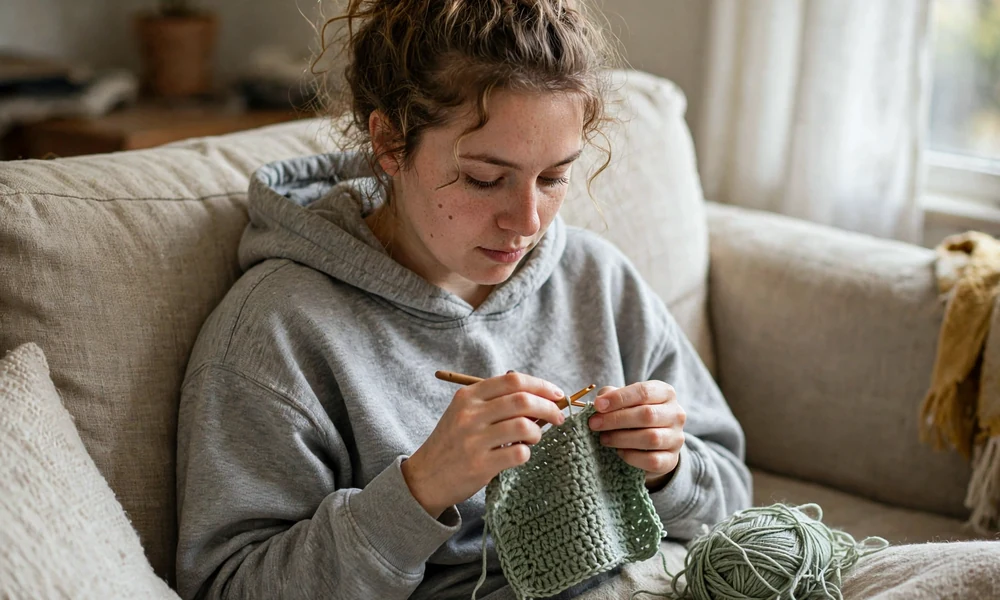
The hooks worth buying share a short list of features, and none of them is expensive on its own. A smooth shaft and head with no burrs or snags, a head shaped to catch the yarn cleanly, and a handle that fits the hand without aching. A clear size marking, a sensible size for a first project, and a build that does not bend, snap, or shed its handle. If a hook fails any one of those checks, keep looking. A hook that is smooth from handle to tip will glide through the yarn for years, while a rough one will snag on the first row and every row after it.
Fit matters as much as build, and the hook should suit the beginner in front of you rather than the expert in the photograph. A new crocheter needs a five-millimetre hook with a comfortable grip, and double-knitting or aran yarn to match. Try the hook with the yarn you will actually use, and work a few stitches before you pay. A hook that works on the first row and still works on the fiftieth is worth every penny. If you want to choose the yarn to match, our guide to the best yarn of 2026 covers the yarns that feel soft and hold their shape.
The Bottom Line
The worst crochet hooks for beginners in 2026 share a pattern: hooks that snag on every stitch, heads that cannot catch a loop, handles that ache after ten minutes, wrong sizes for a first project, hooks that bend, snap, or shed their handles, and sets that promise everything and deliver confusion. Avoid those six failures and you avoid almost every beginner regret. Feel the shaft, test the head, and work a few stitches before you commit. Do that, and the hook you buy will be the one that turns a first blanket into a lifelong craft. And if you fancy trying the sister craft as well, our guide to the best knitting needles of 2026 covers the needles that make every stitch even, while our guide to the best crochet hooks of 2026 covers the hooks that grip yarn just right.