Crochet Hooks That Grip Yarn Just Right in 2026
Crochet hooks that grip yarn just right are the difference between an evening that flies by and an evening spent fighting every stitch. The best crochet hook of 2026 is not the prettiest one in the set, or the most expensive one. It is the hook whose size matches your yarn, whose head catches the strand cleanly, and whose handle sits comfortably in your hand for hours.
A bad hook snags, splits the yarn, and leaves your wrist aching after half an hour. A good one almost disappears: the yarn glides and the stitches stay even. This guide compares the sizes, materials and grips that matter, and helps you pick a hook that suits your hands and your projects.
Key Takeaways
- Match the hook size to the yarn weight first, because the wrong size makes stitches too tight or too loose, whatever the hook costs.
- Aluminium hooks are smooth and fast, wooden hooks are warm and gentle on slippery yarn, and ergonomic soft-grip handles suit long sessions and sore hands.
- Check the hook head before you buy: a deep, smooth throat grips yarn cleanly, while a shallow or rough head snags it.
- Buy a small set covering the middle sizes before buying singles: most projects use hooks between 4 mm and 6 mm.
- Test a hook for ten minutes before committing: a handle that feels fine in the shop can ache after a full evening.
What a Crochet Hook Actually Does
A crochet hook is a single tool with a hooked head, used to pull loops of yarn through other loops, one stitch at a time. That single-hook method is what makes crochet different from knitting, where two pointed needles hold a whole row of live stitches at once. Knitting builds fabric row by row on two needles; crochet builds it stitch by stitch with one hook, which is why crochet is easier to undo and more forgiving when you drop a stitch.
The hook is also different from the yarn itself. Yarn is the fibre you stitch with, and its weight, ply and fibre content decide how the finished fabric feels and wears, as our guide to the best yarn of 2026 explains. The hook shapes each stitch from that yarn. A beautiful yarn worked with a hook that snags will still look uneven, and a perfect hook cannot save yarn that is wrong for the project.
How We Judged
We judged hooks the way they are used at home: crocheting real pieces with different yarns, for long enough to feel the difference. Each hook was tested with double knitting, aran and chunky yarn, in plain and textured stitches, for at least an hour at a time. We checked how smoothly the yarn slid, whether the head snagged or split the strand, and how our hands felt afterwards. A hook scored well when it gripped yarn cleanly, kept stitches even, and stayed comfortable after a full evening.
Hook Sizes Explained
Hook size is the diameter of the shaft in millimetres, and it decides the size of every stitch. The ball band on your yarn recommends a size, usually between 4 mm and 6 mm for everyday yarn, and that is the best place to start. Go smaller and the stitches tighten, the fabric stiffens, and your hands work harder. Go larger and the stitches loosen, the fabric drapes more, and the piece grows bigger than the pattern intended.
Most makers use a small range again and again: 3.5 mm and 4 mm for fine work and amigurumi, 4.5 mm and 5 mm for double knitting, and 5.5 mm and 6 mm for aran and blankets. A 6.5 mm or 8 mm hook suits chunky yarn. Beginners should start with a 5 mm hook and a medium-weight yarn, because the stitches are big enough to see clearly and mistakes are easy to spot. Fine steel hooks below 2 mm are made for lace and thread crochet, and they belong to a later project.

Size labels can confuse, because older hooks use letters in the US system and numbers in the UK system, and the two do not match. Ignore the letters and buy by millimetres: every modern hook has its size printed on the shaft or the handle.
Hook Materials Compared
Aluminium is the most common hook material, and for most makers the best starting point. It is light, smooth, strong, and cheap, and yarn slides over it with almost no friction, which makes for fast, even stitching. The drawback is slipperiness: on smooth cotton or silk yarn, stitches can slide off too easily, and aluminium feels cold in the hand. A good aluminium hook with a comfortable handle is what most makers reach for most of the time.
Wooden and bamboo hooks are warm, light, and gentle, and they grip yarn slightly, which makes them ideal for slippery yarns that slide off metal. They feel lovely in the hand, especially for long sessions. The trade-off is speed and strength: wood is slower than metal, fine wooden hooks can snap if you grip too hard, and a rough wooden hook will snag yarn. Buy a well-sanded wooden hook and check the head before you use it.
Plastic and resin hooks are light, colourful and affordable, and they suit beginners and children, because they are comfortable, unbreakable in normal use, and easy to spot in a project bag. Their weakness is friction: yarn drags on plastic more than on metal, so stitching feels slower, and cheap plastic hooks can bend under a tight grip. A poor one is the fastest way to put a beginner off crochet.
Steel hooks are the specialists, made in tiny sizes for lace and thread work, where precision matters more than comfort. Ergonomic hooks are not a material but a shape: a thicker, cushioned handle, often soft silicone over a metal core, that spreads the grip across your hand. They cost more, but for sore hands or long sessions, they are the best upgrade a maker can buy.
Grip, Comfort and Hand Pain
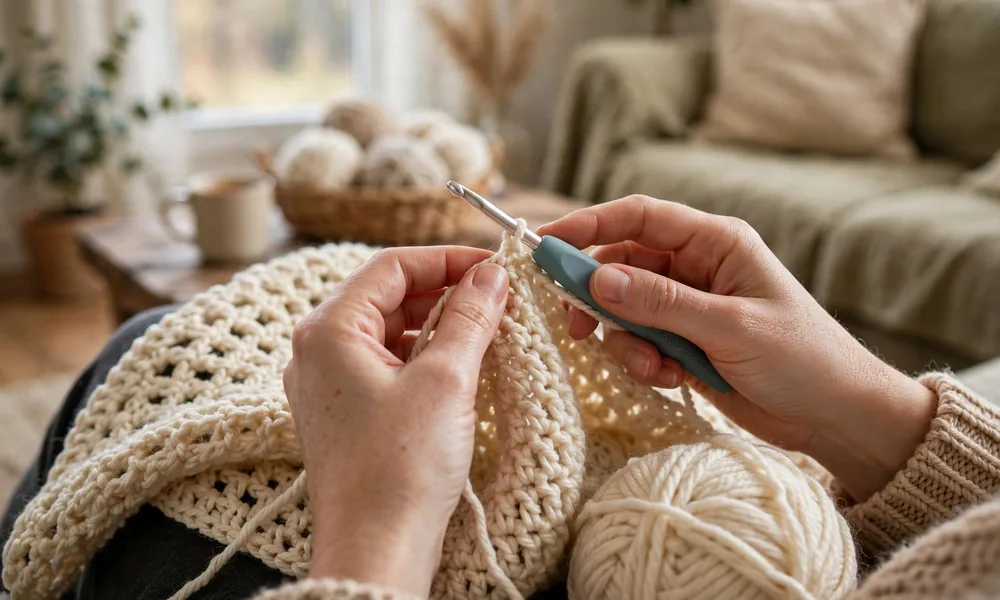
How you hold a hook matters as much as which hook you hold. The two common grips are the pencil grip, holding the hook like a pen, and the knife grip, holding it like a knife handle. Neither is right or wrong; the right grip keeps your wrist straight and your hand relaxed. If your wrist aches, your grip is too tight, your hook is too thin, or you have stitched too long without a break.
Ergonomic handles help by making the grip thicker, so your fingers do not have to close so tightly, and by cushioning the pressure points. A handle with a flat thumb rest keeps the hook from rotating, which is the small twist that causes most fatigue. If your hands hurt, try a thicker handle, a lighter hook, and a shorter session with a stretch in the middle. Our guide to sewing kits that cover every quick fix makes the same point: the tool that fits your hand is the tool you will actually use.
Hook Shapes, Sets and Singles
Hook heads come in two shapes: inline, where the head lines up with the shaft, and tapered, where the head sits slightly below it. Inline hooks suit makers who work tightly, while tapered hooks suit looser stitchers. Most makers never notice the difference until they try both. If your stitches keep splitting, try the other shape.
Sets versus singles is a budget question. A set from 3.5 mm to 6 mm costs less per hook than buying them one by one, and the right size is always to hand. Buy a set first, then add singles in the sizes you use most, plus a spare, because a favourite hook has a habit of disappearing into the sofa. Tunisian hooks, with a long shaft and a stopper, are a separate craft, closer to knitting than to ordinary crochet, and they deserve their own purchase.
Hooks Compared at a Glance
| Hook type | Best for | Speed | Grip on yarn | Comfort |
|---|---|---|---|---|
| Aluminium | Everyday crochet, fast work | Excellent | Low | Good |
| Wood and bamboo | Slippery yarn, long sessions | Good | High | Excellent |
| Ergonomic soft-grip | Sore hands, long sessions | Very good | Medium | Excellent |
| Plastic and resin | Beginners, children, travel | Fair | Medium | Good |
| Steel | Lace and thread crochet | Good | Low | Fair |
Keeping Your Hooks in Good Shape
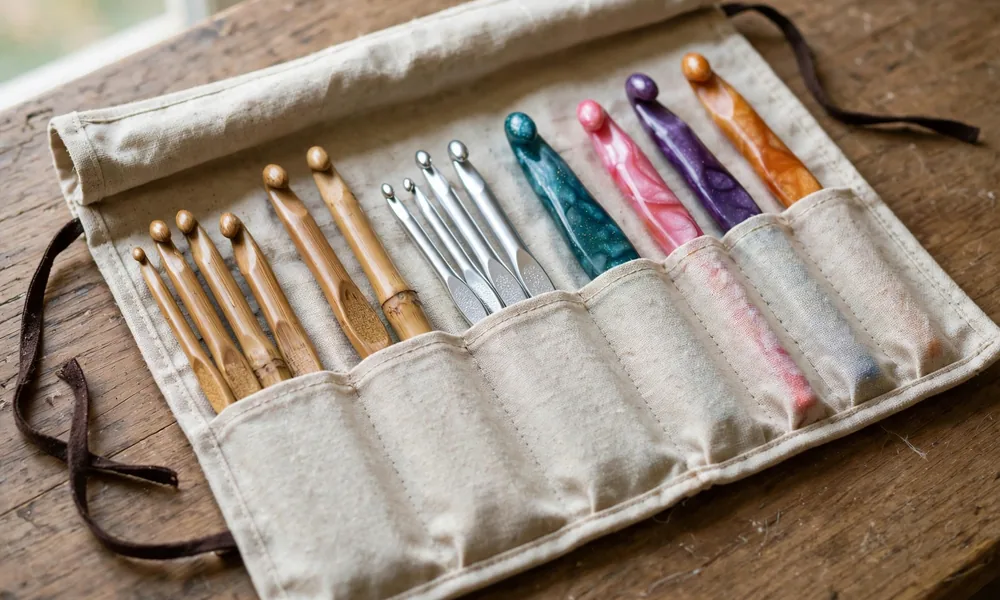
Hooks last for years with almost no care. Wipe metal hooks clean after use, because tarnish makes yarn drag. Keep wooden hooks dry and away from radiators, because damp and heat can warp them, and a light rub with beeswax keeps the wood smooth. Store hooks in a case or roll, not loose in a bag, where they scratch each other and the heads get nicked. A nicked head is the most common reason a good hook starts snagging, and the same care applies to other craft tools, as our guide to embroidery hoops that keep fabric taut shows.
Before You Buy: A Quick Checklist
- Check the yarn’s ball band for its recommended hook size, and start there.
- Feel the handle in your hand for a full minute, and imagine holding it for an hour.
- Run your finger over the hook head: it should be smooth, with no rough edge to snag yarn.
- Buy a set covering 3.5 mm to 6 mm first, then add singles in your most-used sizes.
- Try both inline and tapered heads, because the shape that suits your stitching is a personal choice.
- Keep the receipt and the case, so a hook that does not suit you can be swapped.
Frequently Asked Questions
What size crochet hook should a beginner start with?
Start with a 5 mm hook and a medium-weight yarn, in double knitting or aran weight. The stitches are big enough to see clearly, and mistakes are easy to spot and undo. Add a 4 mm and a 6 mm hook once you have finished your first project.
Are ergonomic crochet hooks worth the extra money?
Yes, if your hands ache, or if you crochet for more than an hour at a time. The thicker, cushioned handle spreads the grip across your hand and keeps your wrist straighter. If you only crochet occasionally, a standard hook is fine.
Why does my yarn keep splitting on the hook?
Splitting usually means the hook head is too sharp, too rough, or the wrong shape for your stitching. Try a hook with a deeper, smoother throat, or the other head shape. A hook that is too small for the yarn also splits it, so check the ball band.
Can I use a knitting needle instead of a crochet hook?
No, not for crochet. A knitting needle has a pointed tip for holding live stitches, while a crochet hook has a hooked head for pulling loops through loops. The two tools do different jobs, and a needle cannot catch yarn the way a hook does.
How do I know if a hook is too big or too small?
Crochet a tension square with the size the ball band recommends, then compare it with the pattern. If your stitches are tighter and smaller than the pattern, go up a size; if they are looser and bigger, go down a size.
Do I need a whole set of hooks, or just one?
One hook is enough for your first project, but a small set is better value. Most projects use hooks between 4 mm and 6 mm, so a set covering that range means the right size is always to hand.
The Bottom Line
The best crochet hook of 2026 is the one that matches your yarn, grips it cleanly, and feels comfortable in your hand for a whole evening. Aluminium is fast and smooth, wood is warm and gentle on slippery yarn, and ergonomic handles are the best upgrade for sore hands. Start with a 5 mm hook and a medium yarn, buy by millimetres, and test the head for smoothness.