
Loom Kits That Make Your First Weave Easy in 2026
Loom kits are the gentlest way into weaving. A loom kit gives you a small frame, the warp threads already planned, a shuttle, and enough yarn for your first piece, so you can start weaving within minutes of opening the box. Your first weave might be a wall hanging, a scarf, or a set of coasters, but whatever it is, it will be yours: rows of yarn you placed yourself, with a texture no shop-bought fabric can match.
Weaving is not knitting and it is not crochet, and the distinction matters when you choose a kit. Knitting builds fabric one loop at a time with needles, and crochet builds it one loop at a time with a hook; weaving crosses two sets of threads, the warp and the weft, over and under each other on a loom. A loom kit is therefore a different tool for a different craft: it makes flat, structured cloth such as scarves, placemats, and wall hangings.
Key Takeaways
- A good beginner loom kit includes the loom, warp thread, weft yarn, shuttle, and instructions in one box.
- Frame looms are the easiest starting point; rigid heddle looms are the best step up for scarves.
- Choose a loom at least 10 inches wide so your first pieces feel useful rather than tiny.
- Look for smooth, sanded wood and sturdy joints, because rough frames snag yarn.
- Weaving crosses warp and weft on a loom, unlike knitting with needles or crochet with a hook.
What Is in a Loom Kit?
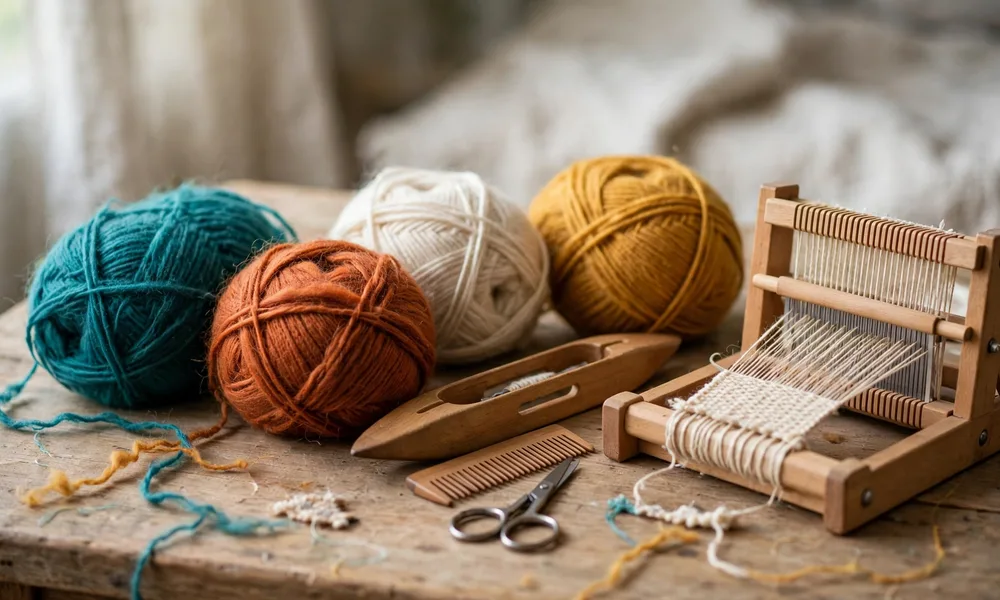
A loom kit is a complete weaving starter set. At its heart is the loom, usually a wooden frame with notches or pegs that hold the warp threads taut. Around it, a good kit packs warp thread for setting up, weft yarn in two or three colours, a shuttle for carrying the weft across, a comb for pressing rows together, and a heddle for lifting alternate warp threads. The best kits add a printed guide with step-by-step photographs.
Frame quality is what separates a kit you love from one you abandon. Look for hardwood or smooth beech with sanded edges, because rough wood catches yarn and frays it. Joints should be tight, with no wobble when you press the frame, and warp notches should be evenly spaced. Yarn matters just as much: beginner-friendly yarn is smooth, medium weight, and slightly springy, with enough contrast between colours that you can see each row.
Types of Loom Kits
Frame looms are the simplest kind and the best place to start. They are a rectangular wooden frame on which you wind warp threads by hand, weaving with a shuttle or needle. Frame looms are light, cheap, and portable, and they are perfect for wall hangings, small tapestries, and coasters. Their limit is width: most beginner frames are 10 to 16 inches wide, so scarves are possible but blankets are not.
Rigid heddle looms are the natural next step. They add a reed that lifts alternate warp threads for you, making weaving faster and the cloth more even. A rigid heddle loom can make scarves, table runners, and placemats in reasonable time. Tapestry looms are frame looms designed for picture weaving, with a finer warp and often a stand. Lap looms are small frames meant to sit in your lap, a good choice for children or for weaving on the sofa.

The 7 Loom Kits Worth Your Money in 2026
1. Best Overall: A Sturdy Frame Loom Kit
The best all-round first kit is a hardwood frame loom of about 12 to 16 inches, sold with warp thread, three colours of yarn, a shuttle, a comb, and a clear photo guide. The frame is the star: smooth, solid, and stable enough that the warp stays evenly tensioned from the first row to the last.
2. Best Budget: A Simple Lap Loom Kit
A lap loom kit is the cheapest way to try weaving. These kits use a small, light frame, often 10 inches wide, with yarn, a needle, and a short starter guide. They are not as sturdy as a hardwood frame, and the cloth they make is small, but they teach every core skill: warping, plain weave, changing colours, and finishing edges.
3. Best for Scarves: A Rigid Heddle Loom Kit
Weavers who want to wear what they make should start with a rigid heddle loom kit. The reed lifts alternate threads, so your scarf grows quickly and evenly. Look for a kit with a 15-inch reed or wider, two shuttles, and enough yarn for a full scarf.
4. Best for Wall Hangings: A Tapestry Loom Kit
Tapestry kits are made for weavers who think in pictures. The loom is usually a tall frame with a stand, the warp is fine and even, and the kit includes a range of colours and a guide to shapes and texture knots. A stand holds the work upright, which is kinder to your neck and shoulders.
5. Best for Kids: A Colourful Beginner Weaving Kit
Children need a loom that is forgiving, colourful, and quick to reward. The best kids kits use a chunky wooden frame with wide-spaced warp, thick bright yarn, and a blunt needle instead of a shuttle, so small hands can manage every step. Projects are short: a coaster or a mini wall hanging that finishes in one sitting. Avoid kits with fine warp or fiddly parts for under-tens.
6. Best for Learning Properly: A Kit With a Full Course
Some loom kits pair the hardware with a proper course: printed lessons and a sequence of projects that build skill step by step. The loom is usually a solid mid-range frame or rigid heddle, and the teaching is the real value. You start with plain weave, move on to stripes and colour changes, then try texture and finishing. If you learn best with structure, a course-based kit is worth the extra cost.
7. Best Portable: A Folding Loom Kit
Weaving travels well if the loom folds. Folding frame and rigid heddle looms pack flat into a bag with their yarn and tools, so you can weave on a train, in a garden, or at a friend’s house. Look for hinges that lock firmly when open, because a loom that flexes mid-weave ruins tension.
Loom Kits Compared
| Kit type | Best for | Typical width | Makes | Typical price band |
|---|---|---|---|---|
| Frame loom | Best overall | 12 to 16 inches | Wall hangings, coasters | Low |
| Lap loom | Budget buyers | 10 inches | Small first pieces | Lowest |
| Rigid heddle | Scarves | 15 inches or wider | Scarves, runners | Mid to high |
| Tapestry loom | Wall art | 12 to 18 inches | Pictures, hangings | Mid |
| Kids kit | Children | 8 to 10 inches | Coasters, pouches | Low |
| Course kit | Structured learning | 12 to 16 inches | Graded projects | Mid |
| Folding loom | Travel and small homes | 12 to 15 inches | Scarves, hangings | Mid to high |
How to Choose the Right Loom Kit
Start by deciding what you want to make. Wall hangings call for a frame or tapestry loom; scarves and table runners call for a rigid heddle; small gifts call for a lap loom. Buying the wrong type is the most common regret. Picture your finished piece before you shop, and let that picture choose the loom.
Next, check the width and the contents list. Treat 10 inches as a minimum width for adults, and read the contents carefully: the kit should include warp thread as well as weft yarn, because warp is a different, stronger thread. A shuttle, a comb, and a needle should all be in the box, along with instructions you can follow.
Your First Weave, Step by Step
Warping comes first, and it is the step beginners fear most. Warping means winding the warp threads onto the loom, evenly spaced and under even tension, like strings on a harp. Follow the kit guide exactly and do not pull the threads drum-tight: even tension matters more than high tension.
Once warped, start with plain weave: over one thread, under the next, all the way across, then back the other way. Use the shuttle to carry the weft, leave a small loop of yarn at the edge so the sides do not pull in, and press each row down gently with the comb. After ten rows the rhythm arrives and the cloth starts to look like cloth.

Common Mistakes Beginners Make
The most common mistake is pulling the weft too tight. A tight weft drags the edges inward, so the piece narrows into an hourglass shape. Leave a gentle loop at each edge and press the weft down rather than yanking it straight. The second mistake is uneven warp tension: slack threads make lumps, tight threads snap, and the cloth comes out wavy.
Checklist: Before You Buy a Loom Kit
- Decide what you want to make first: wall hanging, scarf, or small gifts.
- Choose a loom at least 10 inches wide so your first pieces feel useful.
- Check the box includes warp thread, weft yarn, shuttle, comb, and instructions.
- Look for smooth, sanded wood, tight joints, and evenly spaced warp notches.
- Pick smooth, medium-weight yarn in at least two colours you like together.
- Plan where you will weave, with good light, a comfortable chair, and storage.
Loom Kits and Other Fibre Crafts
Weaving sits in a family of fibre crafts, and many weavers enjoy the neighbours too. If you like working with yarn but want a portable craft for the sofa, knitting needles are the classic choice: knitting builds fabric loop by loop with needles, while weaving crosses warp and weft on a loom. For finer, lacier work, crochet hooks make everything from blankets to small toys with a single hook. And whichever fibre craft you choose, read about yarn that feels soft and holds its shape before you stock up.
Frequently Asked Questions
How long does a first weaving project take?
A small wall hanging or coaster takes an evening or two, including warping. A scarf on a rigid heddle loom takes several evenings across a week. Warping is the slowest part for beginners, so allow an hour for your first warp.
Is weaving easier than knitting or crochet?
Most beginners find weaving easier to start, because the loom holds the tension and the pattern is a simple over-under repeat. Knitting and crochet ask you to hold tension in your hands and keep count of stitches, which takes longer to learn.
What yarn should I use for my first weave?
Use a smooth, medium-weight cotton or wool-blend yarn in two or three colours. Smooth yarn shows your pattern clearly and slides easily through the warp. Avoid very slippery, very fuzzy, or novelty yarns until you have finished a few plain pieces.
Do I need a stand for a frame loom?
No, a frame loom works flat on a table, which is how most beginners start. A stand helps for larger pieces and longer sessions, but it is a convenience rather than a necessity for your first kit.
Can children use loom kits?
Yes, with a kit made for them: a chunky frame, thick yarn, and a blunt needle, and a project that finishes in one sitting. Children under eight usually need an adult to warp the loom.
How do I finish the edges of a woven piece?
Cut the warp threads, knot them in pairs to make a fringe, or fold them back and stitch them down for a clean edge. Then wash the piece gently in cool water, press it flat while damp, and let it dry away from heat. Washing settles the fibres and gives the cloth its final, even feel.
The Bottom Line
The best loom kit is the one that gets you weaving on the first evening: a sturdy frame or rigid heddle loom, warp and yarn in colours you love, a shuttle that fits your hand, and instructions that make sense. Start with plain weave, keep your tension even, and let your first piece be small.


