The quilting frames that keep fabric taut in 2026 are the quiet difference between a quilt that lies flat and one that puckers, ripples and fights you at every stitch. A good frame holds all three layers of a quilt sandwich — top, batting and backing — under steady, even tension, so your needle passes through cleanly and every stitch lands exactly where you meant it to. A poor frame sags, lets the layers shift, and turns an evening of quilting into an evening of unpicking.
Choosing the right quilting frame is about matching it to the quilts you make, the space you have, and the way you sit and stitch. This guide compares the strongest quilting frames of 2026, explains what keeps fabric taut, and helps you pick one.
Key Takeaways
- A quilting frame holds the quilt sandwich taut so layers cannot shift while you stitch.
- Floor frames suit large quilts and dedicated rooms, while tabletop and lap frames suit small spaces.
- Even tension matters more than size: check the clamps, rollers and rails before you buy.
- A frame is hardware you reuse for years, not a bundle of fabric and patterns.
- Measure your largest quilt and your available floor space before ordering any frame.
What a Quilting Frame Actually Does
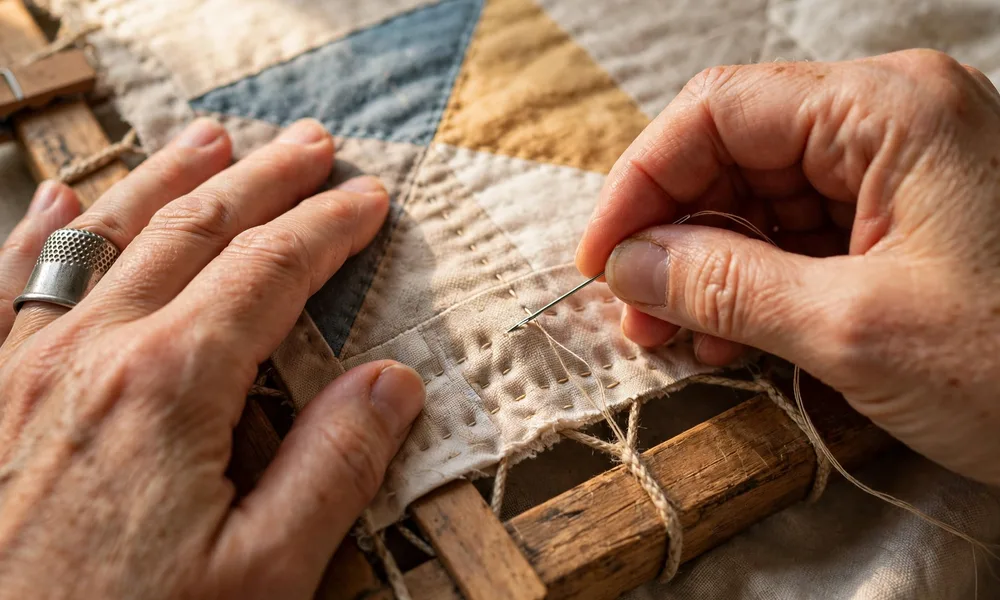
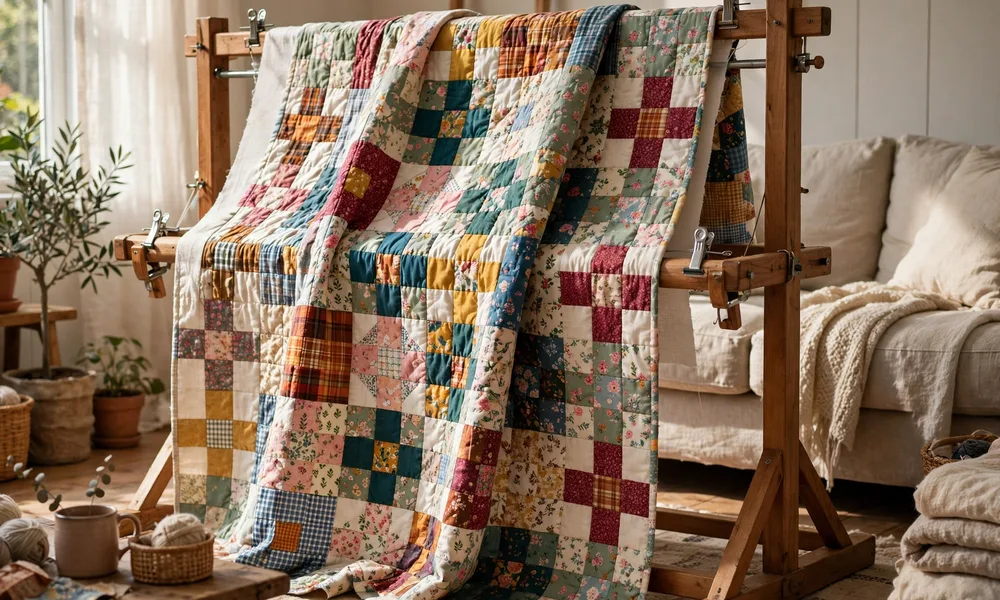
A quilting frame is a stand, usually wood or metal, that grips the edges of a quilt sandwich and stretches it flat like a drum skin. The top, the batting and the backing are each attached to rollers or rails, then tensioned until the surface is smooth and firm. Your hands stay free and the needle travels through all three layers in one smooth motion. Without a frame, the same work happens in your lap, where the quilt’s weight drags the layers out of line.
Tension is the whole point. When fabric is taut, stitches stay even and the finished quilt lies flat instead of curling at the corners. When fabric is slack, the top layer creeps ahead of the backing and small folds get stitched in by accident. The best frames of 2026 make tension easy to set and keep: smooth rollers, clamps that grip without marking, and rails that stay square under load.
A floor frame also takes the quilt’s weight entirely, so you can stitch for twice as long with half the neck and shoulder strain.
A Frame Is Not a Kit: The Distinction That Matters
It is easy to confuse a quilting frame with a quilting kit, because both promise an easier first quilt. They solve different problems. A quilting kit is a bundle: pre-cut fabric, batting, backing, a pattern and matching thread for one specific quilt. A quilting frame is hardware: the stand that holds any quilt taut while you stitch it. You buy it once and use it for every quilt afterwards.
The distinction matters when you are spending money. If you are starting from scratch and want your first quilt to be easy, a bundled quilting kit that makes a first quilt easy is the kindest way in, because it removes the hardest decisions about fabric and measuring. But a kit will not hold your quilt taut while you stitch it, and once the kit quilt is finished, the kit is gone. A frame, by contrast, does nothing for your fabric choices and everything for your stitching: it is the tool that makes the quilting itself smoother, flatter and kinder to your body, quilt after quilt.
Most quilters end up owning both, at different times: the kit gets you started and the frame keeps you quilting. If you already have fabric and a pattern you love, skip the kit and put the money into the frame.
The Four Types of Quilting Frame
Every quilting frame in 2026 falls into one of four families, each suiting a different quilter and deciding how big a quilt you can work on and how much room the frame needs.
Floor Frames
A floor frame stands on its own legs and holds a full-size quilt stretched between two or more rollers. The quilt rolls from one roller to the other as you finish each section, so you never re-pin mid-project. The best models adjust in height, tilt towards you, and fold flat against a wall. Their weakness is footprint: a queen-size frame needs roughly the floor space of a single bed.
Tabletop Frames
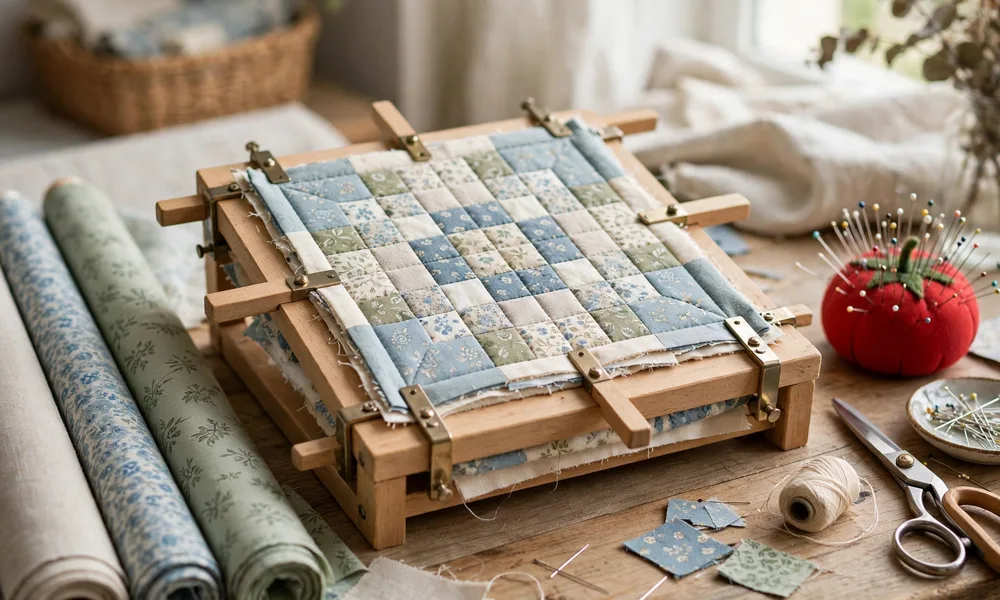
A tabletop frame sits on a table or desk, clamping a section of quilt at a time. It suits baby quilts, wall hangings and first projects, needs no floor space, and packs into a cupboard between sessions. The trade-off is reach: you work one panel at a time, which is fine for small pieces but slow for a double bed quilt.
Lap Frames
A lap frame is the smallest of all: a compact frame that rests in your lap, holding a modest area of fabric taut. It is cheap, portable and useful for hand quilting on the sofa, but it offers a small working area and no help with a large quilt’s weight. Think of it as a step up from a hoop rather than a smaller floor frame.
Roller and Hoop Frames
The fourth family blends the others: roller frames for a table or stand, and large hoops that behave like frames for medium pieces. Roller frames suit machine quilters who want to baste evenly. If you already stitch with hoops, the closest comparison is an embroidery hoop that keeps fabric taut — the same idea of even grip, scaled up for quilts.
Quilting Frames Compared
The table below compares the four types on quilt size, space, tension and price.
| Frame type | Best for | Quilt size | Space needed | Tension control |
|---|---|---|---|---|
| Floor frame | Large quilts, daily quilters | Single to king | A bed-sized footprint | Rollers, excellent |
| Tabletop frame | Small quilts, flats | Baby to lap size | A tabletop | Clamps, very good |
| Lap frame | Portable stitching | Blocks and small pieces | Your lap | Hoop grip, good |
| Roller / hoop frame | Machine basting, medium pieces | Lap to double | Table or small stand | Rollers or hoop, good |
Price follows size and build quality, not brand. A solid beech floor frame costs more than a pine tabletop frame because it carries more weight, holds tension longer and lasts decades. Cheap frames cut corners exactly where it hurts: soft wood that flexes, plastic clamps that slip, rollers that wobble.
What to Look For Before You Buy
Start with the quilt, not the frame. Measure the largest quilt you realistically expect to make in the next two years, then check the frame’s working width against it. Manufacturers rarely mention that you lose a few inches at each end to the clamps, so buy a little wider than you think you need.
Next, check the tension system with your hands. Rollers should turn smoothly and lock firmly, clamps should grip without marking fabric, and rails should feel rigid when you press the middle — any flex shows up as sag in your quilt. Wood should be smooth-sanded and metal free of sharp edges.
Think about your body as well as your quilt: the frame should let you sit upright with your feet flat. If you have to hunch or twist, you will stop using it, however good the tension is. Adjustable height and a slight tilt are worth paying for.
Finally, consider storage. Some floor frames fold flat in under a minute; others need tools and half an hour. If your sewing room doubles as a spare bedroom, the folding frame wins. A hardwood floor frame is a two-person lift, while a tabletop frame should be light enough to carry one-handed.
Setting Up So the Fabric Stays Taut
A good frame only works if you load it well. Press all three layers first so no crease gets locked in, then lay the backing face down and attach it to the rollers, smoothing from the centre outwards. Add the batting, then the top, smoothing each layer the same way, until the sandwich is flat with no bubbles.
Tension the layers in order — backing, batting, top — tightening each a little at a time. Tap the surface when you are done: it should feel firm, not loose. If you see ripples at the edges, loosen and re-smooth rather than pulling harder, which only locks the ripples in.
Check the tension again after your first half hour of stitching, because fabric relaxes as you work. A quick re-tighten saves hours of uneven stitches. Do the same whenever you roll the quilt forward: re-smooth, re-tension, then pick up the needle.
Keep your cutting tools sharp, because straight, accurate pieces sit flatter on the frame. Good quilting rulers that cut straight lines make the quilt top square before it reaches the rollers, and a square top is a taut top.
Mistakes That Ruin Good Tension
The most common mistake is over-tightening: fabric stretched too hard distorts the weave and puckers worse when it comes off the frame. Tension should be firm, not fierce. The second mistake is uneven loading, where one side is tighter and the quilt skews — loading slowly from the centre prevents it. The third is leaving a quilt on the frame for weeks without checking it, as fabric creeps and clamps settle.
Checklist: Before You Buy a Quilting Frame
- Measure your largest planned quilt and buy a frame wider than it, allowing for the clamps.
- Measure your floor or table space and check the frame fits with room to sit comfortably.
- Test the rollers, clamps and rails for smooth movement, firm grip and no flex.
- Check the frame adjusts in height and tilts, so you can sit upright while you stitch.
- Confirm it folds or packs away if your sewing space is shared with anything else.
- Budget for the frame as a long-term tool and buy the best build you can afford.
Frequently Asked Questions
Do I need a quilting frame to hand quilt?
No — you can hand quilt in a hoop or in your lap, and many quilters do. A frame makes the work flatter, faster and easier on your body, especially above lap size, but it is a convenience rather than a requirement.
What size quilting frame should a beginner buy?
A tabletop frame is the best starting point: it handles baby quilts, wall hangings and lap quilts, costs less than a floor frame, and packs away easily. Move up when you start making bed-size quilts regularly.
Can a quilting frame damage fabric?
A well-made frame should not damage fabric: smooth clamps and even rollers hold without marking. Damage usually comes from over-tightening or rough, unfinished wood, so check both before you buy.
How do I keep a quilt taut on a frame?
Load the layers one at a time, smoothing from the centre outwards, tensioning backing, then batting, then top. Re-check after the first half hour and every time you roll the quilt forward.
Is a wooden or metal quilting frame better?
Wood is warmer and quieter, and a good hardwood frame lasts for decades. Metal is lighter, often cheaper, and easier to fold. Either works if the joints are rigid and the tension is smooth; build quality matters more than material.
Can I use a quilting frame for machine quilting?
Some are, particularly roller frames that hold layers flat for basting. A standard hand-quilting floor frame is not usually right for a sewing machine, so check the manufacturer’s guidance first.
The Bottom Line
The quilting frames that keep fabric taut in 2026 are the ones that match your quilts, your space and your body: a floor frame for big quilts in a dedicated room, a tabletop frame for small quilts in a shared home, and a lap frame for portable stitching. Buy for even tension and solid build, load the layers slowly from the centre outwards, and re-check the tension as you work. Do that, and your stitches will stay even and your quilts will lie flat.