Quilting Kits That Make a First Quilt Easy in 2026
Quilting kits that make a first quilt easy in 2026 take the hardest part of quilting — choosing fabric, measuring, cutting and working out what goes where — and do most of it for you. A good kit arrives with pre-cut fabric squares or strips, the batting and backing you need, a pattern you can actually follow, and thread that matches. That is why a kit is the kindest way for a complete beginner to start.
A quilt is layered fabric stitched into a quilt: a decorative top, a soft middle layer called batting, and a backing, all held together by stitching. A quilting kit is the box that gives you all three layers, cut and matched, plus the pattern that turns them into a finished quilt. It is not a single tool. A quilting ruler only helps you cut straight lines, fabric scissors only cut, and a sewing kit only mends clothes. Those are useful neighbours, but none of them makes a quilt. This guide compares the kits that genuinely make a first quilt easy, and explains how to choose one you will actually finish.
It is also worth knowing what a quilting kit is not. Cross-stitch is counted-thread embroidery on evenweave fabric, where you build a picture one tiny X at a time by counting squares on a chart. Quilting is the opposite kind of making: you join pieces of fabric into a patterned top, layer it, and stitch through the layers. If the counted-thread craft is the one calling you, our guide to cross-stitch kits for beginners covers it.
Key Takeaways
- A quilting kit is a complete quilt-making set: a patterned top in pre-cut pieces, batting, backing, thread and a pattern, not a single tool.
- Pre-cut fabric is the biggest kindness a kit can offer a beginner, because accurate cutting is where most first quilts go wrong.
- Start with a small quilt, such as a lap quilt or a baby quilt, using large squares or strips rather than tiny triangles.
- Check that the batting and backing are included and big enough, because buying them separately adds cost and confusion.
- A clear pattern with diagrams for every step matters more than extra fabric, since a confusing pattern can stall a quilt for months.
What a Quilting Kit Actually Is
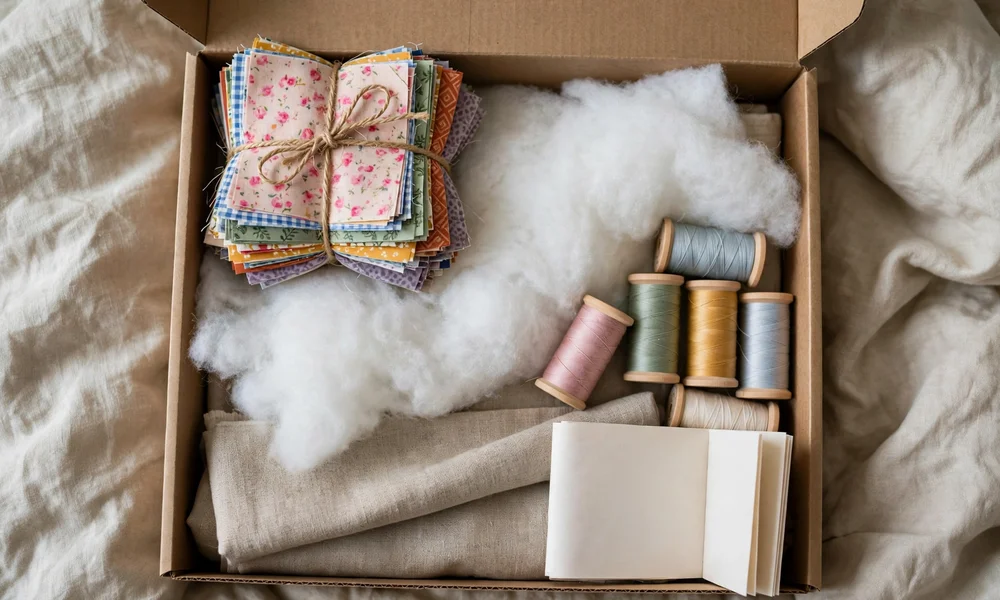
A quilting kit is a box, or a neatly tied bundle, that contains everything needed to make one quilt from start to finish. Inside you will usually find the fabric for the quilt top, already cut into squares, strips or triangles. You will also find batting, the soft middle layer that gives a quilt its warmth and weight, and backing fabric, the layer that sits underneath. Most kits add thread in a matching colour, a pattern booklet with cutting and assembly diagrams,.
Quilting kits differ from the tools around them in an important way. A quilting ruler is a thick acrylic guide that helps you cut fabric straight, and it is a wonderful thing to own, but it does not give you a quilt. Fabric scissors cut the cloth, and a sewing kit mends a torn seam or a missing button. A quilting kit is the only one of the group that hands you a finished project. Cross-stitch is different again: it is counted-thread embroidery on evenweave fabric, covered in our guide to cross-stitch kits for beginners. That is why it is the right first purchase for someone who wants to make a quilt, rather than someone who wants to collect sewing supplies.
Quilting Kits Compared
The kits below are types, not brands, because the type decides whether your first quilt is a pleasure or a puzzle. Judge a kit by how much cutting it asks of you, how big the finished quilt is, and how clearly the pattern explains each step.
| Kit type | Cutting needed | Finished size | Best for | Watch out for |
|---|---|---|---|---|
| Pre-cut square kit | Almost none | Lap or baby quilt | True beginners | Small pieces in some kits |
| Strip jelly-roll kit | Very little | Lap or throw quilt | Quick first finishes | Strips can stretch |
| Fat-quarter bundle kit | Moderate | Throw quilt | Learning to cut | Needs a ruler and mat |
| Panel kit | Minimal | Baby or wall quilt | Fast, pretty results | Less piecing practice |
| Full bed-quilt kit | Moderate to heavy | Single or double bed | Ambitious beginners | Long project, more fabric |
Pre-Cut Square Kits
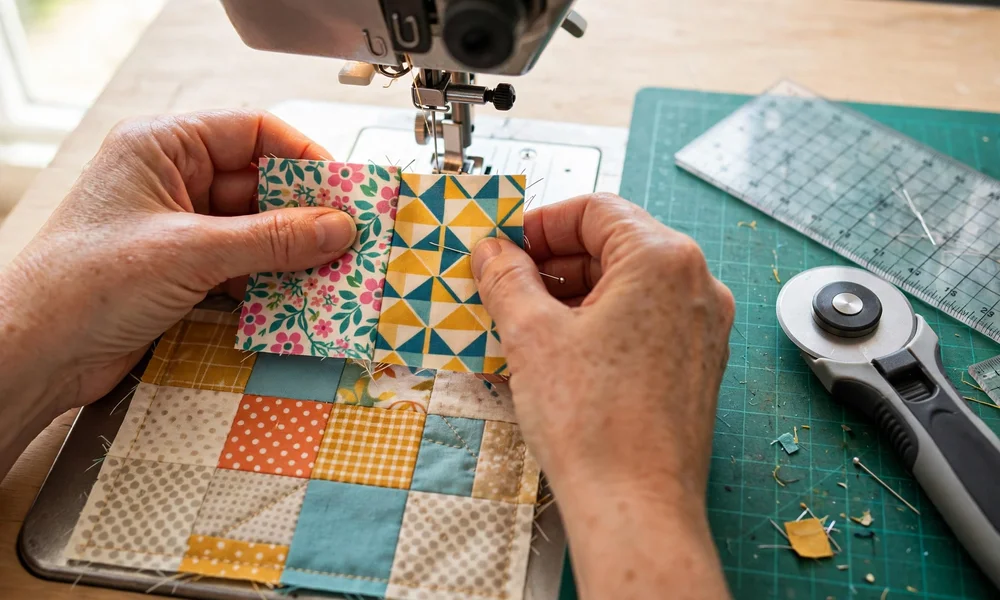
Pre-cut square kits are the easiest possible start. The fabric arrives already cut into squares, usually five or ten inches across, in colours and prints that have been chosen to look good together. Your job is to arrange the squares into a pattern you like, sew them into rows, join the rows, and then layer and quilt the result. There is almost no measuring and no cutting, which removes the two steps where beginners most often go wrong.
Strip and Jelly-Roll Kits
Strip kits, often sold as jelly rolls, contain long strips of fabric, usually two and a half inches wide, rolled up like a Swiss roll. You sew the strips together in long rows, cut the rows into blocks, and rearrange the blocks into a pattern. It is a fast, forgiving way to make a quilt top, and the finished quilt has a lovely striped, scrappy look that hides small mistakes well.
Fat-Quarter Bundle Kits
A fat-quarter bundle kit gives you a stack of fat quarters — pieces of fabric about eighteen by twenty-two inches — in matching prints, plus a pattern, batting and backing. You do the cutting yourself, following the pattern, which means you learn the skill properly: measuring, rotary cutting, and squaring up your pieces. It is more work than a pre-cut kit, but it teaches you the craft rather than just the assembly.
Panel Kits
A panel kit is built around one large printed piece of fabric — a picture, a scene, or a set of blocks printed as a single panel — with borders and backing to finish it. You add a border or two, layer it with batting and backing, quilt around the printed design, and bind the edges. The result looks impressive very quickly, because the printed panel does most of the decorative work.
Full Bed-Quilt Kits
Full bed-quilt kits contain everything for a single or double bed quilt, and they are a big undertaking for a first project. The fabric quantities are large, the quilt top takes many hours to piece, and quilting the finished layers through a home sewing machine is physically awkward because so much fabric has to pass through the machine. Ambitious beginners do finish them, but they usually take weeks rather than days.
What to Check Before You Buy
Read the contents list as carefully as the pattern. A complete kit lists the fabric for the top, the batting, the backing, the thread and the binding. If batting or backing is missing, you will need to buy it separately, and matching the size is confusing when you are new.
Look at the finished size. A lap quilt, roughly forty by sixty inches, is a sensible first project: big enough to use, small enough to manage through a sewing machine. A baby quilt is even quicker and makes a lovely gift. Anything larger is a commitment.
Check the pattern itself. A good beginner pattern has a diagram for every step, tells you the seam allowance — usually a quarter of an inch — and explains pressing, layering and binding in plain words. A kit with beautiful fabric and a confusing pattern is a kit that will sit unfinished in a cupboard.
How Your First Quilt Comes Together
Making a quilt has five stages, and a kit walks you through each one. First you piece the top, sewing the fabric pieces into rows and joining the rows, pressing each seam as you go. Second, you make the quilt sandwich: backing face down, batting in the middle, top face up, pinned or basted so nothing shifts.
Third comes the quilting itself, stitching through all three layers, often in straight lines along the seams or in a simple grid. Fourth, you trim the edges square and bind them. Fifth, you wash the quilt gently and enjoy it. None of these stages is hard on its own; the kit’s job is to make sure you never have to guess what comes next.
Mistakes That Stall a First Quilt
The most common mistake is choosing a pattern that is too complicated. Tiny triangles, curved seams and intricate stars look wonderful in a shop photograph, but they demand accuracy a beginner has not built yet. A pattern of squares or strips forgives a seam that is a millimetre out; a star does not.
The second mistake is skipping the pressing. Pressing each seam flat with an iron, rather than just finger-pressing it, is what makes the pieces lie flat and the corners meet. It is the difference between a quilt top that lies flat and one that ripples. The third mistake is rushing the layering: wrinkles in the backing or bunches in the batting get stitched in permanently, so smooth each layer and pin generously.

First-Quilt Checklist
- Choose a lap or baby quilt with large squares or strips, not a bed quilt or a star pattern.
- Confirm the kit includes the top fabric, batting, backing, thread, binding and a printed pattern.
- Check the batting and backing are each a few inches larger than the finished quilt top.
- Have a rotary cutter, cutting mat, quilting ruler, pins and an iron ready before you start.
- Read the whole pattern once before sewing a single seam, so no step surprises you.
- Press every seam as you go, and smooth and pin the three layers carefully before quilting.
Frequently Asked Questions
Do quilting kits include everything I need?
A complete kit includes the top fabric, batting, backing, thread, binding and a pattern. Some leave out batting or backing, and a few assume you own a rotary cutter, mat and ruler, so always read the contents list.
How long does a first quilt take?
A simple lap quilt from a pre-cut kit usually takes a weekend of relaxed sewing. A fat-quarter kit takes longer, and a bed quilt can take several weeks.
Do I need a sewing machine?
A sewing machine makes quilting much faster, and most kits assume you have one. You can piece a small quilt by hand, but it is slow; if you have no machine, borrow one for your first project.
What is batting, and does it matter which kind I get?
Batting is the soft middle layer of a quilt, and it gives the quilt its warmth, weight and drape. Cotton batting is the classic choice because it is easy to quilt through and washes well. Polyester is lighter and loftier, while a blend is a forgiving middle ground.
Can I wash a quilt made from a kit?
Yes, in most cases: wash gently in cold water on a delicate cycle, and dry flat or on low heat. Pre-washing the fabric first reduces the risk of colours running.
What is the easiest quilt pattern for a beginner?
A quilt of large squares, or of long strips sewn into rows, is the easiest pattern there is. Both use straight seams only and look good even when a seam is slightly imperfect.
The Bottom Line
The best quilting kit for a first quilt is a pre-cut square or strip kit for a lap or baby quilt, with batting, backing, thread and a clearly diagrammed pattern all in the box. It removes the cutting, the fabric matching and the guesswork, and leaves you with the enjoyable part: sewing pieces together and watching a quilt appear. Start small, press as you go, and finish one quilt before you dream of the next.