
Summer is when a pickup truck finally earns its keep. The best pickup trucks for summer driving are the ones that stay cool in traffic, tow a boat or a camper without breaking a sweat, swallow bikes, coolers, and camping gear, and still feel comfortable after four hours on a hot highway. A truck that only looks good in a driveway is not enough: the best summer pickups combine strong cooling, a roomy cabin, a hard-working bed, and fuel economy that does not punish a long road trip.
We judged summer pickups on what changes a hot-weather trip: air conditioning at idle in a queue, engine behaviour towing in 35-degree heat, real cargo and passenger space, and what a full tank costs over a 500-mile week away. The winners below make a summer of driving easier, cheaper, and more comfortable.
Key takeaways
- Full-size pickups are the best summer choice for towing boats and campers, with the strongest cooling and the highest towing capacity.
- Midsize pickups are the smarter pick for beach towns and daily summer driving, because they are easier to park and cheaper to run.
- Air conditioning matters more than horsepower in summer: check rear vents, ventilated seats, and performance at idle.
- A crew cab with a short bed is the best compromise for most families, balancing passenger space with a bed that fits bikes and camping gear.
- Budget for fuel before you buy: a thirsty V8 can add hundreds of dollars to a two-week summer trip compared with a modern turbo or hybrid truck.
How we ranked the best summer pickups
Our ranking starts with heat: a summer truck spends hours in direct sun, stop-start traffic, and long climbs with a trailer. We gave the highest marks to trucks with large radiators and transmission coolers, strong air conditioning that holds temperature at idle, and cabins that stay cool. Tinted rear glass, ventilated seats, and rear vents earned points, because they decide whether the back seat is bearable on a July afternoon.
Next came towing and hauling. Summer is trailer season, so we looked at rated towing capacity, payload, trailer sway control, and how the truck behaves with a loaded bed on a steep grade. A truck rated at 12,000 pounds that overheats on the first hill is worse than one rated at 9,000 that tows all day without complaint. We also weighed ride comfort, because a stiff work truck becomes tiring after the third hour, and running costs, because summer miles add up.
The best summer pickups at a glance
| Truck type | Best for | Typical towing | Summer strength | Watch out for |
|---|---|---|---|---|
| Full-size crew cab | Towing boats and campers | 9,000 to 13,000 pounds | Strong cooling, big cabin | Fuel use, tight parking |
| Full-size hybrid | Long road trips | 10,000 to 12,000 pounds | Lower fuel bills, quiet cruising | Higher purchase price |
| Midsize crew cab | Beach towns and trails | 6,000 to 7,700 pounds | Easy to park, cheaper to run | Less rear legroom |
| Midsize off-road | Camping and dirt tracks | 5,000 to 6,500 pounds | Ground clearance, tough tyres | Firmer ride on motorways |
| Compact pickup | Light summer duties | 2,000 to 4,000 pounds | Car-like driving, low costs | Small bed, limited towing |
There is no single best summer pickup. A full-size truck wins on towing, but a midsize truck wins on the summer most people actually have: short hops to the beach, a loaded bed, and a vehicle that still fits in a car park. Match the truck to your summer, not to the biggest number on the spec sheet.
Full-size pickups: the summer workhorses
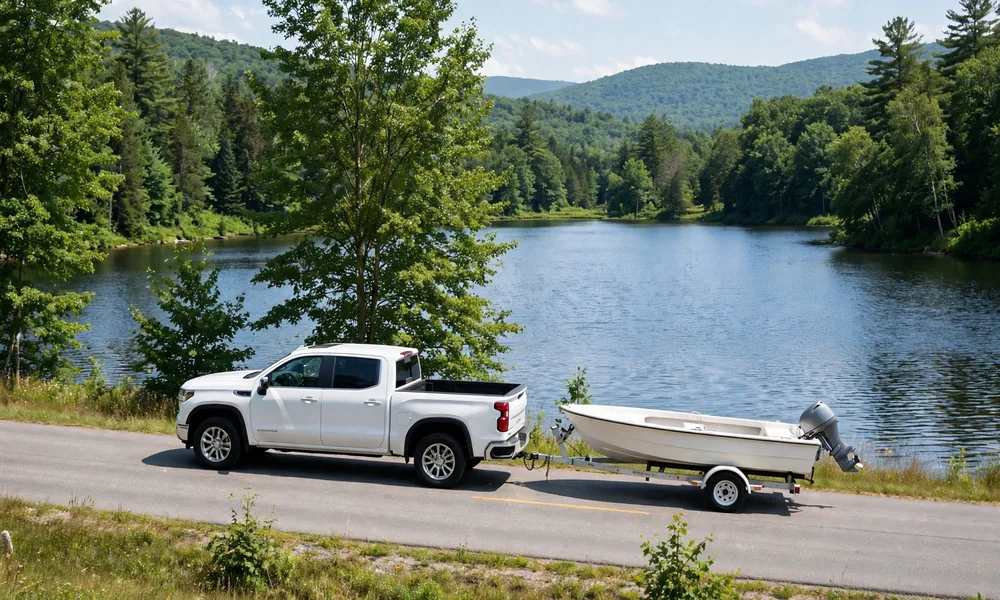
When the summer plan involves a boat, a travel trailer, or a camper, a full-size pickup is still the right tool. Their separate frames, large engines, and heavy-duty cooling are exactly what towing in hot weather demands. A typical full-size crew cab tows between 9,000 and 13,000 pounds when properly equipped, and its payload of 1,700 to 2,300 pounds covers a bed full of gear plus the tongue weight of a trailer. That margin is what keeps a summer tow calm instead of stressful.
Modern full-size trucks have also become genuinely comfortable long-distance machines, with quiet cabins, supportive seats, and air conditioning that cools a big cabin quickly. Ventilated seats are worth seeking out, because leather in direct sun can be painfully hot. Hybrid full-size trucks deserve a look too: they cut fuel use in stop-start resort traffic, and many can power a fridge or campsite lights from the bed, saving enough over two weeks on the road to cover several nights of campsite fees.
What to check before towing in summer heat
Before a summer tow, check the transmission cooler, the trailer brake controller, and the tyres, including trailer tyres, which age faster than most owners expect. Load the trailer so roughly 10 to 15 percent of its weight sits on the tongue, and plan fuel stops early, because a hot engine works harder with a trailer. If you want a deeper comparison of towing setups, our guide to pickup vs SUV for towing breaks down capacity, stability, and running costs side by side.
Midsize pickups: the easier summer companion
Midsize pickups are the sweet spot for many summer drivers. They tow enough for a small boat, jet skis, or a light camper, usually 6,000 to 7,700 pounds, and carry a family and a bed full of gear without full-size bulk. That means easier parking at beaches and trailheads, less stressful narrow roads, and fuel bills typically 15 to 25 percent lower than a comparable full-size V8.
The best midsize summer trucks have crew cabs with usable rear seats, rear air vents, and a bed long enough for bikes laid flat. Off-road versions add ground clearance, skid plates, and all-terrain tyres for rough tracks to remote campsites, though they ride more firmly on the motorway. The trade-off is cabin space on very long days: three adults in the back will feel it after a couple of hours, and four adults and a dog on a 400-mile drive call for a full-size truck.
What actually matters in summer heat
Heat is the great test of a summer pickup, and it exposes weaknesses that never show up in a winter test drive. The cooling system is first: a truck with a large radiator, an auxiliary transmission cooler, and a fan that keeps temperatures stable at idle will tow happily in 35-degree heat, while a truck with marginal cooling will cut power on the first long climb. Towing packages usually include the cooling upgrades that matter most, so ask about them when you buy.
Tyres matter more in summer than most drivers realise. Hot asphalt increases tyre pressure and wear, and an overloaded bed makes it worse. Check pressures when the tyres are cold, before the sun heats them, and stay inside the payload rating printed on the door jamb rather than the marketing number. Dark interiors absorb heat, so a lighter interior or a good sunshade makes a real difference after the truck has sat in the sun, and remote start cools the cabin before you load up.
Bed setup for a summer of camping
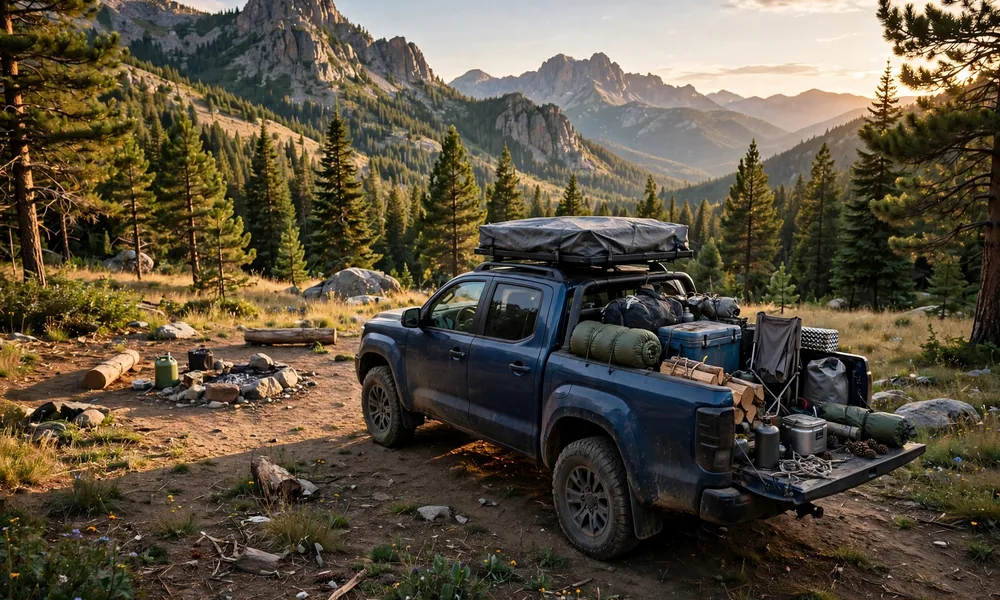
A good summer bed setup is simple: a spray-in liner to protect against sand and wet gear, adjustable tie-downs, a lockable cover, and a cargo net to stop loads sliding. Pack heavy items low and towards the cab, keep the cooler accessible, and leave space for a folding table and chairs. A rooftop tent on a bed rack turns the truck into a base camp, though it adds weight up high and fuel use, so it suits slower scenic routes better than motorway days.
Best pickup for each kind of summer trip
For a lake or coastal holiday with a boat, choose a full-size crew cab with a factory towing package and trailer brake controller: the extra cooling and stability make launching and retrieving a boat far less stressful. For a mountain camping trip on rough tracks, choose a midsize off-road truck with all-terrain tyres and a bed rack, because ground clearance and a shorter wheelbase matter more than maximum towing on a rutted forest road.
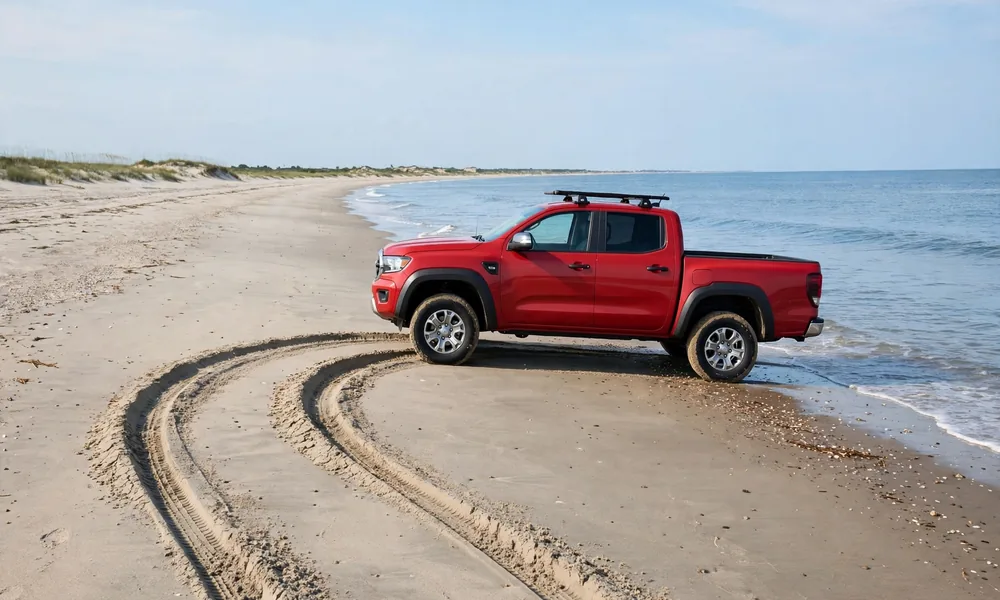
For a beach holiday, a midsize or compact pickup is often the best fit: sand driving needs lower tyre pressures and a light throttle, and a smaller truck turns around more easily on a narrow beach track. Check local rules before driving on sand, and rinse the underside afterwards to keep salt from causing corrosion. If your summer is mostly town driving with weekend escapes, do not overlook the compact pickup: it drives like a car, parks anywhere, and still carries bikes and camping gear that would never fit in a hatchback. Our roundup of the best hatchbacks for summer driving shows what smaller cars can do, but a compact pickup adds a bed and towing a hatchback cannot match.
Summer pickup checklist
- Test the air conditioning at idle on a hot day, and check for rear vents and ventilated seats before you buy.
- Confirm the towing package includes an auxiliary transmission cooler and a trailer brake controller.
- Measure the bed against your longest regular load, such as bikes, kayaks, or a rooftop tent.
- Check payload on the door jamb, not the brochure, and allow for passengers, gear, and tongue weight.
- Inspect tyre age and condition, including the spare and any trailer tyres, before a long hot trip.
- Budget fuel for the whole trip at summer prices, and compare a hybrid or turbo engine against a V8.
Frequently asked questions
Are pickup trucks good for summer driving?
Yes, when the truck matches the trip. Pickups handle towing, camping gear, and rough tracks better than cars, and modern crew cabs are comfortable on long hot drives. Choose the right size: full-size for heavy towing, midsize for mixed use, and compact for light duties.
Which pickup truck tows best in summer heat?
Full-size trucks with factory towing packages tow best in heat, with larger radiators, transmission coolers, and stronger frames. Choose a truck rated comfortably above your trailer weight, so the engine and transmission are not at their limit on a hot climb.
Do pickup trucks use more fuel in summer?
Fuel use rises slightly in summer because the air conditioning works harder, but load and speed matter more: a loaded truck with a trailer at motorway speed uses far more fuel than the same truck unloaded, so plan stops and keep speeds steady.
Is a midsize pickup enough for a family summer holiday?
For most families, yes: a midsize crew cab carries two adults, two children, and a bed full of camping gear, and tows a small boat or light camper. Only choose a full-size truck if you tow heavy trailers or regularly carry four adults over long distances.
Should I choose a hybrid pickup for summer?
A hybrid is a strong summer choice for town driving or long touring: it saves fuel in traffic and can power campsite equipment from the bed. Check payload and towing ratings for the exact version, since they can differ from the petrol-only model.
How do I keep a pickup cool when parked in the sun?
Use a windscreen sunshade, park in shade where possible, and crack the windows slightly if it is safe to do so. A light-coloured interior and a bed cover help, and remote start cools the cabin before you load up. Our comparison of the best pickup trucks for city driving also covers cabin comfort and parking in summer towns.
Bottom line
The best pickup trucks for summer driving stay cool, tow without drama, and fit the trips you actually take. A full-size truck wins for heavy towing and long family tours, a midsize truck wins for beach towns and mountain tracks, and a hybrid wins for lower fuel bills across a whole summer. Choose the size that matches your trailer and your parking spaces, check the cooling and air conditioning before you sign, and the truck will make the summer easier instead of harder.


