The best hatchbacks for summer driving in 2026 are the small cars that stay cool, comfortable and cheap to run when the temperature climbs and the miles pile up. A good summer hatchback cools its cabin quickly after sitting in the sun, holds motorway speed without straining, swallows holiday luggage, and sips fuel on long runs to the coast.
This guide compares the hatchbacks that handle summer best in 2026, judged on air conditioning, cabin heat, boot space, real-world fuel economy, motorway comfort and value. Use the table to narrow the list, then read the notes to find the hatchback that fits your budget and the summer driving you actually do.
Key takeaways
- The Toyota Corolla Hybrid is the best hatchback for summer driving in 2026, with fast air conditioning, superb fuel economy and a cabin that stays cool.
- The Honda Civic e:HEV is the best long-distance summer hatchback, with a quiet, relaxed motorway manner and the most comfortable seats in this group.
- The Volkswagen Golf is the best all-rounder, with a big boot, a polished cabin and strong engines for loaded holiday runs.
- The Mazda3 is the best-looking hatchback and the most enjoyable to drive, though its boot is smaller than the class leaders.
- Check the air conditioning before you buy: a weak system turns a summer hatchback into a greenhouse, whatever the badge says.
The best hatchbacks for summer driving in 2026 at a glance
| Hatchback | Best for | Boot space | Fuel economy | Why it wins |
|---|---|---|---|---|
| Toyota Corolla Hybrid | Overall summer driving | 361 litres | Over 60 mpg | Cool cabin, tiny fuel bills |
| Honda Civic e:HEV | Long motorway trips | 410 litres | Over 55 mpg | Quiet, comfortable, spacious |
| Volkswagen Golf | All-round ability | 381 litres | Over 50 mpg | Big boot, polished cabin |
| Mazda3 | Driving enjoyment | 334 litres | Over 45 mpg | Beautiful cabin, sharp handling |
| Hyundai i30 | Value for money | 395 litres | Over 50 mpg | Big boot, long warranty |
| Kia Ceed | Equipment and warranty | 395 litres | Over 50 mpg | Seven-year warranty, generous kit |
| Mini Cooper 5-door | Fun and city summers | 275 litres | Over 45 mpg | Characterful, easy to park |
The hatchbacks, in detail
1. Toyota Corolla Hybrid
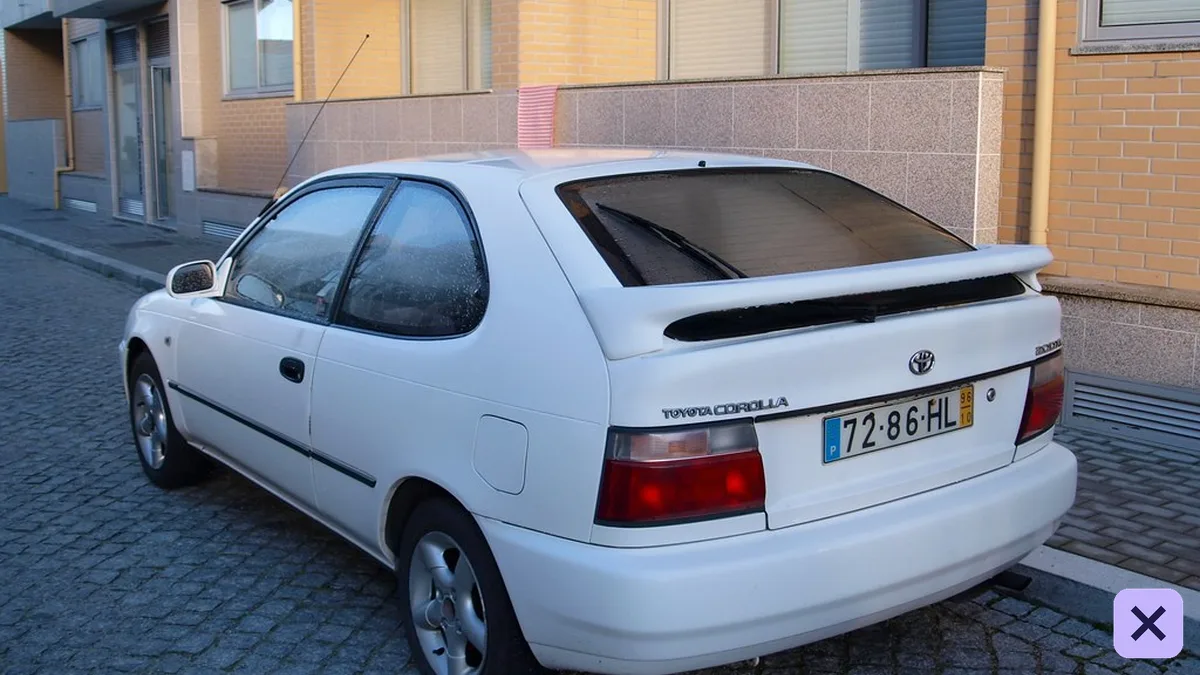
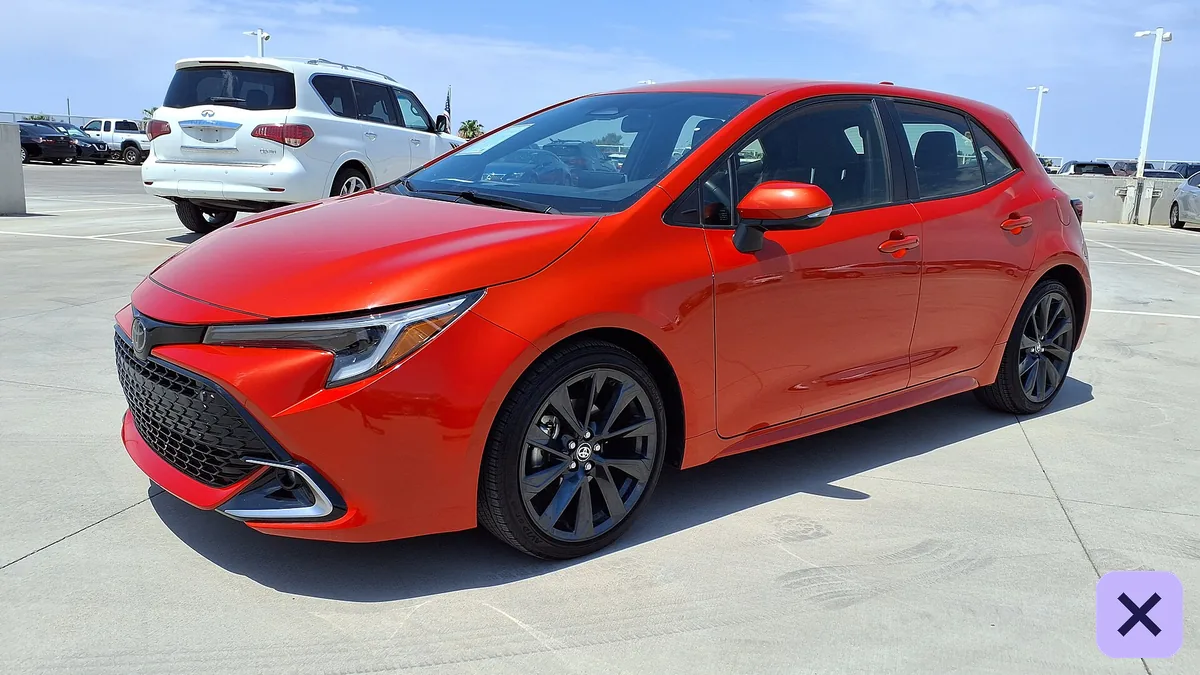
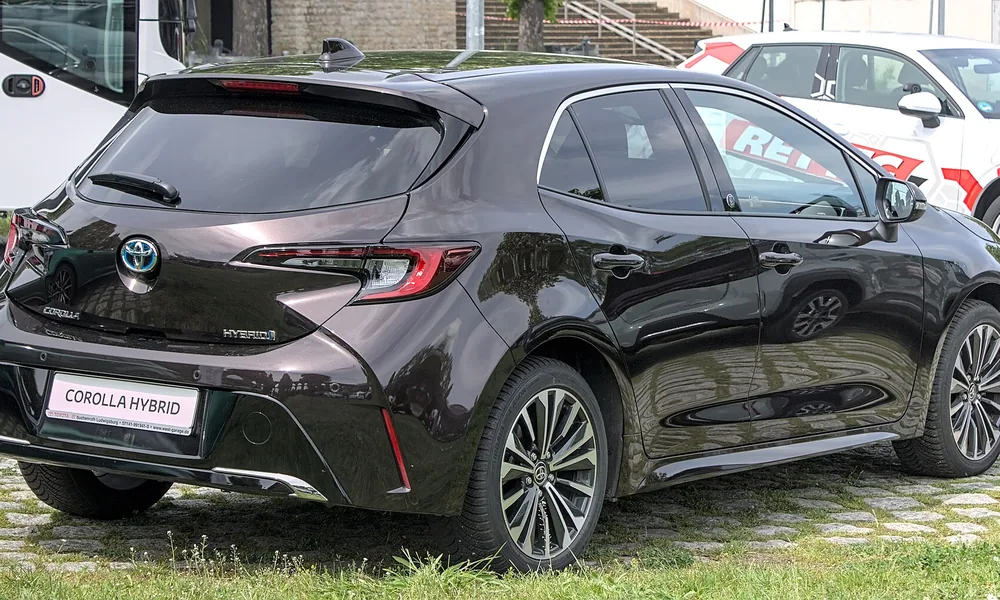
The Toyota Corolla Hybrid is the best hatchback for summer driving because it does the hot-weather basics better than anything else in this group. The air conditioning is powerful and quick: on a 30-degree day, the cabin goes from oven to comfortable in a couple of minutes, and the hybrid system runs the compressor even in stop-start traffic, so the cold air never fades at the lights. Real-world fuel economy is over 60 mpg, which makes long summer trips remarkably cheap. The 361-litre boot takes two large suitcases, and the cabin is quiet at motorway speed.
2. Honda Civic e:HEV
The Honda Civic e:HEV is the hatchback to choose if your summer means long motorway miles. Its hybrid system is smooth and near-silent, the ride settles beautifully at speed, and the front seats are the most supportive in this group — a real advantage after three hours behind the wheel. The 410-litre boot is the biggest here, swallowing a family holiday load without a roof box, and the air conditioning is strong, with rear vents on higher trims. It returns over 55 mpg in real driving, and the cabin feels a class above.
3. Volkswagen Golf
The Golf remains the benchmark hatchback for a reason, and in summer it is hard to fault. The 381-litre boot is square and easy to load, the cabin is solidly built and stays cool thanks to effective air conditioning and well-tinted glass on higher trims, and the range of engines covers everything from a frugal 1.5-litre petrol to a punchy 2.0-litre diesel for long-distance drivers. On the motorway the Golf is quiet, stable and relaxing. Running costs are reasonable, residuals are strong, and the Golf is the safest choice if you want one car to do everything.
4. Mazda3
The Mazda3 is the hatchback to buy with your heart, and it still makes sense in summer. The cabin is the most beautiful in this group, with soft materials, a restrained design and seats that stay comfortable on long drives. The handling is the sharpest here, with precise steering on winding coastal roads. The 334-litre boot is the weak point — smaller than the Golf or Civic, and awkwardly shaped — so pack light or plan on a roof box for a family holiday. Fuel economy over 45 mpg is respectable, and the air conditioning copes well.
5. Hyundai i30
The Hyundai i30 is the value pick of this group, and it is a genuinely good summer car rather than a cheap compromise. The 395-litre boot is one of the largest here, the cabin is roomy for four adults, and the air conditioning is strong, with a cooled glovebox on some trims for keeping drinks cold on the journey. The 1.5-litre petrol returns over 50 mpg, and Hyundai’s five-year warranty brings real peace of mind. Equipment is generous even on mid-range trims.
6. Kia Ceed
The Kia Ceed shares its engineering with the Hyundai i30 and matches it on the numbers that matter in summer: a 395-litre boot, over 50 mpg from the 1.5-litre petrol, and effective air conditioning that cools the cabin quickly. Where the Ceed pulls ahead is its seven-year warranty — the longest in this group — and a slightly sharper, more modern cabin with a large touchscreen and clear controls. The ride is comfortable and the car is easy to drive in town. It is also one of the quietest cars here at speed, with running costs among the lowest in the class.
7. Mini Cooper 5-door
The Mini Cooper 5-door is the most fun hatchback in this group, and in summer it is a delight: the go-kart handling, the punchy engines and the open, airy cabin make every coastal road feel like an occasion. The five-door body adds usable rear doors and a 275-litre boot — enough for a weekend away for two. The optional panoramic sunroof floods the cabin with light, though it adds heat on the hottest days. The Mini is the best choice for couples and city drivers who want character above practicality, and it is the easiest car here to park at a crowded beach.
How to choose the right summer hatchback
Start with the air conditioning, the feature you will use every summer day. Test it properly: sit in the car after it has been parked in the sun and time how long the cabin takes to cool. A good system does it in two or three minutes; a weak one takes ten. Then think about the boot: measure it against your actual holiday load, not the brochure figure — a square boot beats a deep, narrow one. For long motorway runs, prioritise the Civic or the Golf; for town and coast roads, the Mini or the Mazda3 will make you smile more. For the lowest running costs, the Corolla Hybrid is the clear winner. For the opposite season, our guide to the best hatchbacks for winter driving shows which cars cope when the temperature drops.
Summer driving: what actually matters
Heat attacks the car as well as the driver: a cabin parked in the sun can pass 60 degrees inside, so air conditioning, window tint and seat colour all matter — light interiors stay noticeably cooler than black leather. Tyres matter too: summer tyres grip far better than worn all-season tyres in a sudden downpour, when most summer accidents happen. Hybrids like the Corolla and Civic are at their best in warm weather, since warm engines are more efficient. Before a long trip, check the coolant, the tyre pressures and the air conditioning, and keep water and sun protection in the car.

What a summer hatchback costs in 2026
Prices in 2026 start at around £22,000 for a Hyundai i30 or Kia Ceed, rise to roughly £28,000 for a Corolla Hybrid or Golf, and reach about £32,000 for a well-specified Civic e:HEV or Mazda3. The Mini sits in the middle, from around £25,000. What matters is total cost of ownership: the Corolla’s fuel savings can be worth hundreds of pounds a year, and the Kia’s seven-year warranty removes repair bills other owners pay. Check insurance groups too: the Mini and Mazda3 can cost more to insure than the Hyundai or Kia. A summer car is not only about the purchase price: our round-up of the worst sedans for summer driving shows which cars struggle most in the heat.
Checklist: buying a hatchback for summer
- Test the air conditioning in a sun-soaked car, not a shaded showroom.
- Measure the boot against your real holiday load, and check the shape as well as the litre figure.
- Choose light-coloured seats if you can: dark interiors soak up far more heat.
- Check for rear air vents if you regularly carry passengers in the back.
- Look at real-world fuel economy, not the brochure figure: hybrids are at their best in warm weather.
- Inspect the tyres and the coolant before a long summer trip, and keep water and sun protection in the car.
Frequently asked questions
Which hatchback has the best air conditioning?
The Toyota Corolla Hybrid has the most effective air conditioning in this group: it cools the cabin in a couple of minutes, even in stop-start traffic, because the hybrid system keeps the compressor running. The Honda Civic e:HEV is a close second, with rear vents on higher trims. Test any car in the sun before you buy.
Are hatchbacks good for long summer road trips?
Yes, the best ones are excellent. The Honda Civic e:HEV is the most comfortable for long motorway miles, with supportive seats and a 410-litre boot. The Volkswagen Golf is a close second, and the Toyota Corolla Hybrid is the cheapest to run over a long trip. Any of the top three will handle a full day of driving easily.
What is the most fuel-efficient hatchback in summer?
The Toyota Corolla Hybrid is the most fuel-efficient, returning over 60 mpg in real-world mixed driving. The Honda Civic e:HEV is next, at over 55 mpg. The Hyundai i30, Kia Ceed and Volkswagen Golf all return over 50 mpg.
Should I choose a hybrid hatchback for summer?
Yes, for most drivers. Hybrids cool their cabins effectively in traffic and use very little fuel in town. The Corolla Hybrid and Civic e:HEV are the two best hybrids in this group. The exception is a driver who does almost all their miles on the motorway, where a diesel Golf can match a hybrid on fuel — and electric cars have their own summer trade-offs, which our guide to the worst electric cars for summer driving explains.
Do I need a sunroof in a summer hatchback?
No, and it can be a mixed blessing. A panoramic sunroof floods the cabin with light, but it also lets in heat on the hottest days and adds weight and cost. Good air conditioning matters far more than a sunroof. If you choose one, make sure it has a proper sunshade.
What boot size do I need for a family summer holiday?
For a family of four on a week-long holiday, look for at least 380 litres: the Civic at 410, the i30 and Ceed at 395, and the Golf at 381 litres all manage it. The Corolla at 361 litres works with careful packing, while the Mazda3 at 334 and the Mini at 275 litres suit couples or shorter trips, unless you add a roof box.
The bottom line
The best hatchback for summer driving in 2026 is the Toyota Corolla Hybrid: it cools fastest, sips fuel and swallows a holiday load. The Honda Civic e:HEV is the best choice for long motorway miles, the Volkswagen Golf the best all-rounder, and the Hyundai i30 and Kia Ceed the best value. Whichever you choose, test the air conditioning in the sun and measure the boot against your real luggage.