The worst sedans for summer driving in 2026 are the ones that turn a hot day into hard work: weak air conditioning that never catches up, black leather seats that burn on contact, small engines that strain at motorway speed, and cabins that trap heat long after you have parked. A good summer sedan starts cool and stays cool in traffic. The sedans in this guide were judged on cooling power, cabin heat and engine strain.
Summer changes the job of a car completely. In mild weather, the engine is barely working and the cabin is comfortable within minutes. In a heatwave, the air conditioning can draw a tenth of a small engine’s power and the cabin can reach 60 degrees after an hour parked in the sun. The worst summer sedans feel hot, loud and tired by the second hour of a journey. The best sedans for winter driving face the opposite problem, so a car that shines in January can still struggle badly in July.
Key Takeaways
- Air conditioning capacity matters more than horsepower in summer, and the weakest systems never catch up.
- Black leather and dark cabins can add 10 degrees or more to seat temperatures after parking in the sun.
- Small engines lose a noticeable share of their power to the air conditioning and feel strained at motorway speed.
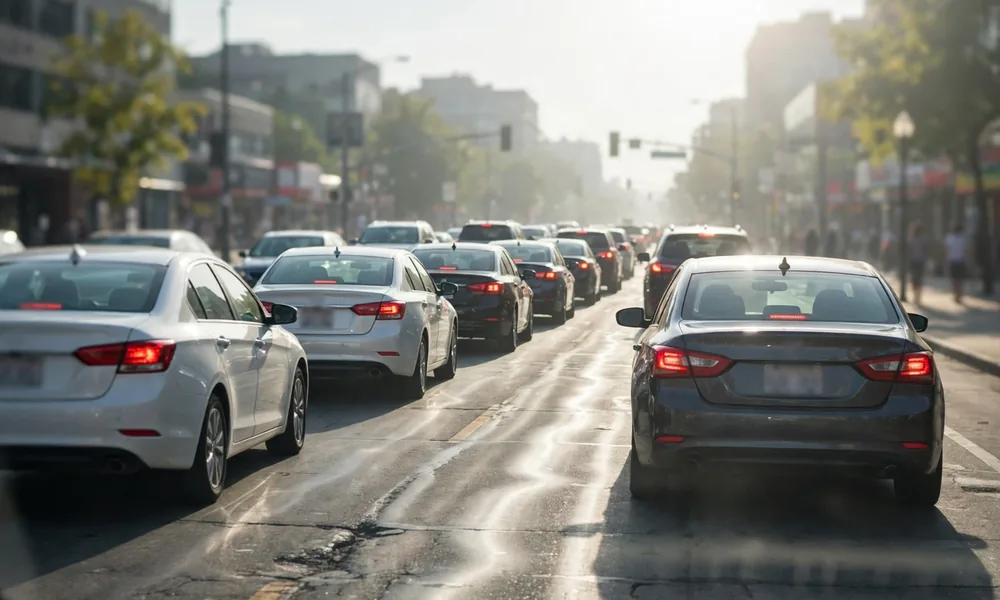
- Stop-start traffic is the hardest summer test: idling engines and a cabin that warms up again.
- The best summer sedans pair strong cooling with light-coloured interiors and engines that stay calm in the heat.
What Summer Really Demands From a Sedan
Summer asks five things of a sedan. The first is cooling power: the air conditioning must bring a heat-soaked cabin down within ten minutes, not twenty, and hold it there in traffic. The second is insulation: thin doors, a thin roof and single-pane glass let heat pour in faster than the air conditioning can pump it out. The third is engine cooling: a small engine working hard with the air conditioning on can run hot in traffic. The fourth is the cabin itself: dark leather, a black dashboard and a glass roof without a proper blind turn the interior into a greenhouse. The fifth is visibility: low sun and glare off hot tarmac make a clean windscreen matter more than most drivers expect.
Heat soak is the real summer problem. A sedan parked in full sun for an hour can have a dashboard temperature above 70 degrees, and the first ten minutes of the drive are spent cooling the seats and the steering wheel. Cars with light-coloured interiors recover far faster than black-on-black cabins. Ventilated seats, which blow cool air through the seat itself, are the most effective summer feature after strong air conditioning, and they are still rare on cheaper sedans.
The Worst Sedans for Summer Driving in 2026
The sedans below are the weakest summer performers in 2026. Each one has a specific flaw that shows up in hot weather, and the right alternative depends on which flaw bothers you most.
1. Mitsubishi Mirage G4: The Weakest Air Conditioning
The Mirage G4 is the worst summer sedan on sale, and the reason is simple: its tiny 1.2-litre three-cylinder engine has just 78 horsepower, and the air conditioning takes a large share of it. On a hot day the car feels sluggish pulling away from junctions and strained at motorway speed, and the cooling itself is weak, taking far longer than rivals to bring the cabin down. The thin doors and roof let heat in quickly, and the base trim has no ventilated seats, no rear vents and dark cloth that holds the heat.

2. Nissan Versa: The Heat-Soaked Budget Sedan
The Versa is a likeable cheap sedan for nine months of the year, and a poor one in the other three. Its 1.6-litre engine is adequate in mild weather but loses a noticeable share of its modest power to the air conditioning, and the base S trim pairs a weak single-zone system with no rear vents, so back-seat passengers wait longest for cool air. The Versa’s small fuel tank also means more frequent stops on long summer journeys. If you live somewhere with a short summer, the Versa is fine; if your summer runs from May to September, the weak cooling becomes a daily frustration.
3. Volkswagen Jetta: The Black Cabin Problem
The Jetta is a good sedan in most respects, which makes its summer weakness more annoying: the cabin. Most Jettas on sale wear a black interior with a black dashboard and dark headlining, and the optional panoramic sunroof adds a large sheet of glass above your head with only a thin blind to hold the heat back. The 1.5-litre turbo engine is efficient, but it runs hot in traffic and the stop-start system cuts the air conditioning compressor at every red light, so the cabin warms up again between junctions. The air conditioning itself is strong, but the dark cabin and the glass roof mean it has to work far harder than it should.
4. Chevrolet Malibu: The Traffic Overheater
The Malibu’s weakness in summer is traffic. Its 1.5-litre turbo engine is tuned for economy, and in stop-start heat it cycles the stop-start system constantly, cutting the air conditioning at every halt and letting the cabin warm up in the queue. The turbo runs hot after a motorway run, and the car needs a proper cool-down before switching off. The cabin is spacious, but the seats and dashboard are dark and the rear vents are weak, so the back of the car stays warm long after the front has cooled. The Malibu is a comfortable motorway car in mild weather, but in a summer traffic jam it is one of the least pleasant to sit in.
5. Mazda 3 Sedan: The Greenhouse Cabin
The Mazda 3 is one of the best-driving sedans on sale, and one of the worst in a heatwave. Its cabin is a dark one: black leather, a black dashboard and a black headlining are standard on most trims, and the cabin is small and low, so it heats up fast and holds the heat. The air conditioning is adequate rather than strong, and the rear vents are small, so back-seat passengers suffer most. The 2.5-litre engine is powerful enough that the air conditioning barely dents it, but the cabin itself is the problem: after an hour parked in the sun, the seats are too hot to sit on and the steering wheel is too hot to hold. A Mazda 3 with a light interior is a different car in summer.
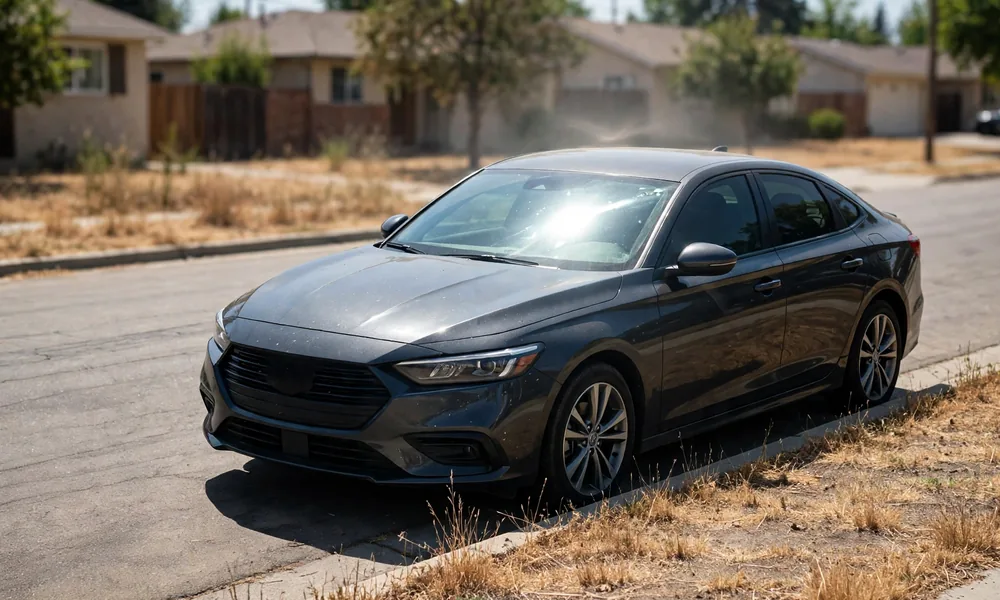
6. Dodge Charger: The Heat and Thirst Problem
The Charger is the biggest, thirstiest sedan in this guide, and summer makes both of those traits worse. Its large V8 engine produces a huge amount of heat in traffic, and the cabin sits over it, so the floor and the centre console warm up on long hot journeys. The black leather interior, which most Chargers wear, absorbs the sun and stays hot for hours, and the air conditioning, while powerful, has a large cabin to cool. Fuel consumption in summer traffic is the worst here by a wide margin. It is a fun car in the cool of the evening, but as a daily summer driver it is the wrong tool for the job.
Worst Sedans for Summer Driving Compared
| Sedan | Main summer weakness | Air conditioning | Cabin heat | Traffic verdict |
|---|---|---|---|---|
| Mitsubishi Mirage G4 | Weak cooling, tiny engine | Weak | High | Poor |
| Nissan Versa | Slow cooling, no rear vents | Weak | High | Poor |
| Volkswagen Jetta | Black cabin, glass roof | Strong | Very high | Average |
| Chevrolet Malibu | Stop-start cuts cooling | Average | High | Poor |
| Mazda 3 Sedan | Dark greenhouse cabin | Average | Very high | Average |
| Dodge Charger | Engine heat, thirst | Strong | Very high | Poor |
How to Cope, and What to Buy Instead
If you already own one of the sedans above, summer is manageable with a few habits. Park in the shade or use a windscreen sunshade, which can cut the dashboard temperature by 15 degrees or more. Open all the doors for a minute before you set off, then run the air conditioning on full with the windows down for the first minute. Use recirculation mode once the cabin is cool. Keep the windscreen clean inside and out, because a dirty screen scatters low summer sun into glare. In traffic, switching the stop-start system off keeps the air conditioning compressor running, which is worth the small fuel penalty on the hottest days.
If you are buying, the summer test is simple: on the test drive, park the car in the sun for twenty minutes, then time how long the air conditioning takes to make the cabin comfortable. Choose a light-coloured interior, insist on rear air vents, and treat ventilated seats as a must-have if your summers are long. Cars that handle the city in summer are usually the ones with strong cooling and light cabins, and the worst sedans for city driving share many of the same flaws. Electric cars face a different summer problem, with range falling as the air conditioning works hard, and the worst electric cars for summer driving show how battery and cabin cooling compete for the same energy.
Checklist: Surviving Summer in a Sedan
- Park in the shade or use a sunshade, and open all doors for a minute before setting off.
- Run the air conditioning on full with the windows down for the first minute, then switch to recirculation.
- Switch stop-start off in heavy traffic so the air conditioning compressor keeps running at red lights.
- Choose a light-coloured interior and rear air vents when buying, and treat ventilated seats as a must-have.
- Keep the windscreen clean inside and out, and replace worn wiper blades before the dusty summer season.
- Check coolant and tyre pressures monthly in summer, since heat raises both.
Frequently Asked Questions
What makes a sedan bad for summer driving?
Weak air conditioning, a dark interior that absorbs heat, a small engine that loses power to the cooling system, and poor ventilation. The worst combine several of these, so the cabin stays hot even with the air conditioning at full power.
Does black leather really make a car hotter?
Yes. Black leather seats can reach 70 degrees or more after an hour in the sun, while light cloth seats stay 10 to 15 degrees cooler. That is why a light interior is the simplest summer upgrade.
Why does my air conditioning feel weaker in traffic?
In traffic there is no airflow through the condenser, the engine is idling, and stop-start systems cut the compressor at every halt, so the cabin slowly warms up again between junctions.
Do small engines struggle more in summer?
Yes. The compressor can take 5 to 10 horsepower, which is a large share of a 78-horsepower engine and a small share of a 250-horsepower one.
Are ventilated seats worth it?
Yes, if your summers are long. Ventilated seats blow cool air through the seat itself, which cools you directly instead of waiting for the whole cabin to cool down.
What is the best sedan for summer driving?
A sedan with strong air conditioning, rear vents, a light-coloured interior, ventilated seats and an engine with enough power that the air conditioning barely dents it.
The Bottom Line
The worst sedans for summer driving in 2026 are the Mitsubishi Mirage G4 and the Nissan Versa, with the weakest cooling and the smallest engines, followed by the Jetta, Malibu, Mazda 3 and Charger, each undone by a dark cabin, stop-start cooling cuts or sheer engine heat. If you already own one, shade, a sunshade and switching stop-start off in traffic will help. If you are buying, test the air conditioning in full sun and choose a light interior with rear vents and ventilated seats.