
Why the Best Skewers Are the Cheapest Upgrade to Your Grill in 2026
Why do the best skewers change grilled food so much for so little money? Because a skewer is the cheapest way to cook small pieces over fire: it holds meat, vegetables and seafood in one neat line, turns them all at once, and keeps them from falling through the grates. A good skewer also stops food spinning when you turn it, which is the difference between evenly browned kebabs and pieces that are burnt on one side and raw on the other. This guide explains why the best skewers in 2026 are worth buying, which types suit which food, and how to use them well.
Key Takeaways
- Flat metal skewers are the best all-round buy: they stop food spinning, hold heavy pieces, and last for years.
- Round skewers suit light food like shrimp and vegetables, but they let heavy meat spin when you turn them.
- Bamboo skewers are cheap and disposable, but they must be soaked for thirty minutes or they will burn and snap.
- Match the length to your grill: 30 to 35 centimetres suits most home grills, with room for handles clear of the heat.
- Leave a small gap between pieces so hot air reaches every side, and turn the whole skewer, not the pieces.
What a Skewer Is, and What It Is Not
A skewer is a long, thin rod you thread food onto for cooking over fire. The classic form is a flat stainless steel blade with a handle at one end and a point at the other: push it through cubes of meat, peppers, onions and mushrooms, lay it across the grill, and turn it once or twice. The food stays in a line, cooks evenly, and lifts off in one movement. Bamboo skewers do the same job for one meal and then go in the bin, while double-prong skewers hold food with two parallel rods so nothing can twist.
It is not a grill basket, though the two solve the same problem. A basket holds small pieces in a cage you flip as a unit, while a skewer threads them in a line you turn by the handle. Our guide to the best BBQ tools for grilling covers baskets alongside skewers as part of a full grill kit; a skewer is the simpler tool and gives more control over each piece. It is not a kebab skewer in the narrow sense either: a kebab skewer is the long, flat metal type, and this guide covers it alongside round, double-prong and bamboo skewers, so you can match the skewer to the food. And it is not a serving tool: tongs lift food off the grill, while a skewer is the cooking tool itself. Our guide to the best serving tongs covers the tongs for once the skewers come off the heat.
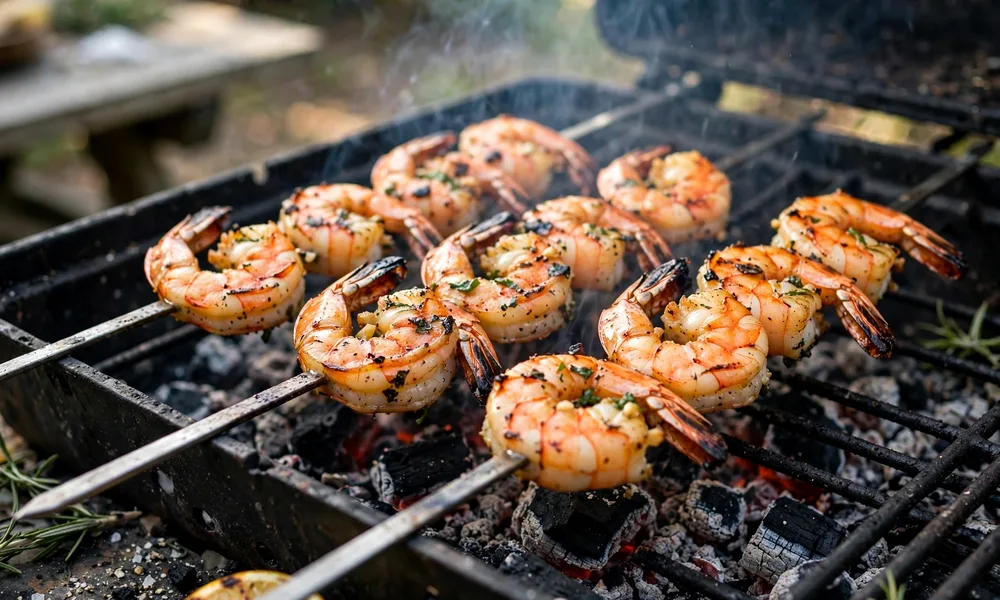
The Main Types of Skewer
Almost every skewer falls into one of four designs, differing in shape, material, and whether it is made to last or to throw away. Pick the shape first: it decides whether the food turns with the skewer or spins on it.
Flat Metal Skewers
A flat metal skewer is a wide, thin blade of stainless steel, and the best all-round buy for most grillers. The flat shape is the whole point: food threaded onto a flat blade cannot spin, because the wide cross-section locks each piece in place. Turn the skewer and every piece turns with it, so the meat browns evenly. Look for blades about 8 to 10 millimetres wide, with a handle that stays cool and a point sharp enough to pierce meat without tearing it. The trade-off is weight and storage: flat skewers are heavier than bamboo, and the blades need a case or a roll so they do not dull.
Round Metal Skewers
A round metal skewer is a thin steel rod, and it is the best choice for light, delicate food. Shrimp, cherry tomatoes, mushrooms and soft vegetables slide on easily, and the thin rod leaves only a tiny hole. The trade-off is spinning: a round rod gives heavy pieces nothing to grip, so cubes of meat rotate when you turn the skewer and cook unevenly. Use round skewers for light food, and a flat skewer when the pieces are heavy or the marinade is thick and slippery.
Double-Prong Skewers
A double-prong skewer is two parallel rods joined at the handle, and it is the best choice for food that must not move at all. The two rods hold each piece at two points, so even a thick cube of meat or a whole fish cannot twist. They suit large pieces, whole shrimp, and fish fillets, and are the easiest to turn one-handed. The trade-off is threading: two rods mean two holes in every piece, so loading takes longer, and they cost more than a single rod.
Bamboo and Wooden Skewers
A bamboo skewer is a thin wooden stick, and it is the cheapest way to grill for a crowd. A pack of a hundred costs less than a single metal skewer, they need no washing, and they suit parties where nobody wants to wash up. The trade-off is burning: bamboo chars over direct heat, so soak the skewers for at least thirty minutes and keep them away from the hottest part of the grill. Bamboo also bends under heavy pieces, so it suits light food and short skewers, not a full load of steak.
Length, Material and Handles
Length decides whether the skewer fits your grill and whether your hands stay clear of the heat. A skewer of 30 to 35 centimetres suits most home grills: it spans the grate with room for the handle outside the hot zone, and holds enough food for one portion. Shorter skewers of 20 to 25 centimetres suit small grills, while long ones of 40 centimetres or more suit large grills and whole fish but are awkward to turn and store. Measure your grill first, and leave at least five centimetres of handle clear of the coals.
Material decides durability and cleaning. Stainless steel is the safest choice: it does not rust or bend, and it goes in the dishwasher. Look for food-grade steel with a smooth finish, because rough steel grips food and makes it hard to slide pieces off. Wooden handles stay cool but need oiling and char if they touch the coals. All-metal skewers with a twisted handle stay cooler than a straight rod, because the twist breaks the path of the heat, and they stack neatly.
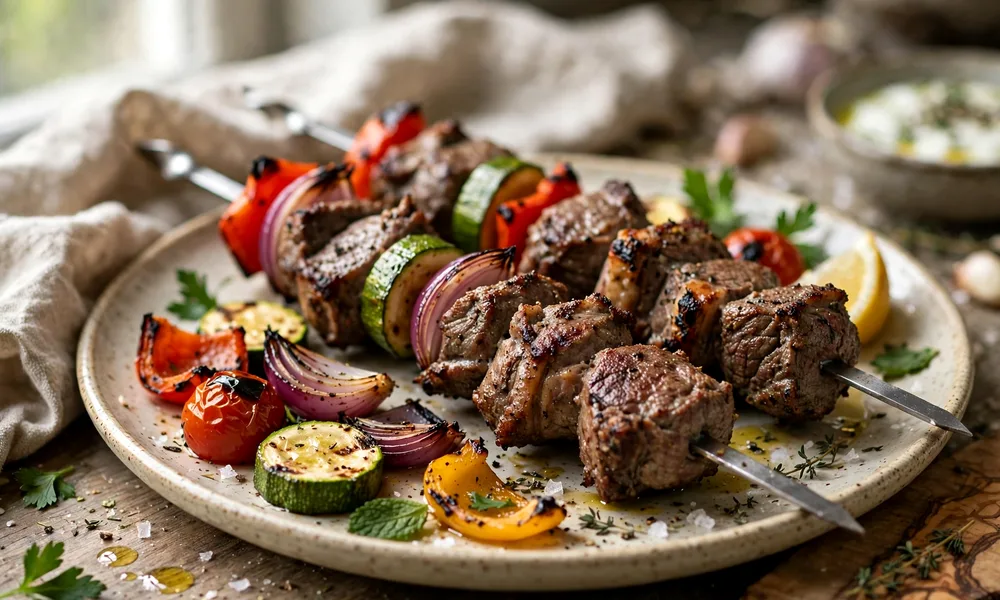
Skewers Compared
| Type | Best for | Spinning | Weakness |
|---|---|---|---|
| Flat metal | Everyday kebabs, heavy meat | None | Heavy, needs storage |
| Round metal | Shrimp, vegetables, light food | Heavy pieces spin | Uneven browning on meat |
| Double-prong | Large pieces, whole fish | None | Slow to load, costs more |
| Bamboo | Parties, light food, one meal | Some | Burns, bends, single use |
How to Use Skewers, Step by Step
The technique is mostly about loading well. Cut the food into even pieces, about three centimetres across, so everything cooks at the same rate. Thread the pieces with a small gap between each one, about half a centimetre: pieces packed tight steam instead of browning. Alternate meat and vegetables, and put the fastest-cooking pieces at the ends, where the heat is lower. Oil the skewer lightly before threading.
Grill over medium-high heat, and turn the whole skewer by the handle, not the pieces. Cook meat skewers for about eight to ten minutes, turning every two to three minutes, and rest them for five minutes so the juices settle. For bamboo skewers, soak them for thirty minutes, keep them over medium heat, and wrap the exposed ends in foil if they start to char. When the food is done, slide it off with a fork, and never leave metal skewers on the grill after cooking, or the handles will get too hot to hold.
Care, Cleaning, and What to Avoid
Metal skewers need almost no care beyond prompt cleaning. Rinse them as soon as you finish, before marinade dries on the blade: a soak in hot soapy water clears dried sauce, and a stiff grill brush helps with anything baked on. Stainless steel skewers can go in the dishwasher, though hand washing is quicker. Dry them at once, and store them in a case or a roll so the points do not dull. Bamboo skewers go in the bin after one use: do not reuse them, because the wood dries out, splinters, and burns faster the second time.
The most common mistakes are overloading the skewer, which makes the middle pieces steam, and using round skewers for heavy meat, which spins and cooks unevenly. Avoid very thin metal skewers, which bend under a full load, and plastic handles, which melt if they touch the grill. Do not thread food the night before and leave it uncovered in the fridge: the pieces dry out. And do not use a skewer as a carving fork or a poker for the coals: it bends the blade and dulls the point.
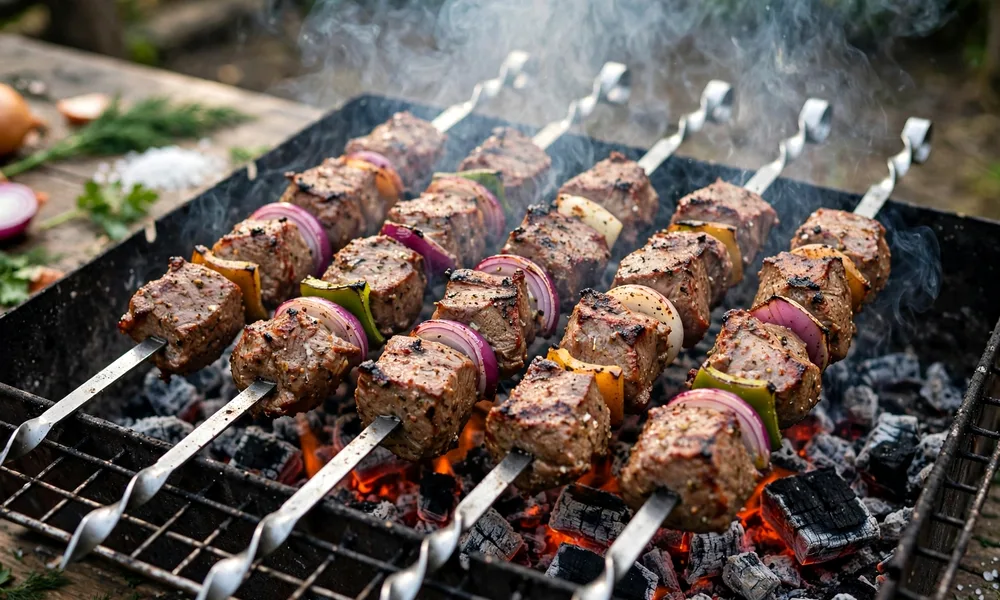
Your Skewer Checklist
- Choose flat stainless steel skewers as a first buy, 30 to 35 centimetres long, with a cool handle.
- Keep round skewers for light food like shrimp and vegetables, and double-prong skewers for large pieces and fish.
- Soak bamboo skewers for thirty minutes, and keep them over medium heat, never fierce coals.
- Cut pieces evenly, leave a small gap between them, and oil the skewer lightly before threading.
- Turn the whole skewer by the handle every two to three minutes, and rest meat skewers for five minutes.
- Rinse metal skewers at once, dry them, store them in a case, and never reuse bamboo skewers.
Frequently Asked Questions
Are flat skewers better than round skewers?
For most grilling, yes. A flat blade locks each piece in place, so the food turns with the skewer and browns evenly. Round skewers suit light food, but heavy meat spins on a round rod and cooks unevenly.
How long should I soak bamboo skewers?
At least thirty minutes in water, and an hour is better for a long cook. Soaking stops the bamboo charring, but it does not make it fireproof: keep soaked skewers over medium heat and wrap the ends in foil if they brown.
What length skewer should I buy?
Thirty to thirty-five centimetres suits most home grills, with room for the handle clear of the heat. Shorter skewers suit small grills, while forty centimetres or more suits large grills and whole fish but is harder to turn and store.
Can I put skewers in the dishwasher?
Stainless steel skewers can go in the dishwasher, though hand washing is quicker and kinder to wooden handles. Dry them at once and store them cased so the points stay sharp. Bamboo skewers are single use.
Why does food spin on my skewers?
Because the skewer is round and the pieces are heavy. Food grips a flat blade but slides around a round rod. Switch to flat or double-prong skewers for meat, and save round skewers for light food.
Should I oil skewers before threading?
Yes, lightly. A thin wipe of oil on the blade stops food sticking and lets it slide off cleanly. Oil the skewer, not the food: oiling the food drips into the coals and flares.
The Bottom Line
A skewer is the cheapest upgrade a grill can get, and it is the difference between kebabs that brown evenly and kebabs that burn on one side and stay raw on the other. Buy flat stainless steel skewers, thirty to thirty-five centimetres long, load them with even pieces and a small gap between each one, and turn the whole skewer by the handle. Soak bamboo skewers if you use them, and keep them for light food and parties. Get the shape right and the grill does the rest.


