
Best Serving Tongs for Table Service That Never Drops a Thing in 2026
The best serving tongs are the quiet heroes of a good meal. They sit beside the roast, the bowl of vegetables or the bread basket, and they do one job over and over: lift food from the dish and set it neatly on a plate, without dropping it, tearing it or making the host look clumsy. This guide explains what serving tongs are, how the main types work, and how to choose a pair that serves well at the table in 2026.
Key Takeaways
- Serving tongs are a table tool, not a cooking tool: they lift and place food that is already cooked, so grip matters more than heat resistance.
- Buy tongs around 25 to 30 centimetres long, long enough to reach across a serving dish without your knuckles touching the food.
- Scalloped tips grip slippery food best, while wide flat tips suit bread, slices of meat and anything that tears easily.
- Stainless steel lasts longest, wood looks best on the table, and silicone tips protect delicate dishes.
- Check the spring: it should open smoothly and close firmly, not snap.
What Serving Tongs Actually Do
Serving tongs have two jobs, and both happen at the table rather than at the stove. The first is lifting: picking up a slice of roast, a spoonful of vegetables or a piece of bread from a shared dish. The second is placing: setting that food down on a plate without it sliding or falling apart. Both need the same thing, a grip firm enough to hold the food but gentle enough not to crush it.
That table job is what separates serving tongs from the other tongs in the kitchen. Cooking tongs live at the stove, where heat resistance and a strong grip on slippery chicken matter most, and our guide to tongs covers that world in full, from twelve-inch stove tongs to long grill tongs. Serving tongs never go near a flame. They work on food that is already cooked and already on the table, so they can be shorter, lighter and gentler.
Salad tongs are the closest cousin, and the two are easy to confuse, but they are not the same tool. Salad tongs are a narrow tool for a narrow job: tossing and lifting delicate leaves without bruising them, and our guide to salad tongs explains why wide, gentle tips matter there. Serving tongs are the general table-serving tool. They handle roast meat, vegetables, bread, pasta and anything else on the table, including heavier and hotter food than a salad bowl ever holds. A pair of salad tongs will struggle with a thick slice of roast beef. A pair of serving tongs will handle it, and then turn around and serve the salad too.
The other neighbour is the serving spoon, which moves food in a single scoop and is the right tool for rice, stews and anything loose or saucy. Our guide to serving spoons explains the deep-bowl design that makes a spoon good at its job. A spoon cannot grip, though. It cannot pick up a slice of meat, a bread roll or a piece of corn on the cob. That is the gap serving tongs fill: anything that needs to be picked up rather than scooped belongs to the tongs.
The Main Types of Serving Tongs
Most serving tongs fall into four designs, and the right one depends on what you serve most often.
Stainless Steel Tongs
Stainless steel tongs are the standard and the best choice for most tables. They are strong, easy to clean, and they do not stain, absorb smells or go soft in hot food. The best ones are made from a single piece of thick steel with a strong spring, and they feel solid rather than flimsy. Cheap steel tongs bend at the hinge and lose their grip within a year, so check the thickness of the metal before you buy.
Wooden Tongs
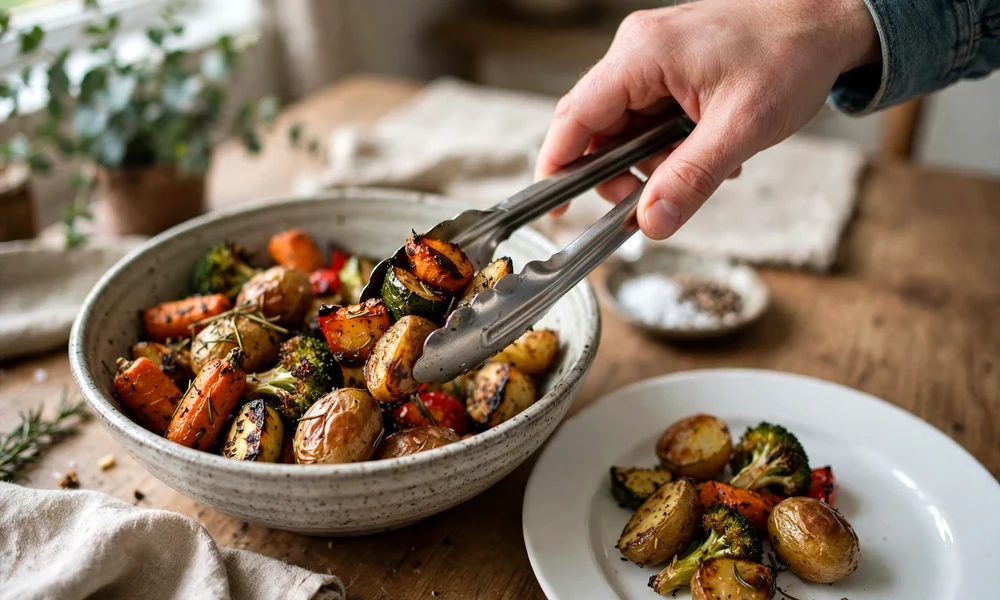
Wooden tongs bring a warmth that steel cannot match, and they look right on a wooden table next to a loaf of bread and a salad bowl. They are kind to every dish you own, they will not scratch a serving platter, and they do not get hot when they rest against a warm dish. Choose tongs made from a single piece of hardwood such as olive or acacia, with a smooth, oiled finish and no joins that can trap food. The trade-off is care: wood needs hand washing and occasional oiling.
Silicone-Tipped Tongs
Silicone-tipped tongs have soft, heat-resistant tips over a steel frame. They grip well, do not scratch delicate serving dishes, and are gentle enough to handle fish and soft vegetables without tearing them. The trade-off is precision: silicone is slightly less exact than bare steel on very slippery food, and the tips can stain with turmeric or tomato.
Scissor Tongs and Fork-and-Spoon Tongs
Scissor tongs work like a pair of scissors, with two handles that cross at a pivot, and they give the most control for large or heavy portions. Fork-and-spoon tongs join a small fork to a small spoon at the top, and the spoon side cradles the food while the fork side holds it in place. Both designs suit guests serving themselves, because they are easy to pick up and use without instruction. Scissor tongs suit a buffet line. Fork-and-spoon tongs suit a seated table, where the food is lighter and the portions smaller.
How to Choose Serving Tongs
Length comes first. Tongs around 25 to 30 centimetres long reach across a serving dish and into a deep bowl without your knuckles touching the food, and they are short enough to rest neatly on the edge of a platter. Shorter tongs, around 20 centimetres, suit small dishes and bread baskets but force your hand too close to hot food. Longer tongs suit a buffet line but feel clumsy at a seated table.
Tip shape comes second, and it decides what the tongs can actually lift. Scalloped tips grip slippery food far better than flat tips, because the curves bite into the surface without cutting it, and they also work as a small spoon for serving vegetables. Wide flat tips spread the pressure across a larger area, so they suit bread, slices of meat and anything that tears easily. Narrow pointed tips concentrate the pressure in one spot, which is why they crush soft food. If you buy one pair, buy scalloped tips: they handle the widest range of food.
The spring is the test most people forget. Pick the tongs up and open and close them a few times. They should open smoothly and close with a firm, even pressure, not a stiff snap that tires your hand and not a weak flop that drops food. A locking mechanism matters more than it sounds: it keeps the tongs closed in the drawer and stops them springing open in a crowded utensil jar.
Weight and balance decide whether the tongs feel good in the hand. Hold them by the middle and they should sit level, not tip toward the tips. A well-balanced pair feels light even when it is holding a heavy slice of roast. Heavy tongs tire the wrist during a long meal, and very light tongs feel cheap and bend under weight.
Serving Tongs at a Glance
| Type | Best For | Care | Watch Out For |
|---|---|---|---|
| Stainless steel | Everyday serving, roast meat | Dishwasher safe | Cheap thin steel bends |
| Wooden | Bread, salads, wooden tables | Hand wash, oil monthly | Soaking shortens its life |
| Silicone-tipped | Fish, delicate dishes | Dishwasher safe | Tips can stain |
| Scissor tongs | Buffets, heavy portions | Dishwasher safe | Bulky in a drawer |
| Fork-and-spoon | Seated tables, light food | Dishwasher safe | Weak on heavy slices |
Serving Tongs for Different Foods
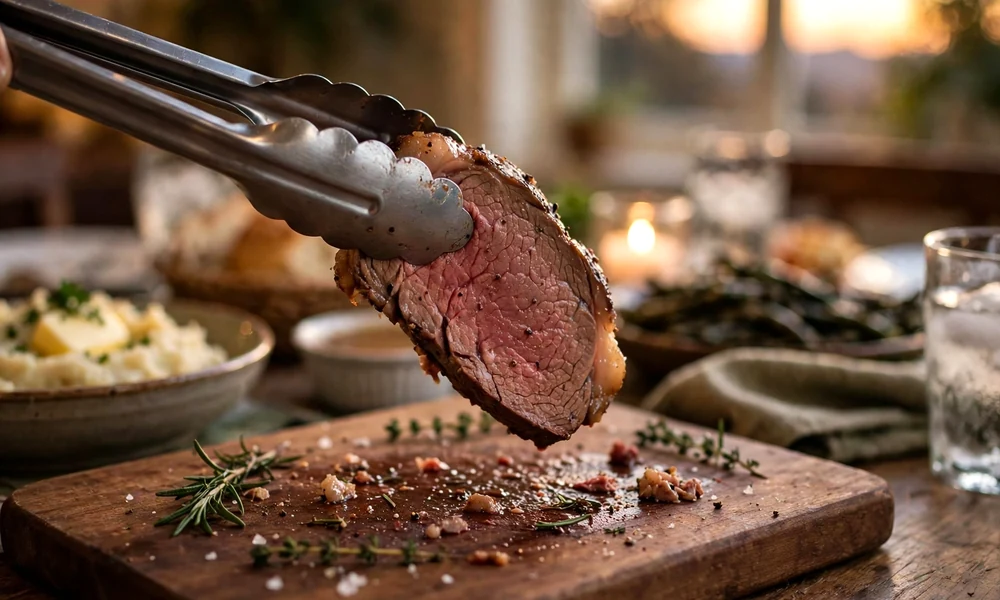
Roast meat is the classic serving-tong job. A slice of beef, pork or chicken is heavy, slippery and hot, and it needs a grip that holds without tearing. Scalloped steel tongs do this best: the curves hold the slice steady while you lift it from the carving board to the plate, and the length keeps your hand away from the heat. Cut the meat first, then serve with the tongs, rather than trying to carve and serve with the same tool.
Bread, pasta and buffet food complete the picture. Tongs lift bread rolls from a basket without anyone touching the other rolls, which matters when guests serve themselves. They lift pasta from a serving bowl without dropping strands back into the sauce, and they are the right tool for a buffet line, where people move along the table and serve themselves quickly. On a buffet, put one pair of tongs with each dish.

Care, Cleaning and Storage
Steel and silicone-tipped tongs go in the dishwasher, and that is the simplest care routine there is. Rinse off sauce before loading them, and dry them if your dishwasher leaves spots on steel. Wooden tongs need hand washing with warm soapy water, drying straight away, and a light coat of food-safe oil once a month. Never leave wooden tongs soaking in the sink: the wood swells and the finish lifts.
Storage is simple if the tongs have a lock. Close them, lock them, and lay them in a drawer or a utensil jar. Without a lock, tongs spring open and jam against everything else in the drawer, which bends the spring over time. Check the spring every few months: if the tongs no longer close evenly, or the tips meet at an angle instead of squarely, it is time to replace them.
Serving Tongs Checklist
- Length 25 to 30 centimetres for table use.
- Scalloped tips for grip on slippery food.
- Strong, smooth spring with a locking catch.
- Thick steel, solid hardwood or silicone tips, not thin metal.
- Balanced in the hand, neither heavy nor flimsy.
- One pair per dish on a buffet table.
Frequently Asked Questions
Are serving tongs the same as cooking tongs?
No. Cooking tongs are longer, stronger and built for heat at the stove and grill. Serving tongs are shorter, lighter and built for the table, where the food is already cooked and the job is lifting and placing, not turning over a flame.
Are serving tongs the same as salad tongs?
No, though they are close cousins. Salad tongs are a specialist tool for delicate leaves, with wide gentle tips that will not bruise a leaf. Serving tongs are the general table tool for roast meat, vegetables, bread and pasta, and they handle heavier food than salad tongs can.
What length should serving tongs be?
Around 25 to 30 centimetres suits most tables. That length reaches across a serving dish and into a deep bowl without your knuckles touching the food.
Should I buy steel, wood or silicone-tipped tongs?
Steel suits most tables: it lasts longest and goes in the dishwasher. Wood looks best and is kindest to dishes, but needs hand washing. Silicone tips suit fish and delicate serving dishes, because they grip without scratching or tearing.
How many pairs of serving tongs do I need?
Two pairs cover most homes: one steel pair for roast meat and vegetables, and one wooden or silicone pair for bread and delicate food. On a buffet, add one pair per dish.
How do I stop serving tongs dropping food?
Buy scalloped tips, test the spring before you buy, and grip the food in the middle of the tips rather than at the very ends. If the tips meet at an angle instead of squarely, or the spring feels weak, replace the tongs.
Bottom Line
Buy one good pair of steel serving tongs, around 25 to 30 centimetres long with scalloped tips and a locking catch, and add a wooden or silicone pair if you serve a lot of bread or fish. Keep them for the table, leave the cooking to the stove tongs, and let the salad tongs handle the leaves. The food arrives on the plate neatly, nothing drops, and nobody notices the tool at all.


