
Tongs That Grip Without Slipping in 2026
Tongs are the tool every kitchen reaches for a dozen times a day, and the difference between good tongs and bad ones shows up in the first minute of cooking. Good tongs grip a slippery piece of chicken, hold a steak steady while it sears, and lift pasta from boiling water without dropping a strand. The best tongs of 2026 grip firmly, feel balanced in the hand, and last for years, and this guide covers the lengths, materials, and tip styles that decide whether a pair earns its place in your kitchen.
Key Takeaways
- Twelve-inch tongs are the best all-round length for the stove and the grill, while nine-inch tongs suit small pans and serving, and sixteen-inch tongs keep your hands safe from high grill heat.
- Stainless steel tongs with a strong spring grip best and last longest, while silicone-tipped tongs protect nonstick pans from scratches.
- Scalloped tips grip slippery food far better than flat tips, and they also work as a spoon for serving vegetables and salad.
- A locking mechanism matters more than it sounds: it keeps tongs closed in the drawer and stops them springing open in a crowded utensil jar.
- Test the tension before you buy if you can: tongs should open smoothly and close with a firm, even pressure, not a stiff snap.
Why Good Tongs Matter More Than You Think
Tongs are an extension of your hand, and that is why a bad pair is so frustrating. When you turn a piece of fish in a hot pan, you need the tips to close exactly where you want them, hold the fish without crushing it, and release it cleanly. Cheap tongs fail at all three: the tips meet at an angle, the spring is either too weak or so stiff that your hand aches, and the metal bends under a heavy roast.
Good tongs also keep you safe. They let you move food over a hot grill or in a pot of boiling water without putting your fingers near the heat. A pair that is too short for the grill leaves your knuckles over the flames.
The Main Types of Tongs
Tongs come in a few clear types, and each suits a different job. Most kitchens need two pairs: a medium pair for the stove and a long pair for the grill. A third pair with silicone tips is worth adding if you cook with nonstick pans.
Stainless Steel Tongs
Stainless steel tongs are the standard and the best choice for most jobs. They are strong, heat-resistant, easy to clean, and they do not melt, stain, or absorb smells. The best ones are made from a single piece of thick steel with a strong spring, and they feel solid rather than flimsy. Cheap steel tongs bend at the hinge and lose their grip within a year, so check the thickness of the metal before you buy.

Silicone-Tipped Tongs
Silicone-tipped tongs have soft, heat-resistant tips over a steel frame. They grip well, do not scratch nonstick or ceramic pans, and are gentle enough to handle fish and eggs without tearing them. The trade-off is grip: silicone is slightly less precise than bare steel on very slippery food, and the tips can stain with turmeric or tomato. They are the right second pair for a kitchen with nonstick cookware.
Long Grill Tongs
Grill tongs are sixteen inches or longer, and the extra length is there to keep your hands away from the heat. They need to be strong enough to lift a heavy steak or a whole chicken without bending, which means thicker steel and a firmer spring than kitchen tongs. Look for a hanging loop or a lock, because long tongs are awkward in a drawer and usually live hanging by the grill.
Serving and Salad Tongs
Serving tongs are shorter, lighter, and often prettier than cooking tongs, with wide, spoon-like tips that lift salad, vegetables, and pasta without tearing them. They are designed to stay on the table, so a locking mechanism and a comfortable grip matter more than heat resistance. A good pair of serving tongs makes a buffet or a family-style dinner far easier to manage.
The Best Tongs of 2026
The tongs below cover the full range of kitchen use, from a daily stove pair to a long grill pair. Each one is chosen for grip, balance, spring strength, and durability, and each is a tool you can expect to use for years.
| Tongs | Length | Tips | Best for |
|---|---|---|---|
| Classic Steel 12-Inch | 12 inches | Scalloped steel | Everyday cooking |
| Silicone-Tip 12-Inch | 12 inches | Silicone | Nonstick pans |
| Long Grill 16-Inch | 16 inches | Scalloped steel | Barbecue and grill |
| Compact 9-Inch | 9 inches | Flat steel | Small pans and serving |
| Heavy-Duty 18-Inch | 18 inches | Scalloped steel | Large roasts and grills |
| Serving Tongs | 10 inches | Spoon tips | Salad and buffet |
Classic Steel 12-Inch: Best Overall
The classic twelve-inch steel tongs are the best overall because they do everything well. The length keeps your hand clear of a hot pan without feeling unwieldy, the scalloped tips grip firmly, and the spring holds a heavy piece of meat without tiring your hand.
Silicone-Tip 12-Inch: Best for Nonstick Pans
The silicone-tip pair is the best choice for nonstick and ceramic pans. The soft tips cannot scratch a coating, they grip pasta and vegetables well, and they are gentle on fish, which tears easily under bare steel.

Long Grill 16-Inch: Best for the Barbecue
The sixteen-inch grill tongs are the pick for the barbecue. The extra length keeps your knuckles well clear of the flames, the thick steel handles a heavy steak without bending, and the scalloped tips hold slippery food firmly. The rest of your barbecue tools should match this standard: sturdy, simple, and built to last.
Compact 9-Inch: Best for Small Pans
The nine-inch pair is the pick for small pans, toaster ovens, and serving. It is light, precise, and easy to control, which makes it ideal for turning a single piece of fish or lifting toast.
Heavy-Duty 18-Inch: Best for Large Roasts
The eighteen-inch heavy-duty tongs are the pick for large roasts, whole chickens, and big grills. The length and thicker steel give you the leverage to lift several pounds of meat without the tongs flexing.
Serving Tongs: Best for the Table
The serving tongs are the pick for the table. Their wide, spoon-like tips lift salad and vegetables without tearing them, they look good enough to leave on the table, and the lock keeps them closed in the drawer.
How to Choose the Right Length
Length is the first decision, and it is decided by the job. Nine-inch tongs suit small pans, serving, and precise work. Twelve-inch tongs are the all-round choice for the stove: long enough to keep your hand clear of heat and short enough to control. Sixteen-inch tongs suit the grill, where the heat is fiercer and the distance matters more. Eighteen-inch tongs are for large grills and roasts only.
A common mistake is buying one pair that is too long for the stove, because long tongs feel clumsy in a small pan. Another is buying a pair that is too short for the grill, because short tongs over a charcoal fire are a burn waiting to happen.
Materials and Build Quality
Stainless steel is the best material for cooking tongs. Thick, heavy steel holds its shape, resists bending, and survives the dishwasher for years. Thin steel flexes under a heavy load and the hinge loosens, which is why the cheapest tongs are a false economy.
The spring is the heart of a pair of tongs. A coil spring is strong and durable, while a spring made from the metal itself is simpler and easier to clean. Test it by squeezing the tongs twenty times: if your hand aches, the spring is too stiff, and if the tongs feel loose, it is too weak.
The hinge and the lock deserve a look too. A riveted hinge lasts longer than a spot-welded one, and a pull-ring or sliding lock keeps the tongs tidy in the drawer. If you cook with nonstick pans, check that the tips are smooth and burr-free, because a rough edge can scratch a coating in a single stroke.
Caring for Your Tongs
Good tongs need little care, but a few habits keep them working well. Wash them after every use, because dried grease in the hinge makes the spring sticky. Most steel tongs are dishwasher safe, but hand washing is gentler on the spring and the lock. Dry them straight away, because water left in the hinge can cause rust in cheaper steel.
Silicone-tipped tongs need slightly different care: wash them by hand when you can, because the dishwasher can loosen the silicone over time, and keep them away from direct flame, which can scorch the tips.
Using Tongs Well
Technique matters as much as the tool. Grip tongs near the middle of the handle, not at the very end, because that gives you control without tiring your hand. Squeeze gently: tongs are for holding food, not crushing it, and a delicate piece of fish needs far less pressure than a steak.
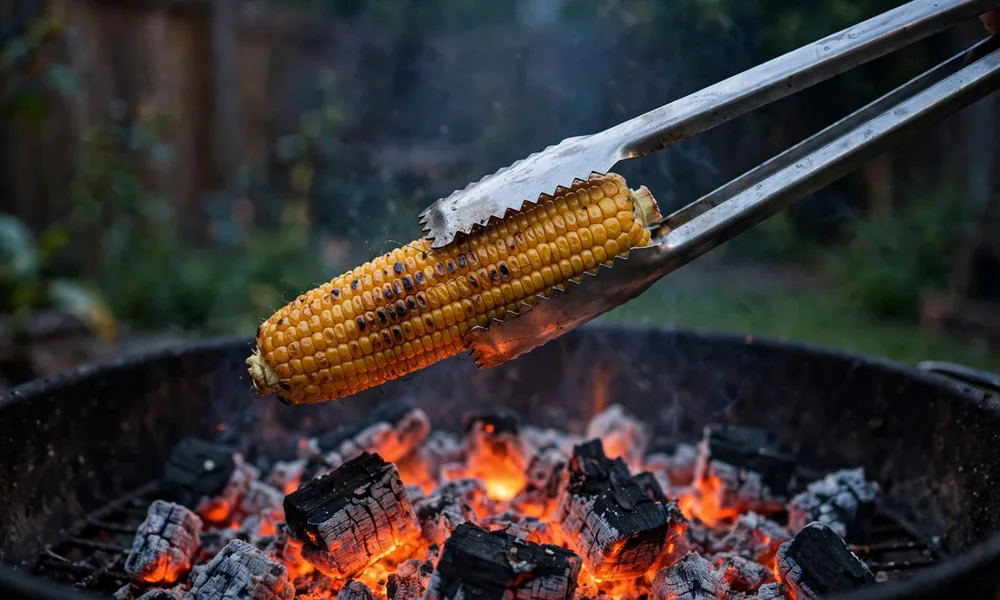
When turning meat on the grill, slide the tongs under the food and lift it, rather than grabbing it from the side and dragging it across the grate. When serving pasta, twist the tongs as you lift, which winds the strands into a neat nest that stays put on the plate.
One habit to avoid is using tongs to pierce meat, because piercing lets the juices run out and dries the meat. Tongs grip from the outside, which keeps the juices in and the meat tender. A good grill rewards that care with better food.
Tongs Buying Checklist
- Choose the length for the job: 9 inches for serving and small pans, 12 inches for the stove, 16 inches or more for the grill.
- Squeeze the tongs and check that the tips meet evenly, the spring opens smoothly, and the grip feels firm without tiring your hand.
- Pick stainless steel for everyday cooking and the grill, and add silicone tips if you use nonstick or ceramic pans.
- Look for scalloped tips, which grip slippery food far better than flat tips.
- Check for a locking mechanism so the tongs stay closed in the drawer and do not spring open.
- Buy two pairs if you grill: one for raw meat and one for cooked food, so you never cross-contaminate.
Frequently Asked Questions
What size tongs should I buy first?
Twelve inches is the best first pair for most kitchens. It is long enough to keep your hand clear of a hot pan, short enough to control precisely, and it handles everything from turning chicken to tossing pasta.
Are silicone-tipped tongs better than steel tongs?
They are better for nonstick and ceramic pans, because they cannot scratch the coating, and they are gentler on fish and eggs. For the grill and for heavy meat, bare steel grips better and handles higher heat.
Why do my tongs keep slipping?
Slipping usually means flat tips, a weak spring, or tips that do not meet evenly. Scalloped tips grip far better than flat ones, and a strong spring keeps the pressure even. If the tips are bent, replace the tongs.
Can I put tongs in the dishwasher?
Most stainless steel tongs are dishwasher safe, but hand washing is gentler on the spring and the lock, and it prevents water sitting in the hinge. Silicone-tipped tongs last longer if you wash them by hand.
How do I stop tongs springing open in the drawer?
Buy tongs with a locking mechanism, such as a pull ring or a sliding lock, and lock them closed before you put them away. If your current tongs have no lock, store them hanging from a hook.
Should I use separate tongs for raw and cooked meat?
Yes. Use one pair for raw meat on the grill and a clean pair for cooked food, because tongs that have touched raw meat can carry bacteria onto food that is ready to eat.
The Bottom Line
The best tongs are the ones that grip firmly, feel balanced, and match the job in front of you. A twelve-inch stainless steel pair with scalloped tips handles almost everything on the stove, a sixteen-inch pair keeps your hands safe at the grill, and a silicone-tipped pair protects your nonstick pans. Buy quality once, and keep one pair for raw meat and one for cooked food.


