
Sink Stoppers That Hold Water Without Leaking in 2026
Sink stoppers are the small plugs that decide whether a basin holds water or slowly drains away, and the difference between a good one and a bad one shows up within minutes. A good sink stopper seals tight, fits your drain on the first try, survives hot water without warping, and lifts out easily when you are done. A bad one leaks around the edges, pops out when the water gets deep, or jams in the drain. This guide compares the types that seal, shows how to measure your drain, and covers the habits that keep a stopper working for years.
Start with what a stopper is for, because it is often confused with its neighbours. A stopper seals the drain so the basin holds water, for washing dishes, soaking clothes, or filling a bathroom basin. A strainer does the opposite job: it lets water through while catching food and debris, and our guide to sink strainers that keep drains clear covers that side of the sink. If your basin will not hold water at all, the stopper is the first thing to check.
Key Takeaways
- Measure the drain opening before you buy: a stopper even a few millimetres too small will leak, and one too large will not sit flat.
- Rubber plugs seal best on old or uneven drains, while pop-up stoppers suit bathroom basins and silicone stoppers suit flat kitchen drains.
- Check the drain type first: pop-up stoppers need a matching drain assembly, but rubber and silicone plugs fit almost any standard drain.
- Hot water is the enemy of cheap stoppers: thin rubber warps and thin silicone softens, so look for heat-rated materials.
- Clean the stopper weekly and the drain monthly, because soap scum and hair are what turn a tight seal into a slow leak.
What a Sink Stopper Actually Does
A sink stopper has one job: close the drain completely so the basin holds water. It presses a soft sealing surface against the rim of the drain, blocking the hole entirely. The seal has to hold against the weight of the water above it, which pushes down harder as the basin fills. A stopper that seals when the basin is half full but leaks when it is full has failed at its only job, and the cause is usually a poor fit rather than a worn seal.
The Main Types of Sink Stopper Compared
Rubber plugs are the oldest and simplest type: a tapered rubber cone on a chain or a knob that wedges into the drain. They seal well on old, worn, or slightly uneven drains because the rubber compresses to fit the shape, and they cost very little. Their weakness is heat and age: cheap rubber hardens and cracks after a year or two of hot water. Buy thick, soft rubber, and replace the plug when the surface feels stiff.
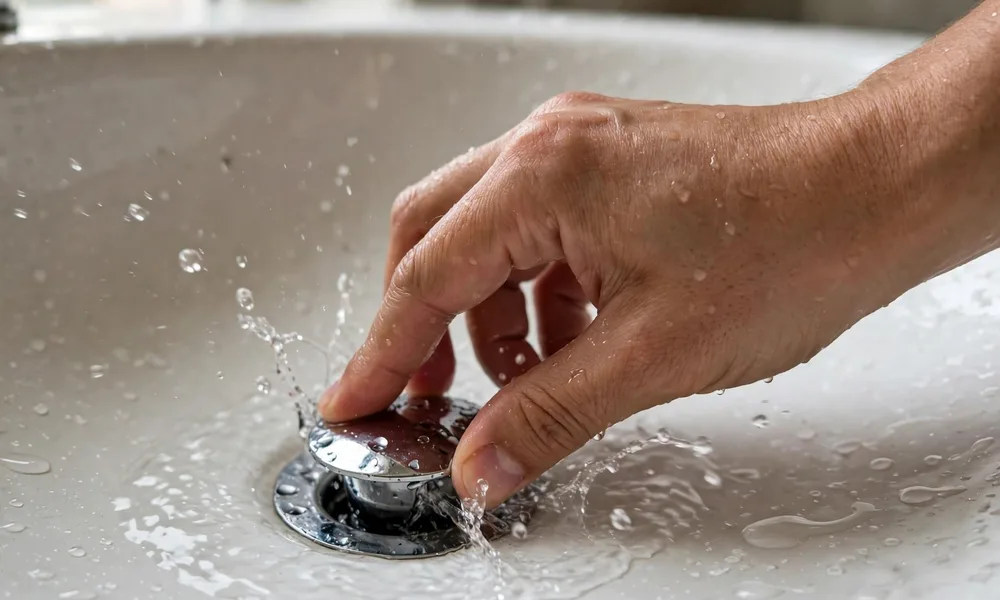
Pop-up stoppers are built into the drain itself, usually in bathroom basins. You press the top to close the drain and press again to open it, and a lever under the basin controls the movement. They look neat, there is nothing loose to lose, and they seal well when the mechanism is adjusted correctly. The catch is fit: a pop-up only works with a drain made for it, so replacing one means matching the diameter, the thread, and the linkage.
Silicone stoppers are flat discs with a small tab, made to lie over the drain rather than wedge into it. They suit flat-bottomed kitchen sinks and modern basins, seal well on smooth surfaces, and survive hot water better than rubber. They are also the easiest to clean, since there are no crevices for grime to hide in. Their weakness is the seal: they rely on suction and weight, so they can shift if the basin is bumped or the water is very deep.
Sink Stoppers at a Glance
| Type | Best for | Seal | Heat resistance | Weakness |
|---|---|---|---|---|
| Rubber plug | Old or uneven drains | Very good | Fair | Hardens and cracks with age |
| Pop-up stopper | Bathroom basins | Very good | Good | Needs a matching drain |
| Silicone stopper | Flat kitchen drains | Good | Very good | Can shift in deep water |
| Chain plug | Traditional sinks | Good | Fair | Chain tangles and rusts |
| Strainer stopper | Kitchen sinks | Fair | Good | Seals less tightly than a plug |
How to Measure Your Drain Before You Buy
Measuring takes two minutes and saves a return. Measure the inside diameter of the drain opening, across the widest point, with a tape measure or a ruler. Most kitchen drains are 40 to 50 millimetres across, and most bathroom basins are 32 to 40 millimetres, but older sinks vary widely. Write the number down and compare it with the stopper’s stated size range before you buy.
Check the shape as well as the size. Run a finger around the rim of the drain and feel for chips, rust, or a raised edge. A stopper cannot seal on a damaged rim, and no amount of pressing will fix it. If the rim is damaged, a thick rubber plug is your best chance, because it can compress around the damage. Our guide to the best kitchen sinks covers the drain sizes that come with new sinks, which helps if you are replacing the whole basin.
Kitchen Stoppers vs Bathroom Stoppers
Kitchen and bathroom stoppers live different lives, and the right type follows the room. Kitchen stoppers deal with hot water, grease, and food, and they are used several times a day. A silicone disc or a rubber plug suits the kitchen best, because both come out easily for cleaning and neither has a mechanism for grease to clog. Keep the area around the kitchen sink tidy too: our guide to sink caddies that keep washing-up tools tidy covers the holders that keep sponges and brushes off the worktop.
Bathroom stoppers deal with hair, soap, and toothpaste, and they are used once or twice a day. A pop-up stopper suits the bathroom best, because it is built in, there is nothing to lose, and it looks tidy. The trade-off is maintenance: hair wraps around the linkage and soap builds up on the seal, so a bathroom stopper needs cleaning more often than a kitchen one. Avoid chain plugs in bathrooms, because the chain catches hair.
Why Stoppers Leak, and How to Fix Them
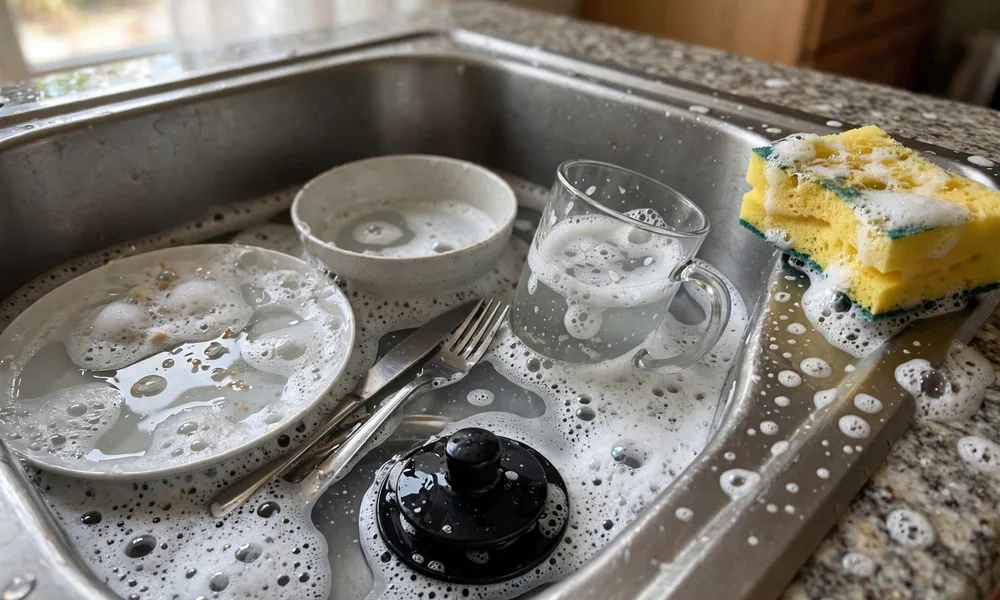
Most leaks come from four causes, and three of them are easy to fix. The first is the wrong size: a stopper that is too small leaves a gap, and a stopper that is too large sits on the rim instead of in the drain. Measure again and buy the right size. The second is dirt on the seal: soap scum, limescale, and food form a crust on the rubber or silicone that stops it sitting flat. Clean the stopper with hot water and a brush, and wipe the drain rim clean. The third is a hardened seal: rubber that has gone stiff with age and heat no longer compresses, so it leaks at the edges. Replace the stopper.
The fourth cause is the drain itself. If the flange is loose, the sealant under it has failed, or the drain is out of round, water will escape around the drain rather than through it, and no stopper will fix that. Test it by filling the basin with the stopper in and watching where the water goes: if the level drops but the stopper is dry on top, the leak is around the drain, not through it. That is a job for a plumber or a new drain flange, not a new stopper. Do not reach for sealant as a quick fix, because it makes the next repair harder and rarely holds under hot water.
Cleaning and Care That Keeps the Seal Tight
A stopper lasts longer when it is cleaned regularly, and the routine is simple. Rinse the stopper under hot water after each use in the kitchen, and give it a proper wash once a week with washing-up liquid and a brush. Pay attention to the sealing edge, where a thin ring of grime builds up unnoticed. For bathroom stoppers, pull the pop-up out once a month if your drain allows it, and clear the hair and soap from the linkage.
Your Sink Stopper Checklist
- Measure the inside diameter of the drain before you buy, and write the number down.
- Match the type to the room: silicone or rubber for the kitchen, pop-up for the bathroom.
- Check the drain rim for chips, rust, or a raised edge before you blame the stopper.
- Test the seal with a full basin, not a half-full one, because leaks show at depth.
- Clean the sealing edge weekly and the drain monthly to stop grime breaking the seal.
- Replace a rubber plug every one to two years, or as soon as it feels stiff.

Frequently Asked Questions
Why does my sink stopper leak?
The usual causes are the wrong size, dirt on the sealing edge, a hardened rubber seal, or a damaged drain rim. Measure the drain, clean the stopper and the rim, and replace the stopper if the rubber feels stiff. If the basin still loses water, the leak is probably around the drain flange, which needs a plumber.
What size sink stopper do I need?
Measure the inside diameter of the drain opening. Most kitchen drains are 40 to 50 millimetres across and most bathroom basins are 32 to 40 millimetres, but older sinks vary. A rubber plug should be a few millimetres wider than the opening so it wedges in, while a silicone disc should cover the opening by at least 10 millimetres all round.
Are pop-up stoppers better than rubber plugs?
Pop-up stoppers are neater and there is nothing to lose, which suits bathroom basins. Rubber plugs seal better on old or uneven drains and cost far less, and they fit almost any standard drain without a matching assembly. If your basin already has a pop-up drain, keep it. If it does not, a rubber plug is the simpler and cheaper choice.
Can I use a sink stopper in a bath?
Only if it fits. Bath drains are larger than basin drains, usually 40 to 50 millimetres, so a basin plug will be too small and will fall through or leak. Buy a plug made for baths, or a universal stopper with a wide size range. Check the fit with a full bath, because a stopper that holds a basin of water may still leak under the weight of a full bath.
How do I clean a sink stopper?
Rinse it under hot water after each use, and wash it weekly with washing-up liquid and a brush, paying attention to the sealing edge. For a pop-up stopper, pull it out once a month if your drain allows it, and clear hair and soap from the linkage. Soak a stained rubber plug in hot water with a little white vinegar, then rinse and dry it before use.
How long does a sink stopper last?
A rubber plug lasts one to two years with daily use, less with very hot water. A silicone stopper lasts longer, often three to five years, because silicone resists heat better. A pop-up stopper lasts as long as its drain assembly, but the linkage and the seal need cleaning and occasional adjustment. Replace any stopper as soon as the seal feels stiff or the basin starts losing water overnight.
The Bottom Line
The best sink stopper in 2026 is the one that fits your drain, seals tight under a full basin, and comes out easily with wet hands. Rubber plugs suit old or uneven drains, pop-up stoppers suit bathroom basins, and silicone discs suit flat kitchen drains. Measure the opening, check the rim, test the seal with a full basin, and clean the sealing edge weekly.


