
The best sink caddies in 2026 are the ones that keep everything you reach for at the sink in one place, let it drain dry between uses, and stay put when you grab a sponge with wet hands. A sink caddy sounds like a small thing, and it is, but the sink is the busiest spot in most kitchens. The sponge, the brush, the washing-up liquid and the cloth all live there, and without a caddy they spread across the worktop, slide into the basin, and sit in puddles that turn them slimy.
A good sink caddy solves that with a simple idea: one container, divided into compartments, that lives at the sink and drains into it. The sponge stands upright so air reaches it. The brush has its own slot. The soap bottle sits where you can pump it one-handed. This guide covers the types worth buying, how they differ from the neighbours that look similar, and how to choose one that fits your sink.
Key Takeaways
- A sink caddy holds several washing-up tools together at the sink; a sponge holder holds one sponge, and a cleaning caddy carries supplies around the house.
- Drainage is the whole job: the caddy must let water run back into the basin, or the sponge will sit in a puddle and start to smell.
- Measure your sink first: a caddy that is too wide will not sit flat, and one that is too tall will catch on the tap.
- Stainless steel wire caddies dry fastest and rinse cleanest, while silicone and plastic caddies grip better and suit worktops.
- Clean the caddy weekly and replace the sponge every two to four weeks, or the tidy caddy will still smell.
What a Sink Caddy Actually Is
A sink caddy is a small, divided container designed to hold the tools you use at the sink: a sponge, a dish brush, a bottle of washing-up liquid, and often a cloth. It lives at the sink itself, either inside the basin on suction cups, straddling the divider of a double sink, or on the worktop right beside the tap. The defining feature is drainage. The base is open, slatted or sloped, so water runs out of the caddy and back into the basin instead of pooling underneath the sponge.
That matters because a sponge left in a puddle is one of the dirtiest objects in a house. A damp sponge stays warm, dark and full of food residue, which is exactly what bacteria need. A sponge that drains and dries overnight lasts longer, smells fresher, and does a better job. The caddy is not just tidiness for its own sake. It is the thing that lets the sponge dry.
It helps to be clear about what a sink caddy is not, because several nearby products look similar. Our guide to cleaning caddies that carry everything in one trip covers the portable tote that carries spray bottles and cloths from room to room; a sink caddy never leaves the sink. A sponge holder, covered in our guide to the best sponge holders of 2026, holds a single sponge and nothing else. A sink caddy holds the whole washing-up kit together. And a sink mat protects the bottom of the basin; it does not hold anything at all.

The Main Types of Sink Caddy, Compared
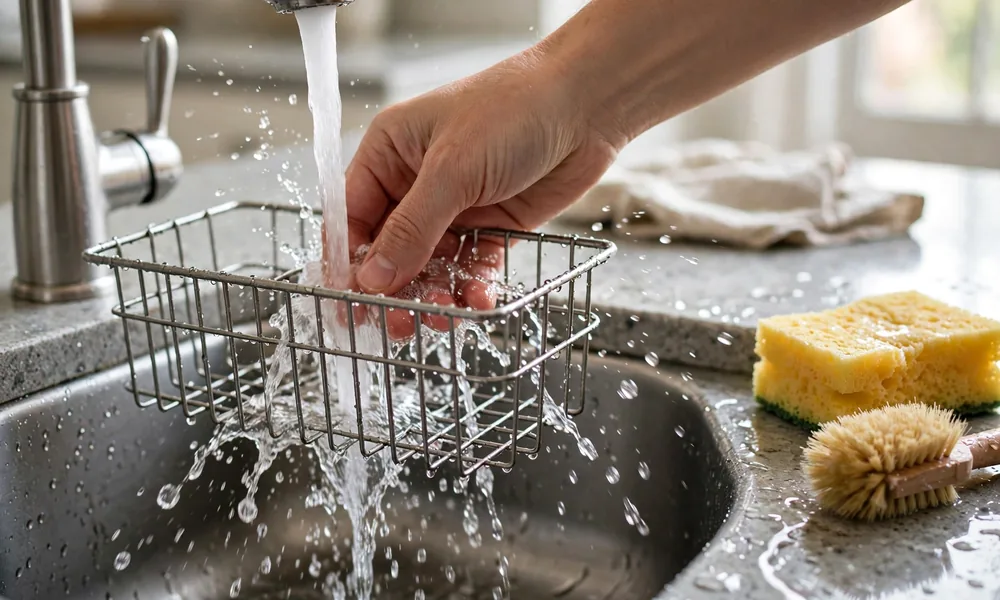
Most sink caddies are variations on four basic designs, and the right one depends on your sink shape and where you want the tools to live. A wire caddy that hangs inside the basin is the classic choice. It is usually stainless steel, with open wire walls that let air through from every side, and it hooks over the sink edge or sticks to the wall with suction cups. It dries fastest of all the types, rinses clean under the tap, and takes up no worktop space. The catch is the fixing: suction cups grip smooth steel well and textured surfaces badly, so check them weekly.
A plastic or silicone caddy that sits on the worktop is the most forgiving choice. It has moulded compartments, a non-slip base, and often a spout or sloped base that drains back into the sink. It suits sinks where suction will not hold, and it is easy to lift out and wash. The trade-off is drying: a solid plastic base dries slower than open wire, so look for one with drainage slots and a raised bottom.
A sink-divider caddy straddles the wall between the two bowls of a double sink. It needs no suction cups and no worktop space, and it sits exactly where your hands already are. It only works if you have a double sink with a divider of the right height, so measure before you buy. Finally, an over-sink caddy spans the basin on a frame, holding tools above the water while dishes soak below. It is handy in a small kitchen, but it can get in the way when you are washing large pans.
| Type | Best for | Drainage | Watch out for |
|---|---|---|---|
| Wire, suction-cup | Single steel sinks, fast drying | Excellent, open wire | Suction fails on textured sinks |
| Plastic or silicone, worktop | Any sink, renters, easy cleaning | Good if slotted | Solid bases hold water |
| Sink-divider | Double sinks, no fixings | Good, drips into basin | Only fits some dividers |
| Over-sink frame | Small kitchens, soaking pans | Good | Blocks large pans |
How to Judge a Sink Caddy
Judge a sink caddy the way you will actually use it: with wet hands, several times a day, in a hurry. Drainage comes first. Pick the caddy up and look at the base. If water can pool anywhere a sponge sits, the design has failed. Open wire, slats, or a sloped base that channels water toward the sink are what you want. A flat solid base with no holes is a puddle waiting to happen, whatever the packaging claims.
Fit Before You Buy
Measure the sink before you order. For a caddy that sits inside the basin, measure the width of the wall it will stick to and the depth from the rim to the bottom. For a worktop caddy, measure the space between the sink edge and the wall or splashback, and check the tap will not hit it when you swing the spout. A caddy one centimetre too wide is a caddy that lives in a cupboard, not at the sink.
Stability and Materials
Stability comes second. The caddy must stay put when you pull the brush out one-handed. Suction-cup caddies need clean, smooth steel and cups wiped free of limescale. Worktop caddies need a grippy base or some weight, or they will slide across a wet surface. On materials, stainless steel wire is the toughest and easiest to clean, but it can rust at welded joints if it is cheap chrome rather than true stainless. Silicone is soft, quiet and grippy, and it rinses clean, but it can stain. Hard plastic is cheap and light, but thin plastic cracks where a heavy soap bottle sits.
Capacity That Matches Your Kit
Capacity is the third test, and it is easy to get wrong in both directions. Count what actually lives at your sink: usually a sponge, a brush, a bottle of washing-up liquid, and a cloth. A caddy that holds only the sponge is a sponge holder with ambitions. A caddy with six compartments will collect clutter, and every extra pocket becomes a home for something that should live elsewhere. Three or four compartments, sized for real tools, is right for most kitchens.

Keeping a Sink Caddy Clean
A sink caddy only works if it is clean, and it lives in the wettest place in the house, so it needs a routine. Rinse it under the tap every day when you finish the washing up, and give it a proper wash once a week with hot water and washing-up liquid, or a run through the dishwasher if it is dishwasher-safe. Wire caddies dry in minutes; plastic ones need a shake and a wipe.
Watch for the signs that a caddy is past its best. Suction cups that no longer grip after cleaning, wire that has gone rusty at the joints, plastic that has gone cloudy or cracked, or a smell that survives a wash are all reasons to replace it. A caddy is cheap, and a smelly one defeats its own purpose. The sponge itself needs replacing every two to four weeks, sooner if it smells, tears, or sheds bits into the washing-up water. No caddy can save a sponge that should have been thrown away a month ago.
Common Mistakes to Avoid
The most common mistake is buying a caddy for the sink you wish you had, not the one you have. Suction cups on a textured composite sink, a divider caddy for a single-bowl sink, or a worktop caddy wider than the gap beside the tap will all end up unused. The second mistake is treating the caddy as extra storage. If it starts holding spare scourers, a bottle of hand wash, and a nail brush, it is no longer a washing-up caddy, it is a junk drawer that happens to be wet.
The third mistake is forgetting the drain. A caddy pushed against the splashback, with its spout pointing away from the sink, will pool water on the worktop. Set it up so water has a clear path back into the basin, and check after the first wash that it actually drains. The fourth is buying the cheapest wire caddy and finding it rusts within a month. Spend a little more on real stainless steel, and check the joints before you buy if you can.
Before You Buy: The Checklist
- Measure the sink wall, the divider, or the worktop gap before you order anything.
- Check the base: open wire, slats, or a slope that drains into the basin, never a flat solid base.
- Count your real kit: sponge, brush, soap bottle, cloth, and buy compartments to match.
- Test the fixing: suction cups only on smooth clean steel, grip or weight on worktops.
- Choose real stainless steel, silicone, or thick plastic, and avoid thin chrome wire.
- Confirm it is dishwasher-safe or easy to rinse clean, so weekly cleaning actually happens.
Frequently Asked Questions
What is the difference between a sink caddy and a sponge holder?
A sponge holder holds one sponge. A sink caddy holds the whole washing-up kit: sponge, brush, soap bottle and cloth, in separate compartments, all draining into the sink.
Do suction-cup sink caddies actually stay up?
Yes, on smooth, clean stainless steel, if you wipe the cups and the sink wall free of limescale first. They fail on textured sinks, stone, and grout, so choose a worktop or divider caddy for those.
Where should a sink caddy live?
Inside the basin, on the divider of a double sink, or on the worktop right beside the tap, whichever your sink allows. The one rule is that water must drain back into the basin.
How often should I clean my sink caddy?
Rinse it daily and wash it properly once a week with hot water and washing-up liquid. A caddy that smells after washing should be replaced.
Can a sink caddy hold a washing-up liquid bottle?
Most can, if the compartment is tall and wide enough. Measure your bottle before you buy, and look for a caddy with one deep section rather than four shallow ones.
Is a wire or plastic sink caddy better?
Wire dries fastest and rinses cleanest, so it suits steel sinks and heavy use. Plastic and silicone grip better and suit worktops and sinks where suction will not hold.
The Bottom Line
The best sink caddy is the one that fits your sink, drains into the basin, and holds exactly the tools you use every day. Measure first, choose drainage over looks, and keep it clean, and the busiest corner of the kitchen will stay tidy, dry, and free of smells.


