
What Is a Sink Mat? The Best Sink Mats for Protecting Your Basin in 2026
A sink mat is a protective layer that sits on the bottom of your kitchen sink, between the basin and everything you put into it. Every plate, pan and glass that lands in the sink hits the basin, and over months those small knocks add up to scratches, dull patches and chips. A good sink mat takes the impact instead: it cushions dishes, stops them sliding, and lets water drain through. This guide covers the types worth buying and how to choose one that fits your sink.
Key Takeaways
- A sink mat protects the basin from scratches, chips and dull patches caused by plates, pans and cutlery.
- Silicone grid mats are the best all-round choice: flexible, quiet, easy to clean, and they grip without scratching.
- Stainless steel grids protect best against heavy pots and hot pans, but cost more and need rubber feet so they do not mark the basin.
- Measure the inside of your basin first: too big curls and traps food, too small leaves the basin exposed.
- A sink mat is not a dish drying mat: the sink mat lives inside the basin, while a drying mat sits on the counter.
What a Sink Mat Actually Does
The job of a sink mat is simple, and it is easy to underestimate until you look at the bottom of an unprotected sink. Steel basins pick up scratches from cutlery and scuffs from pans. Ceramic sinks chip when a cast iron pan is set down hard. Composite granite dulls where grit grinds against it. A sink mat puts a cushion between the dishes and the basin, so the wear lands on the mat instead of the sink.
Protection is only the first job. A sink mat also stops dishes sliding: a wet plate on smooth steel skids at the slightest touch, and a sliding plate is a chipped plate. The raised grid holds plates and glasses still and muffles noise, so a pan lands with a dull thud instead of a ring. Third is drainage: a good sink mat is mostly holes, so water flows through, dishes sit above the water, and food scraps wash through.
The Main Types of Sink Mat
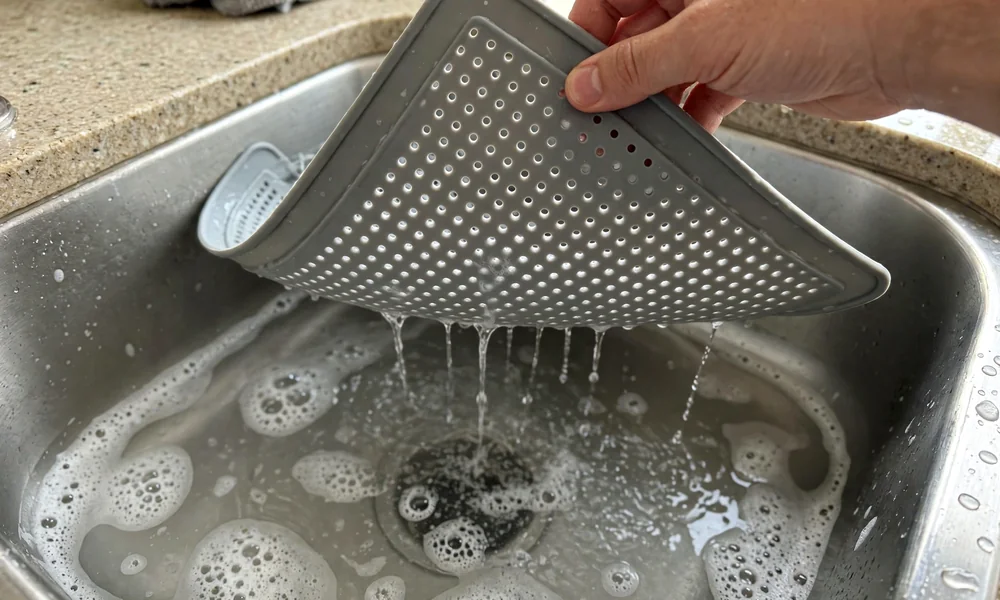
Silicone grid mats are the most popular type, and for most kitchens they are the right choice. They are a flexible sheet of food-grade silicone, moulded into a grid with open gaps. They bend to fit the basin, grip without suction cups, and go in the dishwasher. Buy a thick one, with grid bars at least a few millimetres deep.
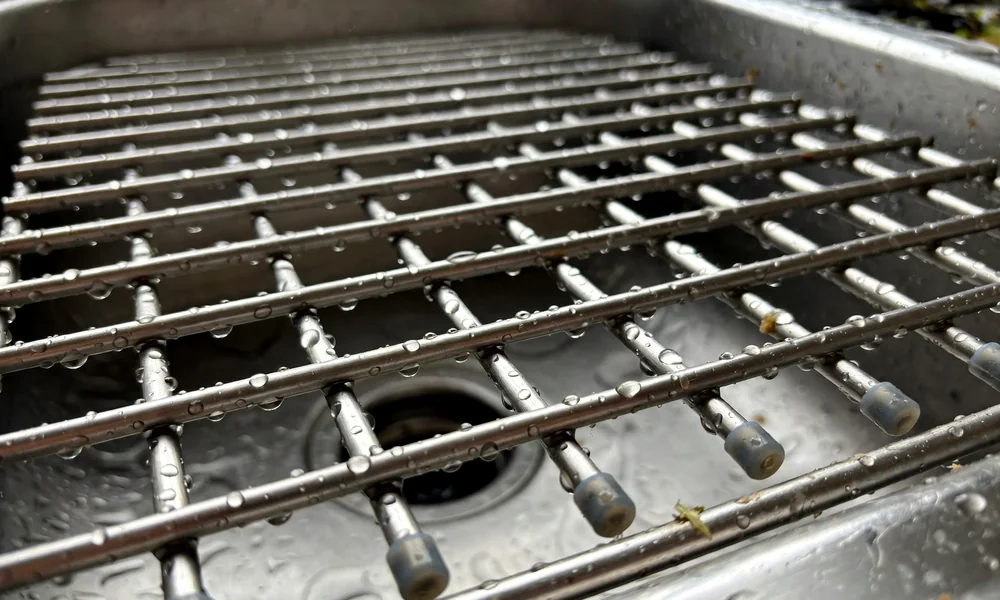
Stainless steel sink grids are the premium option: a rigid frame of steel bars, usually with rubber feet, sized to fit a particular basin. Steel does not flex under a full stockpot, and it lasts for years. It costs more, must match your basin size, and needs its rubber feet checked, since bare steel can scratch the basin.
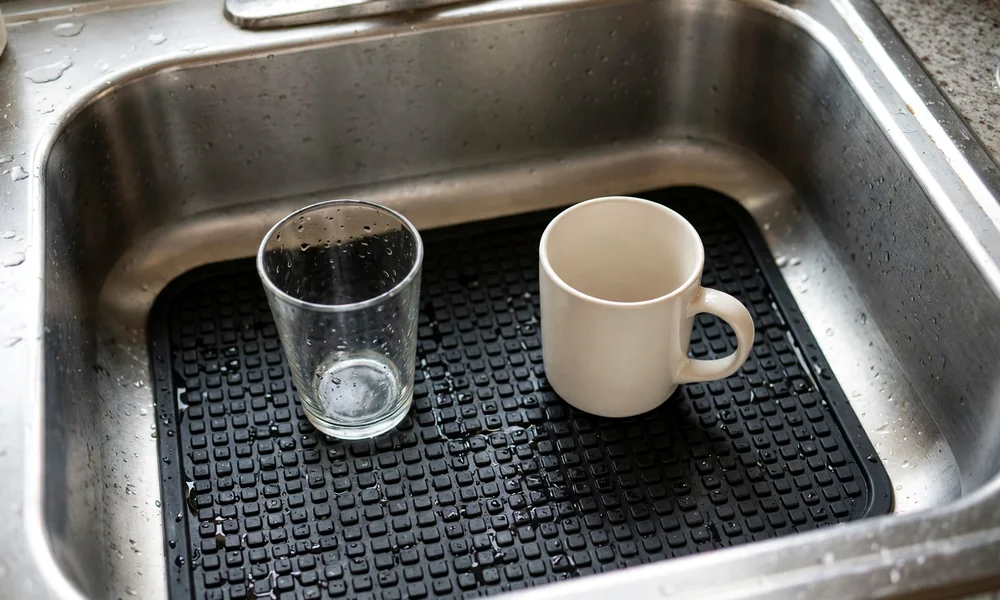
Rubber sink mats sit between the two. They are heavier and stiffer than silicone, so they stay put under a load and cushion well. They are usually moulded with a pebble or ribbed surface rather than an open grid, which makes them quieter but slower to drain. Cheap rubber can stain and smell when new; air it out for a day.
Plastic and vinyl mats are the cheapest type, and the one to be most careful with. Thin plastic mats are light, so they float and shift when the sink fills, and they can warp in very hot water. A heavy vinyl mat can work, but lift it out weekly to dry the basin underneath.
Custom-fit mats are made to order for a specific sink model, usually by the sink maker. They match the basin exactly, including the slope towards the drain, and often include a cut-out for the plug hole. They are the neatest option and the most expensive. For most existing sinks, a standard mat does the same job for less.
The Best Sink Mats of 2026
Five stood out on protection, drainage, grip, cleaning and value. The table below gives a quick overview.
| Sink Mat | Best For | Material | Drainage |
|---|---|---|---|
| Heavy silicone grid mat | Best overall | Silicone | Excellent |
| Stainless steel sink grid | Heavy pots | Steel with rubber feet | Excellent |
| Thick rubber pebble mat | Best budget | Rubber | Good |
| Custom-fit sink protector | New kitchens | Silicone or steel | Excellent |
| Trim-to-fit vinyl mat | Unusual basin shapes | Vinyl | Fair |
Best Overall: Heavy Silicone Grid Mat
The heavy silicone grid mat is the safest first buy. It fits almost any basin, because it bends around curves and can be trimmed with scissors. The open grid drains fast, the silicone grips the basin, and it goes in the dishwasher. Look for grid bars at least five millimetres thick: thinner mats slide and bunch.
Best for Heavy Pots: Stainless Steel Sink Grid
If your sink regularly holds a cast iron skillet or a full stockpot, a stainless steel grid is the only mat that will not flex under the weight. The rigid bars spread the load, the open frame drains instantly, and the steel shrugs off boiling water. Buy one made for your basin size, check the rubber feet are intact, and wipe the bars dry to stop limescale.
Best Budget: Thick Rubber Pebble Mat
A thick rubber pebble mat costs little and protects well. The pebble surface holds glasses upright, the weight keeps it in place, and it deadens noise better than any other type. It is the best choice for a second sink, a utility room, or a rented home. The compromise is drainage: the pebbles slow water down, so rinse food scraps off and lift it out weekly.
Best for New Kitchens: Custom-Fit Sink Protector
A custom-fit protector is cut to your exact basin, so it sits flat edge to edge with no curling corners and no gaps for a pan to slip through. It follows the slope towards the drain, so water never pools. It costs more and only fits one sink, but for a new ceramic or composite sink it is the most complete protection you can buy.
Best for Unusual Shapes: Trim-to-Fit Vinyl Mat
Corner sinks, round sinks and very old basins rarely match a standard rectangular mat. A trim-to-fit vinyl mat can be cut with scissors to any shape, which makes it the only practical option for an awkward basin. It protects less well than thick silicone or steel, but a cut-to-shape mat beats one that does not fit. Replace it yearly: thin vinyl hardens and curls.
Sink Mat vs Dish Drying Mat: The Difference That Matters
These two are constantly confused, and buying the wrong one is the commonest sink mat mistake. A sink mat lives inside the basin: it protects the sink floor from scratches and cushions the dishes while you wash them. A dish drying mat lives on the counter beside the sink: it absorbs water from clean dishes while they air-dry. A drying mat inside the sink would soak up dirty water and smell within days, while a sink mat on the counter would do nothing, because it is made to drain, not absorb. Our guide to the best dish drying mats covers the countertop mats that catch drips from washed dishes, if that is what you actually need.
The same confusion applies to the floor. A mat that cushions your feet while you stand at the sink is a kitchen floor mat, not a sink mat at all. It sits on the floor in front of the sink, never inside it. Our guide to the best kitchen mats covers the cushioned floor mats for comfortable cooking.
How to Measure and Fit a Sink Mat
Measure the inside of your basin, not the outside: you need the length and width of the flat part of the floor, ignoring the curved walls. Measure twice, once at each end, because many basins taper towards the drain. Then check the drain position: the mat must leave the plug hole clear, or have a cut-out for it. A mat that covers the plug hole will slow draining and trap food around the drain.
For a double sink, buy two mats, one per basin. One mat across both basins would bridge the divider, wobble, and leave both half protected. When it arrives, lay it in the dry basin, check it sits flat, then run the tap: water should flow through, not pool. If you are planning a bigger change than a mat, our guide to the best kitchen sinks covers sink sizes and layouts in detail.
Cleaning and Care
A sink mat needs cleaning as often as the sink does. Lift it out weekly, rinse it under hot water, and scrub the grid to clear trapped food. Silicone and steel mats can go in the dishwasher, which is the easiest deep clean. Rubber mats should be hand-washed, because a hot dishwasher cycle can warp thin rubber.
Clean the basin underneath every time you lift the mat out: food and grease collect under any mat, and a damp ring left for weeks will stain steel and smell in ceramic. Wipe the basin dry and let the mat dry fully. Replace the mat when it stops working: silicone goes soft and loses grip, steel grids need new rubber feet, and rubber mats should go when they stain or smell after washing.
Checklist: Choosing Your Sink Mat
- Measure the flat floor of your basin first, and buy a mat that fits without curling.
- Choose silicone for the best all-round protection, steel for heavy pots, and rubber for a tight budget.
- Check drainage first: water must flow through the mat to the plug hole, not pool on top of it.
- Make sure the mat leaves the plug hole clear, or has a cut-out for it.
- Check rubber feet on steel grids, and replace the mat if the feet wear away.
- Lift the mat out weekly, rinse it, and clean and dry the basin underneath.
Frequently Asked Questions
Do I really need a sink mat?
Yes, if you want your sink to stay looking new. Every plate and pan causes tiny scratches, and over a year they add up to a dull, marked basin. A sink mat is a cheap layer that takes the wear instead.
Will a sink mat block my drain?
No, if you buy the right one. A good sink mat is mostly holes, and water flows straight through it. Avoid solid mats with no drainage gaps.
Can I put a sink mat in the dishwasher?
Silicone and steel mats can go in the dishwasher. Rubber mats should be hand-washed: a hot cycle can warp thin rubber.
What is the difference between a sink mat and a sink grid?
They are the same idea in different materials: a sink grid is usually rigid stainless steel, while a sink mat is usually flexible silicone or rubber. The steel grid suits heavier cookware; the silicone mat fits more basin shapes.
Will a sink mat fit a ceramic or fireclay sink?
Yes, and ceramic sinks benefit most, because a dropped pan can chip them. Choose a silicone mat, which never marks ceramic, and measure carefully: fireclay basins often have steeper sides than steel ones.
How often should I clean under my sink mat?
At least once a week: lift it out, rinse it, scrub the basin underneath, and dry both. A mat that is never lifted traps food and moisture and starts to smell.
The Bottom Line
The best sink mat fits your basin, drains freely, and stays put: a heavy silicone grid mat for most kitchens, a steel grid if you wash heavy pots, or a thick rubber mat on a budget. Measure the basin floor, keep the plug hole clear, and lift the mat out weekly. Do that, and your sink will still look new years after the mat has paid for itself.


