
Dishwasher Pods That Clean Properly Without the Cloudy Glasses in 2026
Dishwasher pods are small pre-measured packs of detergent that do the whole wash in one drop: cleaner, rinse aid and salt action sealed in a film that dissolves in hot water. No measuring, no spills. But not every pod cleans the same: some leave glasses cloudy, some fail on dried-on food, and some will not dissolve in a short or cool cycle. This guide explains how they work, the types worth buying, and how to choose one that leaves your dishes properly clean in 2026.
Key Takeaways
- Dishwasher pods are machine detergent, not hand-washing soap: far stronger, and never for the sink or your hands.
- All-in-one pods suit most households: detergent, rinse aid and salt action in one pack, nothing extra to buy or measure.
- Hard water is the biggest cause of cloudy glasses: choose a pod with built-in salt action, or add dishwasher salt separately.
- Pods need a hot, full-length cycle: short and eco cycles can leave the film undissolved and dishes half cleaned.
- Store pods dry and out of reach of children: a damp pod sticks to the next one, and the film dissolves on wet hands.
How a Dishwasher Pod Works
A dishwasher pod is a measured dose of detergent wrapped in a water-soluble film. When the machine fills and heats up, the film dissolves and releases the detergent in stages. Enzymes break down starch and protein, builders soften the water, bleach-based agents lift stains, and rinse aid helps water sheet off so dishes dry spot-free. The pod does in one pack what used to take three products.
The film is the clever part and the weak point: it needs hot water and time. In a long, hot cycle it disappears completely. In a short or cool cycle it can survive the wash, leave sticky residue, or be found whole in the machine. If your pods are not dissolving, the cycle is usually the problem. Never put a pod in the cutlery basket or loose in the machine: it belongs in the dispenser, which opens at the right moment.
The Main Types of Dishwasher Pod
All-in-one pods are the standard choice, and for most households the right one. They combine detergent, rinse aid and salt action in one pack: one product, one pod per load. They cost more per wash than powder, but there is no measuring, no spills, and no separate rinse aid to remember.
Eco pods use plant-based surfactants and no phosphates, and they come in compostable or recyclable packaging. They clean well on everyday loads, but can struggle with greasy pans and baked-on food, and usually need a hotter cycle to match a conventional pod. They are the best choice to cut plastic and chemicals, provided you scrape plates well and run a hot wash.
Hard-water pods add extra salt action and limescale protection for hard-water homes. If your glasses come out cloudy and your kettle furs up, your water is hard, and a standard pod will not be enough. A hard-water pod, or a standard pod plus dishwasher salt, stops the white film hard water leaves behind. Check your hardness first: a test strip costs very little and saves months of cloudy glasses.
Fragrance-free pods suit sensitive skin and households with babies. They use no added scent and fewer dyes, which means less residue on baby bottles and plastic containers. They clean as well as scented pods on everyday loads, although they may need help on strong food smells such as garlic and fish. If anyone in the house has sensitive skin or allergies, fragrance-free is the safest choice.
Tablets are the older, pressed-powder version of the pod: cheaper per load and just as effective, but they can crumble in the packet and dissolve more slowly than a gel pod. They suit households that run long, hot cycles and want the lowest cost per wash. If you use short cycles, a gel pod is better, because it dissolves faster.
The Best Dishwasher Pods of 2026
Five stood out on cleaning power, dissolving, hard-water performance, value and safety. The table below gives a quick overview.
| Dishwasher Pod | Best For | Format | Hard Water |
|---|---|---|---|
| All-in-one gel pod | Best overall | Gel pod | Good |
| Eco plant-based pod | Low-waste homes | Gel pod | Fair |
| Hard-water pod | Hard water areas | Gel pod | Excellent |
| Fragrance-free pod | Sensitive skin | Gel pod | Good |
| Pressed tablet | Best value | Tablet | Fair |
Best Overall: All-in-One Gel Pod
The all-in-one gel pod is the safest first buy. It dissolves quickly, even in a normal cycle, and covers detergent, rinse aid and salt action. Glasses come out clear, plates come out clean, and there is nothing extra to measure. It costs more per wash than powder, but for a daily dishwasher the convenience is worth it. Look for a two-chamber design: one chamber for cleaning, one for rinse aid.
Best for Low-Waste Homes: Eco Plant-Based Pod
The eco pod is the best choice if you want to cut plastic and phosphates. It uses plant-based surfactants and compostable packaging, and cleans well on everyday loads. It needs a hot cycle to match a conventional pod, and will not shift baked-on food on its own, so scrape plates well first. Run a hot wash and load the machine properly, and the difference from a standard pod is small.
Best for Hard Water: Hard-Water Pod
If your glasses come out cloudy no matter what you try, a hard-water pod is the answer. It adds salt action and limescale protection a standard pod lacks, and stops the white film hard water leaves on glass. It costs a little more per wash, but less than replacing cloudy glasses. Pair it with dishwasher salt for the hardest water.
Best for Sensitive Skin: Fragrance-Free Pod
A fragrance-free pod leaves no scent on baby bottles, plastic containers or wine glasses, and is the safest choice for sensitive skin. It cleans as well as a scented pod on everyday loads and rinses cleaner, which matters for anything a baby drinks from. The only trade-off: it will not mask strong food smells, so rinse garlic and fish dishes before loading.
Best Value: Pressed Tablet
A pressed tablet is the cheapest way to run a dishwasher well: less per load than any pod, and just as effective in a long, hot cycle. It can crumble in the packet and dissolves slowly, so it suits full-length hot washes. If you mostly use short cycles, spend the extra on a gel pod instead.

Pods vs Powder vs Gel: Which Cleans Best
Pods, powder and gel all clean well; the differences are about convenience and control, not power. Pods are the most convenient: one pack per load, no measuring. Powder is the cheapest per wash and the only format that lets you adjust the dose. Gel dissolves fastest and suits short cycles, but costs most per wash and is easiest to over-pour.
For most households, pods win on convenience, powder on cost. If you run the dishwasher daily and want the simplest routine, buy pods. If you want the lowest cost and do not mind measuring, buy powder. If your machine runs short cycles, choose gel pods, because they dissolve when powder and tablets may not. The machine matters too: our guide to the best and worst dishwashers explains which machines get the most out of any detergent.
Hard Water and Cloudy Glasses
Cloudy glasses are the commonest dishwasher complaint, and hard water is usually the cause: it leaves calcium deposits on glass that no detergent can fully prevent alone. The fix is a pod with built-in salt action, plus dishwasher salt in the machine, plus rinse aid if your machine has a separate dispenser.
Test your water before buying: a hardness strip costs little and tells you whether you need a hard-water pod or a standard one. If your water is soft, a hard-water pod is wasted money; if it is hard, a standard pod will leave glasses cloudy no matter how good it is. Also check the machine: a clogged filter or blocked spray arm causes the same cloudy result, and no pod will fix that.
How to Use Dishwasher Pods Properly
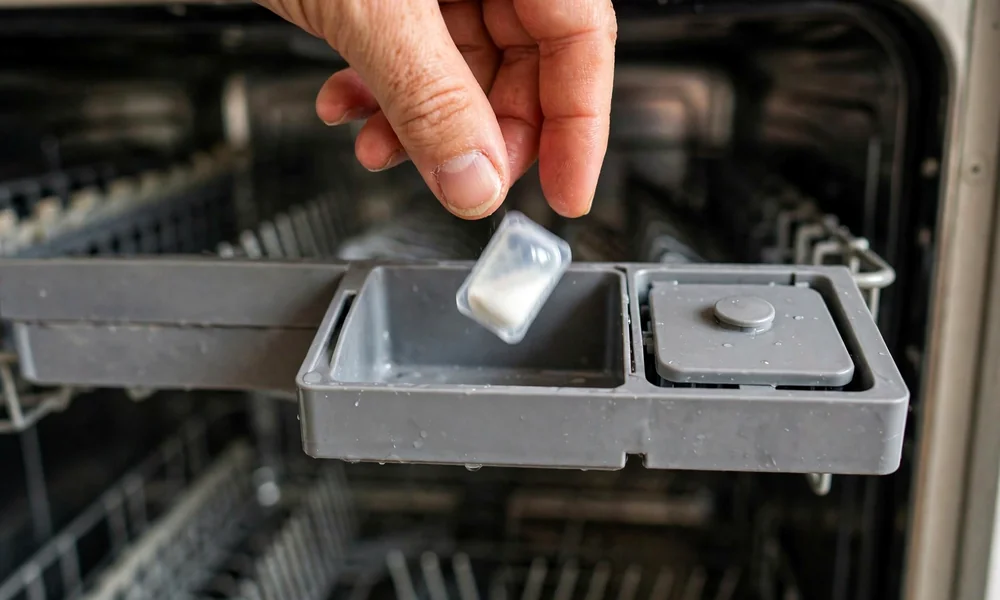
Put one pod in the dispenser, not in the cutlery basket or loose in the machine. The dispenser door opens at the right moment, when the water is hot enough to dissolve the film. A pod dropped in the bottom dissolves too early, in cold water, and much of it washes away before the main wash.
Run a full-length hot cycle when you can: short and eco cycles often do not get hot or long enough to dissolve a pod fully. If you must use a short cycle, choose a gel pod, which dissolves fastest. Never use two pods for a very dirty load: the extra detergent does not clean better, it leaves residue. Scrape plates first, load so the spray arms turn freely, and keep the filter clean. A dishwasher pod is machine detergent, not hand-washing soap, and the two must never be swapped: our guide to the best dish soaps covers the liquids made for washing by hand. The same format idea applies in the laundry room, but the products are not interchangeable: our guide to the best laundry detergent pods covers pods made for clothes, which must never go in a dishwasher.

Checklist: Choosing Your Dishwasher Pods
- Pick all-in-one pods for the simplest routine, or powder for the lowest cost per wash.
- Test your water hardness first: hard water needs a hard-water pod or added salt.
- Choose gel pods for short cycles: they dissolve fastest.
- Use one pod per load, in the dispenser, and run a full-length hot cycle when you can.
- Store pods dry with the packet sealed, out of reach of children.
- Clean the machine filter regularly: a clogged filter causes cloudy glasses whatever pod you use.
Frequently Asked Questions
Can I use dishwasher pods for hand-washing?
No, never. Dishwasher pods contain strong machine detergents that dry out and irritate skin, and they are not made to be handled wet. Use a liquid made for hand-washing, and keep the two products apart so nobody mixes them up.
Why are my glasses cloudy after using pods?
Usually hard water, a clogged filter, or a cycle too short or cool. Test your water hardness, clean the filter, and run a full-length hot cycle. If it remains, switch to a hard-water pod and add dishwasher salt.
Do dishwasher pods dissolve in cold water?
Not reliably: the film needs hot water and time to dissolve. In a cold or very short cycle the pod can survive the wash and leave residue. Use a hot, full-length cycle, or a gel pod, which dissolves fastest.
Are eco dishwasher pods as good as standard pods?
On everyday loads, yes, if you run a hot cycle and scrape plates well first. On greasy pans and baked-on food, a conventional pod usually cleans better. Eco pods are right if cutting plastic and phosphates matters to you.
How should I store dishwasher pods?
In a cool, dry place, in the sealed packet, out of reach of children. Moisture makes the film sticky, so pods can fuse in a damp cupboard. Never handle pods with wet hands: the film starts dissolving on contact.
Can I use two pods for a very dirty load?
No. Extra detergent does not clean better; it leaves residue on the dishes and in the machine. One pod per load is right. For a very dirty load, scrape the plates, use a hot cycle, and run the machine full.
The Bottom Line
The best dishwasher pod matches your water, machine and routine: an all-in-one gel pod for most households, a hard-water pod if your glasses go cloudy, an eco pod to cut plastic, or a pressed tablet for the lowest cost. Use one pod in the dispenser, run a hot full-length cycle, and keep the filter clean: your dishes will come out clean and your glasses will stay clear.


