
Best Kitchen Mats for Comfortable Cooking in 2026
The best kitchen mats in 2026 cushion your feet through long evenings at the sink, catch the spills every kitchen produces, and stay put on hard floors without curling, sliding, or tripping anyone. A kitchen mat is not a rug and it is not a bath mat: it is a working floor mat, built for standing comfort, waterproofing, and cleaning. This guide explains what to look for and picks the best kitchen mats of 2026.
Key Takeaways
- A good kitchen mat cushions your feet while you stand at the sink or cooker, and catches spills before they reach the floor.
- Foam and gel mats give the most cushioning, while woven and vinyl mats are the easiest to clean.
- A rubber or latex backing is essential: a kitchen mat that slides on a hard floor is a trip hazard.
- Measure the space before you buy, because a mat that is too big will trip people and a mat that is too small will not catch the spills.
- Choose a mat with a waterproof top that wipes clean, because a mat that cannot be cleaned will soon look tired and smell stale.
What Makes a Good Kitchen Mat
A good kitchen mat does three jobs at once: it cushions your feet, it catches spills, and it stays where you put it. Standing on a hard floor for an hour puts pressure on your heels, knees, and lower back, and a mat with a thick foam or gel core spreads that pressure out. A waterproof top stops spills soaking through, and a mat that wipes clean in seconds saves you mopping. And grip is the first test: the best mats have a rubber or latex backing that holds the floor, because a mat that slides is worse than no mat at all. Step on it, twist your foot, and see if it moves.
| Feature | What to look for | Why it matters |
|---|---|---|
| Cushioning | Thick foam or gel core | Eases feet, knees, and back |
| Grip | Rubber or latex backing | Stops sliding and tripping |
| Waterproof top | Sealed vinyl top | Spills wipe off, floor stays dry |
| Cleaning | Wipe-clean or machine washable | Stays fresh |
| Thickness | Cushions without catching feet | Comfort, no tripping |
| Size | Fits the sink or cooker run | Catches spills where they land |
Kitchen mats are one member of a bigger family: our guide to the best floor mats of 2026 compares them with doormats, bathroom mats, and bedroom mats.
The Main Types of Kitchen Mat
Foam mats are the comfortable option: a thick layer of cushioned foam, usually with a waterproof vinyl top, and the best choice for anyone who stands at the sink or the cooker for a long time. They are light, easy to move, and wipe clean in seconds. The trade-off is wear: a cheap foam mat flattens within months.
Gel mats are the premium version of the same idea. A gel core moulds gently under your feet and springs back when you step off, which many people find more comfortable than foam. They cost more and are heavier, but they last longer. Woven mats are the practical option: braided fibres that hide dirt well and feel warm underfoot. They absorb spills rather than repelling them, so they need washing more often. Vinyl runner mats are the wipe-clean option: long waterproof runners that cover the whole sink run and hose down outside. They give the least cushioning, but they are the easiest to keep clean.

Cushion and Comfort: How Thick Is Enough
Cushioning is what separates a kitchen mat from other floor mats, and thickness is only half of it. A mat that is thick but hard feels like standing on a board, while a thinner mat made from soft foam or gel can feel far more comfortable. The test is standing on it: press your heel in and see how far it gives.
For most kitchens, a mat around two centimetres thick hits the sweet spot. A mat thicker than that can become a trip hazard at the edges, especially for older adults or anyone shuffling in slippers. Look for a mat with a bevelled edge, which slopes gently down to the floor instead of ending in a hard step. And remember that cushioning fades: a cheap foam mat may flatten within a year, so check the density, not just the thickness.
Grip and Safety
Grip is the job buyers underestimate, and in a kitchen it matters most. Kitchen floors are hard, smooth, and often wet, and a mat that slides on them is dangerous. The best kitchen mats have a full rubber or latex backing, not just a few dots or strips. Test it on your actual floor: step on it firmly from different angles. A good mat should not shift, curl at the corners, or slide when you twist.
Check the backing for your floor type. A rubber backing grips tile, wood, and vinyl well, but it can mark some floors, so lift the mat and clean underneath it weekly. A lightweight mat will slide on a polished floor whatever its backing. If a mat you love has no grip, a separate non-slip underlay cut to size fixes it for a few dollars. Replace any mat whose backing has cracked or gone smooth, because a mat with no grip is worse than no mat at all.
Spills, Waterproofing and Cleaning
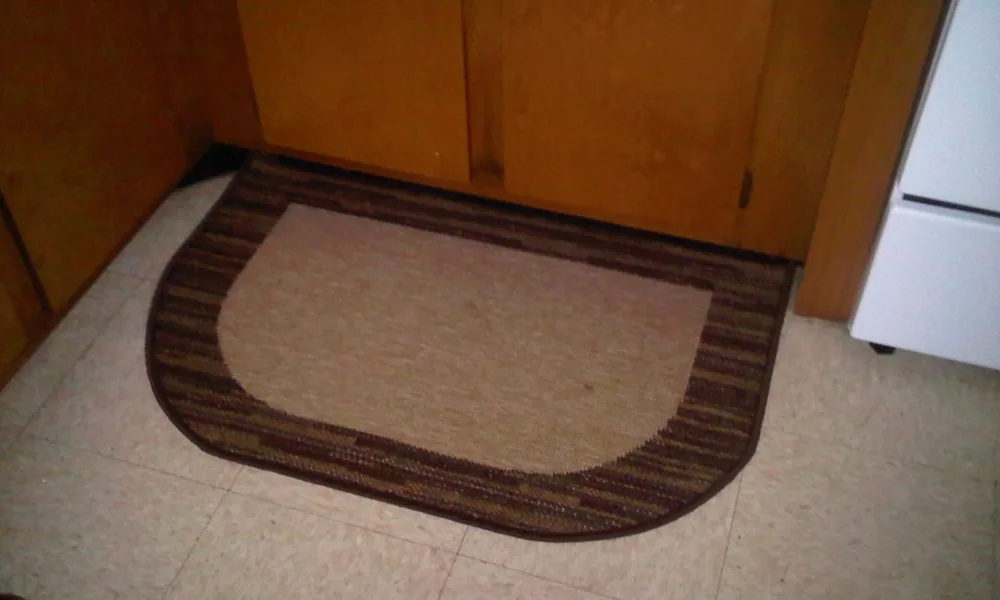
A kitchen mat lives where spills happen, so waterproofing is not a luxury. A mat with a sealed vinyl top stops water, oil, and sauces soaking through to the floor, and it wipes clean in seconds. A woven or fabric mat absorbs spills instead, which feels softer underfoot but means the mat needs washing after a bad spill, and a mat that stays damp will smell. If you cook with oil or have children, a waterproof top is the most practical feature you can buy.
A wipe-clean mat needs only a cloth and a little washing-up liquid. A machine-washable fabric mat is simple too, provided it fits in your machine. Wash fabric mats every two to four weeks, and weekly if you cook daily. Skip fabric softener on woven mats, because it coats the fibres and reduces grip, and never put a foam or gel mat in a hot wash or a tumble dryer, because heat breaks the core down.
Kitchen mats and bath mats are often confused, and the difference matters: a bath mat is built to absorb water from wet feet beside the tub, while a kitchen mat is built for standing comfort and spill-proofing at the sink. Our guide to the best bath mats of 2026 covers absorbent step-out mats in depth.
The Best Kitchen Mats of 2026
After comparing kitchen mats on cushioning, grip, waterproofing, cleaning, and value, five stood out, and the table below gives a quick overview.
| Mat | Best for | Core | Size |
|---|---|---|---|
| CloudStep Gel Kitchen Mat | Best overall | Gel | 50 by 90 cm |
| SoftFoam Cushioned Kitchen Mat | Best cushioning | Foam | 50 by 120 cm |
| WeaveWell Braided Kitchen Rug | Best woven | Braided cotton | 60 by 90 cm |
| QuickWipe Vinyl Runner Mat | Best wipe-clean | Vinyl | 50 by 150 cm |
| Everyday Value Kitchen Mat | Best budget | Foam | 45 by 75 cm |
Best Overall: CloudStep Gel Kitchen Mat. The mat for people who cook every night. The gel core moulds under your feet and springs back, the waterproof top wipes clean in seconds, and the full rubber backing stays put on tile and wood. For a busy family kitchen, this is the safest first buy.
Best Cushioning: SoftFoam Cushioned Kitchen Mat. The thickest, softest mat we tested, with a foam core that stays springy after months of use. It is the mat to buy if your feet, knees, or back ache after cooking.
Best Woven: WeaveWell Braided Kitchen Rug. The mat for kitchens where looks matter. The braided cotton hides dirt well and feels warm underfoot. It absorbs spills rather than repelling them, so wash it every two weeks.
Best Wipe-Clean: QuickWipe Vinyl Runner Mat. A long waterproof runner that covers the whole sink run and hoses down outside in a minute. It gives the least cushioning of the five, but it is the easiest mat to keep clean.
Best Budget: Everyday Value Kitchen Mat. A foam mat at a price that lets you buy two: one for the sink, one for the cooker. It cushions well for its price and wipes clean, though the foam will flatten sooner than the premium options.
Sizing and Placement
Measure before you buy. A mat should cover the place where you stand: in front of the sink, the cooker, or the dishwasher. A mat that is too big will bunch up and trip people, while a mat that is too small will not catch the spills. Measure the run and leave a few centimetres clear at each end.
Put the mat where you stand still, not where you walk through: the sink and the cooker are the two spots that earn a mat. Keep the mat clear of the fridge door and the oven door, and never put a mat over a floor vent or a heating grille. If your kitchen has two work zones, two smaller mats beat one large one. When the sink area needs its own care, our guide to the best dish drying mats covers the countertop mats that catch drips from washed dishes.
Kitchen Mats Buying Checklist
- Measure the sink or cooker run first, and buy a mat that fits it.
- Check the backing: a full rubber backing grips hard floors, while dots or strips alone will slide.
- Choose a waterproof top if you fry or have children, because spills wipe off instead of soaking in.
- Press the core with your heel: it should give gently and spring back.
- Look for a bevelled edge, which slopes down to the floor instead of ending in a hard step.
- Check the cleaning: wipe-clean or machine washable, never dry cleaning.
Frequently Asked Questions
What is the best kitchen mat for standing all day?
A gel or thick foam mat with a waterproof top and a rubber backing. Gel moulds under your feet and springs back, foam is lighter and cheaper, and both beat a flat woven mat.
How thick should a kitchen mat be?
Around two centimetres is the sweet spot: thick enough to cushion, thin enough that it does not catch feet or stop doors. Look for a bevelled edge, and check the density.
Do kitchen mats slide on tile floors?
A mat with a full rubber backing should not slide on tile, but a lightweight mat or one with only dots of grip will. Add a non-slip underlay if it moves.
Can kitchen mats go in the washing machine?
Woven and fabric mats usually can, on a cool wash, but foam and gel mats should never go in a hot wash or a tumble dryer, because heat breaks the core down.
How do I clean a kitchen mat?
Wipe a vinyl or foam mat with a damp cloth and a little washing-up liquid, and hose a runner down outside when it needs a deeper clean. Wash fabric mats every two to four weeks.
What is the difference between a kitchen mat and a bath mat?
A kitchen mat is built for standing comfort and spill-proofing at the sink or cooker, with a cushioned core and a waterproof top. A bath mat is built to absorb water from wet feet beside the tub.
The Bottom Line
The best kitchen mat cushions your feet, catches your spills, and stays where you put it, and no single type wins on all three. A gel mat is the best all-rounder for a busy kitchen, a foam mat is the best value for comfort, a woven mat is the best looking, and a vinyl runner is the easiest to keep clean. Our verdict: measure your sink run, buy the gel mat if you cook every night, and keep a wipe-clean runner for the messiest jobs.


