
Top Buffets That Turn Dinner Into a Proper Serving Station in 2026
The best buffets turn an ordinary dinner into an occasion. A buffet is the low, long piece of dining-room furniture where the food is laid out, and where guests help themselves, plate in hand, moving from dish to dish. A good one keeps hot food hot, gives every dish its own space, and lets the host enjoy the meal instead of running to the kitchen. This guide explains what a buffet is, how the main types work, and how to choose one that serves your dining room well in 2026.
Key Takeaways
- A buffet is a serving station, not a storage cabinet: its job is laying out food.
- Buy a buffet 120 to 180 centimetres long, roughly the length of your dining table, and about 85 centimetres high so guests serve comfortably.
- Depth matters more than length: 40 to 50 centimetres fits a chafing dish and a row of plates; anything shallower wastes the footprint.
- Solid wood or good veneer lasts decades; thin foil-wrapped board sags under a full chafing dish.
- Set the buffet up in serving order, hot dishes first, then cold dishes, then plates and cutlery last.
What a Buffet Actually Is
A buffet is a low, long serving piece that stands against the wall of a dining room, usually 75 to 90 centimetres tall, 40 to 50 deep, and 120 to 200 long. It has a flat top for laying out food, and often a shallow body with a few drawers underneath. Its job is a clear, reachable surface for food, at a height where a standing guest can serve comfortably.
The confusion with sideboards is understandable, because the two pieces are cousins. A sideboard is taller and deeper, with proper cupboards and drawers, built for storing things, and our guide to sideboards explains why it beats a buffet for storage. A buffet is lower and longer, with a shallow body, built for serving food rather than storing it. The two pieces work best together: the sideboard stores, the buffet serves, and neither does the other’s job well.
The dining table is the other neighbour. A dining table is where people sit and eat, and our guide to dining tables covers the sizes, shapes and materials that work in real homes. A buffet stands to one side, against the wall, and holds the food before it reaches the table. If the food is laid out on the dining table itself, there is no room left for plates and elbows. A buffet frees the table for eating.
A credenza is a third cousin worth knowing about. It is lower still, around 75 centimetres tall, longer and slimmer, made for offices and living rooms as much as dining rooms. Its top is usually a display surface rather than a serving surface, so a buffet sits ahead of it for food service.
The Main Types of Buffets
The Low Serving Buffet
The low serving buffet is the classic design: a long, low cabinet with a flat top, a shallow body, and a drawer or two for cutlery and napkins. It suits family dinners and small gatherings, where the food is a roast, a few side dishes and a salad. The top holds two or three serving dishes comfortably. Choose one with a heat-resistant top, because hot dishes sit directly on it.
The Buffet With a Raised Back
A buffet with a raised back, sometimes called a hutch buffet, adds a low shelf or a plate rack along the back edge. It suits hosts who serve a lot of dishes, because the raised shelf holds plates, glasses or a second row of smaller dishes above the main surface. The trade-off is the wall: the piece needs to stand flat against it, and the raised back blocks a window if the room is tight.
The Chafing Buffet
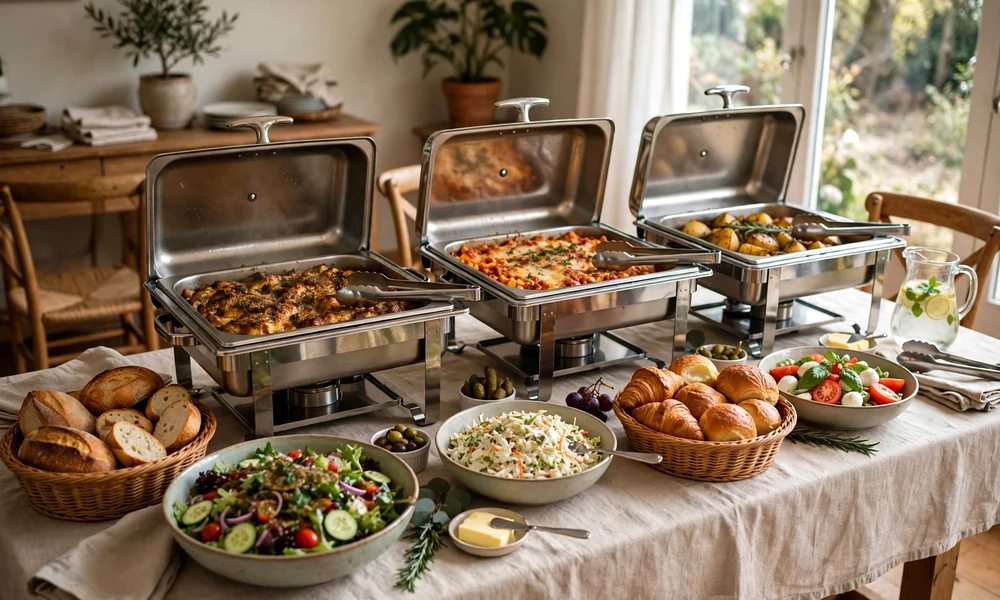
A chafing buffet is built around heat. It has a deeper top, room for one or two chafing dishes, and often a heat-proof surface that can take a fuel burner without marking. It suits large gatherings and holiday meals, where the food must stay hot for an hour or more while guests serve themselves in waves. Check the depth before you buy: a chafing dish needs about 40 centimetres, and a shallower buffet will leave it hanging over the edge.
The Buffet Sideboard Hybrid
The hybrid tries to do both jobs: a buffet top for serving, with deeper cupboards underneath for storage. It suits smaller dining rooms, where there is space for one piece of furniture but not two. The trade-off is compromise: the storage is shallower than a true sideboard, and the serving surface is shorter than a true buffet.
How to Choose a Buffet
Length comes first. A buffet should run about two-thirds of the wall it sits on, and roughly the same length as the dining table, so the room looks balanced. A buffet of 120 centimetres suits a table for four, 150 centimetres suits a table for six, and 180 centimetres suits a table for eight. A buffet that is much shorter than the table looks lost, and one much longer blocks the walkway.
Depth matters more than length. Forty to fifty centimetres fits dinner plates, serving dishes and a chafing dish, and it leaves room for a row of glasses behind the food. Anything shallower wastes the footprint: the dishes sit half on and half off the edge. Measure the deepest dish you own, add five centimetres, and buy a buffet at least that deep. Height is simpler: about 85 centimetres lets a standing guest serve without bending.
Material decides how long the buffet lasts. Solid wood or good veneer over a stable core lasts decades, and it can be repaired if it is scratched or marked by heat. Thin foil-wrapped board sags under a full chafing dish and chips within a year or two, especially along the front edge. Oak, walnut and mango wood all work well. Whatever the material, check that the top is flat and level: a top that dips in the middle will send a chafing dish sliding.
Storage underneath is worth having, but it should not drive the decision. A drawer for cutlery and napkins is genuinely useful, because the buffet is where guests collect them. Deep cupboards, though, belong in a sideboard: a buffet that tries to store everything ends up too deep to serve from comfortably. Buy the buffet for its top, and treat the storage underneath as a bonus.
Buffets at a Glance
| Type | Best For | Size | Watch Out For |
|---|---|---|---|
| Low serving buffet | Family dinners | 120 to 150 cm | Shallow top, no heat proofing |
| Raised-back buffet | Many dishes, big gatherings | 150 to 180 cm | Needs a free wall |
| Chafing buffet | Hot food over hours | 150 to 200 cm, 40 cm deep | Needs 40 cm depth |
| Hybrid | Small rooms, one piece | 120 to 150 cm | Compromise on both jobs |
Setting Up a Buffet That Works
Set the buffet up in serving order, and the queue will flow one way without anyone doubling back. Plates go first, at the start of the buffet, so each guest picks one up and moves along. Hot dishes come next, in the order people will eat them: the main dish first, then the hot sides. Cold dishes follow, then bread, then cutlery and napkins last. Put the drinks on a separate table or at the far end, away from the food, so the two queues do not collide.
Height and heat keep the food good while it waits. Chafing dishes keep hot food hot, and a buffet with room for one or two of them is worth the depth. Cold dishes need the opposite: a tray of ice underneath a salad bowl, or a dish chilled in the fridge before it is set out. Keep serving dishes shallow rather than deep, so the food at the bottom does not go cold. A good serving platter earns its place here, and our guide to serving platters explains why the right platter makes hosting easier.
Leave space for the guests as well as the food. A buffet needs about 90 centimetres of clear floor in front of it, so two people can pass without bumping into each other or into the table. Do not push the buffet against the dining table: the gap between them is the walkway, and if it is too narrow, guests will set plates down on the table edge. If the room is small, serve from one side only.
Care, Cleaning and Everyday Use
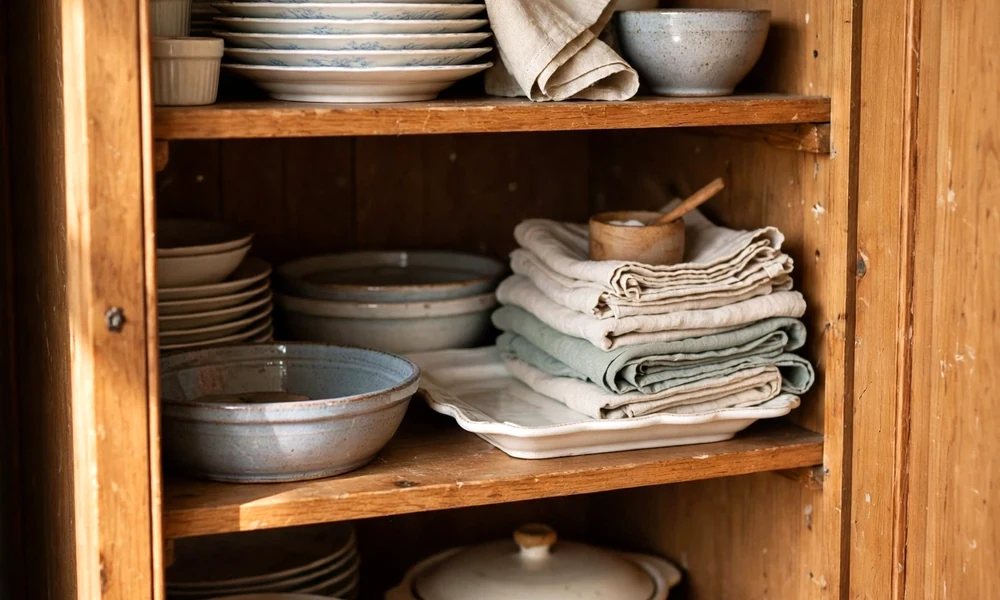
A buffet top takes more wear than any other surface in the dining room, because hot dishes, plates and glasses are set down on it every meal. Wipe it after every use, and use trivets under hot dishes rather than setting them down directly. A heat mark on a wood top is hard to remove. A simple linen runner down the middle of the top protects the wood and looks right at the same time.
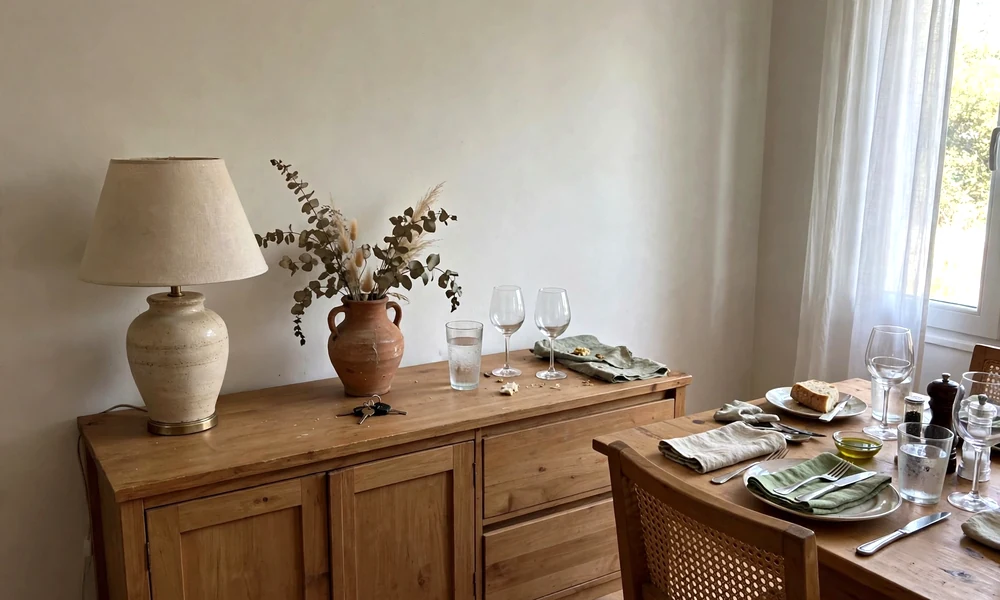
When the buffet is not serving, it should not sit empty. A lamp, a vase or a row of glasses on top makes the room feel finished, and it stops the piece looking like a bare table against the wall. Keep the drawers for the things the buffet serves: cutlery, napkins, serving spoons and the trivets. If the cupboard underneath fills up with things that belong elsewhere, empty it.
Buffets Checklist
- Length 120 to 180 centimetres, roughly the dining table’s length.
- Depth 40 to 50 centimetres, enough for a chafing dish.
- Height about 85 centimetres for comfortable standing service.
- Solid wood or good veneer, flat and level top.
- Serving order: plates, hot dishes, cold dishes, bread, cutlery last.
- 90 centimetres of clear floor in front for the queue.
Frequently Asked Questions
Is a buffet the same as a sideboard?
No, though the two are cousins and often sit in the same room. A buffet is a low, long serving piece with a shallow body, built for laying out food. A sideboard is taller and deeper, with proper cupboards and drawers, built for storing things.
How long should a buffet be?
About two-thirds of the wall it sits on, and roughly the same length as the dining table: 120 centimetres for a table for four, 150 for six, and 180 for eight.
How deep does a buffet need to be?
Forty to fifty centimetres. That fits dinner plates, serving dishes and a chafing dish, with room for glasses behind the food. Anything shallower leaves dishes hanging over the edge.
Can a buffet replace a dining table?
No. A buffet holds the food before it reaches the table, and the dining table is where people sit and eat. If the food is laid out on the dining table itself, there is no room left for plates and elbows.
What should I put on top of a buffet when it is not serving?
A lamp, a vase or a row of glasses. A bare buffet top looks unfinished, while a few objects make the room feel complete.
Do I need a chafing dish with a buffet?
Not for a family dinner, where the food is served and eaten quickly. For a large gathering or a holiday meal, where the food must stay hot for an hour or more, a chafing dish is worth having, and the buffet needs 40 centimetres of depth to hold it.
Bottom Line
Buy a buffet for its top, not its cupboards. Choose one 120 to 180 centimetres long, 40 to 50 centimetres deep and about 85 centimetres high, in solid wood or good veneer, with a flat, level surface that can take a chafing dish. Pair it with a sideboard for storage, keep the dining table free for eating, and set the food out in serving order. The food is laid out, the queue flows, and the host eats with the guests instead of running to the kitchen.


