
The Display Cabinets That Turn a Collection Into the Best Part of the Room in 2026
A display cabinet is the one piece of furniture that does two jobs at once: it stores the things you care about and it shows them off. The best display cabinets in 2026 keep china, glassware, figurines and collectables safe behind glass, lit so they can be seen, and arranged so the room looks finished rather than cluttered. A good one turns treasured objects into a feature of the room; a bad one turns them into a dusty jumble behind smeary glass, with a door that sticks and shelves that sag.
Most people buy a display cabinet for one beloved collection and then discover it holds far more. The trick is to choose by what you actually own, not by what looks good empty in a showroom. Measure the tallest piece, count the shelves you need, and check that the glass, lighting and doors suit a room you live in every day.
Key Takeaways
- Buy for what you own: measure your tallest piece first, then choose a cabinet with adjustable shelves.
- Glass on three sides shows a collection best; a solid wooden back suits china and calms the room.
- Built-in LED lighting is worth paying for: unlit cabinets hide the bottom shelves in shadow.
- Adjustable glass shelves beat fixed wooden ones, because collections change and pieces differ in height.
- Leave a third of every shelf empty: a crowded cabinet looks like storage, a spaced one like a display.
What a Display Cabinet Actually Is
A display cabinet is a tall or wall-mounted cabinet with glass doors, glass sides or both, built to show objects rather than hide them. Inside are glass shelves and often a light. The job is simple: protect the contents from dust, knocks and curious hands while keeping them visible. A sideboard stores things behind closed doors, and our guide to sideboards explains why it beats a buffet for storage; a display cabinet does the opposite, putting the contents on show. A buffet serves food from its top, as our guide to buffets explains, while a display cabinet earns its keep with what sits behind its glass.
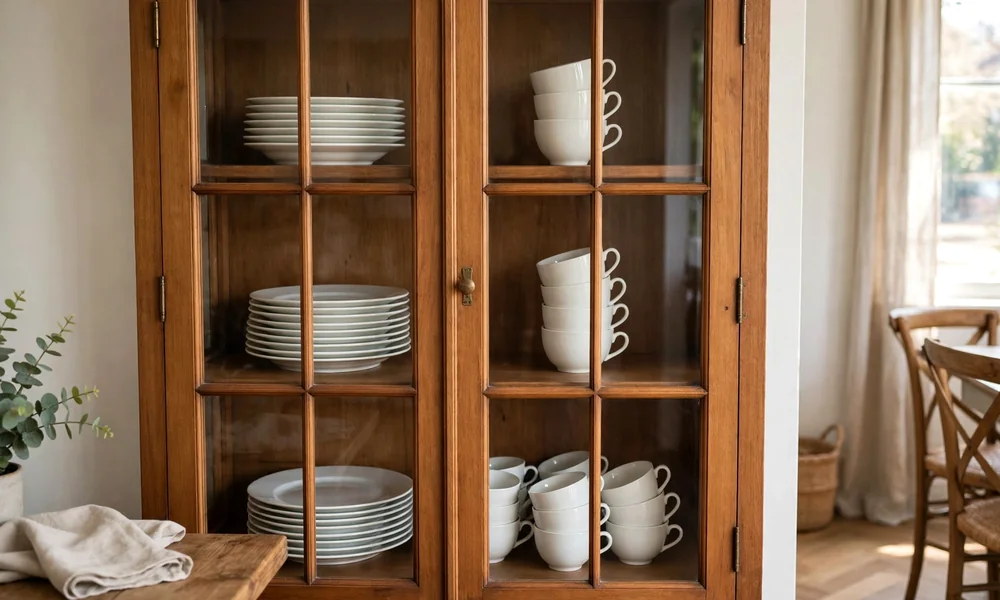
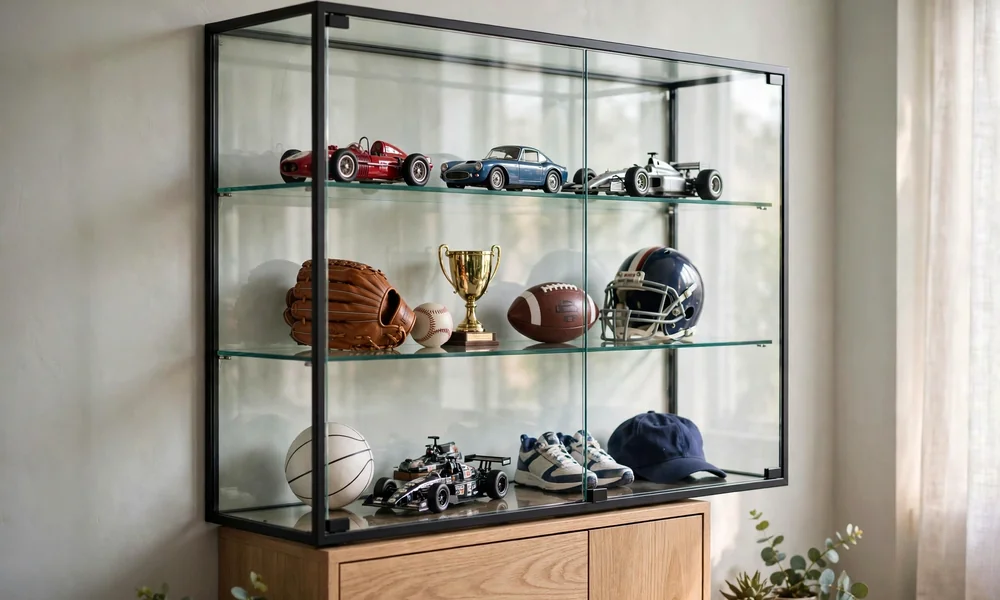
A china cabinet is a display cabinet with a dining-room job: it holds plates, bowls and glasses, usually with a cupboard or drawers underneath for table linen. A curio cabinet is the smaller, narrower version, built for figurines and small collectables, often with a mirrored back. A wall-mounted case suits model cars, medals and memorabilia. A corner cabinet fits a corner that would otherwise hold nothing. All four are display cabinets; the difference is what they hold and where they stand.

The Main Types of Display Cabinet, Compared
Freestanding glass-door cabinets are the most common: 180 to 200 centimetres high and 80 to 120 wide, with two glass doors and four or five shelves. They suit china, glassware and mixed collections in any room. Their weakness is the footprint: they need a clear stretch of wall and room for the doors to swing open.
China cabinets are the dining-room specialists: wider, often shorter, with a solid lower cupboard and glass doors above. The top half displays the good plates and glasses; the bottom half hides tablecloths and serving dishes. They suit anyone who owns a dinner service worth showing off.
Curio cabinets are narrow and tall, often 40 to 60 centimetres wide, with glass on three sides and a mirrored back. They suit small, precious things: figurines, porcelain animals and small vases. The mirrored back doubles the light, but it also doubles the dusting, because every fingerprint shows. Wall-mounted display cases suit flat or small collections: model cars, coins, medals and memorabilia. They take no floor space, which makes them the answer for small rooms, but they hold less, and heavy pieces need proper wall fixings.
Corner display cabinets fit where nothing else will, with an angled front that uses dead space a straight cabinet cannot, and our guide to corner shelves shows how the same dead corner can work as open display. The triangular shelves hold less than they appear to, and tall pieces near the back are hard to reach, so choose one only when the corner is the only free spot.
| Type | Best for | Typical size | Watch out for |
|---|---|---|---|
| Freestanding glass-door | China, glassware, mixed collections | 180–200 cm high, 80–120 cm wide | Needs door swing space |
| China cabinet | Dinner services, dining rooms | 180–200 cm high, 100–150 cm wide | Wrong room looks out of place |
| Curio cabinet | Figurines, small ornaments | 170–190 cm high, 40–60 cm wide | Mirrored back shows every mark |
| Wall-mounted case | Model cars, medals, memorabilia | 60–100 cm wide, hangs on wall | Holds less; needs solid fixings |
| Corner cabinet | Dead corners, small rooms | 180 cm high, 70–90 cm wide | Triangular shelves hold less |
Getting the Size Right
Size is the decision most people get wrong, and it is the one that is hardest to fix afterwards. Start with the collection, not the catalogue. Measure the tallest piece you plan to display, then add five centimetres of air above it, because a vase crammed against the shelf above looks stored rather than shown. Then count the pieces and work out how many shelves you need, remembering that one shelf per type of object usually looks better than one shelf per piece.
Then measure the wall. A display cabinet should fill about two-thirds of it, with at least 60 centimetres of clear floor in front so the doors open fully. Depth matters too: 30 to 40 centimetres suits plates, glasses and figurines, while 45 suits large vases and books. Anything deeper wastes floor space and pushes the back row into shadow.
Glass, Lighting and Shelves
Glass decides how good the collection looks. Clear tempered glass is the standard: strong, scratch-resistant, and true to colour. Low-iron glass is clearer still, with no green tint at the edges, and it is worth the extra money for pale porcelain or crystal. Avoid smoked or tinted glass unless the room gets strong direct sun, because tint dulls everything behind it. Check thickness too: 4 to 5 millimetre shelves hold ordinary china and glassware, while large vases need 6 millimetre shelves or wooden ones.
Lighting is what separates a cabinet that glows from one that sulks. Built-in LED strips on each shelf, or a single warm light at the top with glass shelves to let it through, make every shelf readable. Unlit cabinets leave the bottom shelves in gloom. Warm white light, around 2700 to 3000 Kelvin, flatters wood, porcelain and glass; cool white light makes everything look like a shop window. Battery puck lights are a cheap retrofit, but wired LEDs are the better long-term answer.
Shelves should adjust. Collections change: a new vase arrives, a tall decanter joins the glassware. Adjustable shelves on metal pins let the cabinet change with them, while fixed shelves force the collection to fit the furniture. Glass shelves let light fall through; wooden shelves suit heavier pieces but block the light. Check the shelf load rating before you buy, and put the heaviest pieces on the lowest shelf.
Materials and Build Quality
A display cabinet is a piece you will look at every day, so build quality matters. Solid wood, especially oak, walnut and mahogany, costs more but lasts decades and can be repaired if scratched. Good veneer over a stable core looks almost as good and costs less, provided the edges are sealed; thin foil-wrapped board chips along the front edge within a year or two. Metal-framed cabinets with black or brass frames suit modern rooms and are lighter to move than solid wood.
Check the doors before you buy. They should close flush, and the hinges should hold the door steady when half open. Soft-close hinges are worth having, because a glass door that slams can crack a shelf. A magnetic catch suits a light door; a keyed lock matters if the cabinet holds anything valuable or small children visit. A solid wooden back suits china; a mirrored back suits small collections.
Arranging What Goes Inside
Arranging a display cabinet is closer to arranging a shop window than to packing a cupboard. Group pieces by type, colour or story, and leave space between the groups so the eye can rest. Put the tallest pieces at the back of each shelf and the smallest at the front, so nothing hides behind anything else. Odd numbers look better than even ones: three vases of different heights beat four identical ones, and a single striking piece on a shelf beats a row of similar ones.
Repeat one colour or material across the shelves to tie the cabinet together: the blue of a vase on the top shelf echoed by a blue bowl on the bottom one. Keep the heaviest pieces low, the lightest high, and the most fragile behind the doors rather than on top of the cabinet. Rotate the collection every few months, so the cabinet stays interesting and resting pieces get cleaned.
Cleaning is part of owning one. Dust the shelves and pieces every month, because dust shows through glass far sooner than on an open shelf. Clean the glass with a microfibre cloth and a little glass cleaner, and wipe wooden frames with a damp cloth rather than spray polish, which leaves a film on the glass. Keep the cabinet out of direct sunlight and away from radiators, which dry out wood and can crack old porcelain.
Checklist: Before You Buy a Display Cabinet
- Measure your tallest piece and add five centimetres of air above it.
- Count the pieces and work out how many adjustable shelves you need.
- Check the wall space: two-thirds of the wall, with 60 centimetres clear in front.
- Choose clear tempered glass, 4–5 millimetres for ordinary pieces, 6 for heavy ones.
- Insist on built-in warm LED lighting, not an unlit cabinet.
- Open and close the doors: they should shut flush, with hinges that hold.
Frequently Asked Questions
Are display cabinets still in style in 2026?
Yes. The heavy dark-wood china cabinet of twenty years ago has given way to lighter oak, slim black metal frames and wall-mounted glass cases, but the job is the same. A well-chosen cabinet looks like furniture, not a relic.
What is the difference between a display cabinet and a china cabinet?
A china cabinet is a display cabinet with a dining-room job: plates, bowls and glasses, usually with a cupboard underneath for linen. A display cabinet is the wider family, covering curio cabinets, wall-mounted cases and corner cabinets as well.
How deep should a display cabinet be?
Thirty to 40 centimetres suits plates, glasses and figurines; 45 suits large vases and books. Anything deeper pushes the back row into shadow and wastes floor space.
Do I need lighting inside a display cabinet?
Yes, if you want the collection seen. Built-in warm LED strips make every shelf readable, while an unlit cabinet leaves the bottom shelves in gloom. Battery puck lights work as a retrofit, but wired LEDs last longer.
Can a display cabinet hold heavy pieces?
Yes, if the shelves are rated for the weight. Put the heaviest pieces lowest, use 6 millimetre glass or wooden shelves for stoneware and large vases, and check the load rating before you buy.
How do I keep the glass clean?
Wipe inside and out once a month with a microfibre cloth and a little glass cleaner, and dust the pieces at the same time. Keep it out of direct sunlight and away from radiators, which dry out wood and can crack old porcelain.
The Bottom Line
The best display cabinet fits what you own, fits the wall it stands on, and lights the collection well enough to be seen. Measure the tallest piece first, choose adjustable glass shelves and warm built-in lighting, and leave a third of every shelf empty so the collection reads as a display rather than storage. Do that, and the cabinet becomes the best part of the room.


