What Is a Storage Cabinet, and How Do You Choose One That Lasts in 2026?
A storage cabinet is the piece of furniture that turns a pile into a system. It is a freestanding cupboard with doors, shelves inside, and usually a lock, built to hold what a home accumulates: cleaning supplies, spare bedding, tools, paint tins, and board games. The best storage cabinets of 2026 hide the clutter behind closed doors and keep it sorted on shelves you can reach.
Key Takeaways
- Measure the space and the tallest thing going inside before you buy.
- Steel suits garages and heavy loads, wood suits living rooms and hallways, and plastic suits damp utility rooms where rust is the enemy.
- Adjustable shelves matter more than the number of shelves: fixed spacing wastes the height, while shelves that move let tall bottles and short stacks share one cabinet.
- A lock is worth having whenever the cabinet holds chemicals, medicines, or tools a child should not reach.
- One cabinet, one job, with a label on each shelf, is the only system that stays tidy; a mixed cabinet becomes a junk cupboard with doors.
What a Storage Cabinet Actually Is
A storage cabinet is not the same thing as a wardrobe, and it is not the same thing as a cupboard full of boxes, even though the three get mixed up constantly. A wardrobe holds clothes on a rail. A storage cabinet holds everything else on shelves behind doors, and that difference decides the whole design. The shelves are the point: wide, flat, and spaced for the things you actually store, from paint tins to folded sheets to a stack of board games. Our guide to the best storage bins covers the containers that live inside a cabinet, but the cabinet is the furniture that holds the containers, not a container itself. A bin goes on a shelf; a cabinet is the shelf, the doors, and the lock around it.
The other confusion is with the single-purpose cabinets that already have their own guides. A pantry cabinet holds dry food in a kitchen. A tool chest holds tools in a garage. A shoe cabinet holds shoes by the door. A storage cabinet is the general-purpose version: the tall, doored unit for the garage, the utility room, the laundry, the hallway, or the living room, bought for whatever that room needs to hide. Measure the wall, the door swing, and the route the flat-pack box will travel through the house before you order anything.
Storage Cabinets Compared
| Cabinet type | Best for | Watch out for | Price in 2026 |
|---|---|---|---|
| Steel, tall with lock | Garages, heavy tools and chemicals | Thin steel that flexes; rust in damp garages | Mid to high |
| Wood, tall with doors | Living rooms, hallways, bedrooms | Heavy; doors sag if hinges are weak | Mid to high |
| Plastic, tall or low | Utility rooms, damp spaces, cleaning supplies | Shelves that bow under weight | Low to mid |
| Low cabinet with sliding doors | Under windows, small living rooms | Sliding doors that jump their track | Low to mid |
| Wall-mounted cabinet | Small utility rooms, above a workbench | Fixings that must land in studs or masonry | Low to mid |
Best Overall: The Tall Steel Storage Cabinet
The best overall storage cabinet for most homes in 2026 is a tall steel cabinet, about 180 centimetres high and 80 to 90 centimetres wide, with two locking doors and four adjustable shelves. It holds cleaning supplies, spare bedding, paint tins, and a box of spares on shelves that stay level, year after year. The steel wipes clean, the doors close with a solid click, and the lock keeps chemicals away from small hands.
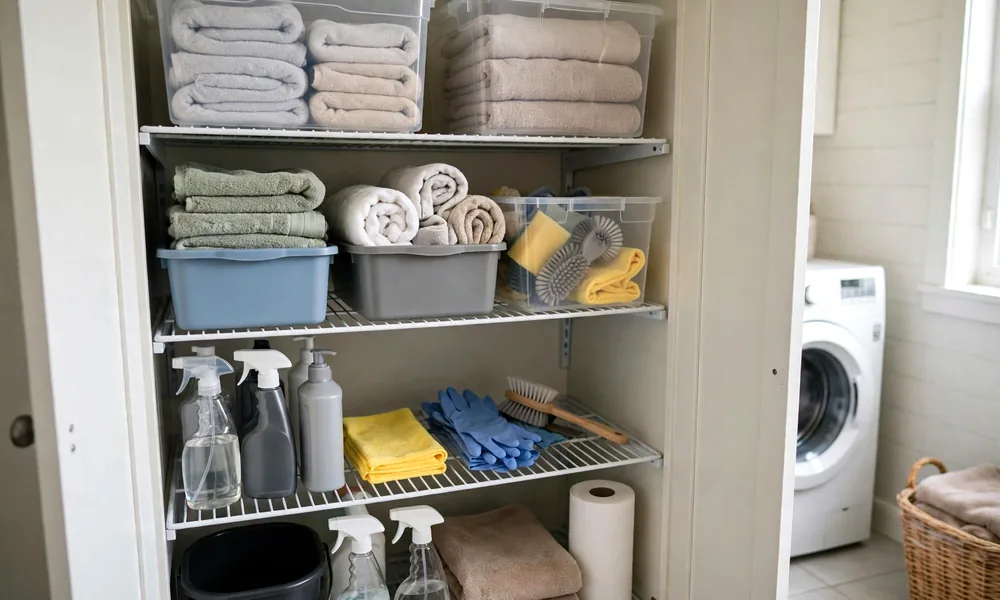
What sets the tall steel cabinet apart is how little it asks of you. The shelves move in minutes, so a tall bottle gets a tall space and shallow boxes share a level without wasting headroom. The doors hide everything, which is the whole point of a cabinet: the room looks calm even when the inside is working hard. Check the steel thickness before you buy: a cabinet built from 0.6-millimetre steel holds its shape when loaded, while thinner steel flexes and the doors bind. Check the powder coating where it wears first, and look for adjustable feet, because few garage floors are level.
Best for the Garage: The Locking Steel Cabinet
In a garage, the lock and the load rating matter more than the looks. A locking steel cabinet with shelves rated for 40 to 50 kilograms each holds paint tins and oil bottles without bowing, and the keyed lock keeps chemicals out of reach. Unlike a tool chest, built around drawers for tools, a storage cabinet is built around shelves for everything else. The two sit side by side in the same garage, doing different jobs.
Damp is the garage cabinet’s real enemy, so favour powder-coated steel over bare metal and keep the cabinet on its feet rather than flat on concrete that sweats. A single keyed lock that secures both doors at once is worth having for anything valuable. Bolt the cabinet to the wall so it cannot tip forward.
Best for Living Rooms: The Wooden Storage Cabinet
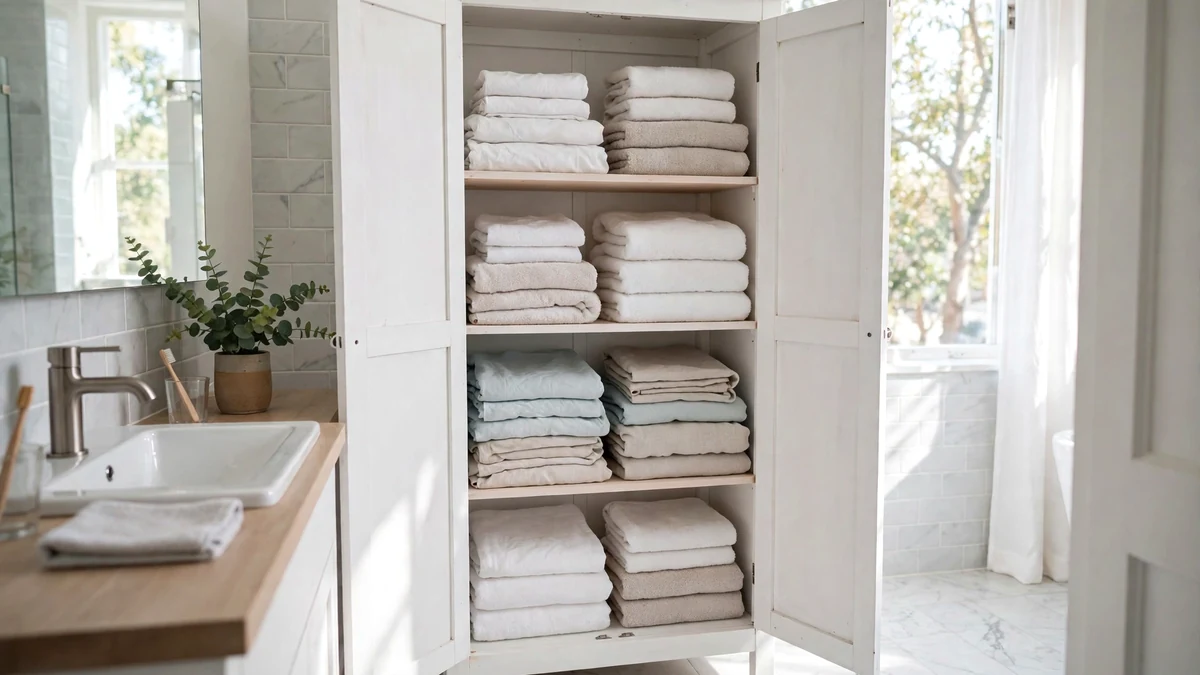
A wooden storage cabinet suits the rooms people actually live in, where a steel box would look like workshop furniture. A tall wooden cabinet with panelled doors holds board games, spare bedding, and household paperwork in a hallway or living room, and it reads as furniture rather than storage. The trade-off is weight: wood is heavier, and a heavy wooden door on weak hinges will sag within a year, so check the hinges and consider soft-close ones on a cabinet opened daily.
A closed door hides the mess, which is a different job from organising it: a shelf of labelled bins is organised, but a closed wooden door is calm. That is why the best living-room cabinet often has the plainest doors. Glass doors show the contents, which defeats the purpose; solid doors hide them, and the room looks finished even when the inside is full.
Best for Small Spaces: The Low Cabinet With Sliding Doors

Small rooms need a cabinet that does not eat the floor. A low cabinet with sliding doors, about 80 centimetres high and 120 centimetres wide, tucks under a window or along a short wall and holds blankets, games, and the things a small household reaches for often. Sliding doors are the clever part: a hinged door needs a clear arc of floor to open, while a sliding door needs none, so the cabinet works in a hallway where a swinging door would hit the opposite wall. Only half the cabinet is open at once, so keep weekly-use things on the side that slides open first.
Wall-mounted cabinets are the other small-space answer: a unit above a workbench uses wall space a small room otherwise wastes and keeps the floor clear. The catch is the fixing: a loaded wall cabinet must be fixed into studs or solid masonry, never plasterboard alone. A cabinet that falls off the wall is worse than no cabinet at all.
What to Check Before You Buy
Start with the shelves, because they are the whole point of a cabinet. Adjustable shelves beat fixed shelves every time, and a shelf that holds 30 to 40 kilograms is the minimum worth trusting with paint tins or books. A shelf that rocks empty will bow full, and once a shelf bows it never comes back. Metal shelves suit garages, wooden shelves suit living rooms, and plastic shelves suit damp rooms but bow first under weight.
Next comes the doors. Hinged doors give full access to the whole cabinet at once, which suits a garage or utility room. Sliding doors save floor space, which suits a hallway or small living room. Whatever the type, open and close the doors several times before you commit. They should close with a solid click, stay shut without a magnet straining, and leave no gap at the top or bottom where dust gets in. Then check the lock, the feet, and the assembly. A lock matters whenever the cabinet holds chemicals, medicines, or anything sharp. Adjustable feet matter because few floors are level, and a cabinet that rocks will wear its hinges out.
Where to Put It: Room by Room
In the garage, put the cabinet against the wall nearest the door you use most, with the things you grab weekly at eye level and the things you use yearly on the top shelf. In the utility room, put it beside the washing machine, with cleaning supplies on the middle shelves and spare bedding above. In the hallway, put it where a door swing will not hit it. In the living room, put it against the longest bare wall and keep the top clear.
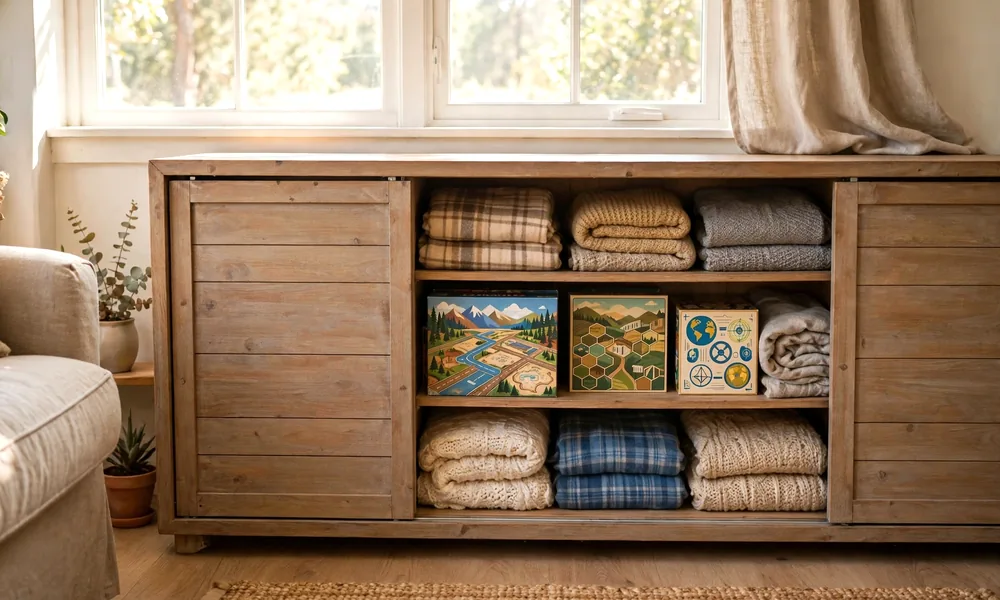
The inside deserves the same thought as the outside. Put the heaviest things at the bottom, where they steady the cabinet. Put weekly-use things at waist and eye level, and yearly-use things on the top shelf. Keep one category per shelf, and label the shelf edge if the household shares the cabinet. Matching storage cubes inside turn a deep shelf into pull-out drawers, and a row of identical cubes reads as calm where odd boxes read as clutter.
Storage Cabinet Checklist
- Measure the wall, the door swing, and the tallest item going inside before you order.
- Choose steel for garages and heavy loads, wood for living rooms, plastic for damp rooms.
- Check the shelves adjust, hold 30 to 40 kilograms each, and sit flat without rocking.
- Open and close the doors several times: they should click shut with no gap top or bottom.
- Fit a lock if the cabinet holds chemicals, medicines, or sharp tools.
- Bolt a tall cabinet to the wall so it cannot tip forward when a door is pulled.
Frequently Asked Questions
What is the difference between a storage cabinet and a wardrobe?
A wardrobe holds clothes on a rail, while a storage cabinet holds general household goods on shelves behind doors. The shelves are the point of a storage cabinet, and the doors hide the clutter rather than displaying it.
Are steel or wooden storage cabinets better?
Steel suits garages and heavy loads because it wipes clean, resists knocks, and holds more weight per shelf. Wood suits living rooms and hallways because it reads as furniture. Plastic suits damp utility rooms where rust is the enemy.
How much weight should a storage cabinet shelf hold?
Look for 30 to 40 kilograms per shelf for general household storage, and 40 to 50 kilograms per shelf for a garage cabinet holding paint tins and tools. Check the per-shelf rating, not the whole-cabinet rating, and keep a quarter of it in reserve.
Do I need a lock on a storage cabinet?
A lock is worth having whenever the cabinet holds cleaning chemicals, medicines, or sharp tools, especially in a home with children. A single keyed lock that secures both doors at once is the simplest option.
Should a tall storage cabinet be fixed to the wall?
Yes. A tall cabinet can tip forward when a door is pulled or a ladder leans against it. Bolt it to the wall through studs or solid masonry, and keep the heaviest items on the bottom shelf so it stays steady.
What should I store on each shelf?
Heavy things at the bottom, weekly-use items at waist and eye level, and yearly-use items on the top shelf. Keep one category per shelf, and label the shelf edge if more than one person uses the cabinet.
The Bottom Line
The best storage cabinet of 2026 fits its wall, holds its rated weight without bowing, and hides the clutter behind doors that close properly. Measure first, choose the material for the room, check the shelves and the lock, and bolt it to the wall.