
A Guide to Utility Carts That Haul Heavy Loads Without Breaking in 2026
A utility cart is a heavy-duty steel hauling cart built for the garage, the workshop and the warehouse, and a good one moves loads that would take four trips by hand. It is not a light shelf on wheels. It is the two-shelf steel platform cart that carries a toolbox, a paint can and a bag of cement in one trip, rolls over a cracked driveway without tipping, and takes a knock from a dropped hammer without bending. If your work involves moving heavy things across a hard floor, a utility cart is the cheapest pair of hands you can buy.
This guide covers the utility carts worth buying in 2026: the types that actually carry their rated load, how to read a weight rating honestly, and the mistakes that turn a workhorse cart into a bent frame with a wobbling wheel. A rolling cart is a light, multi-room shelf unit for towels and books, a garden cart hauls soil and firewood across a lawn, and a kitchen cart adds counter space for cooking. A utility cart does a different job: heavy loads, hard floors, and work that would break a household trolley.
Key Takeaways
- A utility cart is worth buying when a load is too heavy, too awkward or too dirty to carry by hand more than once.
- Buy for the heaviest single load, not the average one: a cart rated for 300 kilograms that is only ever loaded to 100 will last a decade.
- Wheel size decides everything on rough ground: 8-inch wheels roll over cracks and thresholds that stop 3-inch castors dead.
- Steel beats plastic for the frame, and welded joints beat bolted ones, when the load is measured in hundreds of kilograms.
- Measure the doorway, the lift and the parking spot before you buy, because a cart that cannot get through the garage door is a very expensive shelf.
What Makes a Utility Cart Different
Most carts fail in the same place: the wheels. A household trolley has small castors made for smooth indoor floors, and the first time it meets a cracked driveway with a heavy load, the wheels jam, the frame twists, and the load ends up on the floor. A utility cart is built the other way round: large wheels on a steel axle, rated for the full load plus a margin, and everything else built to match.
It also works because it is a hauling tool, not a storage unit. A workbench gives you a fixed surface to work on; a utility cart gives you a moving surface that brings the work to you. It carries the tools to the far end of the garage and the paint to the fence, and it parks against the wall when the job is done.
The Main Types of Utility Cart
Utility carts come in a handful of shapes, and the right one depends on what it will carry and where it will roll. Start with the load, the part that breaks a weak cart, then worry about the shelves and the handle.
Two-Shelf Steel Platform Carts
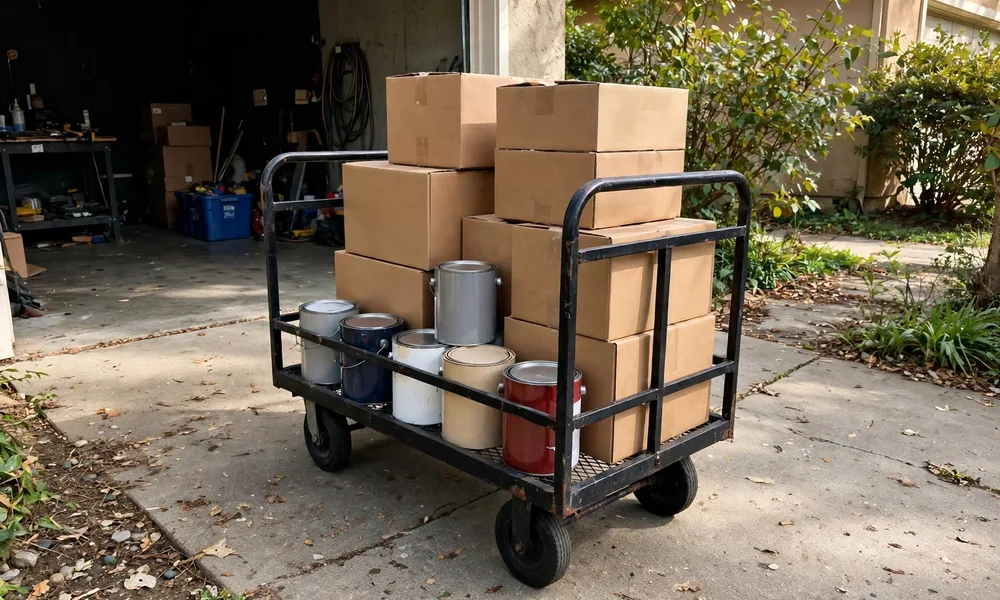
The two-shelf steel platform cart is the best utility cart for most garages in 2026, because it does the most jobs for the least money. A welded steel frame with two flat decks, usually around 90 centimetres long and 45 deep, carries toolboxes, paint cans, bags of cement and boxes with equal ease. The decks have raised edges, so nothing slides off when the cart moves.
Look for a frame that is welded rather than bolted, and for a deck rating stamped on the cart itself, not just on the box. The best versions have two swivel castors at the front and two fixed wheels at the back. Avoid carts with thin sheet-metal decks that dent under a dropped toolbox.
Three-Shelf Service Carts
A three-shelf service cart suits workshops where the cart is a moving workbench as well as a hauler. Three shallow shelves hold tools, parts and materials in order, with the top shelf at working height so you can use it without bending. At around 85 centimetres long it fits between a bench and a wall, and it rolls to the job instead of making you walk back to the bench.
The trade-off is capacity. A third shelf adds height and weight, so the load rating per shelf is lower, usually 80 to 100 kilograms. Keep the heavy things low and the tools you reach for on top.
Drawer Cabinet Carts
A drawer cabinet cart is built for workshops where the tools themselves are the load. Steel drawers on ball-bearing slides hold wrenches, hammers and fasteners in order, with a pegboard side for the tools you grab most often. It rolls to the car, the bench or the far wall, and it locks, so the tools stay where you left them.
The compromise is price and weight. A drawer cart costs more than a platform cart and weighs more empty, so check the castors are rated for the cart plus a full load of tools. Look for drawers that lock shut when the cart moves.
Flatbed and Platform Trucks
A flatbed cart is for loads that do not fit on shelves at all: sheets of plywood, long lengths of timber, stacked boxes and bagged materials. A flat deck with no sides and a push handle at one end carries awkward loads that would never fit in a tub, and removable sides switch it between a flatbed and a box cart in minutes.
The compromise is storage. A flatbed is big, often 120 centimetres long, and it needs real wall or floor space when it is not working. Look for a deck rated for at least 500 kilograms, and for wide tyres that spread the load so the cart does not sink into soft ground.

Folding Utility Carts
A folding utility cart is for garages and vans where space is tighter than the load. The deck folds up against the handle, so the whole cart hangs on a wall hook or slides behind a door between jobs. Open, it carries 150 to 250 kilograms; folded, it is barely 25 centimetres deep.
Check the folding mechanism before you buy: it should lock firmly open with no wobble, and the folded frame should sit flat. Avoid the cheapest folding carts, where a deck that sags under a bag of cement is worse than no deck at all.
Utility Carts Compared
| Type | Best for | Typical size | Load rating |
|---|---|---|---|
| Two-shelf steel platform cart | General garage hauling | 90 x 45 cm | 300 to 500 kg |
| Three-shelf service cart | Moving workshop, tools in order | 85 x 45 cm | 240 to 300 kg |
| Drawer cabinet cart | Tool storage that rolls | 80 x 45 cm | 200 to 400 kg |
| Flatbed and platform truck | Awkward and bulky loads | 120 x 60 cm | 500 to 1000 kg |
| Folding utility cart | Vans and tight garages | 90 x 45 cm | 150 to 250 kg |
If the cart will haul mixed loads every week, the two-shelf platform cart wins. If it will carry tools in order, the drawer cabinet earns its place.
How to Choose the Right Utility Cart
Measure twice, and measure the right things. Measure the doorway the cart must pass and the parking spot against the wall, in centimetres. Then measure the heaviest single thing it will carry, because the rating that matters is the one for the worst load, not the average.
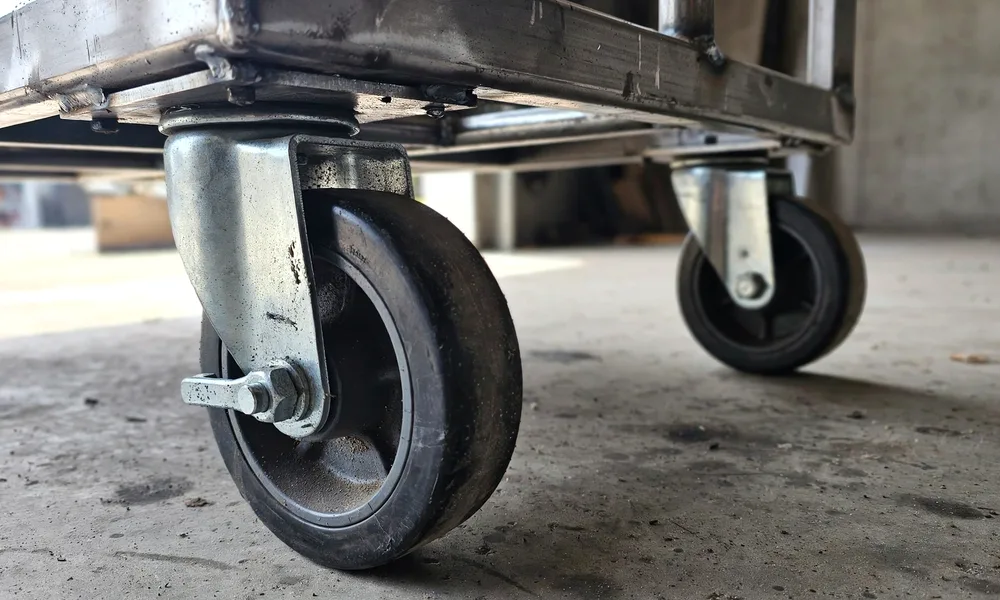
Wheels decide whether a cart is genuinely useful or just a heavy shelf. Large wheels roll over cracks, thresholds and gravel that stop small castors dead, and pneumatic tyres grip better on rough ground, though they can go flat. Solid rubber wheels never puncture and suit workshops with nails and sharp offcuts. Look for at least one braked wheel.
The frame shapes how long the cart lasts. Welded steel joints take knocks that loosen bolted joints over time, and a powder-coated finish resists rust in a damp garage. Check the deck thickness too: a deck that flexes under your foot will dent under a dropped toolbox.
The 6-Point Checklist Before You Buy
- Weigh the heaviest single load the cart will carry, and buy a rating at least 50 percent higher.
- Measure the doorway, the lift and the parking spot, in centimetres, before you order anything.
- Check the wheel size: 8-inch wheels for rough ground, 5-inch for smooth concrete only.
- Confirm at least one wheel has a brake, and test it with a foot before the cart is loaded.
- Look for a welded steel frame and a deck rating stamped on the cart, not just on the box.
- Check the handle height suits the person who will push it, because a handle that is too low wrecks your back.
Mistakes That Waste Money
The most common mistake is trusting the headline rating. A cart rated for 500 kilograms usually means 500 across the whole cart on a perfectly flat floor, not 500 on one shelf or on a slope. Buy a rating well above your worst load, and the cart will last a decade instead of a season.
The second mistake is buying small wheels to save money. Small castors are cheaper, but they jam on the first threshold, and a jammed wheel with a heavy load is how frames bend and loads fall. Spend the difference on wheels once, or spend it on a replacement cart later. And never pull a loaded utility cart by one handle at an angle: push it from behind, slowly, and lock the brake before you load or unload it.
Frequently Asked Questions
What is a utility cart used for?
A utility cart is a heavy-duty steel hauling cart for garages, workshops and warehouses. It moves toolboxes, paint cans, boxes, bagged materials and equipment across hard floors in one trip, and it parks against the wall when the job is done. It is a hauling tool, not a storage shelf.
How much weight can a utility cart hold?
Most two-shelf steel utility carts are rated for 300 to 500 kilograms in total, flatbed trucks for 500 to 1,000 kilograms, and folding carts for 150 to 250 kilograms. Buy at least 50 percent above your heaviest single load.
What is the difference between a utility cart and a rolling cart?
A utility cart is heavy-duty and made for garages and workshops, rated for 300 kilograms or more with large wheels and a welded steel frame. A rolling cart is light and made for indoor, multi-room storage, usually rated under 60 kilograms. They look similar in a photo, but they do opposite jobs.
Are pneumatic or solid wheels better on a utility cart?
Pneumatic tyres roll more smoothly over rough ground and grip better on gravel, but they can go flat. Solid rubber wheels never puncture and suit workshops with nails and sharp offcuts. For mixed garage and driveway use, solid rubber is the safer choice.
Can a utility cart be used outdoors?
Yes, if the frame is powder-coated steel and the wheels are large enough. A utility cart with 8-inch wheels handles driveways, paths and firm lawns, but it is not a garden cart: it has no dumping bed and no tow handle, so it will not replace a cart built for soil and mulch.
How do I stop a utility cart from tipping over?
Load heavy items on the bottom deck, light items on top, and never pull a loaded cart by one handle at an angle. Push it from behind, cross thresholds slowly, and lock the brake whenever the cart is parked or being loaded. A low, wide cart is always more stable than a tall, narrow one.
The Bottom Line
Buy the two-shelf steel platform cart if you want one cart that hauls almost anything, the drawer cabinet if your tools need order, and the flatbed if your loads are sheets and timber. Weigh the worst load, check the wheels, and buy welded steel.


